34
Takashi Murakami
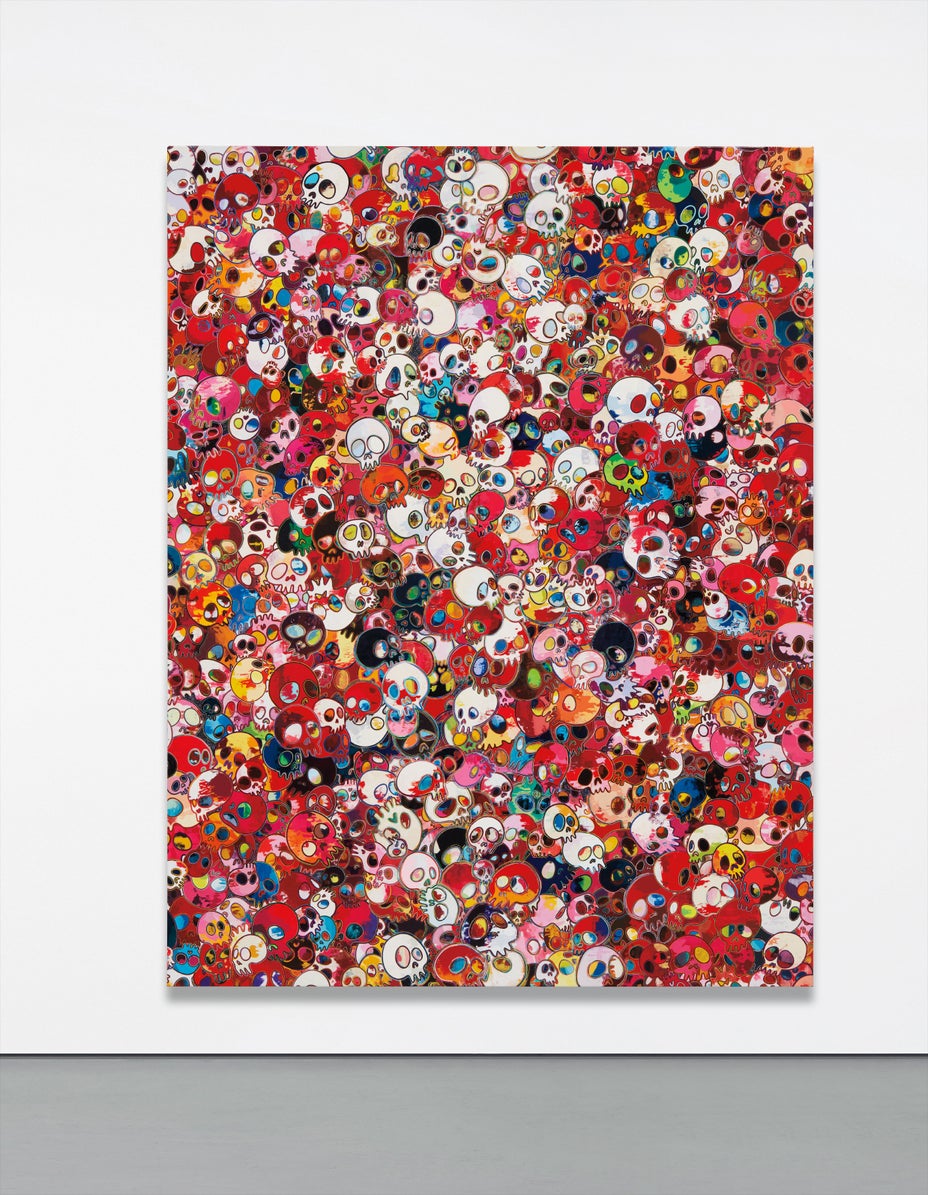
MPGMP, 1960->2012
Full-Cataloguing
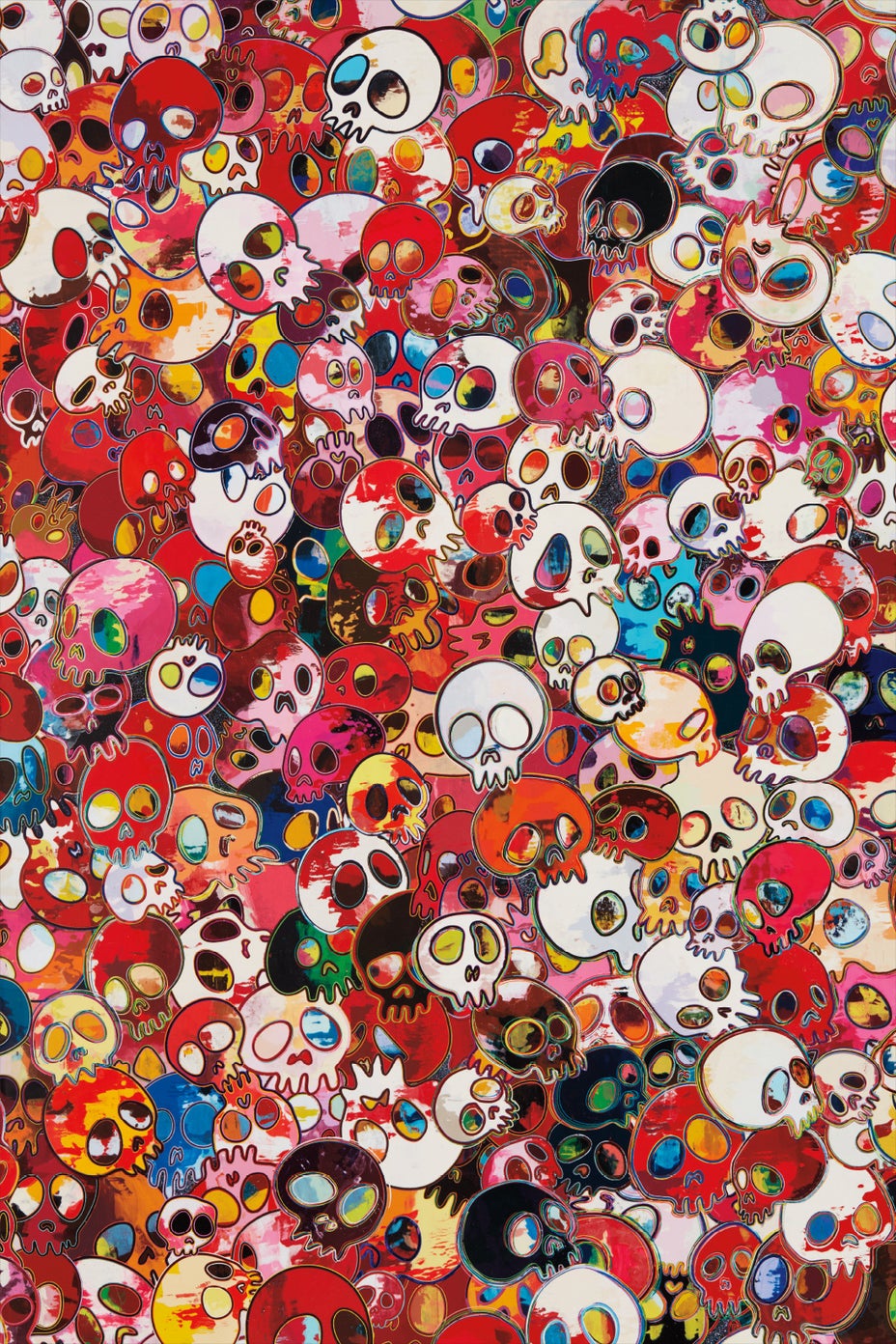
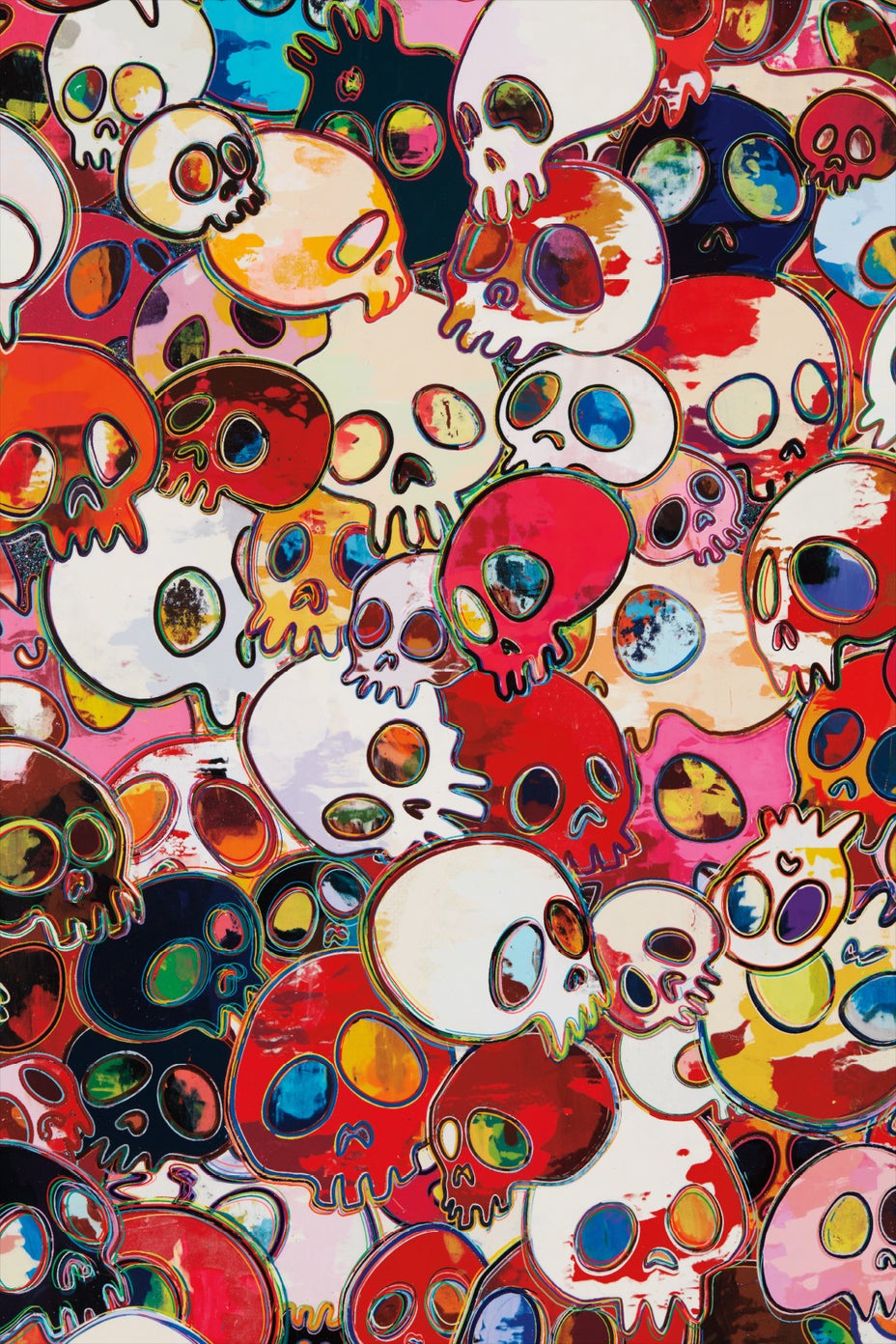
Though Murakami is known for his motley of Neo-pop characters and motifs, often described as “eye candy,” the present lot underscores a profound shift that occurred in his work after meeting his mentor, the Japanese Art Historian Nobuo Tsuji, in 2009. Since then, Murakami has imbedded a deeper engagement in his work with historical Japanese art that has fuelled both the artist’s prodigious imagination as well as ample critical interest. Embellished with a cascade of chromatic skulls, MPGMP, 1960->2012 details Murakami’s fascination with the highly decorative and patterned Rinpa style that originated from the Edo-period of artistic revival.
Created in the year following the disastrous Tōhoku earthquake and tsunami that struck Japan in 2011, the present lot furthermore evokes the Buddhist concept Shogyo mujo connoting the transience of life. “The expression “Shogyo mujo” is very important in Japanese culture,” explains Murakami, “but no one genuinely understands it. After these disasters, people finally understood it in all its brutality.” (Takashi Murakami quoted in Massimiliano Gioni, "Takashi Murakami: SUPERFLAT TO SUPERNATURAL." Flash Art International, 45, no. 284, May 2012, p. 52-56)
Murakami’s fixation on skulls and preoccupation with the Buddhist concept of life’s ephemerality also extends to the western phenomenon of vanitas, a moralising still-life artwork that emerged in 17th-century Holland illustrating symbolic objects curated to remind viewers of their mortality. Like these memento mori, Murakami’s MPGMP, 1960->2012 features skulls to signify death and when seen from a distance, appears like a bed of wild flowers to further emphasise the fragility of life. In comparison to Andy Warhol’s Skulls (1976), the present lot shares Warhol’s use of vivid colours juxtaposed against macabre subject matter, a technique that evokes the curious entanglement of beauty and death inherent to the human condition. When placed next to Puppy (Vase) (1998), Murakami’s Shogyo mujo can moreover be compared to Jeff Koon’s immaculate white porcelain vase that nearly immortalises his signature West Highland Terrier as a stark contrast to the bundle of short-lived cut flowers that the work is meant for. Re-purposing elements from throughout art history and contemporary culture, Murakami’s hyper-colourful, anime-infused painting offers a master work by one of today’s most lauded artists.
Takashi Murakami
Japanese | 1962Takashi Murakami is best known for his contemporary combination of fine art and pop culture. He uses recognizable iconography like Mickey Mouse and cartoonish flowers and infuses it with Japanese culture. The result is a boldly colorful body of work that takes the shape of paintings, sculptures and animations.
In the 1990s, Murakami founded the Superflat movement in an attempt to expose the "shallow emptiness of Japanese consumer culture." The artist plays on the familiar aesthetic of mangas, Japanese-language comics, to render works that appear democratic and accessible, all the while denouncing the universality and unspecificity of consumer goods. True to form, Murakami has done collaborations with numerous brands and celebrities including Kanye West, Louis Vuitton, Pharrell Williams and Google.