174
Sol LeWitt
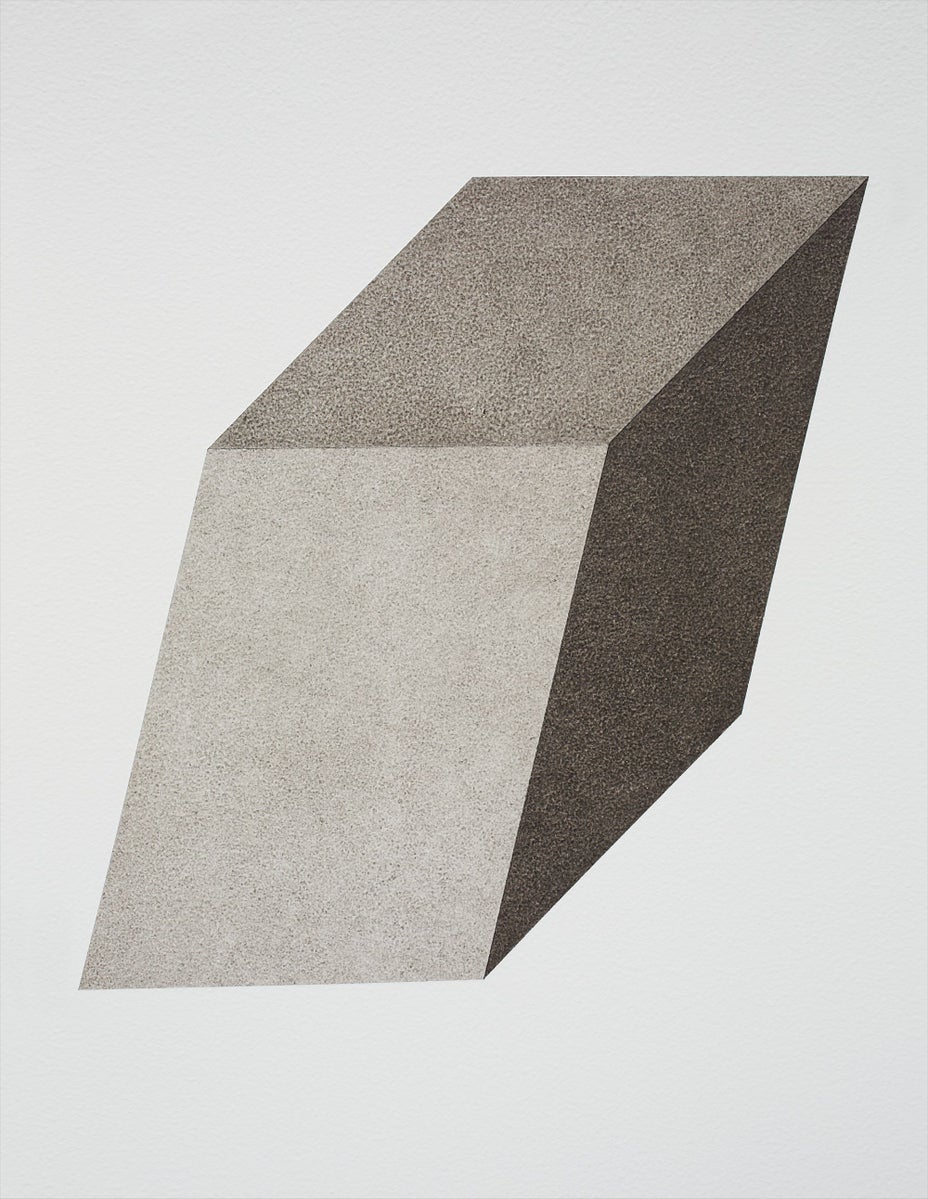
Wall Drawing #354F: Isometric figure drawn with India ink washes [Parallelogram]
This work is accompanied by a certificate of authenticity and a diagram issued by the artist's studio.
Full-Cataloguing
In the present lot, LeWitt blurs the line between artist and architect. He simplifies art to a few of the most basic shapes and colors, presenting an ordered, organized approach to the artistic process. His drawings sometimes resemble mathematical diagrams. LeWitt’s india ink washes create three distinct tones of color, creating literal and figurative “grey areas” of space. His drawings create an interesting juxtaposition to the tradition of the “white cube” viewing space and ignite the work in dialogue with the location where it is ultimately displayed. His brilliantly colored ink washes were diluted and layered to achieve varying shades of grey, creating multifaceted areas. His goal was “to recreate art, to start from square one,” – beginning literally with squares and cubes.
Sol LeWitt
American | B. 1928 D. 2007Connected to the Conceptual and Minimalist art movements of the 1960s and '70s, the artist and theorist Sol LeWitt was a pivotal figure in driving 'idea' art into the mainstream art discourse. Redefining what constituted a work of art and its genesis, LeWitt explored these ideas through wall drawings, paintings, sculptures, works on paper and prints.
Using a prescription to direct the creation of a work, the artist’s hand subordinated to the artist's thoughts, in direct contrast to the Abstract Expressionist movement earlier in the century. Actions, forms and adjectives were broken down into terms, serially repeated and reconfigured: grids, lines, shapes, color, directions and starting points are several examples. These directives and constructs fueled an influential career of vast variety, subtlety and progression.