52
Rolex
Day-Date
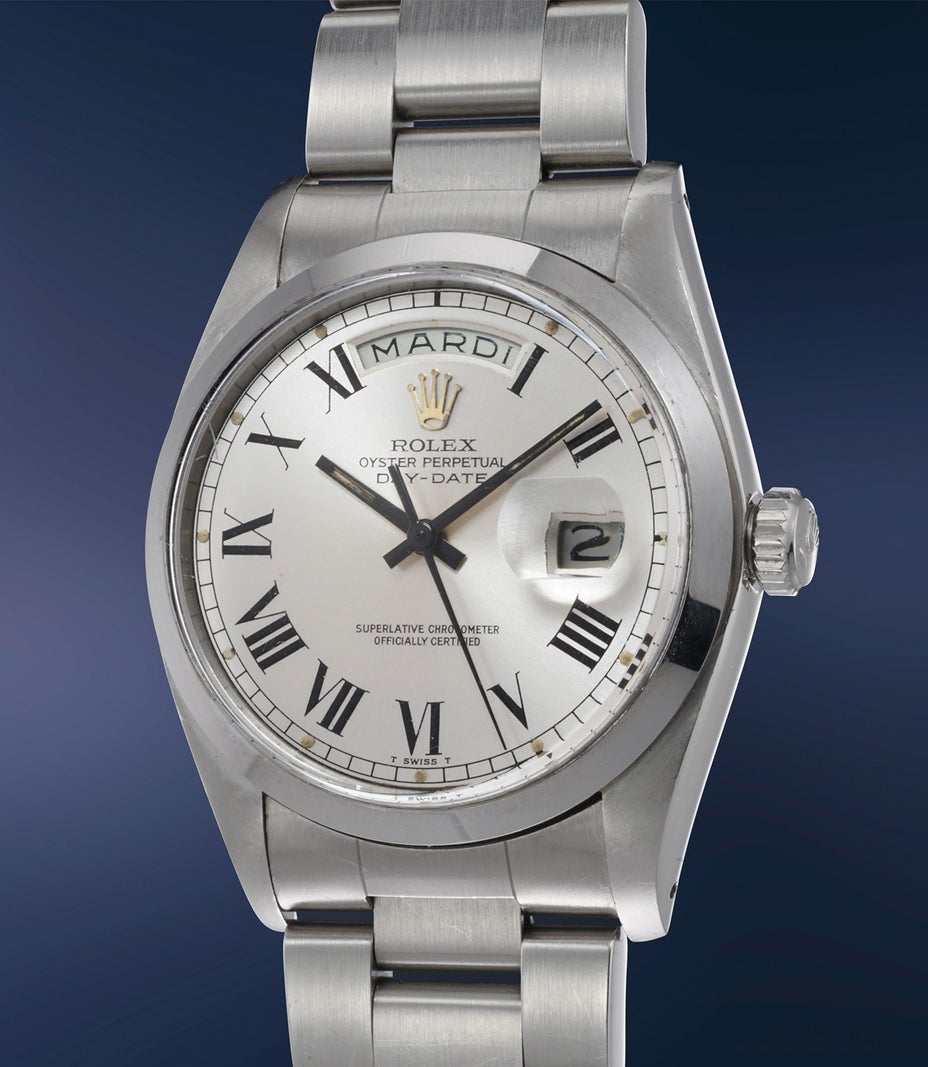
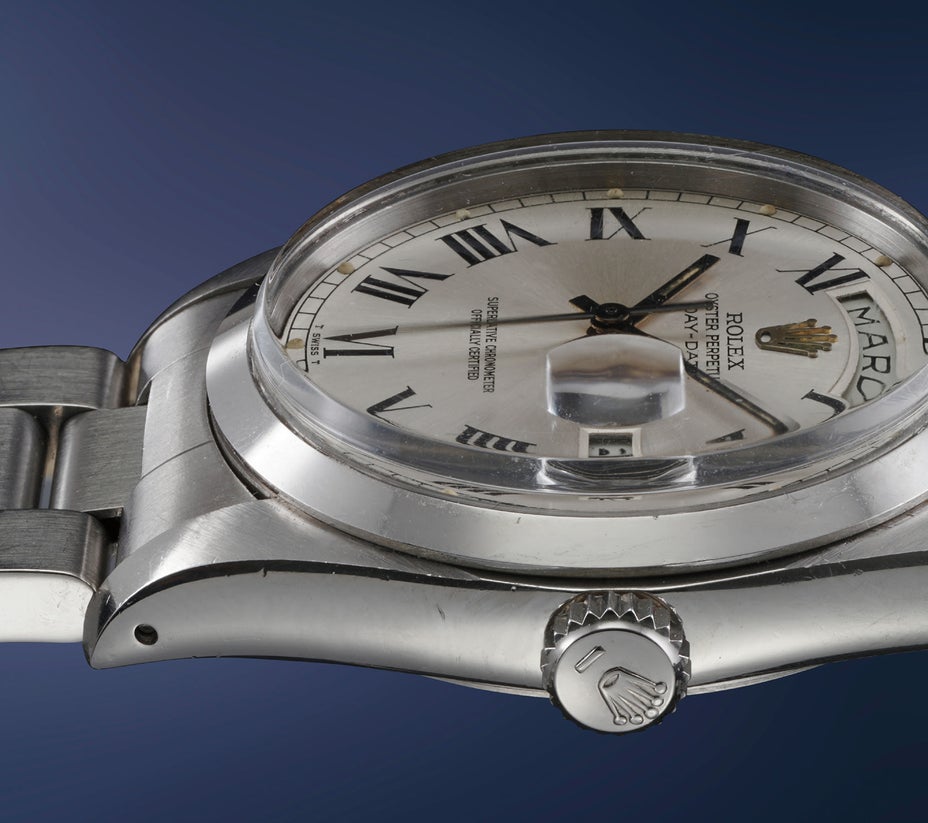
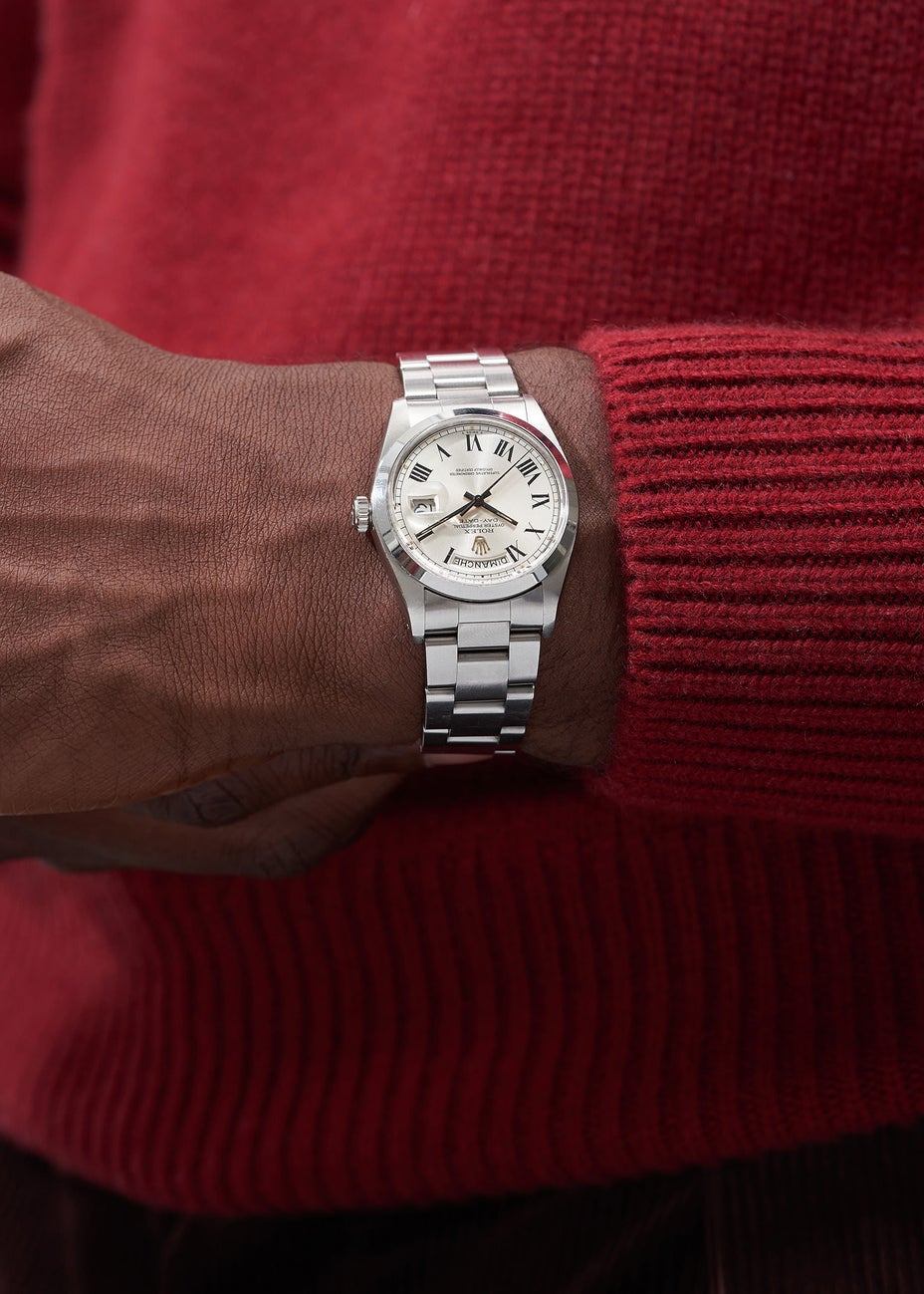
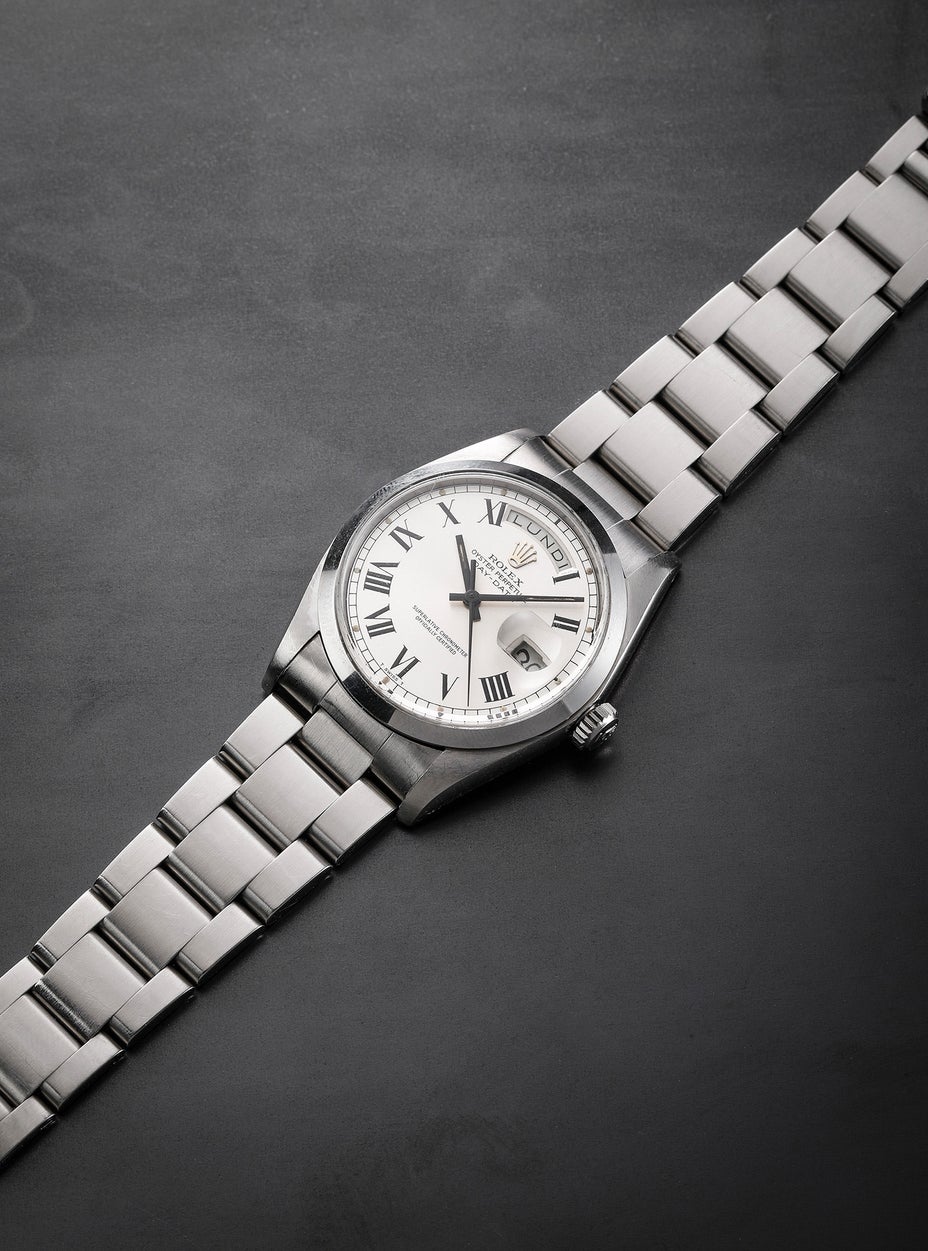
An outstandingly rare and historically interesting stainless steel prototype wristwatch with center seconds, day, date, luminous dial and bracelet
Full-Cataloguing
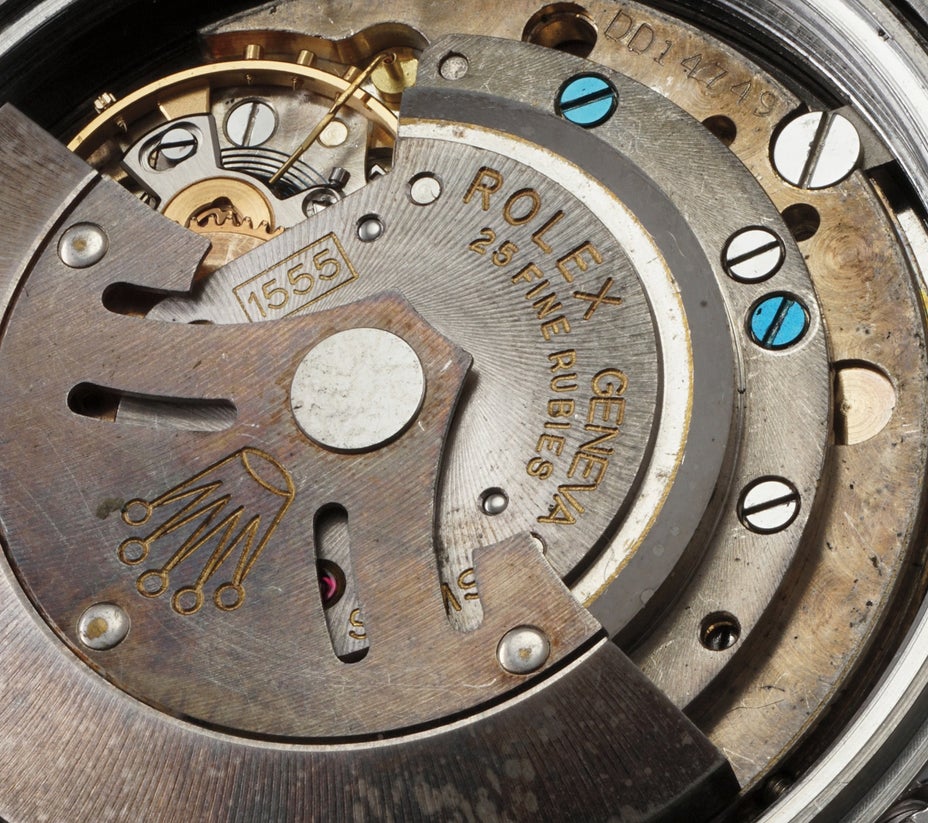
As for every rule, however, there are exceptions to every role, including the “no steel Day-Date” one. As it turns out, an absurdly restricted number of prototype/scholar pieces have in fact been made in stainless steel. One example (movement no. 0004547) is portrayed in John Goldberger’s Rolex “bible” 1000 Superlative Rolex Watches. Two more were sold by Phillips in 2018 (no. 0005073) and in 2019 (no. DD411420). This fourth example (no. DD14749), previously unknown to the market, completes the set of the known stainless steel Day-Date. All these four prototype examples (and indeed, as one would expect from a Rolex prototype, they bear no serial nor case number) were originally gifted to Rolex’s watchmakers at the end of their career and they all have the same Roman numerals dial style.
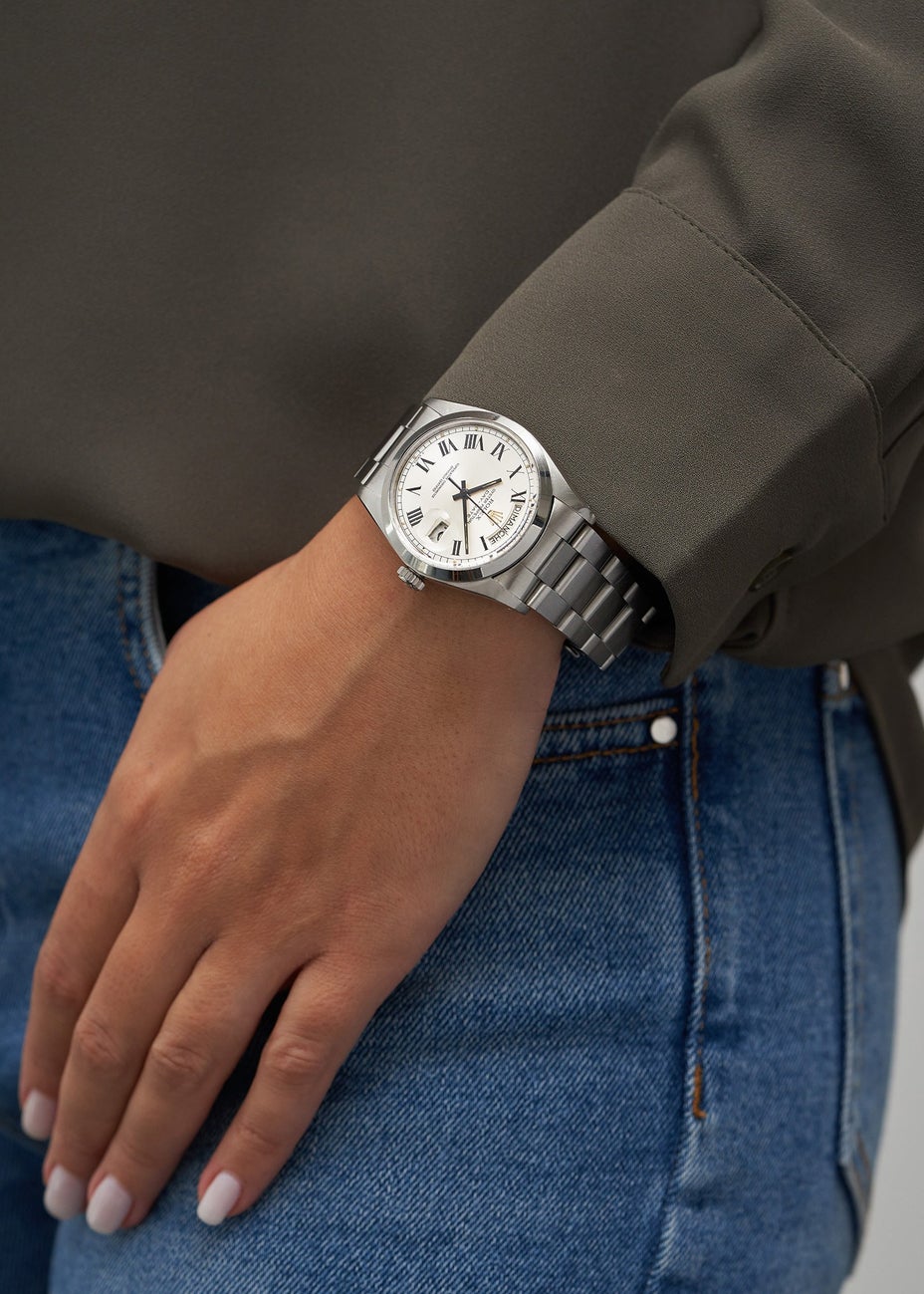
In a world where rarity is considered one of the most important sides of a collectible timepiece, but also where sport’s timepieces are the in extreme demand given their undisputed wearability, this watch definitely deserves the “grail” status. A 4-pieces model would be considered beyond restricted for any brand, and that’s even more true for Rolex, whose output has historically been (relatively to other watchmaking brands, of course) less restricted. When to this rarity one couples the fact that owning this watch equals to owning something that should not even exist, that contradicts the company’s own rules and that at the same time is so eminently “slick”, modern and wearable, it is impossible to not realise that this is without a doubt one of the most interesting and important Day-Date watches made in the past century, and it could be arguably considered one of the most intellectually intriguing timepieces ever made.
Rolex
Swiss | 1905Founded in 1905 England by Hans Wilsdorf and Alfred Davis as Wilsdorf & Davis, it soon became known as the Rolex Watch Company in 1915, moving its headquarters to Geneva in 1919. Like no other company, the success of the wristwatch can be attributed to many of Rolex's innovations that made them one of the most respected and well-known of all luxury brands. These innovations include their famous "Oyster" case — the world's first water resistant and dustproof watch case, invented in 1926 — and their "Perpetual" — the first reliable self-winding movement for wristwatches launched in 1933. They would form the foundation for Rolex's Datejust and Day-Date, respectively introduced in 1945 and 1956, but also importantly for their sports watches, such as the Explorer, Submariner and GMT-Master launched in the mid-1950s.
One of its most famous models is the Cosmograph Daytona. Launched in 1963, these chronographs are without any doubt amongst the most iconic and coveted of all collectible wristwatches. Other key collectible models include their most complicated vintage watches, including references 8171 and 6062 with triple calendar and moon phase, "Jean Claude Killy" triple date chronograph models and the Submariner, including early "big-crown" models and military-issued variants.