113
Rolex
Ref. 16520
Cosmograph Daytona
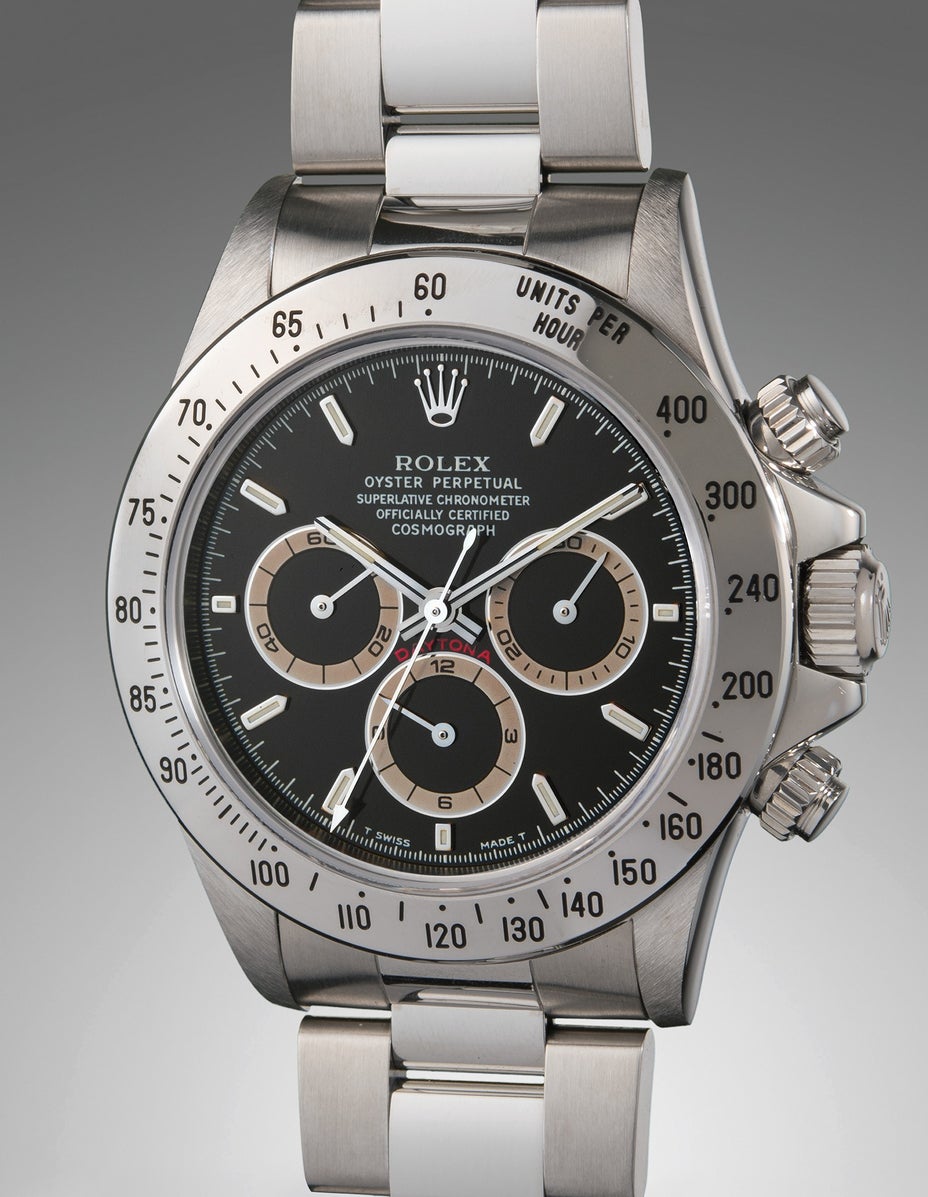
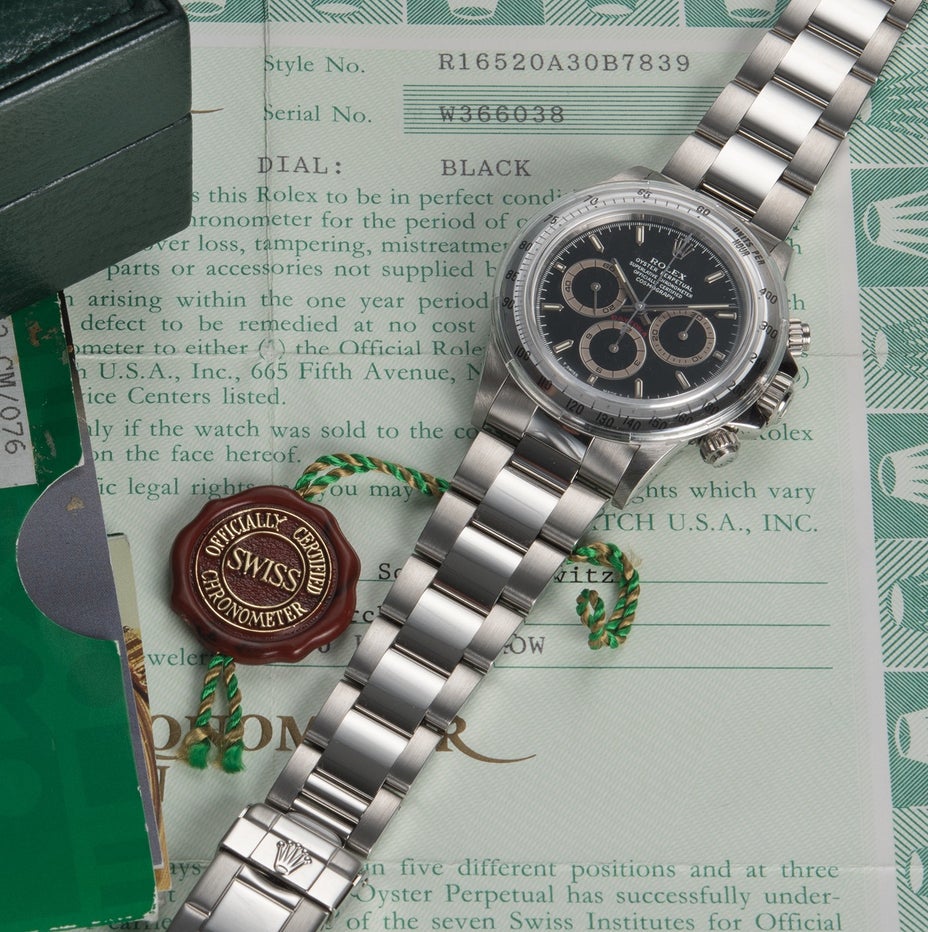
A very fine, rare, and pristine chronograph wristwatch with "tropical" sub-registers, original guarantee, and presentation box
Full-Cataloguing
The launch of the 16520 was an immediate success, resulting in unprecedented demand that would require clients to have to wait as long as seven years to purchase one. This was quite in contrast to the initial lukewarm response of the manually-wound Daytona, first introduced in 1963.
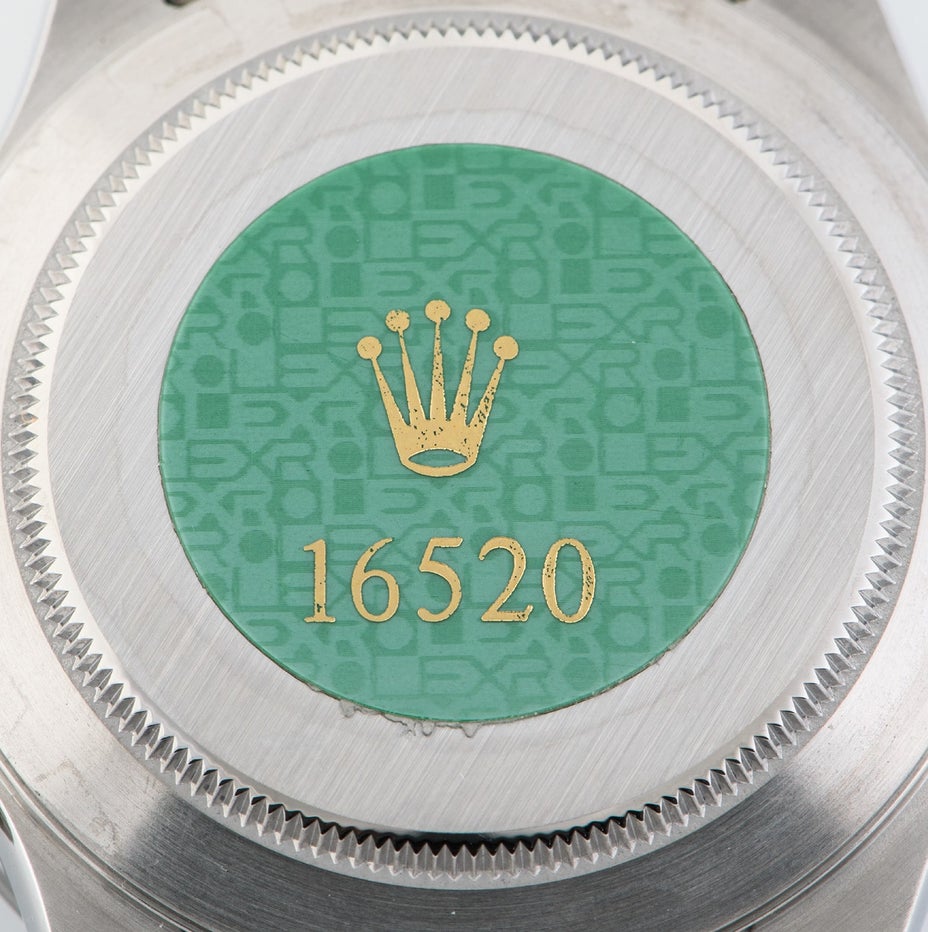
As is the case with many other Rolex models, and part of what makes collecting vintage Rolex so exciting, there are subtle variations to the reference 16520 that can significantly increase its collectability. The present example possesses one of the most desirable traits, a pleasing aging to the sub-dials, nicknamed "tropical", seen only within a certain range of serial numbers. It is believed to be the result of a production defect, with the paint not properly resisting the effects of the UV rays in sunlight and exposure to oxygen, therefore changing color. This desirable defect is not present or possible in all reference 16520s, and are typically only found in black dial, stainless steel examples from between 1993 and 1996. An exceptional example for the connoisseur, it remains in truly “new old stock” condition, having never been worn and still retaining the original stickers on the case and bracelet as delivered by the factory. Furthermore, the present watch is fresh-to-the-market, consigned by the original owner.
Rolex
Swiss | 1905Founded in 1905 England by Hans Wilsdorf and Alfred Davis as Wilsdorf & Davis, it soon became known as the Rolex Watch Company in 1915, moving its headquarters to Geneva in 1919. Like no other company, the success of the wristwatch can be attributed to many of Rolex's innovations that made them one of the most respected and well-known of all luxury brands. These innovations include their famous "Oyster" case — the world's first water resistant and dustproof watch case, invented in 1926 — and their "Perpetual" — the first reliable self-winding movement for wristwatches launched in 1933. They would form the foundation for Rolex's Datejust and Day-Date, respectively introduced in 1945 and 1956, but also importantly for their sports watches, such as the Explorer, Submariner and GMT-Master launched in the mid-1950s.
One of its most famous models is the Cosmograph Daytona. Launched in 1963, these chronographs are without any doubt amongst the most iconic and coveted of all collectible wristwatches. Other key collectible models include their most complicated vintage watches, including references 8171 and 6062 with triple calendar and moon phase, "Jean Claude Killy" triple date chronograph models and the Submariner, including early "big-crown" models and military-issued variants.