158
Paul Ditisheim
"Determination of Longitude by Aeroplane 1920"
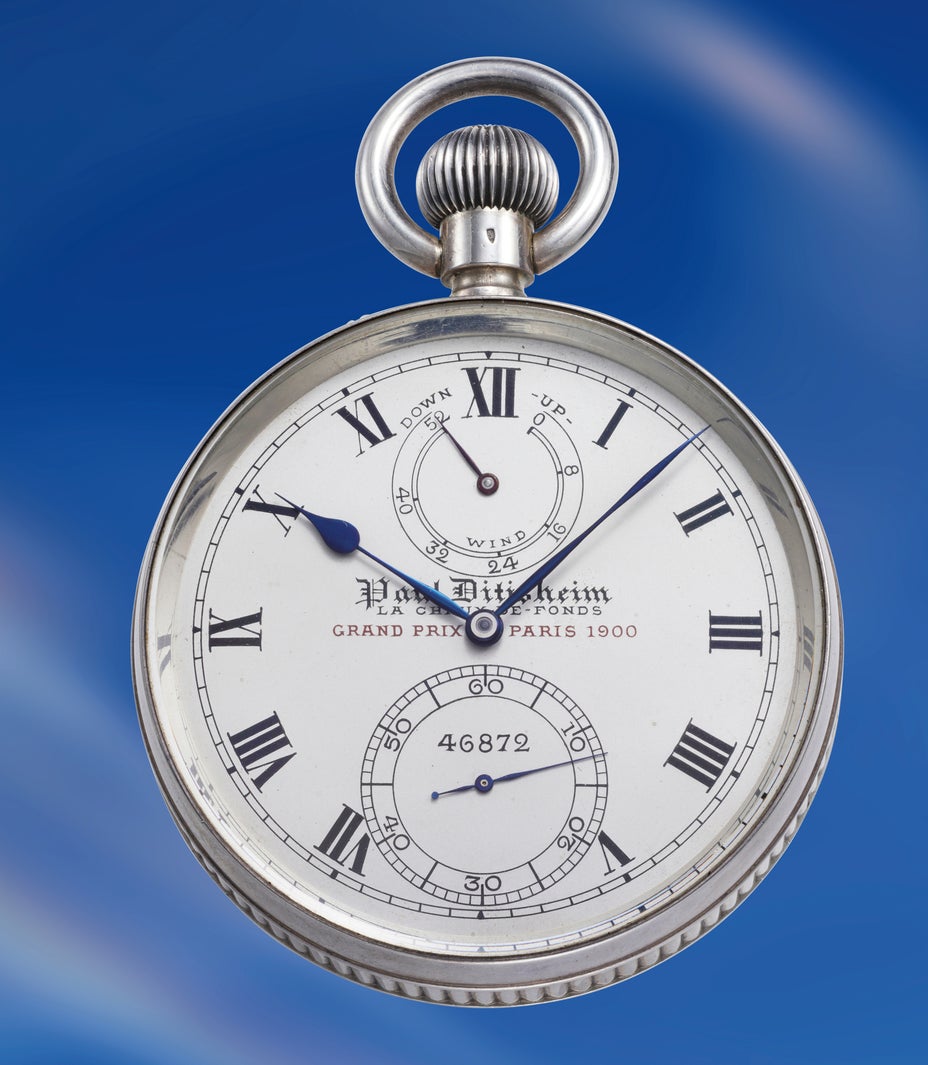
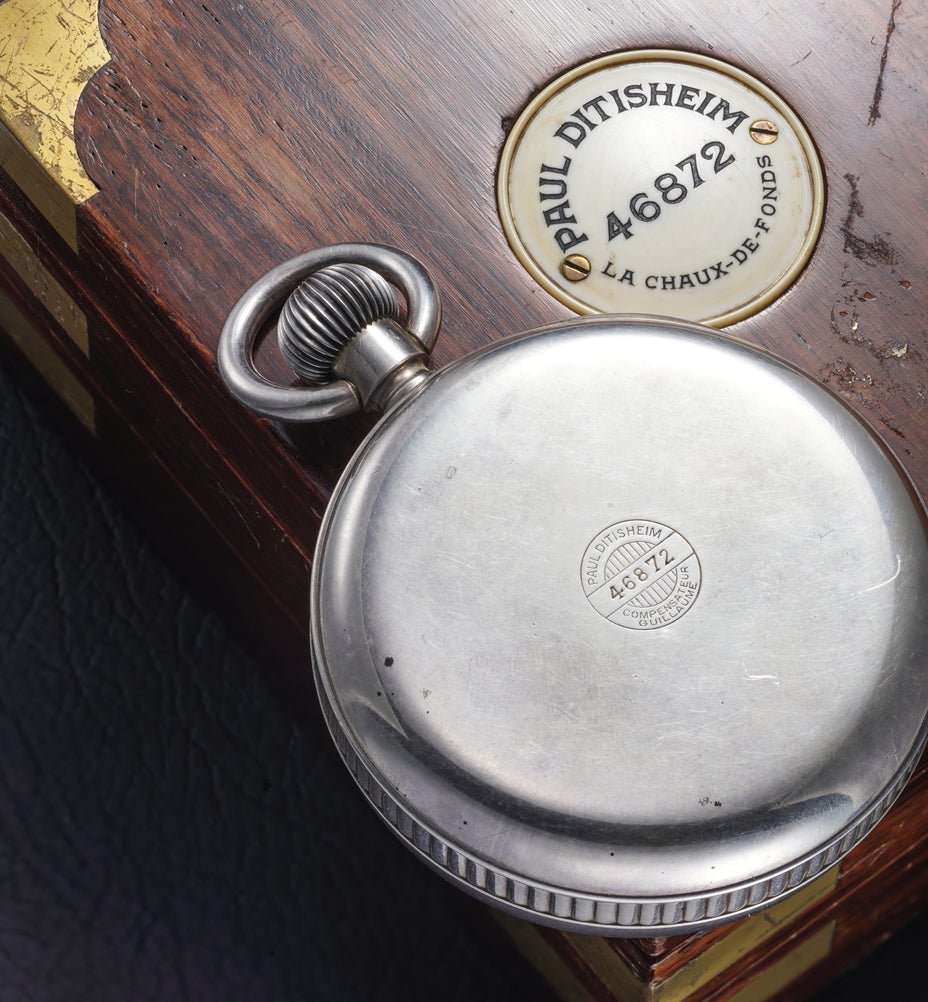
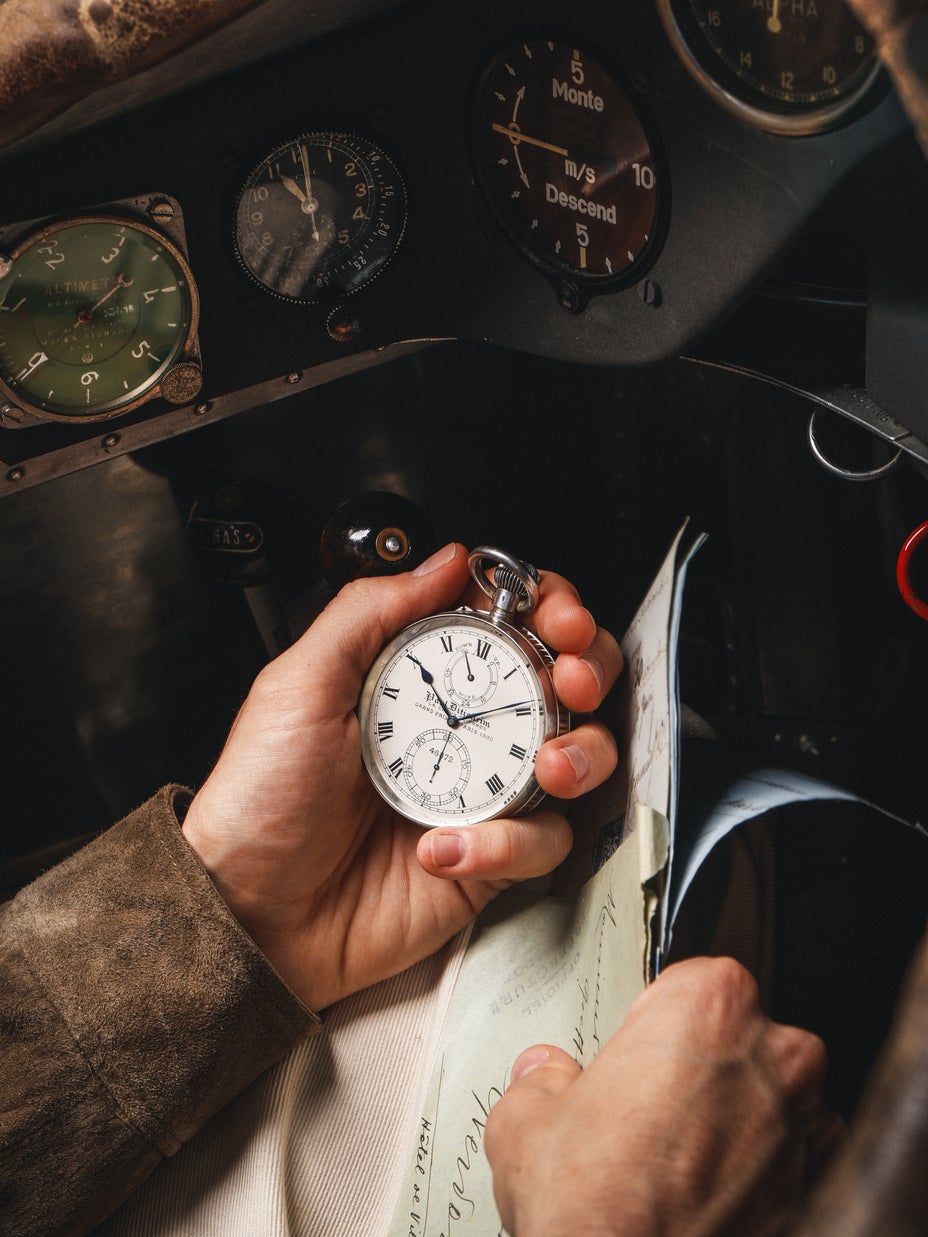
A historically important fine silver openface 2-day lever deck watch with up-and-down indicator, Guillaume balance and original mahogany box, used for the first Determination of Longitude by Aeroplane 1920
Estimate
CHF15,000–30,000
€16,000–32,100
$18,000–36,100
Manufacturer
Paul Ditisheim
Year
1917
Movement No
46'872
Case No
46'872
Model Name
"Determination of Longitude by Aeroplane 1920"
Material
Silver
Dimensions
65mm diameter
Signed
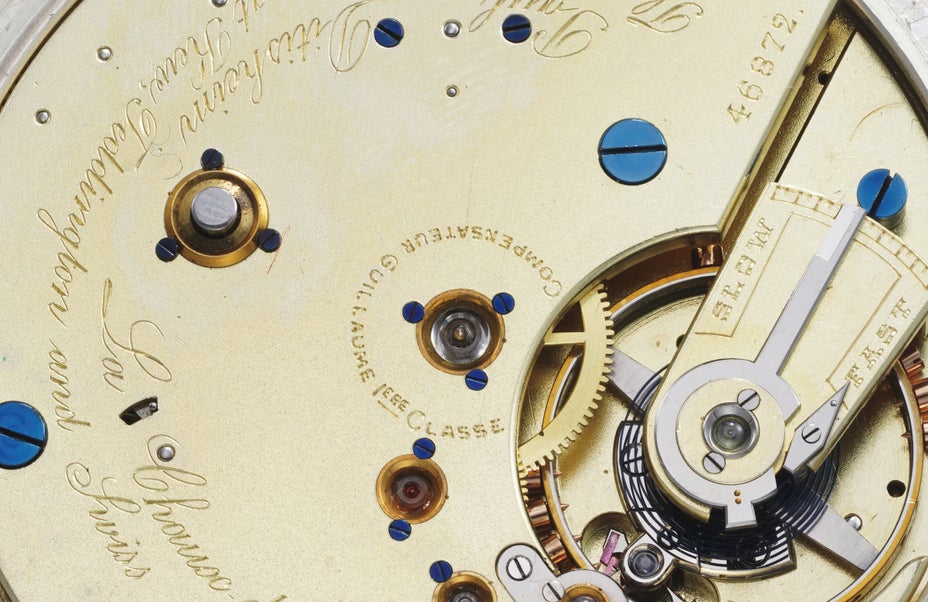
Case, dial and movement signed
Accessories
Paul Ditisheim mahogany box with key, Duplicata of Neuchatel Observatory trials of 31 Dec 1917, Copies of Teddington-Kews trials of 31 March 1918 and 30 April 1920
Full-Cataloguing
Good To Know
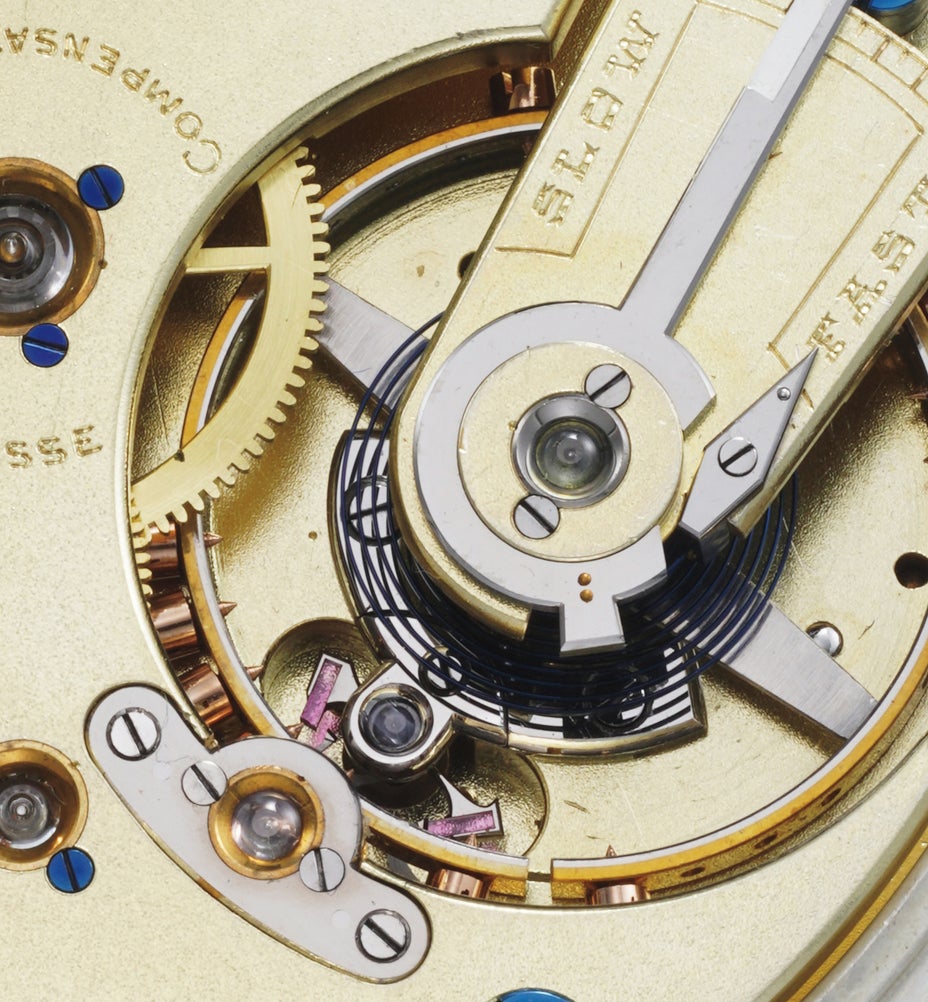
- Deck with Guillaume balance
- 1st prize at Neuchatel Observatory trials and Class A award at Kew
- Used for the first Determination of Longitude by Aeroplane 1920
Renowned Swiss watchmaker Paul Ditisheim (1868-1945) revolutionized precision timekeeping through his chronometer research and innovations like the affix balance. By 1903, his watches were honored by the Observatories of Kew and Neuchâtel. In 1912, he achieved the world chronometric record at the Royal Kew Observatory. Ditisheim's contributions to horology were immense. In 1892, he established his own manufactory in La Chaux-de-Fonds. Ditisheim tirelessly researched and published works on the effects of atmospheric pressure, temperature, and magnetism on chronometric performance. His pioneering improvements in chronometer design included overcoil springs, Guillaume balances, and pivoted detents. Ditisheim's meticulous refinements propelled timekeeping to new heights, as proven by his record-setting accuracy prizes.
The present deck watch, no. 46872, made in 1917, was one of the instruments selected for an especially ambitious experiment undertaken in May 1920: the determination of the difference in longitude between the observatories of Greenwich and Paris by aeroplane.
Until then, such measurements had traditionally relied upon the transmission of precisely timed signals by telegraph, with the inherent delays and uncertainties of long-distance communication. The development of aviation offered a new and considerably faster means of transporting accurately regulated timekeepers between the two locations.
Following the Kew-Teddington trials of 1920, Ditisheim assembled twelve of his finest deck watches, including no. 46872, which had achieved an excellent rating of 93.0 points. The watches were transported to Croydon aerodrome and carried by aeroplane between England and France during a series of flights undertaken between 18 and 27 May. Ditisheim himself accompanied the watches, holding their case on his knees and using a spirit level to maintain their horizontal position during the flight.
The subsequent comparison of their rates and a series of 61 calculations established the longitude difference between Paris and Greenwich at 9 minutes and 20.947 seconds, remarkably close to contemporary determinations. Ditisheim subsequently presented the results to the Académie des Sciences in Paris.
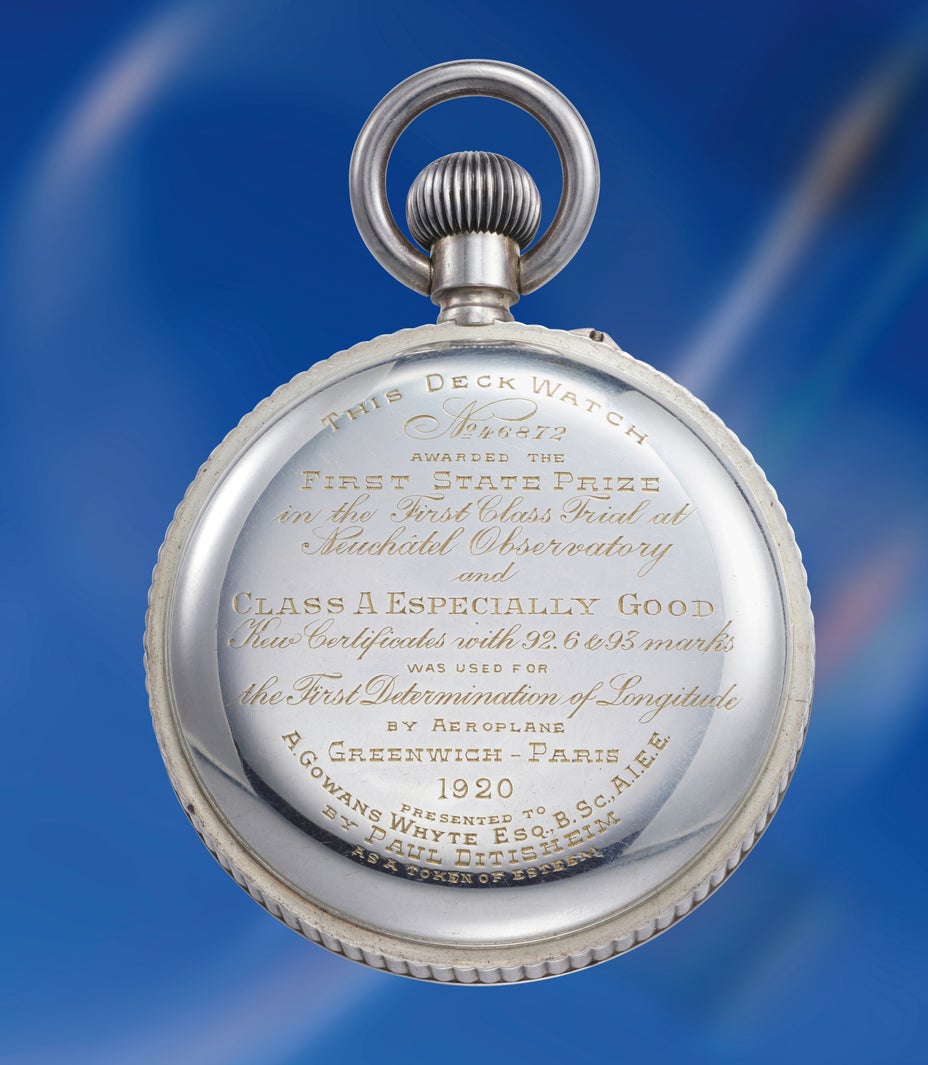
The importance of the experiment is preserved on the silver cuvette of no. 46872, engraved:
THIS DECK WATCH, No. 46872, AWARDED THE FIRST STATE PRIZE INTHE FIRST CLASS TRIAL AT NEUCHATEL OBSERVATORY AND CLASS A ESPECIALLY GOOD, KEW CERTIFICATES WITH 92.6 & 93 MARKS, WAS USED FOR THE FIRST DETERMINATION OF LONGITUDE BY AEROPLANE, GREENWICH – PARIS, 1920, PRESENTED TO A. GOWANS WHITE ESQ. B.Sc., A.I.E.E. BY PAUL DITISHEIM AS A TOKEN OF ESTEEM.
Adam Gowans White was a British science writer, author, and early 20th-century advocate for electrical technology, known also for his work with the Rationalist Press Association.
Accompanied by its original mahogany box, the present watch is therefore not merely an exceptional chronometer, but a tangible record of the moment when precision horology and the emerging technology of aviation were brought together for a scientific purpose.
- Deck with Guillaume balance
- 1st prize at Neuchatel Observatory trials and Class A award at Kew
- Used for the first Determination of Longitude by Aeroplane 1920
Renowned Swiss watchmaker Paul Ditisheim (1868-1945) revolutionized precision timekeeping through his chronometer research and innovations like the affix balance. By 1903, his watches were honored by the Observatories of Kew and Neuchâtel. In 1912, he achieved the world chronometric record at the Royal Kew Observatory. Ditisheim's contributions to horology were immense. In 1892, he established his own manufactory in La Chaux-de-Fonds. Ditisheim tirelessly researched and published works on the effects of atmospheric pressure, temperature, and magnetism on chronometric performance. His pioneering improvements in chronometer design included overcoil springs, Guillaume balances, and pivoted detents. Ditisheim's meticulous refinements propelled timekeeping to new heights, as proven by his record-setting accuracy prizes.
The present deck watch, no. 46872, made in 1917, was one of the instruments selected for an especially ambitious experiment undertaken in May 1920: the determination of the difference in longitude between the observatories of Greenwich and Paris by aeroplane.
Until then, such measurements had traditionally relied upon the transmission of precisely timed signals by telegraph, with the inherent delays and uncertainties of long-distance communication. The development of aviation offered a new and considerably faster means of transporting accurately regulated timekeepers between the two locations.
Following the Kew-Teddington trials of 1920, Ditisheim assembled twelve of his finest deck watches, including no. 46872, which had achieved an excellent rating of 93.0 points. The watches were transported to Croydon aerodrome and carried by aeroplane between England and France during a series of flights undertaken between 18 and 27 May. Ditisheim himself accompanied the watches, holding their case on his knees and using a spirit level to maintain their horizontal position during the flight.
The subsequent comparison of their rates and a series of 61 calculations established the longitude difference between Paris and Greenwich at 9 minutes and 20.947 seconds, remarkably close to contemporary determinations. Ditisheim subsequently presented the results to the Académie des Sciences in Paris.
The importance of the experiment is preserved on the silver cuvette of no. 46872, engraved:
THIS DECK WATCH, No. 46872, AWARDED THE FIRST STATE PRIZE INTHE FIRST CLASS TRIAL AT NEUCHATEL OBSERVATORY AND CLASS A ESPECIALLY GOOD, KEW CERTIFICATES WITH 92.6 & 93 MARKS, WAS USED FOR THE FIRST DETERMINATION OF LONGITUDE BY AEROPLANE, GREENWICH – PARIS, 1920, PRESENTED TO A. GOWANS WHITE ESQ. B.Sc., A.I.E.E. BY PAUL DITISHEIM AS A TOKEN OF ESTEEM.
Adam Gowans White was a British science writer, author, and early 20th-century advocate for electrical technology, known also for his work with the Rationalist Press Association.
Accompanied by its original mahogany box, the present watch is therefore not merely an exceptional chronometer, but a tangible record of the moment when precision horology and the emerging technology of aviation were brought together for a scientific purpose.