157
Dent
"Triple Complication"
A mechanically complex and very fine yellow gold minute repeating, perpetual calendar, chronograph hunter-cased pocket watch with enamel dial, moon phases and leap year indication
Estimate
CHF15,000–30,000
€16,000–32,100
$18,000–36,100
Manufacturer
Dent
Year
Circa 1885
Case No
30'197
Model Name
"Triple Complication"
Material
18k yellow gold
Calibre
Manual, ebauche by Nicole, Nielsen & Co
Dimensions
58mm diameter
Signed
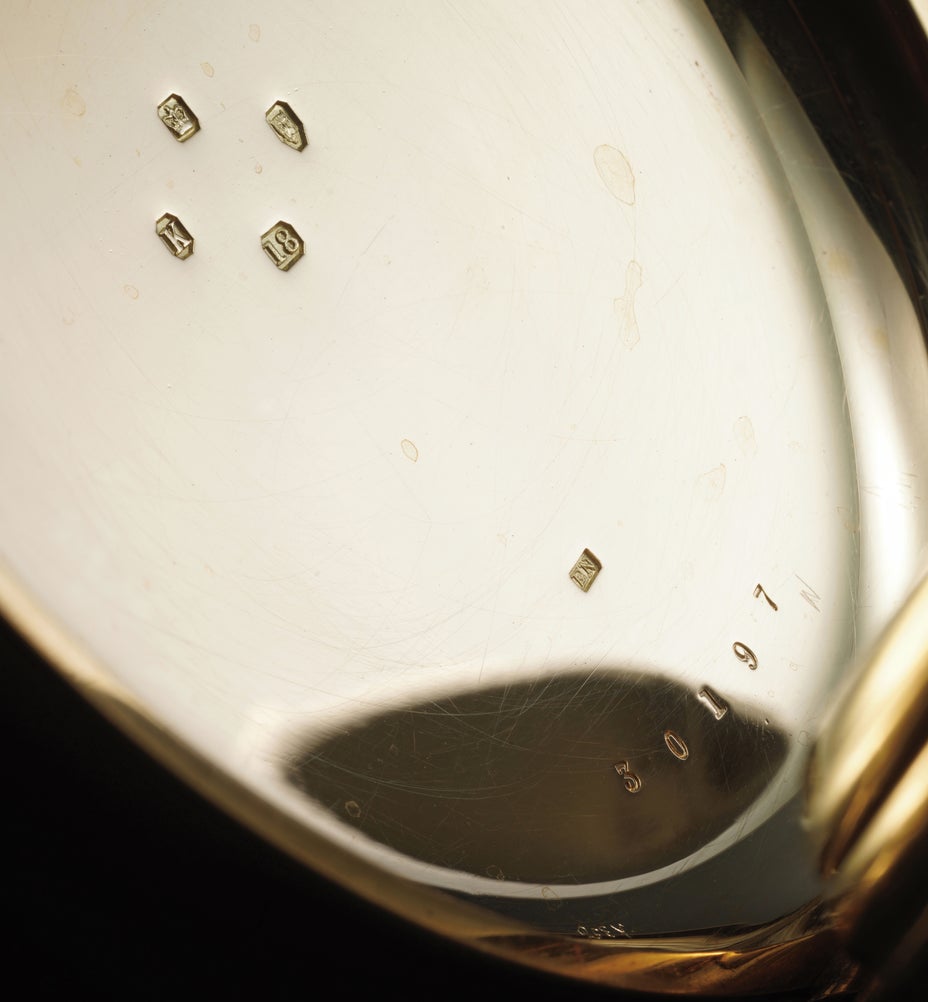
Dial and movement signed, case, cuvette and movement numbered, case further stamped with maker's mark EN (Emil Nielsen) and date letter for 1885
Full-Cataloguing
Good To Know
- Minute repeating, perpetual calendar chronograph
- Very well preserved
At the turn of the 20th century, British horology occupied a distinguished position in the development of precision timekeeping, with makers producing complicated watches that combined technical ingenuity with a level of craftsmanship rarely encountered today. The present Dent “Triple Complication” is an exceptional example, combining a minute repeater, chronograph and perpetual calendar with moon phases, housed in an 18K yellow gold hunter case.
Founded in 1814 by Edward J. Dent, the firm established its reputation through the production of precision chronometers and complicated timepieces. Dent chronometers were used aboard Royal Navy vessels and by explorers, while the firm’s involvement in some of Britain’s most important public clocks cemented its place in the history of British horology. In 1852, Dent constructed the Standard Clock at the Royal Observatory, Greenwich, which became the principal reference for Greenwich Mean Time. The firm was also responsible for the Great Clock of the Palace of Westminster, whose bell, “Big Ben”, has since become one of the world’s most recognisable timekeeping landmarks.
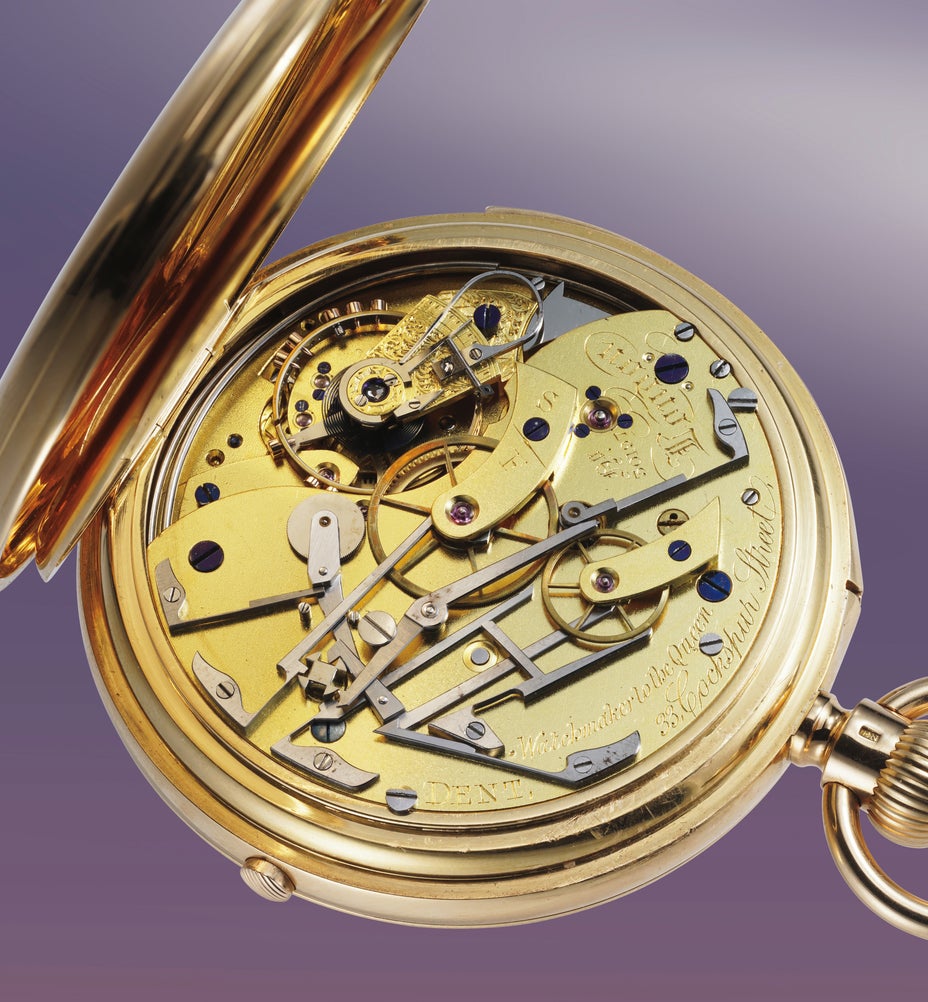
By the beginning of the 20th century, Dent enjoyed royal patronage and maintained its prestigious premises at 33 Cockspur Street, London, the address proudly inscribed on the dial and movement of the present watch.
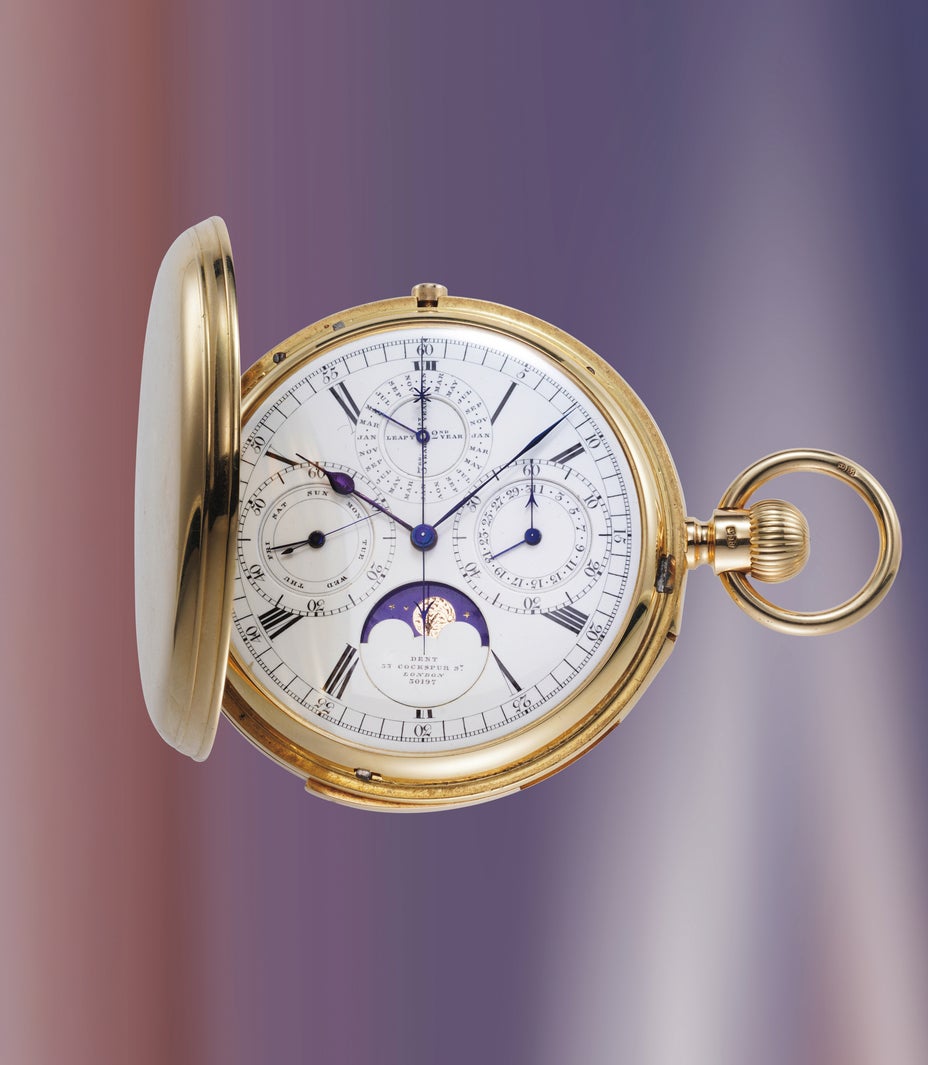
Hallmarked in London for 1885, the substantial case incorporates a slide at 6 o’clock activating the minute repeater, striking the hours, quarters and minutes on two gongs. The chronograph is operated by a single pusher positioned at noon, with the elapsed minutes displayed on a 60-minute counter at 3 o’clock. The perpetual calendar indications are harmoniously integrated into the subsidiary dials, displaying the day, date, month and leap-year cycle, complemented by a moon-phase indication and running seconds.
The dial's crisp Roman numerals and finely arranged subsidiary indications provide an appropriate backdrop to the considerable mechanical complexity concealed beneath.
Absent from public auction since 1997, the present watch offers a rare opportunity to acquire a remarkable example of British watchmaking at the dawn of the 20th century.
- Minute repeating, perpetual calendar chronograph
- Very well preserved
At the turn of the 20th century, British horology occupied a distinguished position in the development of precision timekeeping, with makers producing complicated watches that combined technical ingenuity with a level of craftsmanship rarely encountered today. The present Dent “Triple Complication” is an exceptional example, combining a minute repeater, chronograph and perpetual calendar with moon phases, housed in an 18K yellow gold hunter case.
Founded in 1814 by Edward J. Dent, the firm established its reputation through the production of precision chronometers and complicated timepieces. Dent chronometers were used aboard Royal Navy vessels and by explorers, while the firm’s involvement in some of Britain’s most important public clocks cemented its place in the history of British horology. In 1852, Dent constructed the Standard Clock at the Royal Observatory, Greenwich, which became the principal reference for Greenwich Mean Time. The firm was also responsible for the Great Clock of the Palace of Westminster, whose bell, “Big Ben”, has since become one of the world’s most recognisable timekeeping landmarks.
By the beginning of the 20th century, Dent enjoyed royal patronage and maintained its prestigious premises at 33 Cockspur Street, London, the address proudly inscribed on the dial and movement of the present watch.
Hallmarked in London for 1885, the substantial case incorporates a slide at 6 o’clock activating the minute repeater, striking the hours, quarters and minutes on two gongs. The chronograph is operated by a single pusher positioned at noon, with the elapsed minutes displayed on a 60-minute counter at 3 o’clock. The perpetual calendar indications are harmoniously integrated into the subsidiary dials, displaying the day, date, month and leap-year cycle, complemented by a moon-phase indication and running seconds.
The dial's crisp Roman numerals and finely arranged subsidiary indications provide an appropriate backdrop to the considerable mechanical complexity concealed beneath.
Absent from public auction since 1997, the present watch offers a rare opportunity to acquire a remarkable example of British watchmaking at the dawn of the 20th century.