884
Patek Philippe
Ref. 652/53
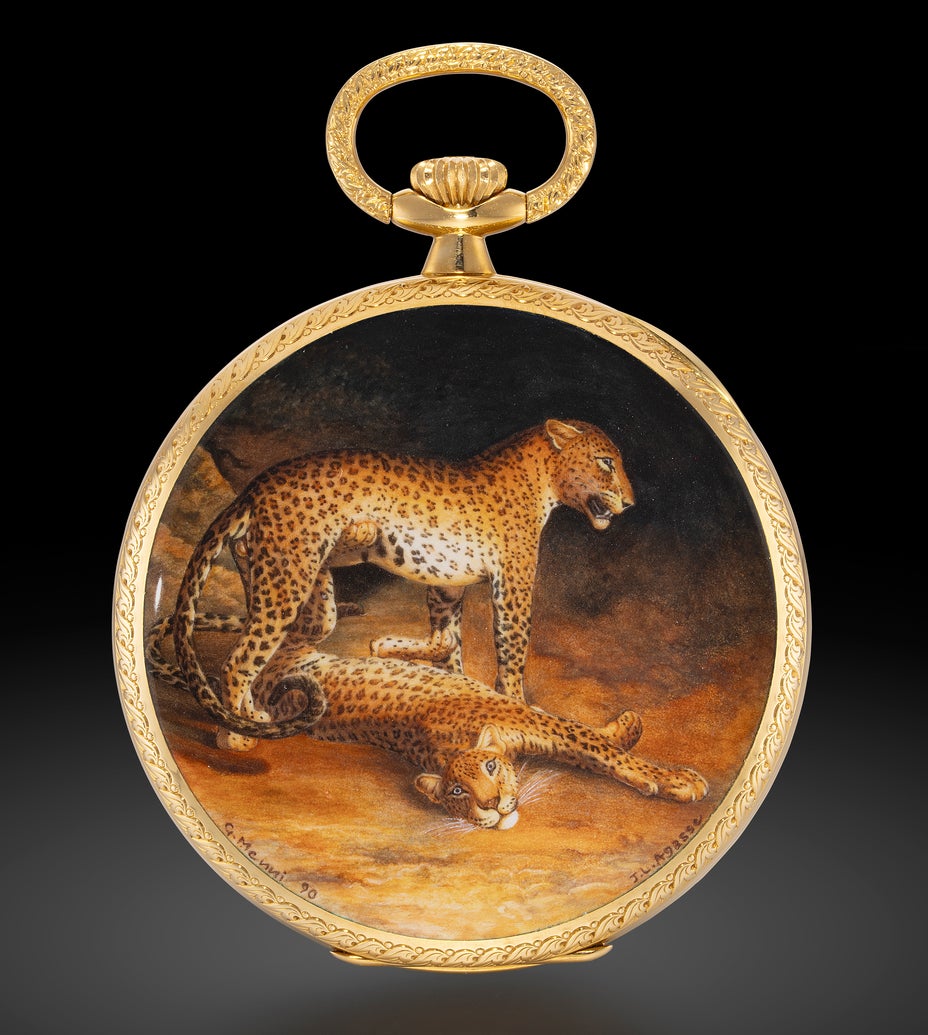
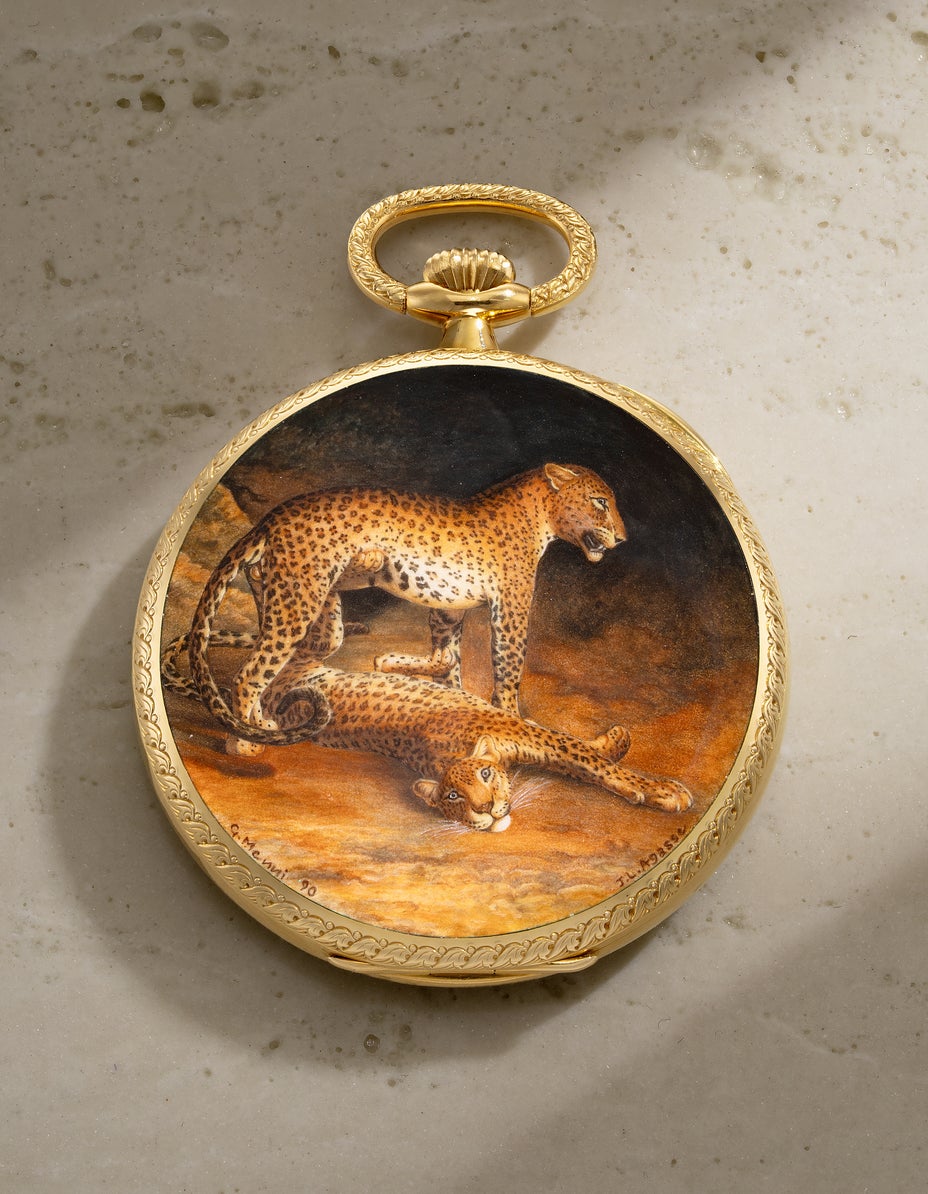
“Two Leopards Lying in the Exeter – J.L. Agasse”
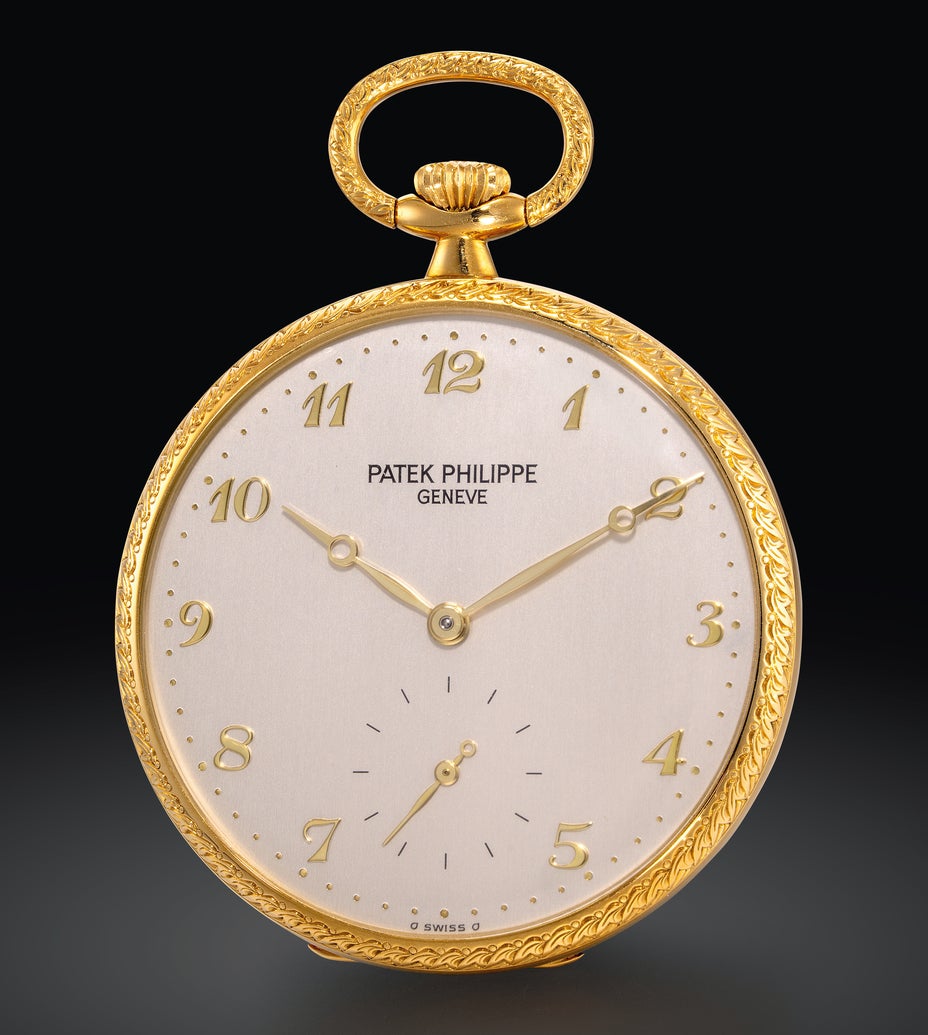
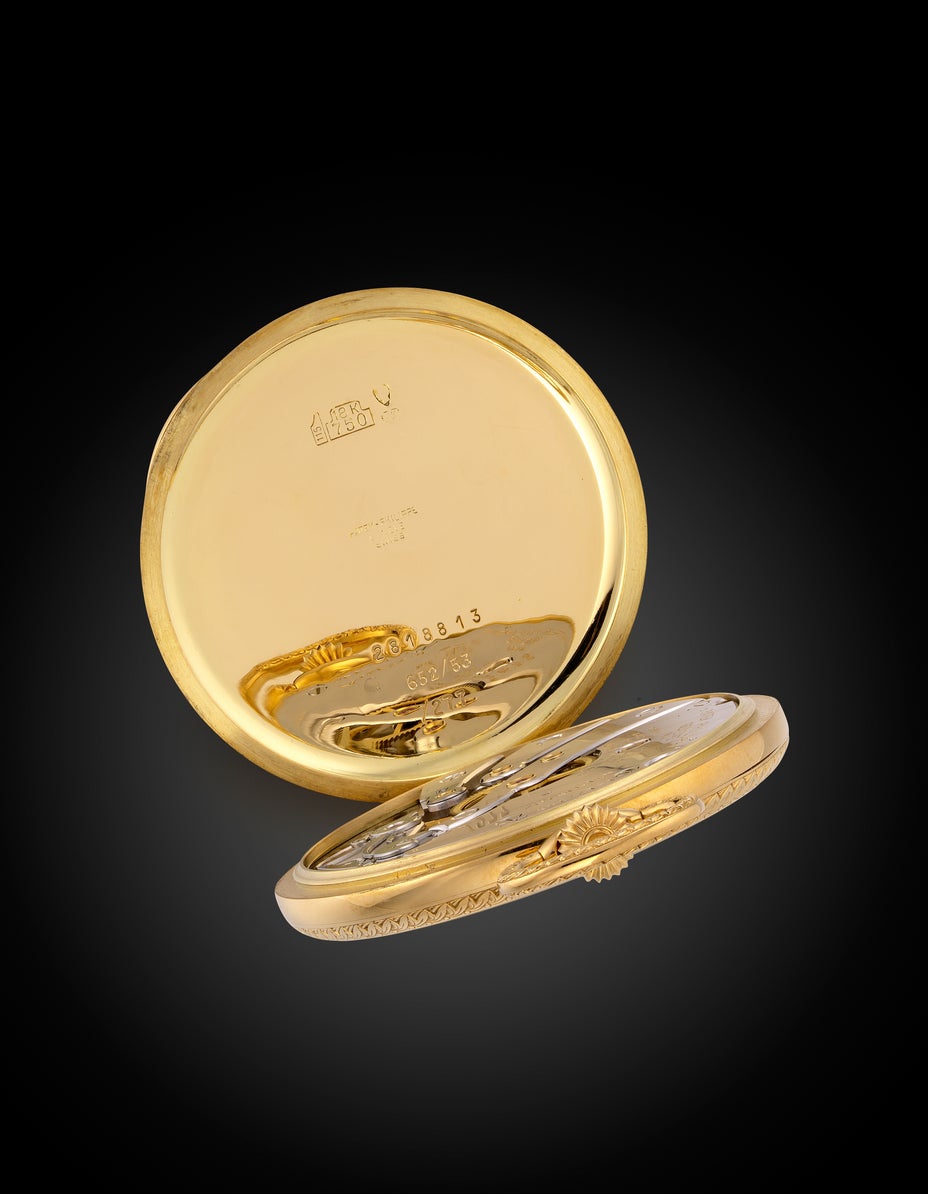
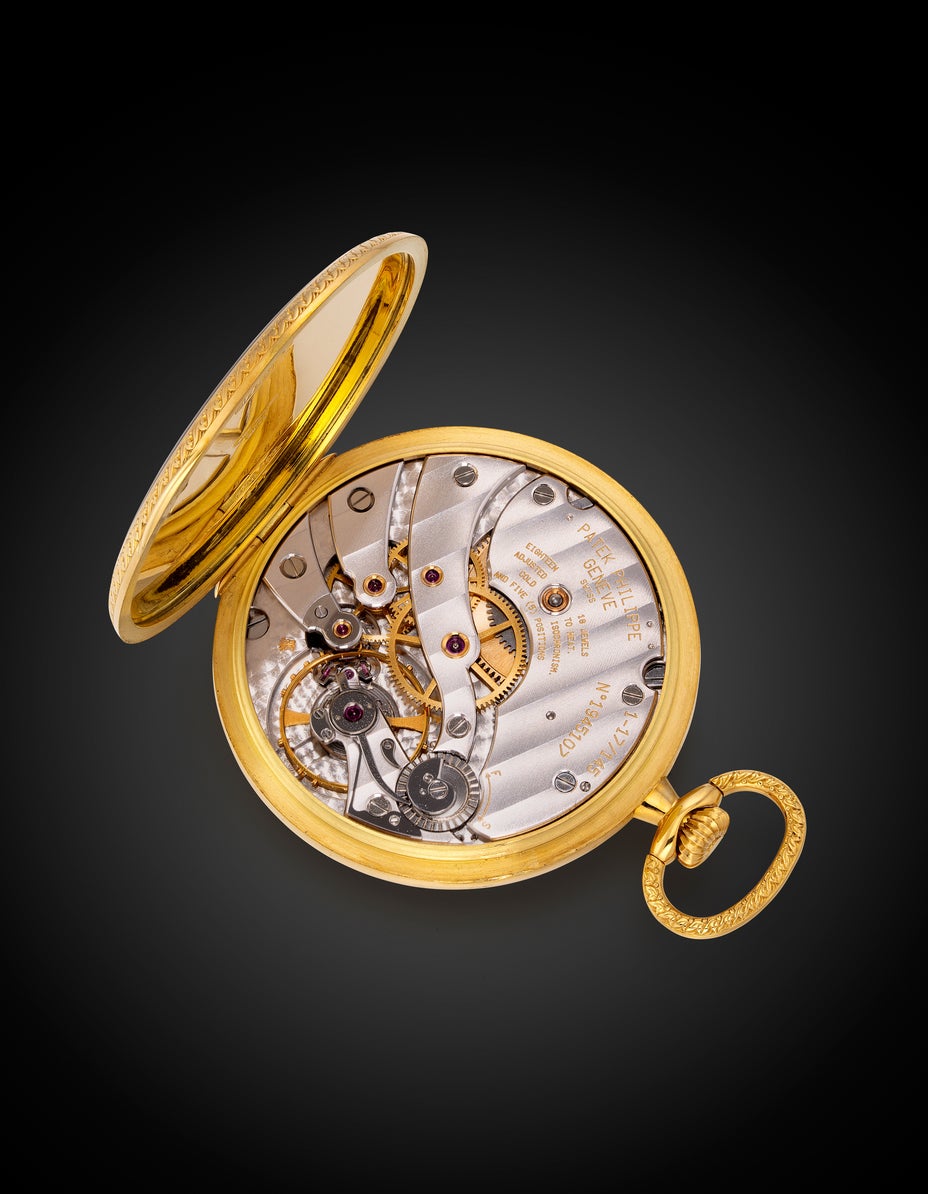
A unique, exceptionally fine and well-preserved yellow gold openface keyless pocket watch with Breguet numerals, engraved case, miniature enamel by Giancarlo Menni reproducing the painting “Two Leopards Lying in the Exeter” after Jacques-Laurent Agasse and presentation box
Full-Cataloguing
- Miniature enamel by Giancarlo Menni after Jacques-Laurent Agasse’s work
- Fascinating animal portraiture
- Engraved case and enamel preserved in immaculate condition
- Offered by the original owner
Giancarlo Menni holds the distinction of creating the second greatest number of painted enamel pocket watches for Patek Philippe, behind only Suzanne Rohr. Research indicates he produced around 50 timepieces between the early 1980s and mid 1990s, with fewer than 30 documented in the public market. Like Rohr, he typically double-signed his creations with both his own name and that of the original artist.
“Two Leopards Lying in the Exeter”, Jacques-Laurent Agasse, circa 1808
Swiss-born master Jacques-Laurent Agasse (1767–1849) was one of the 19th century’s most celebrated animal painters, renowned for blending rigorous anatomical precision with psychological depth. Painted circa 1808, “Two Leopards Lying in the Exeter” encapsulates the height of Agasse’s London period, during which he gained rare access to Edward Cross’s famous menagerie at the Exeter Exchange on the Strand.
Agasse’s composition captures the muscular elegance and quiet energy of two exotic felines in a darkened enclosure. Rather than emphasizing sensationalized ferocity, he renders the beasts with striking dignity. The standing leopard presents a powerful, taut silhouette with meticulously rendered rosettes that shimmer in the light, while its companion reclines in vigilant focus. Subtle highlighting illuminates the rich texture of their fur against the shadow-draped background.
Beyond its artistic brilliance, the work serves as a crucial document of 19th-century Britain’s fascination with exotic wildlife and scientific classification. Agasse elevates animal portraiture to fine art, imbuing these apex predators with quiet majesty. This masterpiece offers collectors a rare opportunity to acquire a seminal work from Agasse’s exotic series, uniting Neoclassical precision with Romantic naturalism.
Preserved in a safe since its purchase in the early 2000s, the engraved case and enamel panel remain in exceptional condition. This lot comes fresh to the market from the original owner.
Patek Philippe
Swiss | 1839Since its founding in 1839, this famous Geneva-based firm has been surprising its clientele with superbly crafted timepieces fitted with watchmaking's most prestigious complications. Traditional and conservative designs are found across Patek Philippe's watches made throughout their history — the utmost in understated elegance.
Well-known for the Graves Supercomplication — a highly complicated pocket watch that was the world’s most complicated watch for 50 years — this family-owned brand has earned a reputation of excellence around the world. Patek's complicated vintage watches hold the highest number of world records for results achieved at auction compared with any other brand. For collectors, key models include the reference 1518, the world's first serially produced perpetual calendar chronograph, and its successor, the reference 2499. Other famous models include perpetual calendars such as the ref. 1526, ref. 3448 and 3450, chronographs such as the reference 130, 530 and 1463, as well as reference 1436 and 1563 split seconds chronographs. Patek is also well-known for their classically styled, time-only "Calatrava" dress watches, and the "Nautilus," an iconic luxury sports watch first introduced in 1976 as the reference 3700 that is still in production today.