40
Patek Philippe
Ref. 5004P
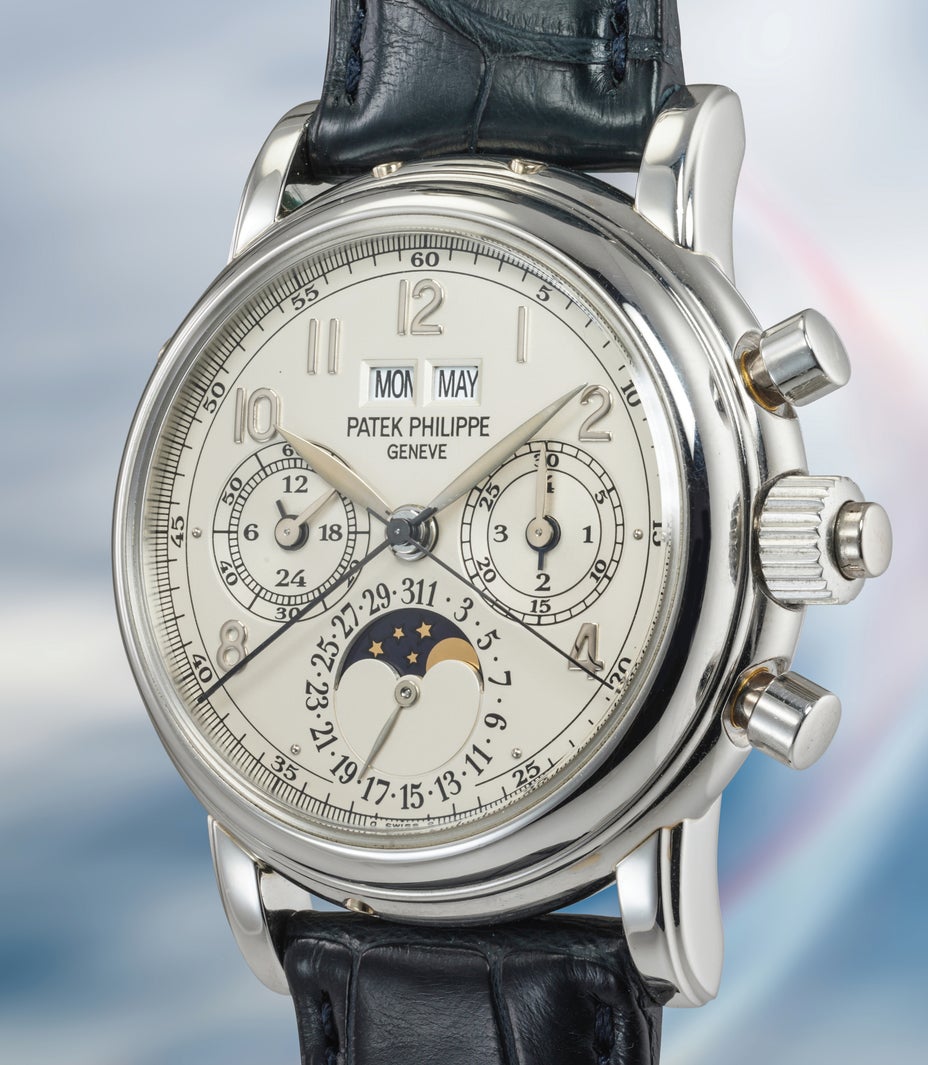
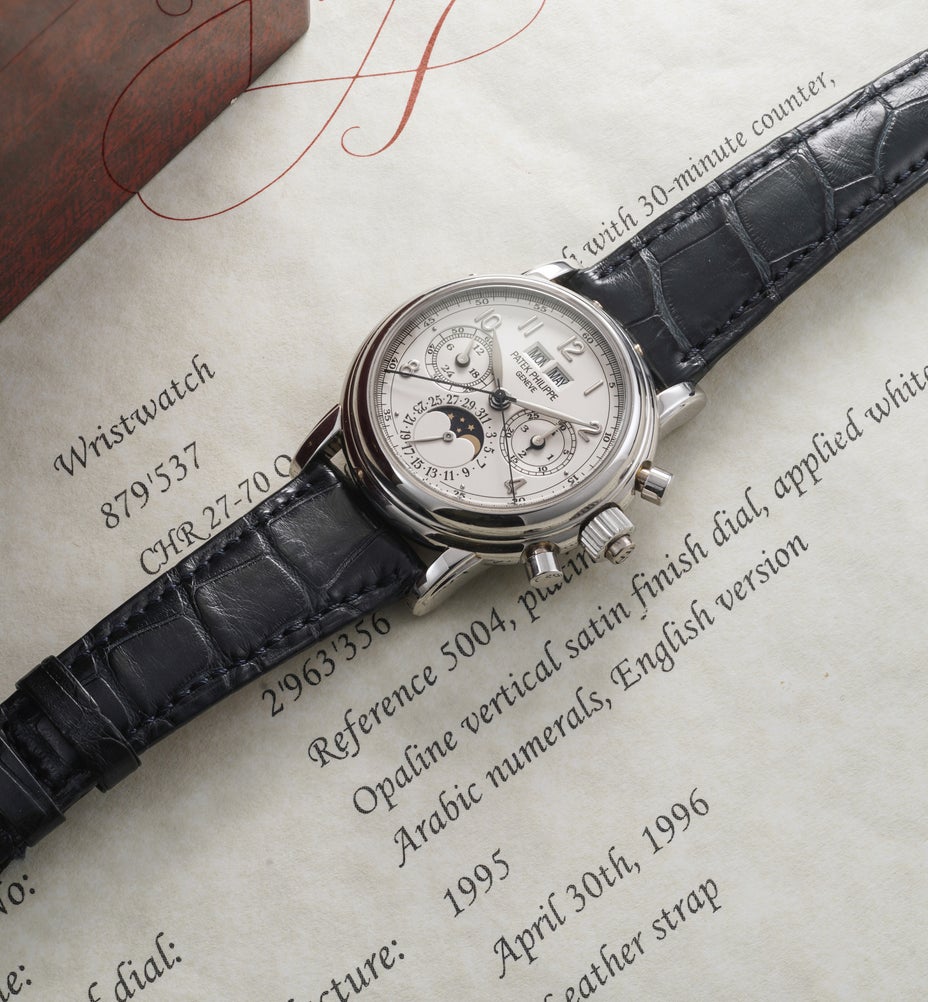
An exceptionally attractive and collectible platinum perpetual calendar split-seconds chronograph wristwatch with moon phases and box
Full-Cataloguing
- Perpetual calendar split seconds chronograph
- Fresh to the market
- Earlier example from 1995
The Patek Philippe reference 5004 has rightfully earned its place among the most important and sought-after neo-vintage watches. Introduced in 1994, it was the first serially produced Patek Philippe perpetual calendar wristwatch to incorporate a split-seconds chronograph, allowing the wearer to time two simultaneous events. The technical complexity of combining a rattrapante mechanism with a perpetual calendar chronograph was such that production remained extremely limited throughout the model's 16-year production period, with only a small number of examples completed each year.
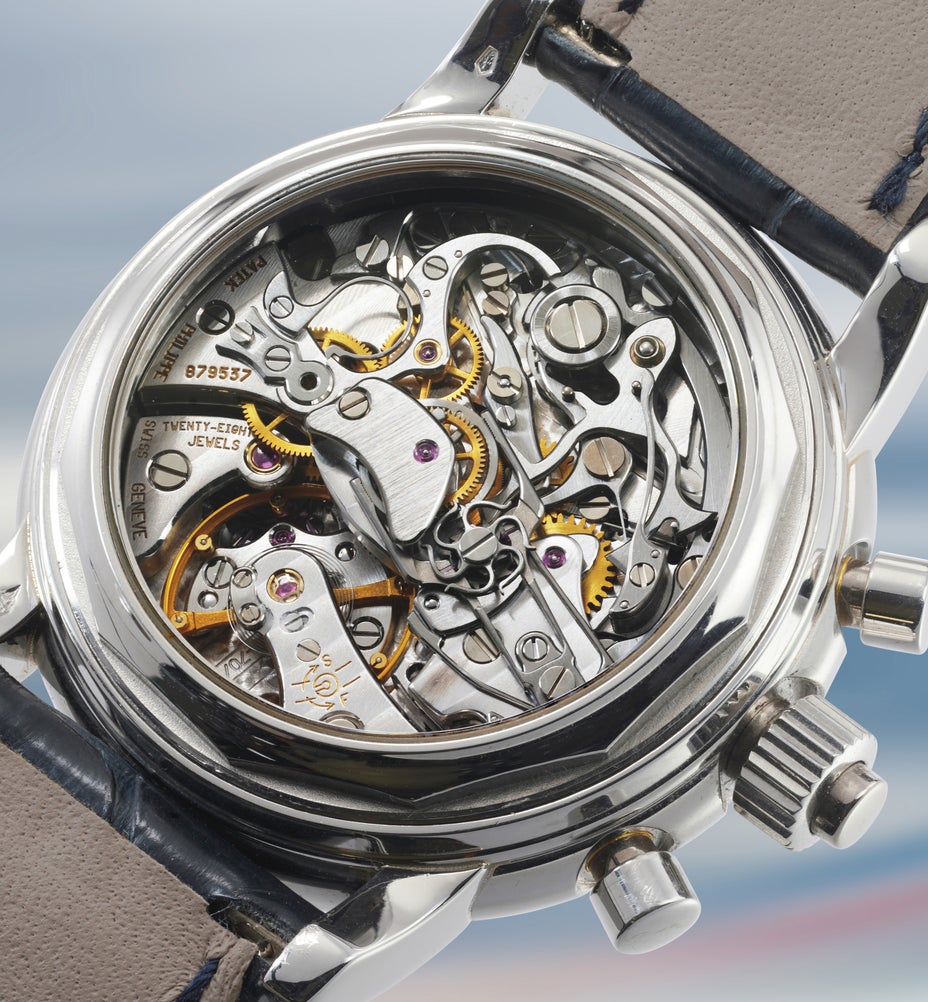
Powered by the Nouvelle Lemania-based calibre CHR 27-70 Q, visible through the sapphire crystal caseback, the reference 5004 was produced until 2010 in yellow, pink and white gold, platinum and, finally, stainless steel. Measuring an elegant 36 mm in diameter, it remained faithful to the aesthetic language established by Patek Philippe's celebrated perpetual calendar chronographs, including references 1518, 2499 and 3970. Its slightly larger and thicker stepped case, however, was necessary to accommodate the additional split-seconds mechanism, giving the watch a more contemporary presence on the wrist.
The present reference 5004 is distinguished by its platinum case, oversized crown at 3 o'clock and restrained silvered dial with applied Arabic numerals. Fresh to the market, it represents a compelling example of one of the most technically accomplished and collectible Patek Philippe wristwatches of its generation.
Patek Philippe
Swiss | 1839Since its founding in 1839, this famous Geneva-based firm has been surprising its clientele with superbly crafted timepieces fitted with watchmaking's most prestigious complications. Traditional and conservative designs are found across Patek Philippe's watches made throughout their history — the utmost in understated elegance.
Well-known for the Graves Supercomplication — a highly complicated pocket watch that was the world’s most complicated watch for 50 years — this family-owned brand has earned a reputation of excellence around the world. Patek's complicated vintage watches hold the highest number of world records for results achieved at auction compared with any other brand. For collectors, key models include the reference 1518, the world's first serially produced perpetual calendar chronograph, and its successor, the reference 2499. Other famous models include perpetual calendars such as the ref. 1526, ref. 3448 and 3450, chronographs such as the reference 130, 530 and 1463, as well as reference 1436 and 1563 split seconds chronographs. Patek is also well-known for their classically styled, time-only "Calatrava" dress watches, and the "Nautilus," an iconic luxury sports watch first introduced in 1976 as the reference 3700 that is still in production today.