78
Lucie Rie
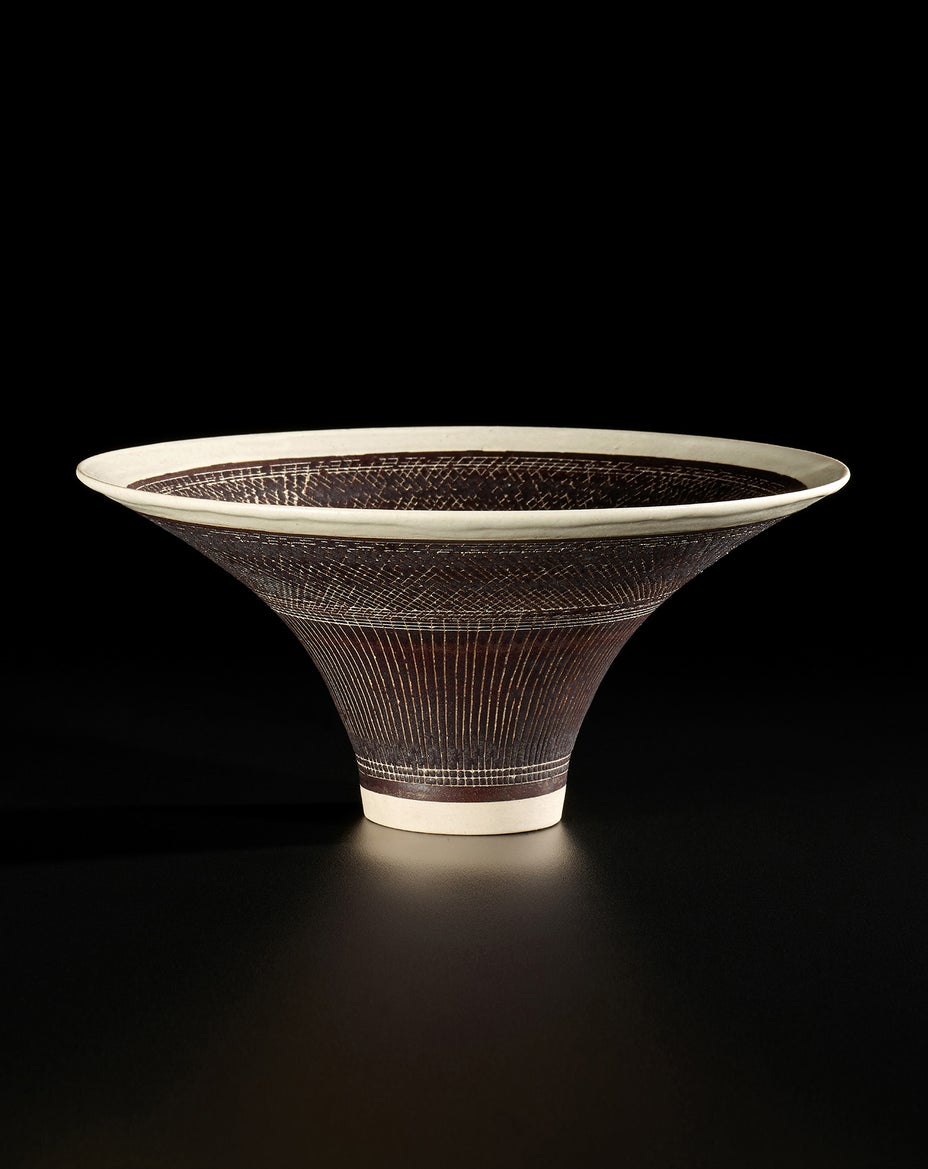
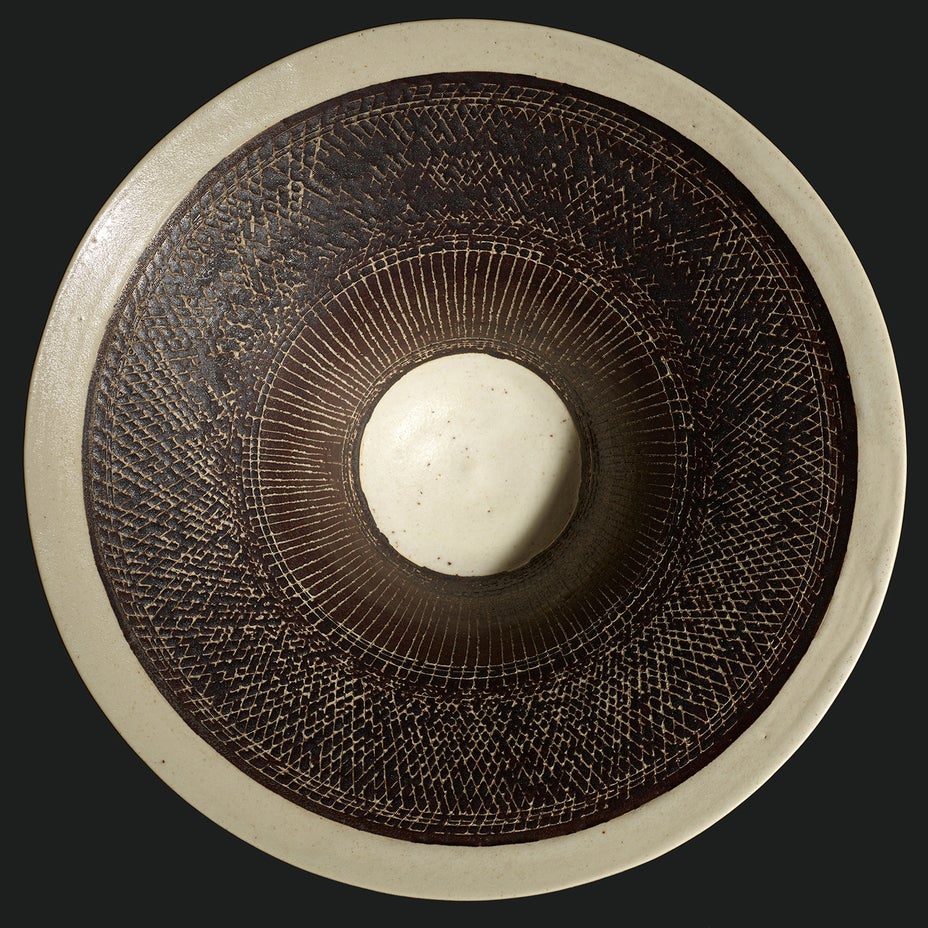
Footed bowl
Full-Cataloguing
In The International Herald Tribune, Frankel wrote, “Lucie Rie, perhaps Britain’s greatest living potter, gently watches the burgeoning ceramic scene. At 88, she has a delicate frame, elfin grace and soft voice that provide a perfect, improbable counterpoint for her lively and sometimes steely intelligence and stunning output.” Although by the late 1960s Rie’s production primarily comprised individual works, Frankel acknowledged her straightforward commitment to making pottery that was intended for everyday use, describing Rie as an “unsentimental professional.” In an earlier article for Art & Auction, Frankel also noted the importance of Rie’s relationship with Hans Coper in reestablishing her career after immigrating to London in 1938, writing “It took her renowned pupil, the German-born Hans Coper, to convince Rie that her original work⎼her slender, graceful, paper-like forms⎼were distinctive and magnificent. He and Rie worked together, exhibited together and encouraged each other.” Their friendship is reflected in the present collection, which among Rie’s distinctive forms features Coper’s Ovoid pot with disc.
Lucie Rie
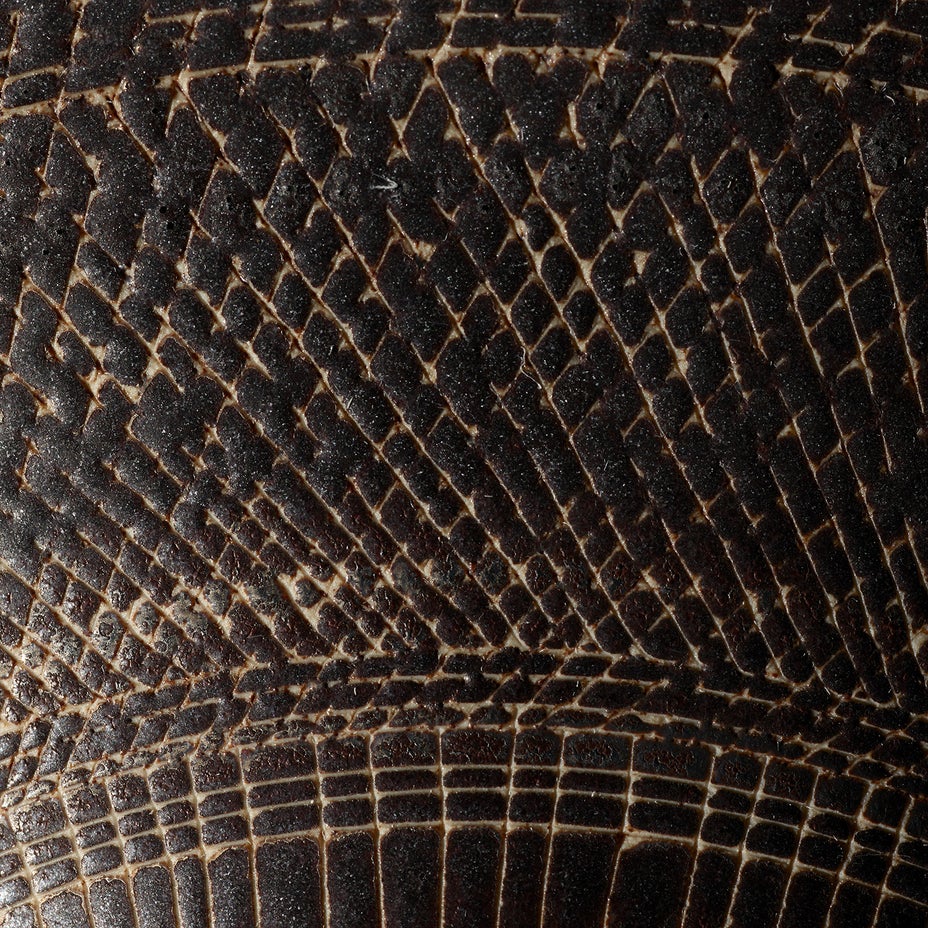
Austrian | B. 1902 D. 1995Dame Lucie Rie studied under Michael Powolny at the Kunstgewerbeschule in Vienna before immigrating to London in 1938. In London she started out making buttons for the fashion industry before producing austere, sparsely decorated tableware that caught the attention of modernist interior decorators. Eventually she hit her stride with the pitch-perfect footed bowls and flared vases for which she is best-known today. She worked in porcelain and stoneware, applying glaze directly to the unfired body and firing only once. She limited decoration to incised lines, subtle spirals and golden manganese lips, allowing the beauty of her thin-walled vessels to shine through. In contrast with the rustic pots of English ceramicist Bernard Leach, who is considered an heir to the Arts and Crafts movement, collectors and scholars revere Rie for creating pottery that was in dialogue with the design and architecture of European Modernism.