43
Lucie Rie
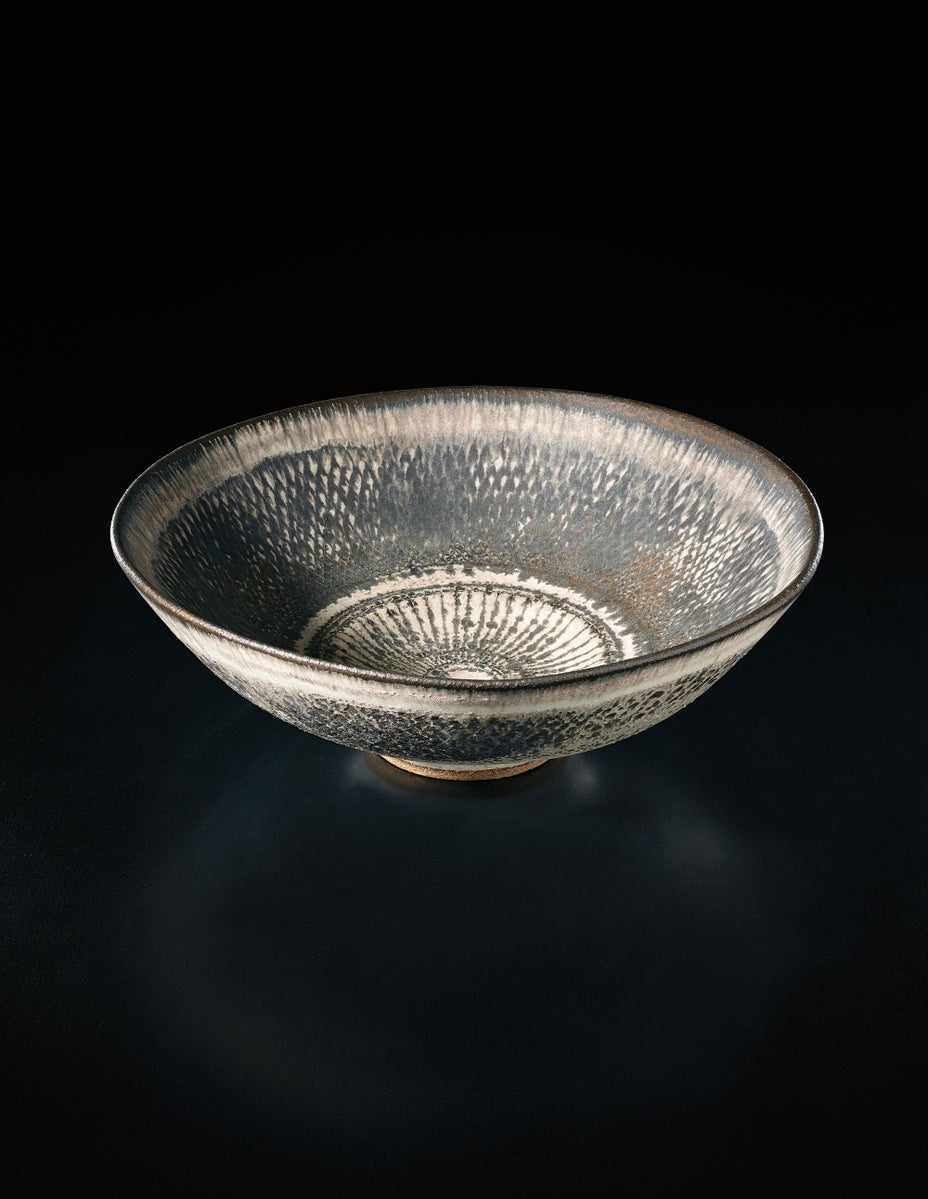
Monumental 'knitted' bowl
Full-Cataloguing
Her 'once-fired' technique was developed in an attempt to minimise the inevitable casualties incurred whilst transporting her fragile un-fired pots between her workshop and kiln across the cobbled streets of 1930s Vienna in her bicycle basket. From these earliest experiments in high Modernist aesthetic through to the very last pots that she produced at the end of the 1980s there is a constant, during the firing the body and glaze are in lively conversation with each other, mineral elements mixed into the clay burst through the glazed surface during the firing to create pitting, flashes of colour and other pleasing effects. Glaze inlaid into marks incised by hand reveals itself, sometimes blending and flowing in combination with contrasting layers of glaze above and reacting to the body beneath, the drama petrified at the end of the process. The 'knitted' bowl takes this conversation between body and glaze to an extreme conclusion, the surface is almost entirely inlaid, allowing a richness and depth to the glaze and an integration with the body unusual even in Rie's work.
Lucie Rie
Austrian | B. 1902 D. 1995Dame Lucie Rie studied under Michael Powolny at the Kunstgewerbeschule in Vienna before immigrating to London in 1938. In London she started out making buttons for the fashion industry before producing austere, sparsely decorated tableware that caught the attention of modernist interior decorators. Eventually she hit her stride with the pitch-perfect footed bowls and flared vases for which she is best-known today. She worked in porcelain and stoneware, applying glaze directly to the unfired body and firing only once. She limited decoration to incised lines, subtle spirals and golden manganese lips, allowing the beauty of her thin-walled vessels to shine through. In contrast with the rustic pots of English ceramicist Bernard Leach, who is considered an heir to the Arts and Crafts movement, collectors and scholars revere Rie for creating pottery that was in dialogue with the design and architecture of European Modernism.