89
Ilbery
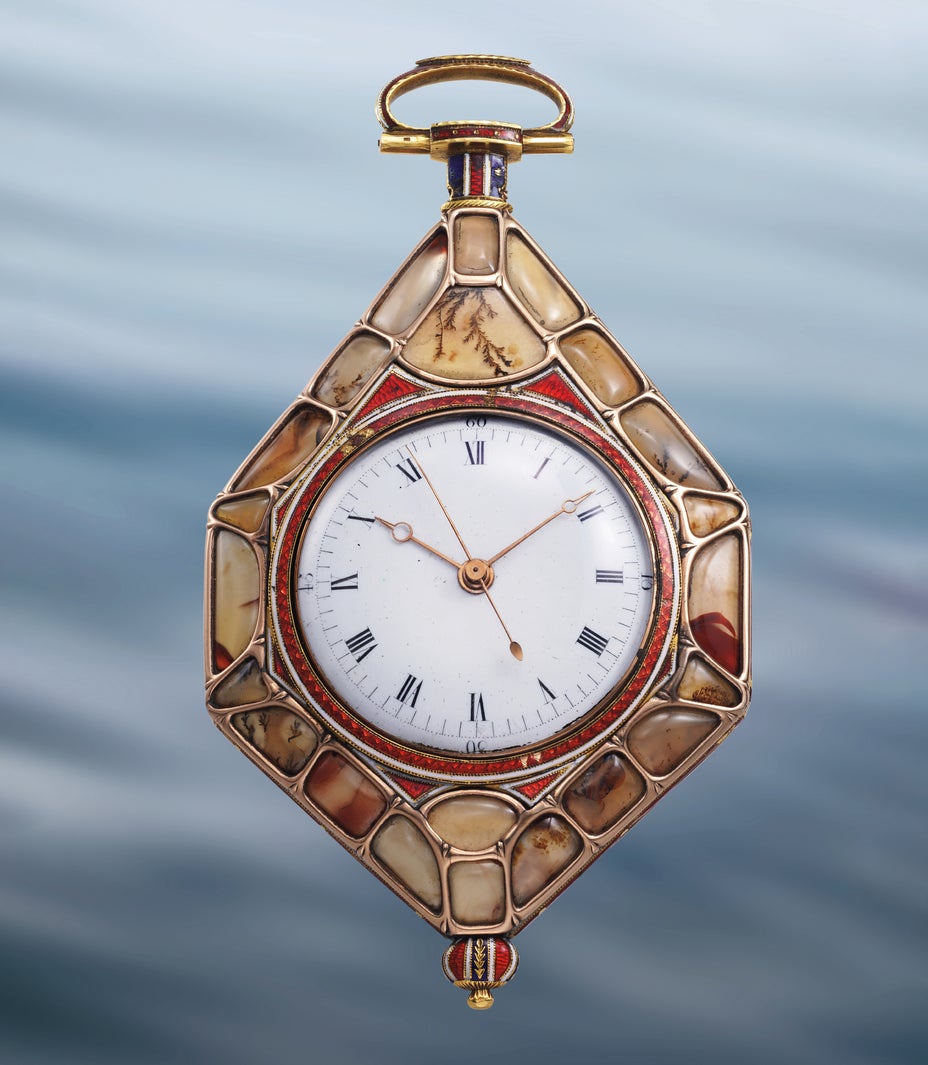
A visually arresting yellow gold, moss-agate, enamel and pearl-set duplex pocketwatch made for the Chinese market
Estimate
CHF10,000–20,000
€10,800–21,500
$12,100–24,100
Manufacturer
Ilbery
Year
Circa 1790
Movement No
6179
Material
18k yellow gold, moss agate, enamel and pearls
Calibre
Manual
Dimensions
45mm width X 80mm length
Signed
Movement signed
Accessories
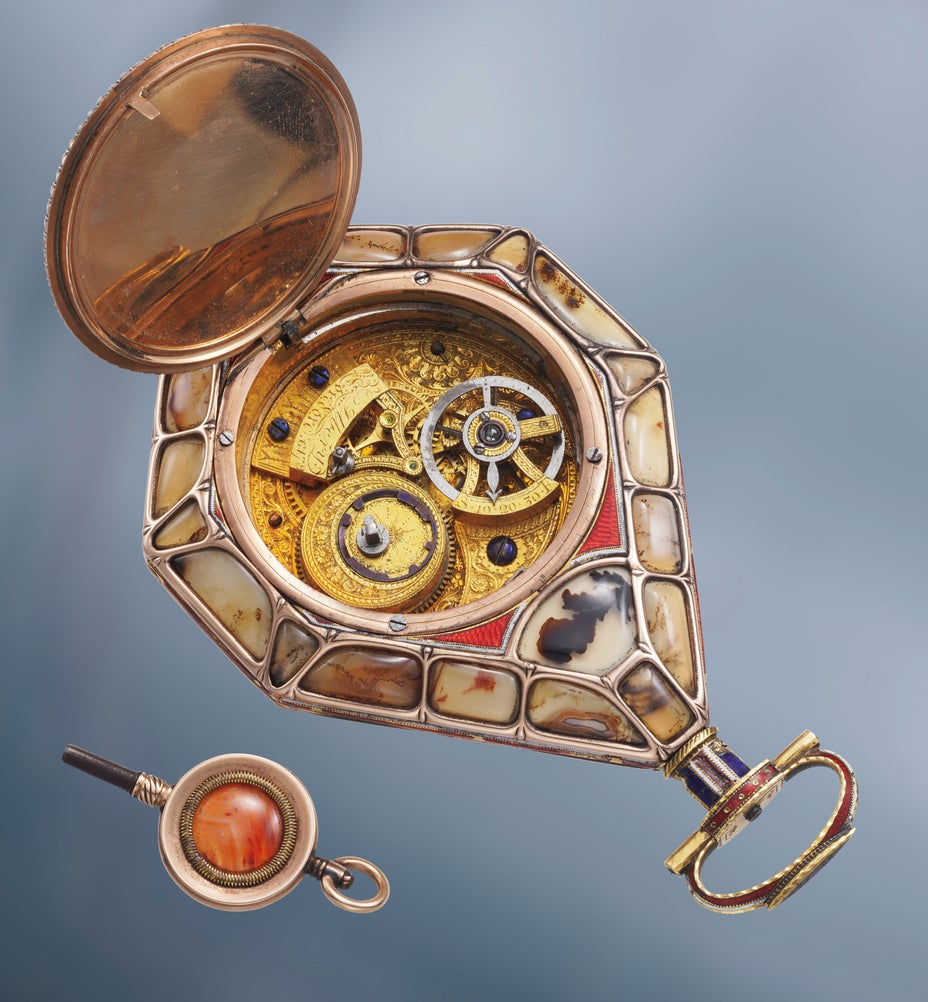
Winding key
Full-Cataloguing
Good To Know
- Highly unusual case shape, made of gold, moss agate, enamel and pearls
- Duplex escapement
William Ilbery occupies a distinctive place in the history of watches made for the Chinese market. Active in London from late the18th century, he developed highly elaborate timepieces combining English horological ingenuity with cases of exceptional decorative richness, specifically conceived for the tastes of the Chinese elite. The present watch, dating from the late 18th century, is a particularly evocative example of this production.
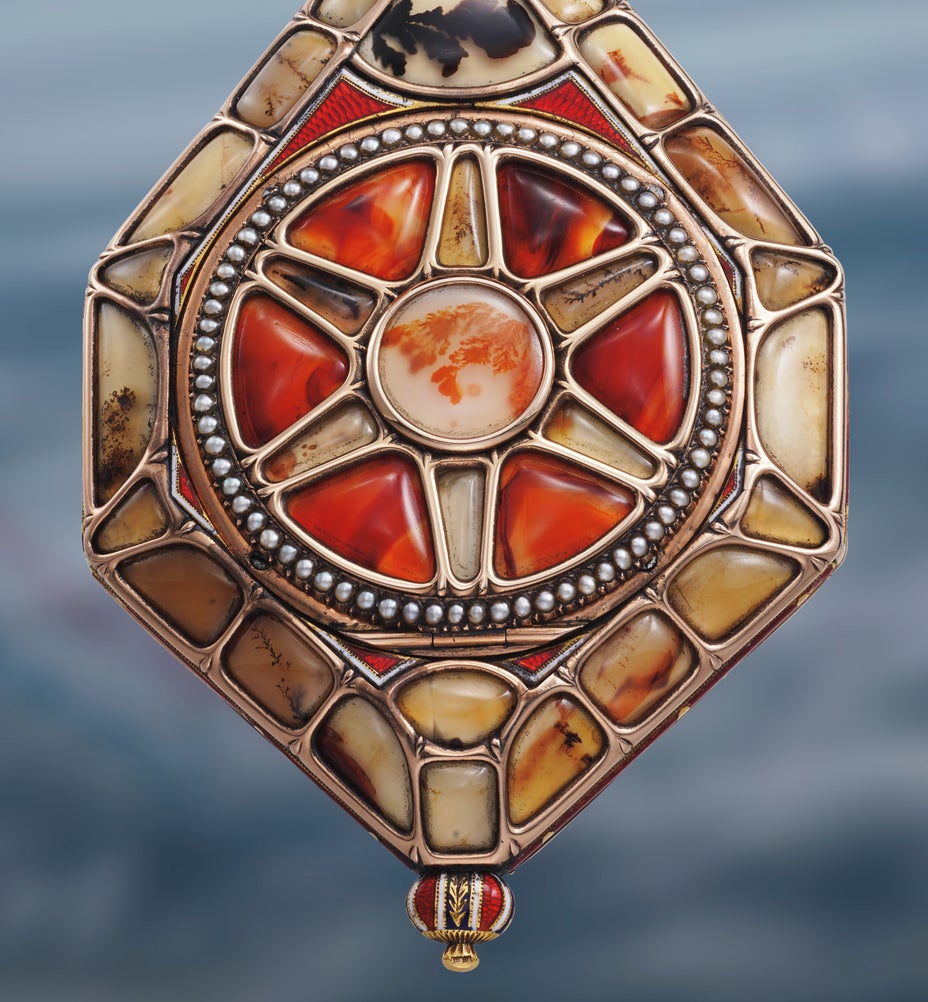
The unusual elongated, architectural case is constructed from a striking arrangement of moss agate, its natural patterns framed by gold and contrasted with translucent red enamel. Pearl-set details on the caseback surrounding a particularly imaginative radial arrangement of richly coloured agate panels further enhance the jewel-like appearance.
The movement is also highly engraved and fitted with a duplex escapement, one of the sophisticated escapements employed by Ilbery. The duplex was particularly suited to the pursuit of improved timekeeping, and its use reflects the technical ambitions behind these otherwise highly decorative objects.
The present watch is therefore more than an extravagant object of personal adornment. It represents the meeting of two traditions: the technical sophistication of late 18th-century English watchmaking and the extraordinary decorative arts developed for the lucrative and discerning Chinese market.
- Highly unusual case shape, made of gold, moss agate, enamel and pearls
- Duplex escapement
William Ilbery occupies a distinctive place in the history of watches made for the Chinese market. Active in London from late the18th century, he developed highly elaborate timepieces combining English horological ingenuity with cases of exceptional decorative richness, specifically conceived for the tastes of the Chinese elite. The present watch, dating from the late 18th century, is a particularly evocative example of this production.
The unusual elongated, architectural case is constructed from a striking arrangement of moss agate, its natural patterns framed by gold and contrasted with translucent red enamel. Pearl-set details on the caseback surrounding a particularly imaginative radial arrangement of richly coloured agate panels further enhance the jewel-like appearance.
The movement is also highly engraved and fitted with a duplex escapement, one of the sophisticated escapements employed by Ilbery. The duplex was particularly suited to the pursuit of improved timekeeping, and its use reflects the technical ambitions behind these otherwise highly decorative objects.
The present watch is therefore more than an extravagant object of personal adornment. It represents the meeting of two traditions: the technical sophistication of late 18th-century English watchmaking and the extraordinary decorative arts developed for the lucrative and discerning Chinese market.