88
Vacheron Constantin
Ref. 4261
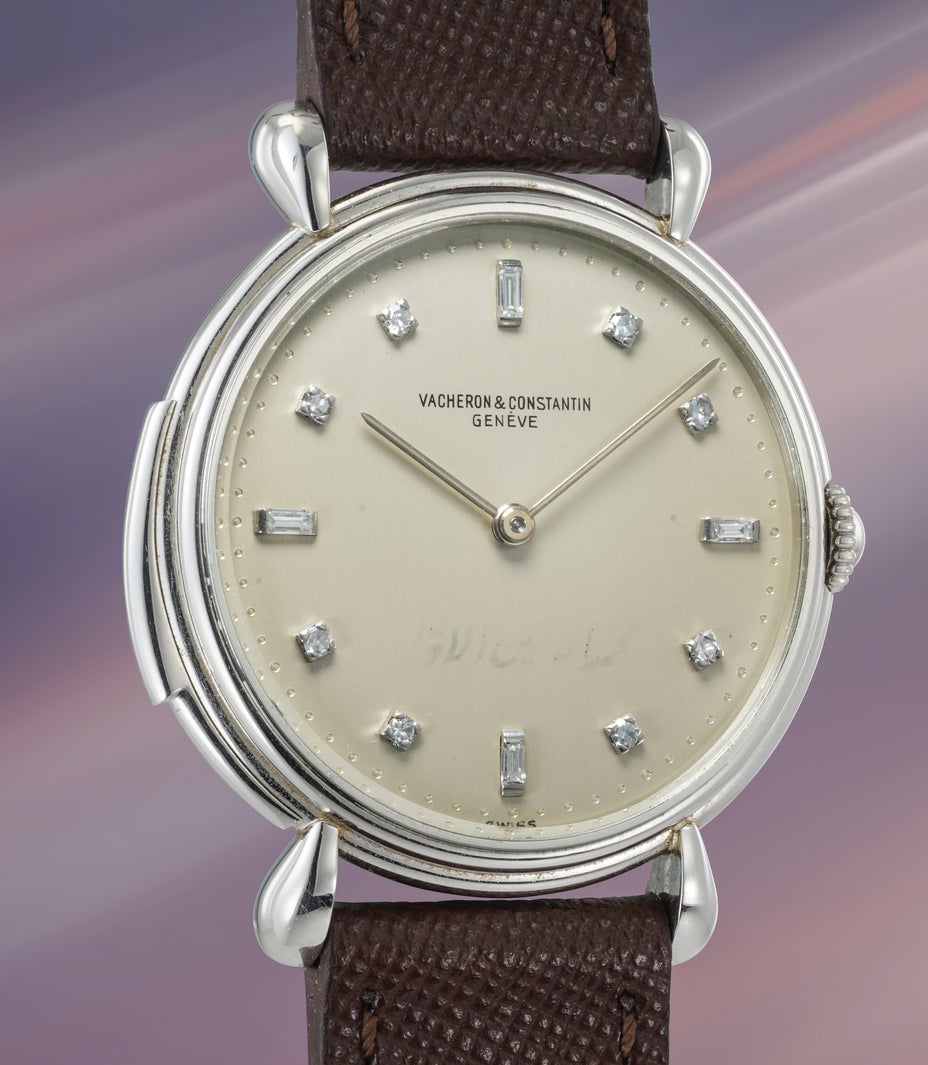
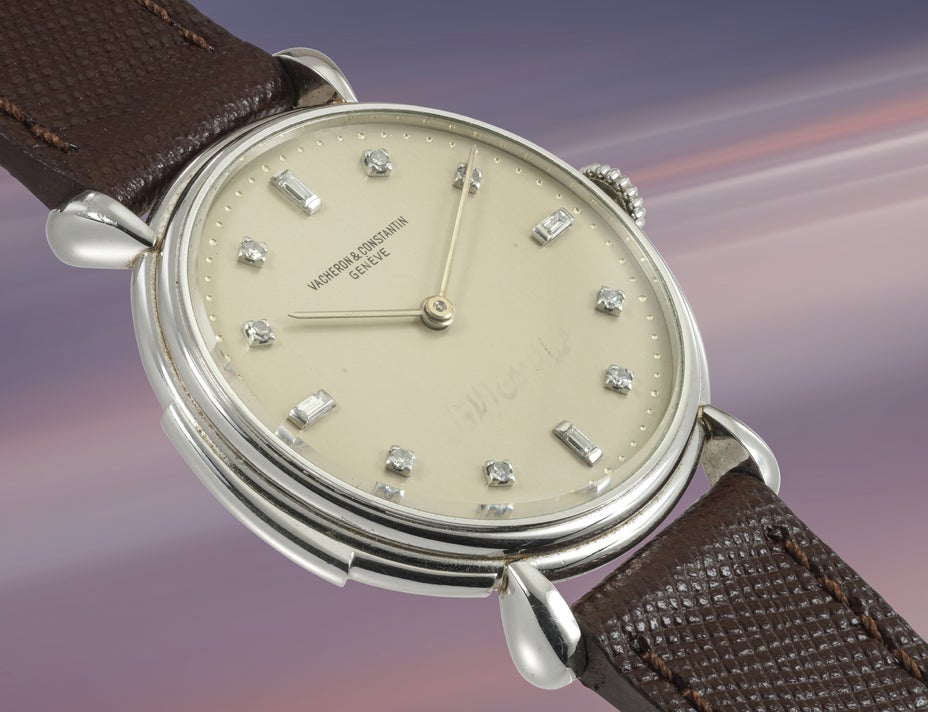
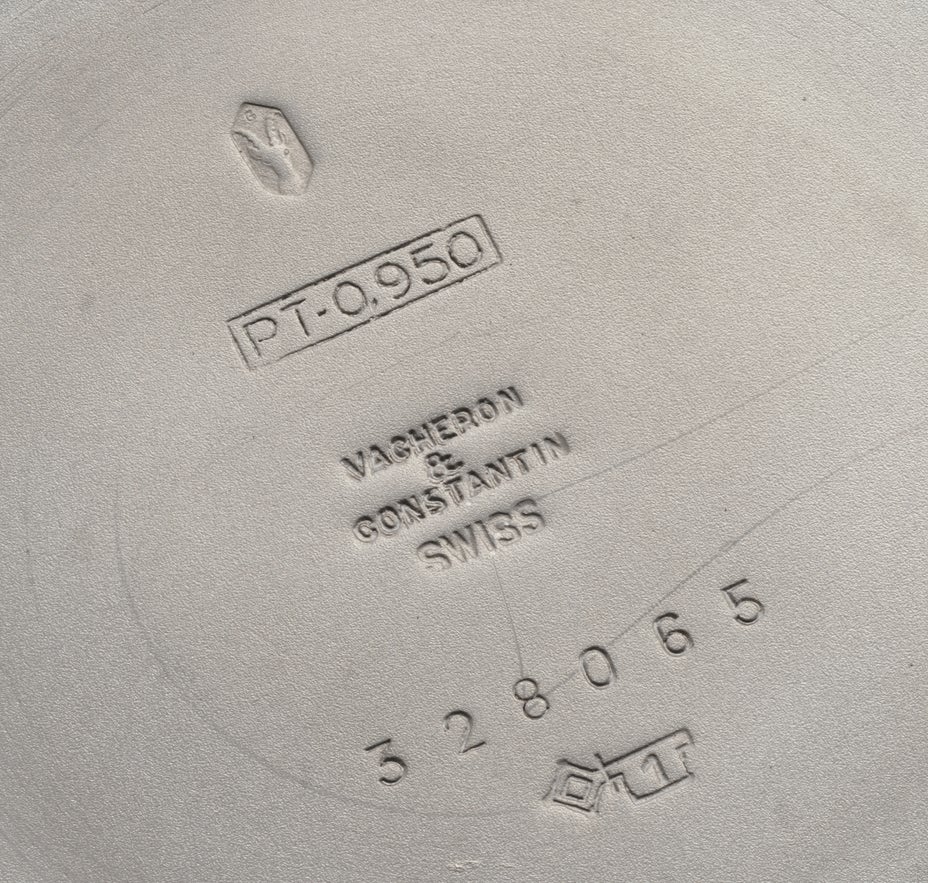
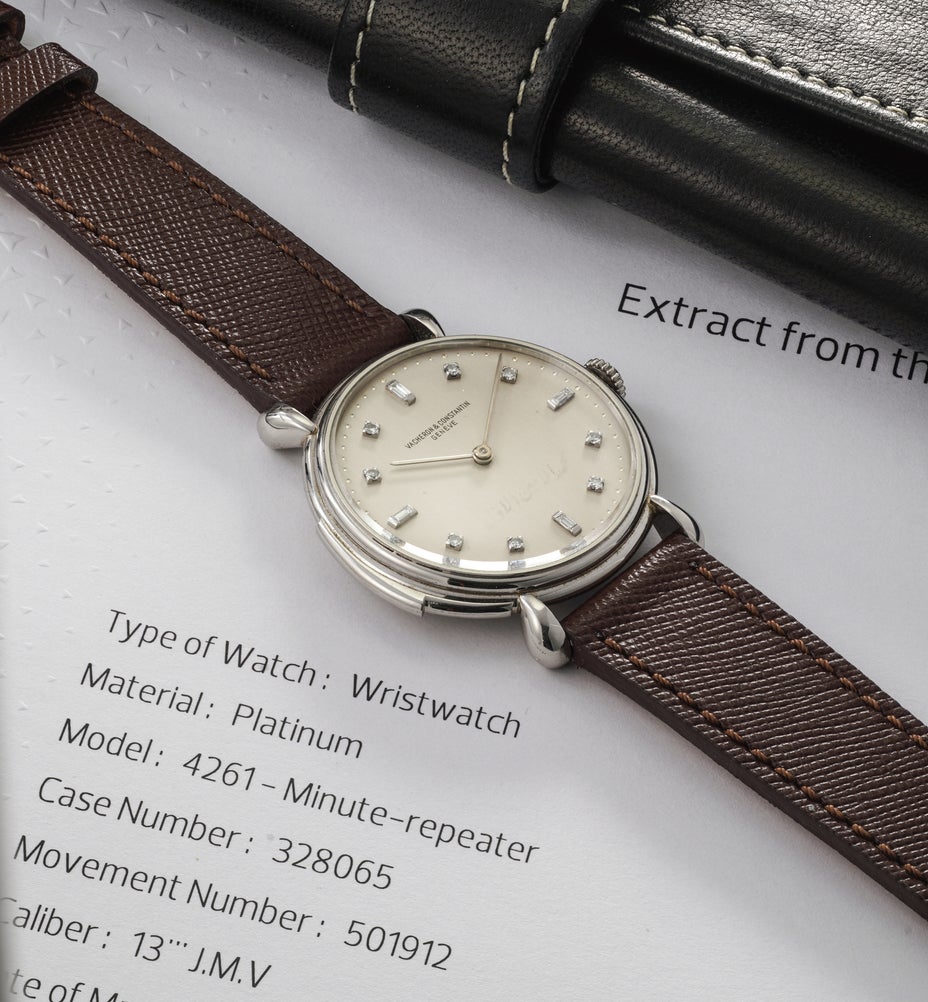
An exceptional slim platinum minute repeating wristwatch made for Lamine Bey, the Bey of Tunis
Further Details
Full-Cataloguing
- Slim minute repeater
- Large case
- only 4 known in platinum all with different dials
- Loud, crisp and pleasant chimes
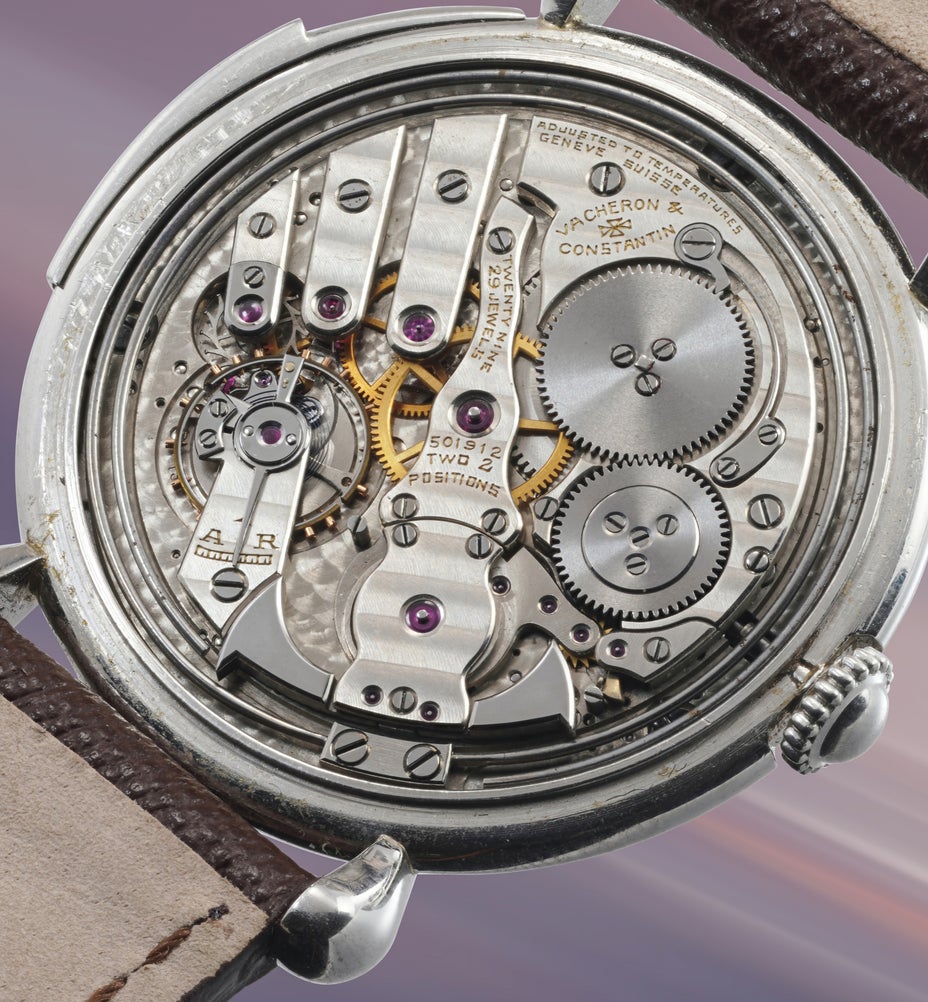
In the history of complicated wristwatches, few achievements of the mid-20th century demonstrate as convincingly the technical refinement of Vacheron Constantin as the reference 4261. At a time when minute repeating wristwatches remained the preserve of only a handful of manufacturers, the Geneva firm succeeded in combining the considerable demands of a chiming mechanism with an exceptionally thin construction. The result was a watch of remarkable proportions and, in the present example, considerable historical interest.
Introduced in the 1940s and produced until the mid-1950s, reference 4261 is distinguished by its elegant, generously proportioned case and characteristic teardrop-shaped lugs, a design that would become closely associated with Vacheron Constantin's watches of the period.
According to scholarship, only 36 minute-repeating wristwatches were produced by Vacheron Constantin during this period, beginning with 17 examples in 1942, followed by 9 in 1944 and a further 10 in 1951 and cased in yellow and pink gold and platinum. Two principal versions are known: the more conventional 12-ligne calibre, generally distinguished by subsidiary seconds and housed in 34 mm case, and the considerably rarer 13-ligne calibre without subsidiary seconds, housed in a larger 36 mm case like the present example.
The latter configuration represents the ultimate expression of the reference. With a 3.1 mm thick movement housed in a case of 5.25mm thickness. Fewer than one third of reference 4261 examples are understood to have been fitted with the larger 13-ligne movement, making such watches particularly desirable. The present platinum-cased example belongs to this exceptionally small group and only 4 examples known and each with a different dial.
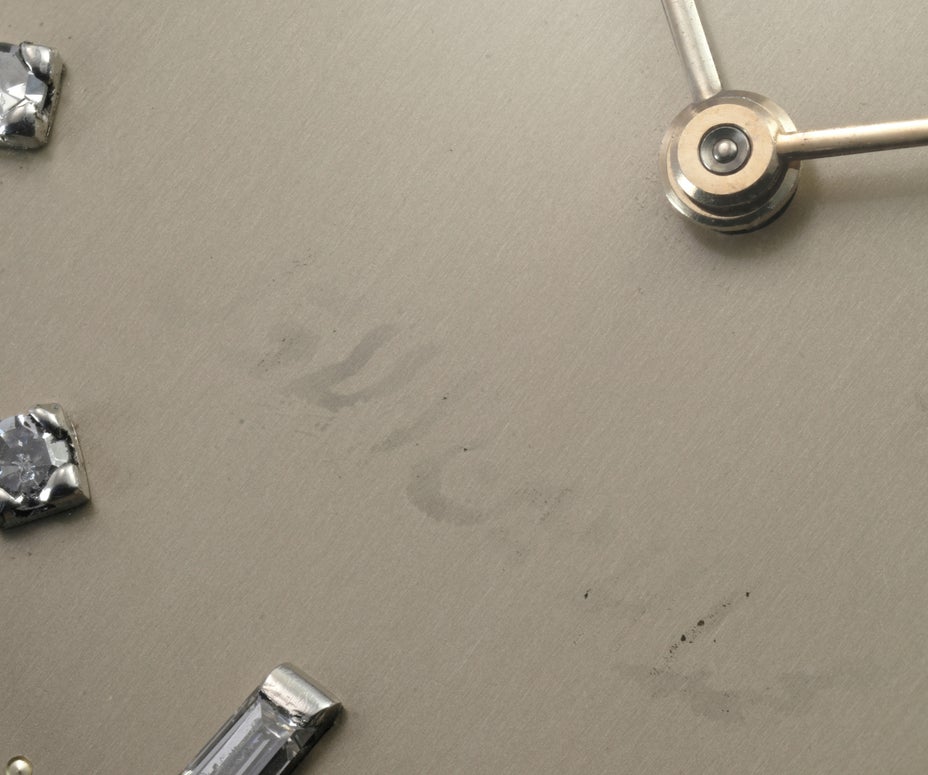
Adding an important layer to its provenance and original context, the dial bears an Arabic inscription translating as “Muhammad Al-Amin the First.” This refers to Muhammad VIII al-Amin, commonly known as Lamine Bey, who ruled as Bey of Tunis from 1943 until the abolition of the Tunisian monarchy in 1957. Its presence suggests that the present watch was made for, or presented to, a member of the Tunisian ruling household, adding a fascinating historical dimension to an already exceptionally rare reference.
This watch originally appeared at auction in 2002 with a stronger signature that seems to have been rubbed off.
Vacheron Constantin
Swiss | 1755The world's oldest watch brand in continuous operation since its founding in 1755, Vacheron Constantin was the first watch company to manufacture movements with interchangeable parts beginning in 1839. Vacheron's watches are admired for their Latin-influenced case designs, well-balanced proportions and exquisitely finished movements of the highest quality. The Geneva-based manufacturer is known for their highly complicated masterpieces, including the King Farouk Grand Complication made in 1935, the Tour de l'Ile that was the most complicated serially produced wristwatch when introduced in 2005 and the 57260 — the world’s most complicated watch — made in 2015.
Key vintage models include minute repeating wristwatches such as the references 4261, chronographs such as the references 4178 and 6087 and the oversized Cioccolotone models such as ref. 4737. Collectors also appreciate Vacheron's Chronometer Royal pocket and wristwatches, as well as the '222,' the brand's first luxury sports watch produced from 1977 through 1984.