447
Gio Ponti
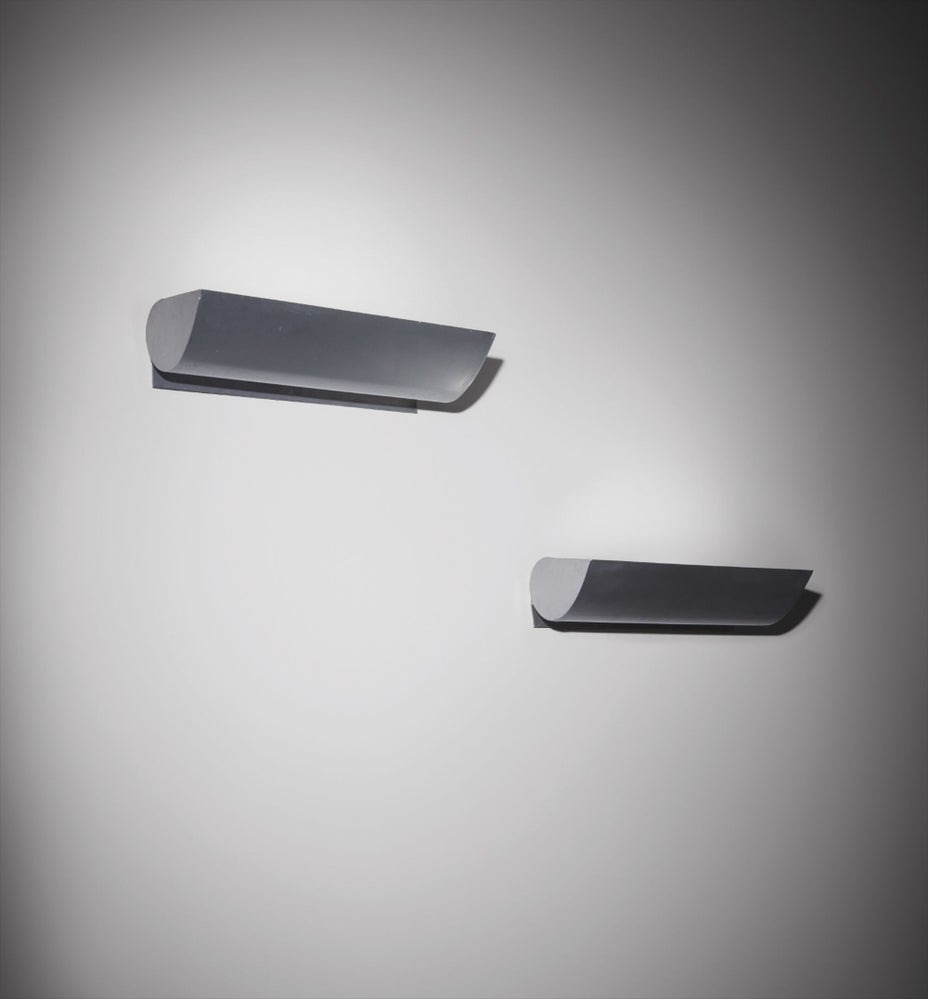
Rare and early pair of wall lights, from Palazzo Montecatini, Milan
Full-Cataloguing
Like many of Palazzo Montecatini’s other furnishings and functional elements, the present pair of wall lights are made of "anticorodal" aluminum. Their austere form resembles a neoclassical interpretation of the wall lights that Le Corbusier used throughout his career from the 1930s onward. Similarly, they made up part of a thoroughly unified scheme of interior furnishings and lighting that were manufactured in a standardized modern manner. Placed throughout the hallways at regular intervals, they became a functional element alongside doors, interior windows and air vents.
Gio Ponti
Italian | B. 1891 D. 1979Among the most prolific talents to grace twentieth-century design, Gio Ponti defied categorization. Though trained as an architect, he made major contributions to the decorative arts, designing in such disparate materials as ceramics, glass, wood and metal. A gale force of interdisciplinary creativity, Ponti embraced new materials like plastic and aluminum but employed traditional materials such as marble and wood in original, unconventional ways.
In the industrial realm, he designed buildings, cars, machinery and appliances — notably, the La Cornuta espresso machine for La Pavoni — and founded the ADI (Industrial Designer Association). Among the most special works by Gio Ponti are those that he made in collaboration with master craftsmen such as the cabinetmaker Giordano Chiesa, the illustrator Piero Fornasetti and the enamellist Paolo de Poli.