
809
Edouard Juvet
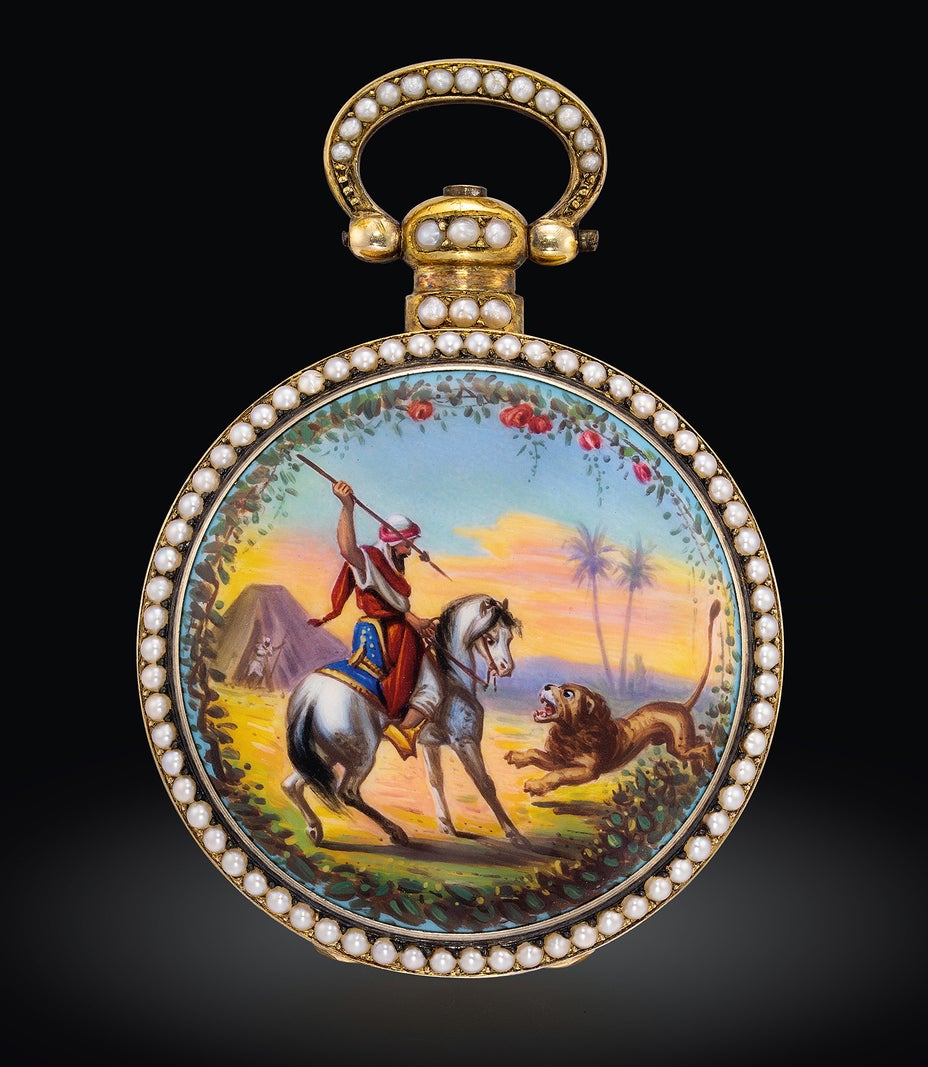
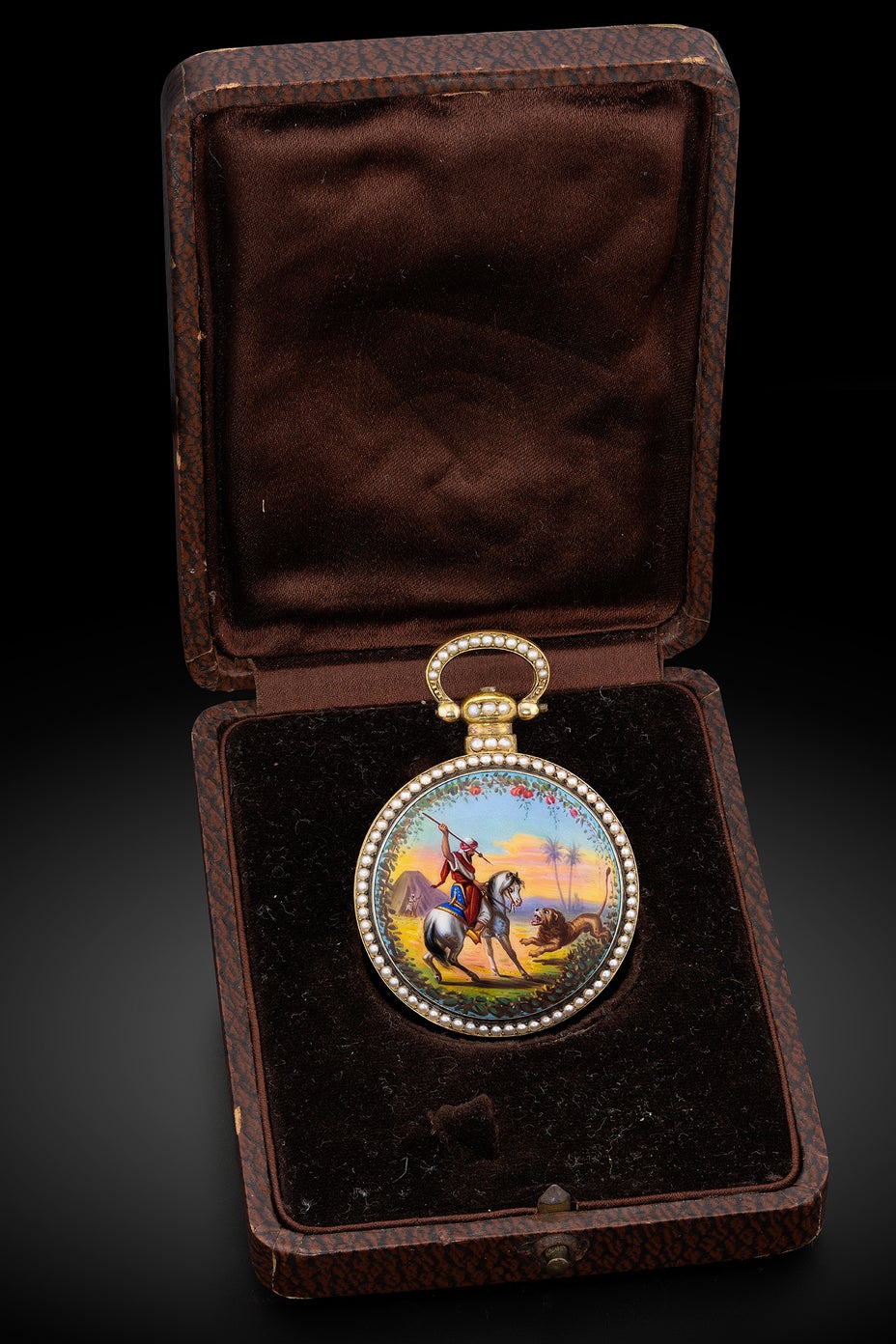
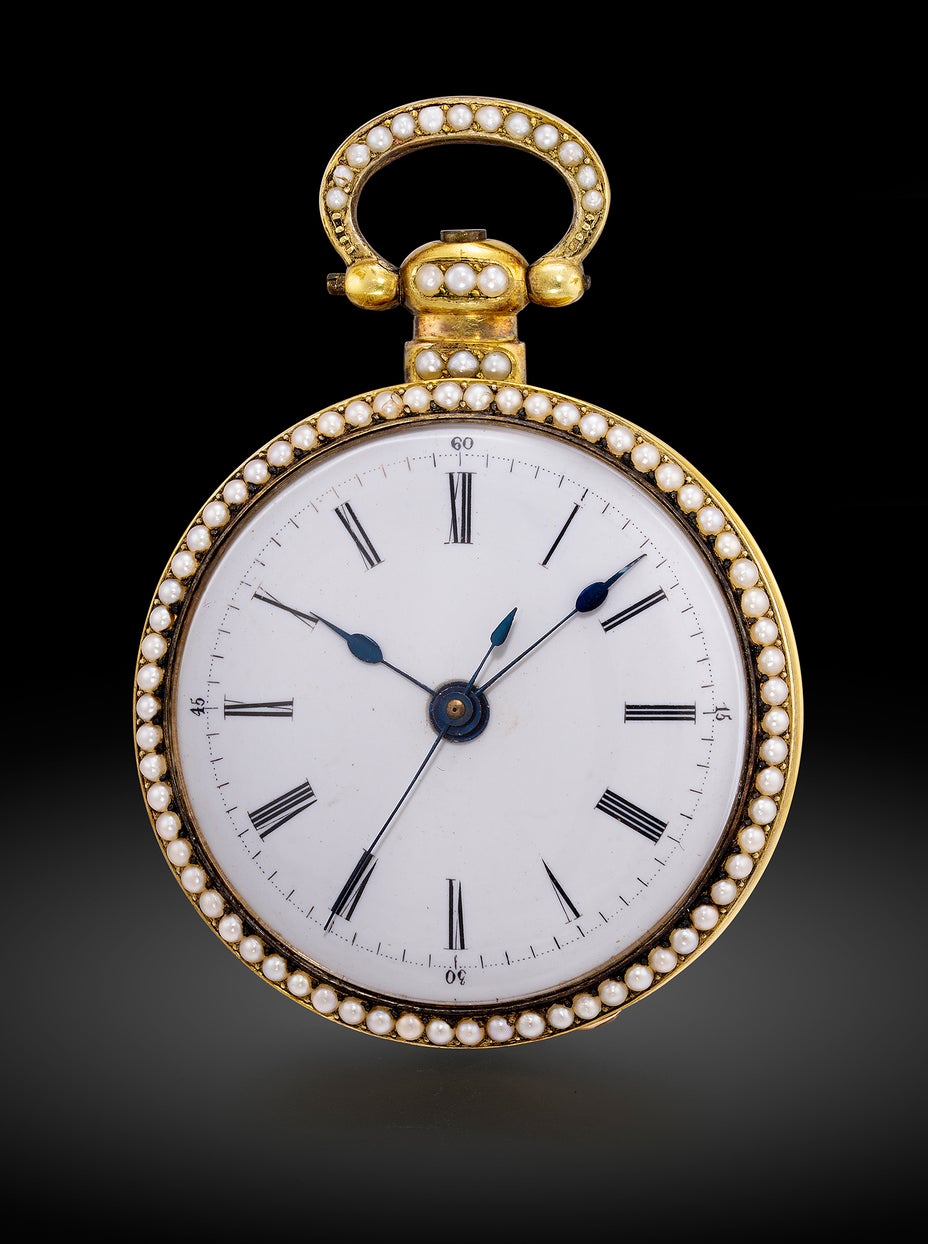
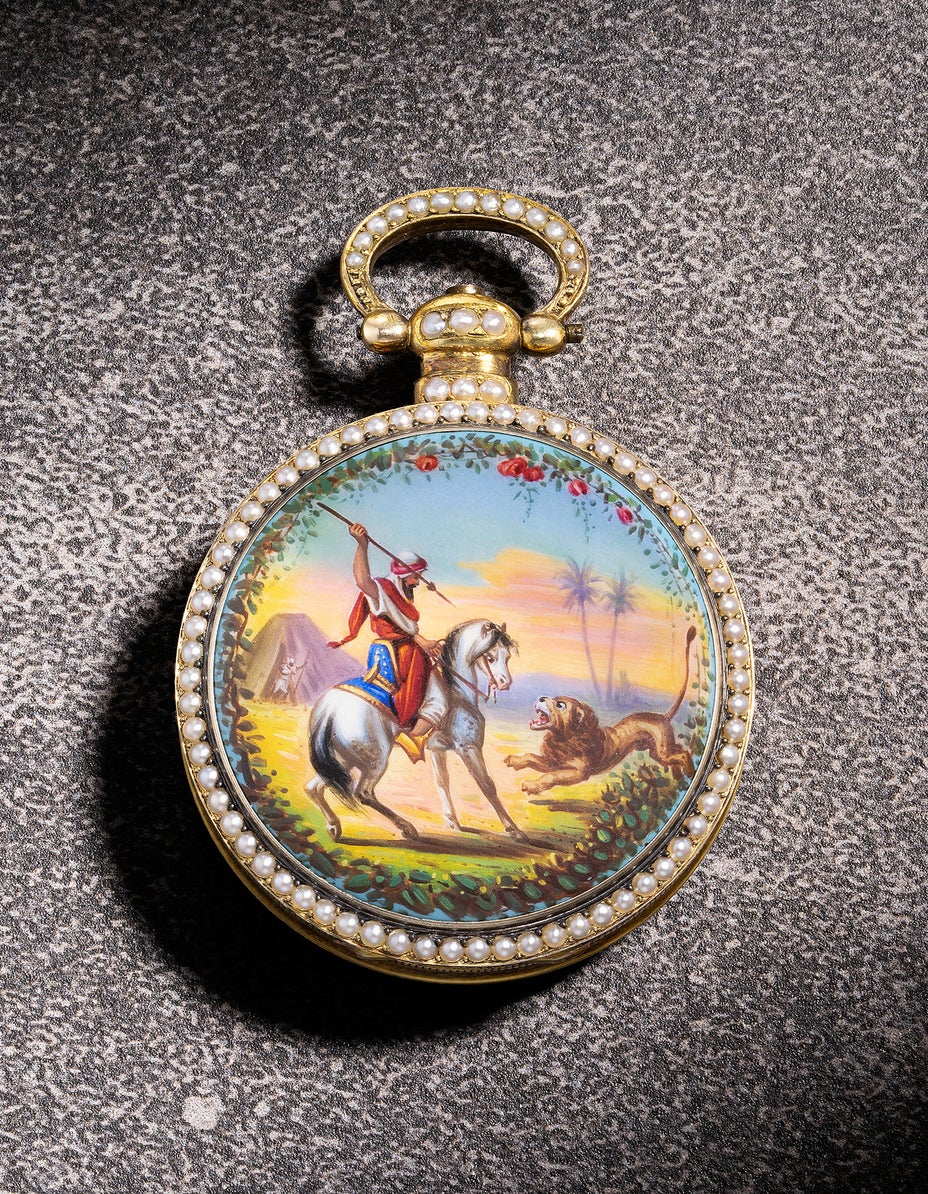
A highly rare and attractive pearl-set gilt-silver openface Empire-styled pocket watch with white enamel dial, center seconds, duplex escapements, polychrome enamel hunting scene painting and presentation box, made for the Chinese Market
Estimate
HK$80,000–160,000
€9,100–18,200
$10,300–20,500
Sold For
HK$152,400
Manufacturer
Edouard Juvet
Year
Circa 1840s
Case No
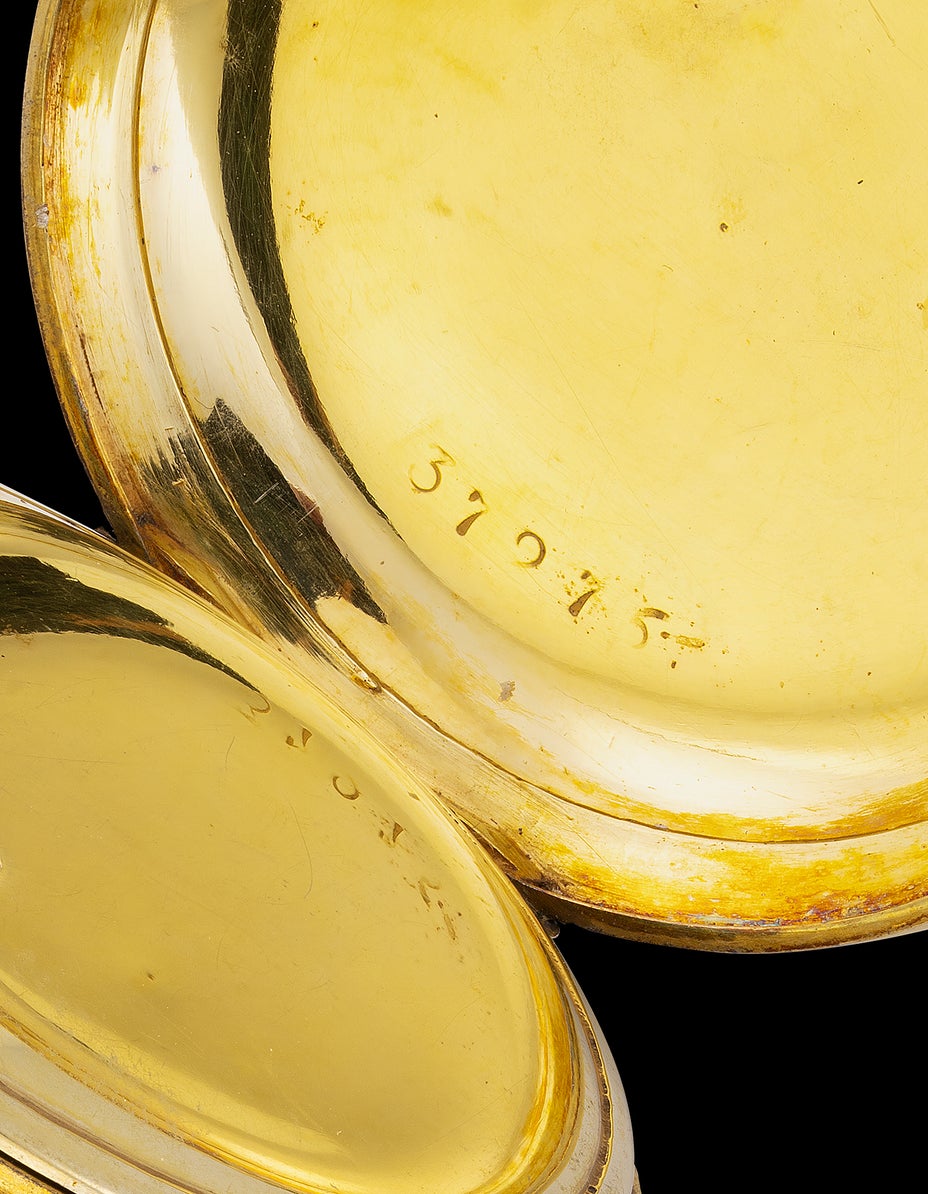
37275
Material
Gilt-silver, pearls and enamel
Calibre
Manual, duplex movement
Dimensions
39mm diameter
Signed
Movement signed
Accessories
Accompanied by fitted presentation box.
Full-Cataloguing
The present 39mm diameter Empire-styled split-pearl case is the work of master watchmaker Edouard Juvet from circa 1840s. Édouard Juvet was notable for producing exquisite Chinese Caliber pocket watches during the 19th century, reflecting the soaring demand for luxury timepieces in the Chinese market. These pocket watches exemplified the fusion of Swiss precision with Chinese artistic traditions, solidifying Juvet's reputation in the horological world and contributing to the broader history of watchmaking for the Chinese elite. The Maison Juvet was so successful, it prospered with branches in Shanghai, Tianjin and Saigon in the 19th century.
His watches often featured intricate designs and complications, aligning with the aesthetic preferences of Chinese patrons such as exotic hunting scenes. The present enamel works featured on the reverse is a fierce duel between an Indian horseman and a wild lion in the tropics of the East.
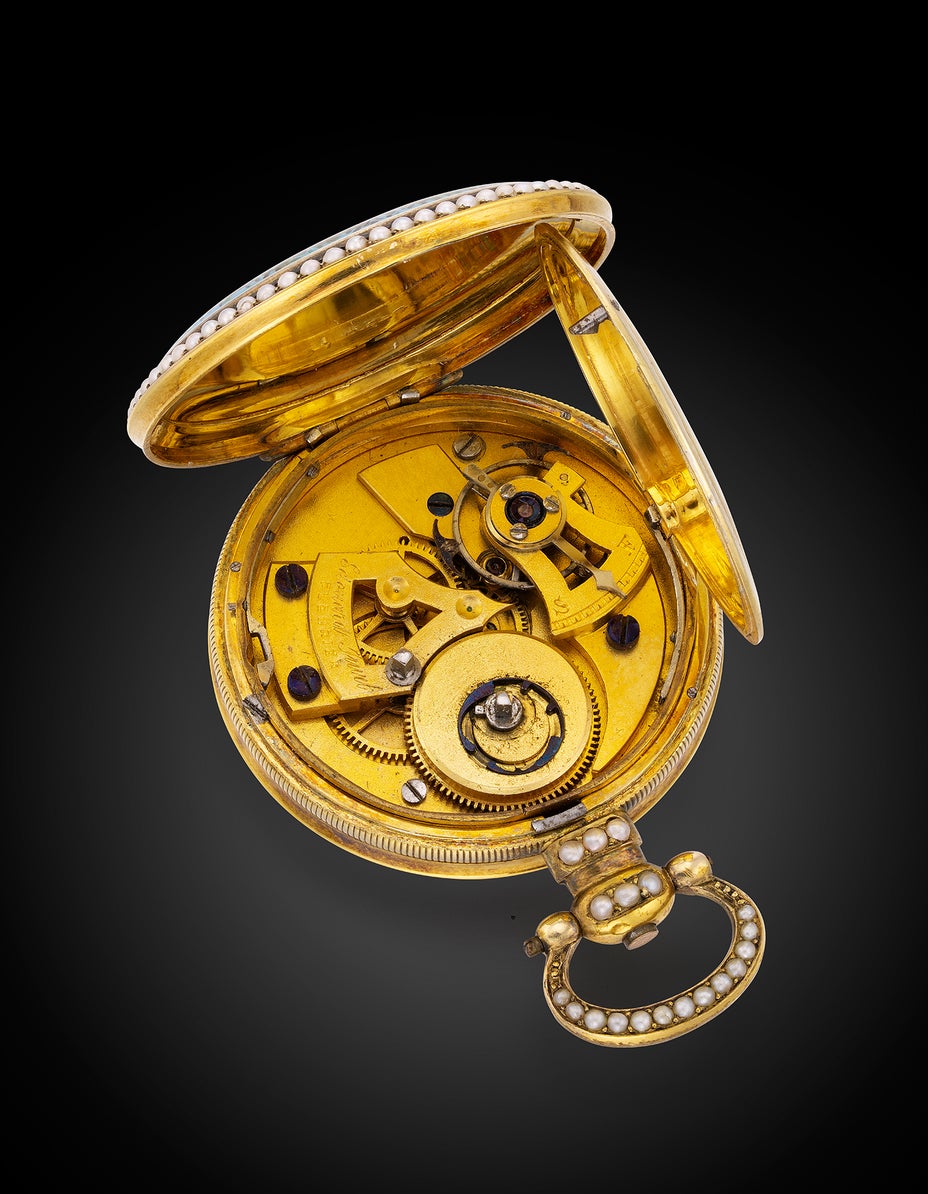
It is equipped with the "Jacot Duplex," or "Chinese Duplex," escapement, invented circa 1830 (US invention Patent No. 9 150, July 27, 1852) by Charles Edouard Jacot. Travelling between La Chaux-de-Fonds and New York, Jacot, the nephew of renowned inventor Abraham Louis Perrelet, is notable for his innovations particularly in escapement designs.
The Jacot Duplex is widely recognized for its modified duplex escapement that features a jumping seconds hand, making it particularly popular in watches made for the Chinese market. According to T.P. Camerer Cuss in The Country Life Book of Watches, this escapement is a refined version of the duplex design, with double locking teeth resembling with blued winged weights. It allows the central seconds hand to move in a jumping motion, creating the illusion of precision akin to that of a regulator. This system achieves dead seconds through an oscillation rate of 14,400 vibrations per hour, functioning as a triple dead beat escapement derived from the duplex mechanism.
While in America, he registered 12 American patents for perfecting the construction of watches, including the “star wheel duplex” escapement, patented on July 20, 1852, and a stop-watch feature, patented on June 8, 1858, by which time Jacot had already returned to Switzerland.
His watches often featured intricate designs and complications, aligning with the aesthetic preferences of Chinese patrons such as exotic hunting scenes. The present enamel works featured on the reverse is a fierce duel between an Indian horseman and a wild lion in the tropics of the East.
It is equipped with the "Jacot Duplex," or "Chinese Duplex," escapement, invented circa 1830 (US invention Patent No. 9 150, July 27, 1852) by Charles Edouard Jacot. Travelling between La Chaux-de-Fonds and New York, Jacot, the nephew of renowned inventor Abraham Louis Perrelet, is notable for his innovations particularly in escapement designs.
The Jacot Duplex is widely recognized for its modified duplex escapement that features a jumping seconds hand, making it particularly popular in watches made for the Chinese market. According to T.P. Camerer Cuss in The Country Life Book of Watches, this escapement is a refined version of the duplex design, with double locking teeth resembling with blued winged weights. It allows the central seconds hand to move in a jumping motion, creating the illusion of precision akin to that of a regulator. This system achieves dead seconds through an oscillation rate of 14,400 vibrations per hour, functioning as a triple dead beat escapement derived from the duplex mechanism.
While in America, he registered 12 American patents for perfecting the construction of watches, including the “star wheel duplex” escapement, patented on July 20, 1852, and a stop-watch feature, patented on June 8, 1858, by which time Jacot had already returned to Switzerland.