808
Edouard Juvet
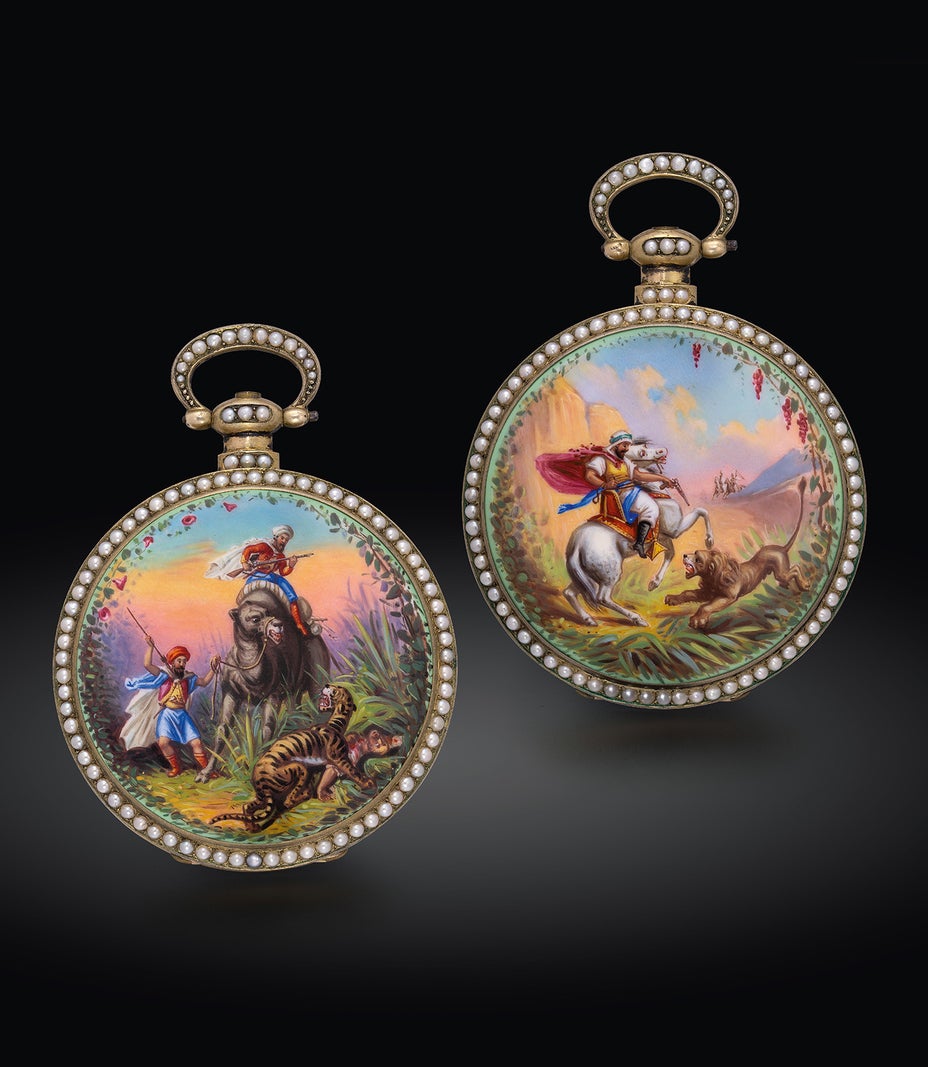
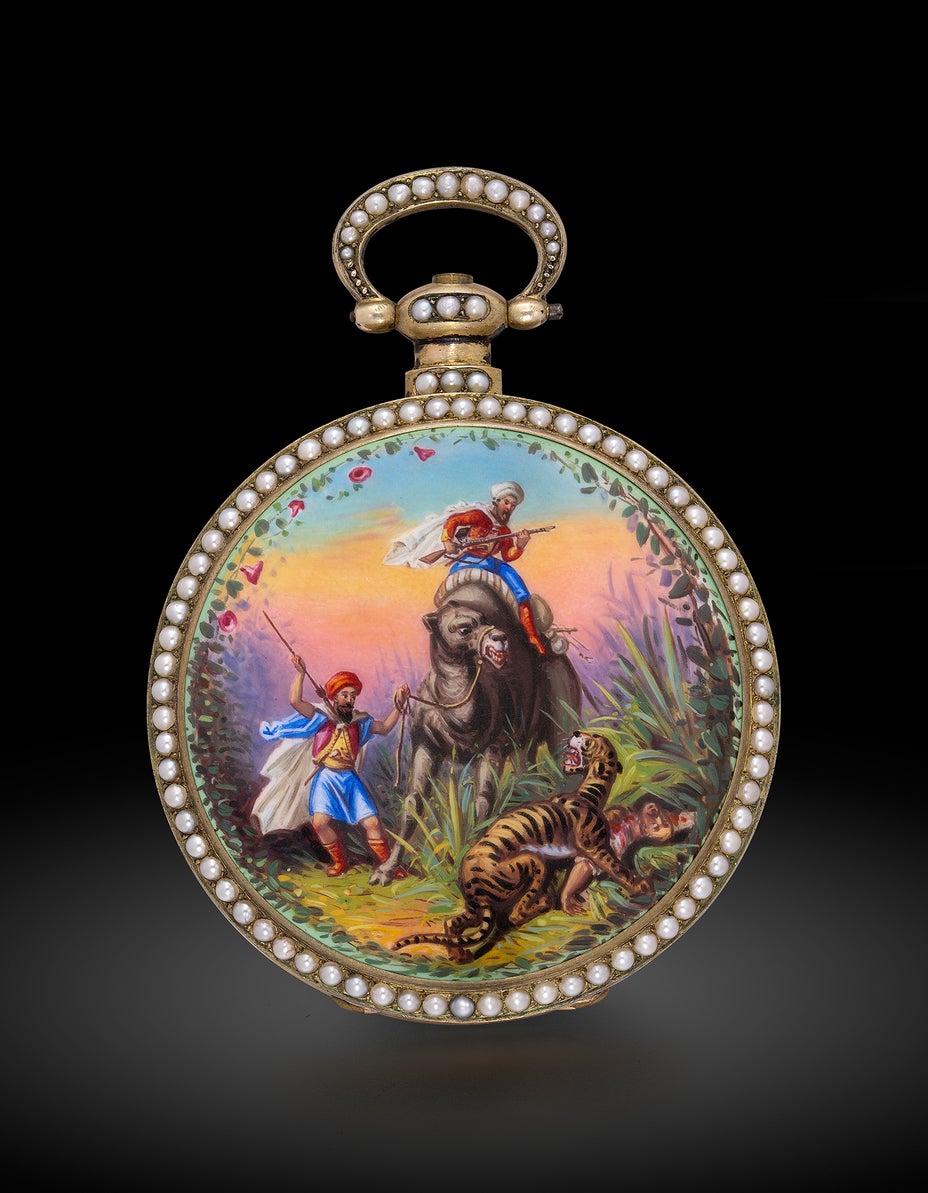
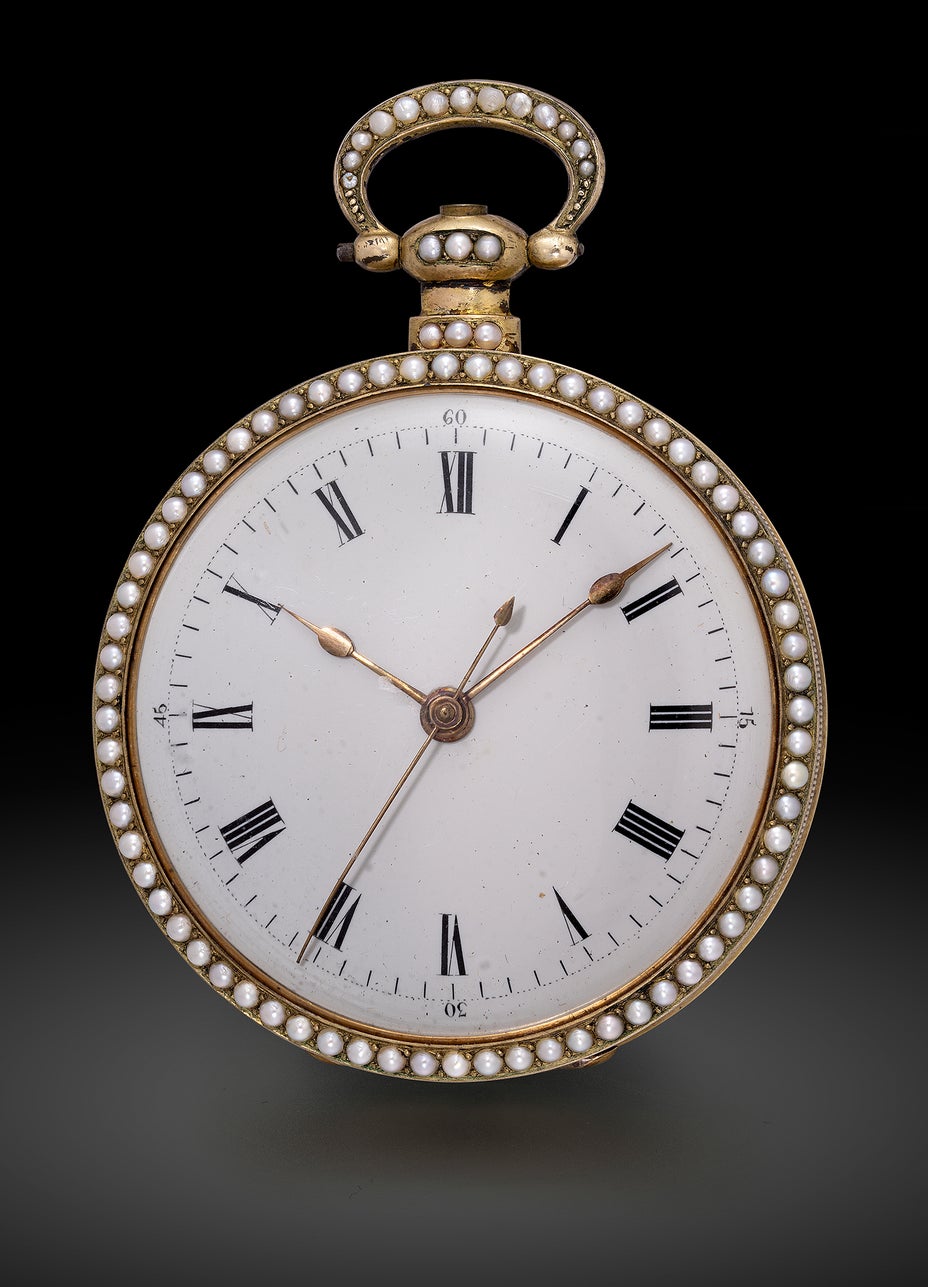
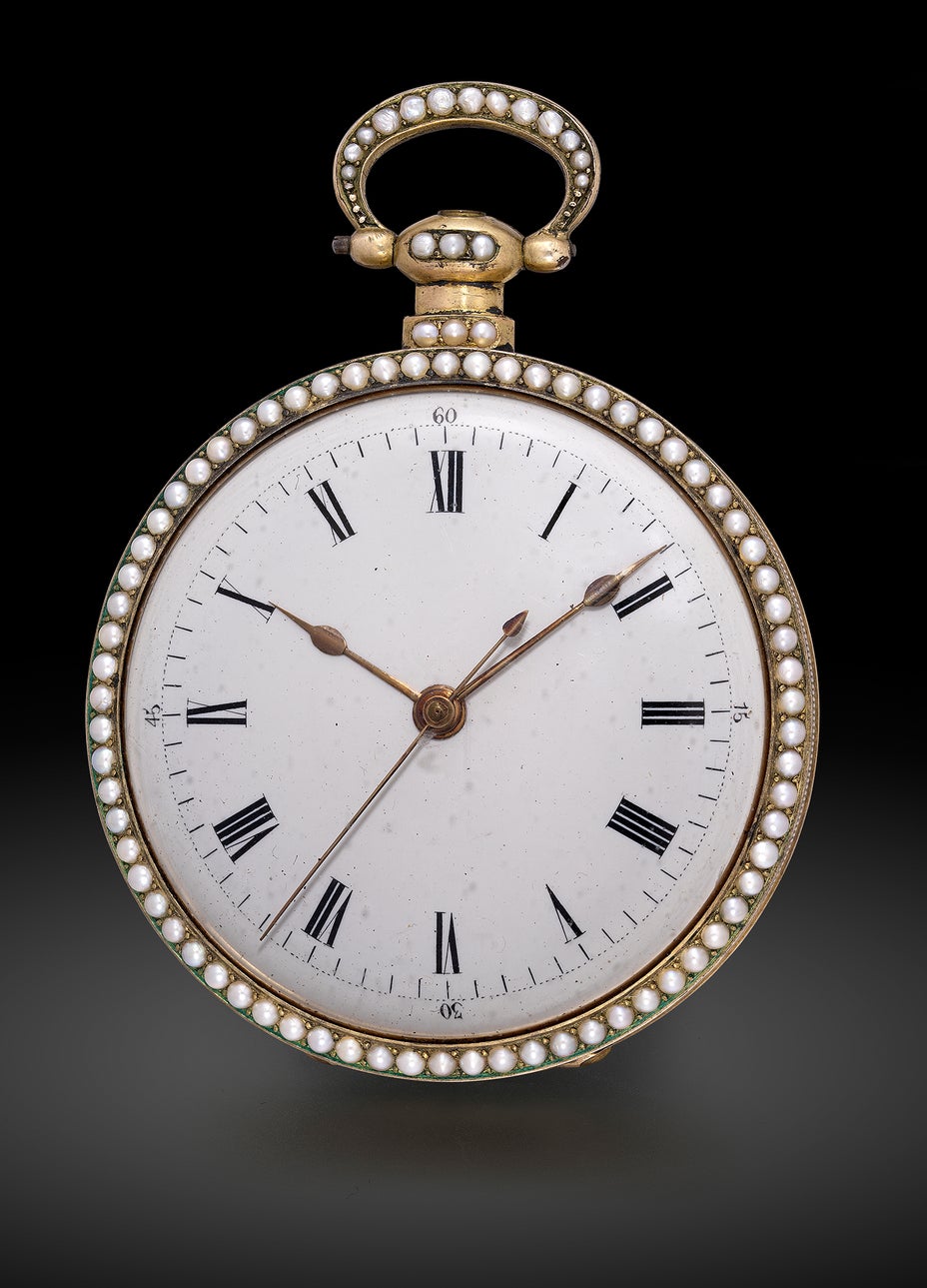
A highly rare, exceptionally fine and attractive pair of pearl-set gilt-metal openface Empire-styled pocket watches with white enamel dial, center seconds, duplex escapements, polychrome enamel hunter scene paintings attributed to Pierre-Amédée Champod, made for the Chinese Market
Estimate
HK$80,000–160,000
€9,100–18,200
$10,300–20,500
Sold For
HK$304,800
Manufacturer
Edouard Juvet
Year
Circa 1860s
Case No
First: 44012, Second: 44009
Material
Gilt-metal, pearls and enamel
Calibre
Manual, duplex movements
Dimensions
Both 57mm diameter
Signed
Movements signed
Full-Cataloguing
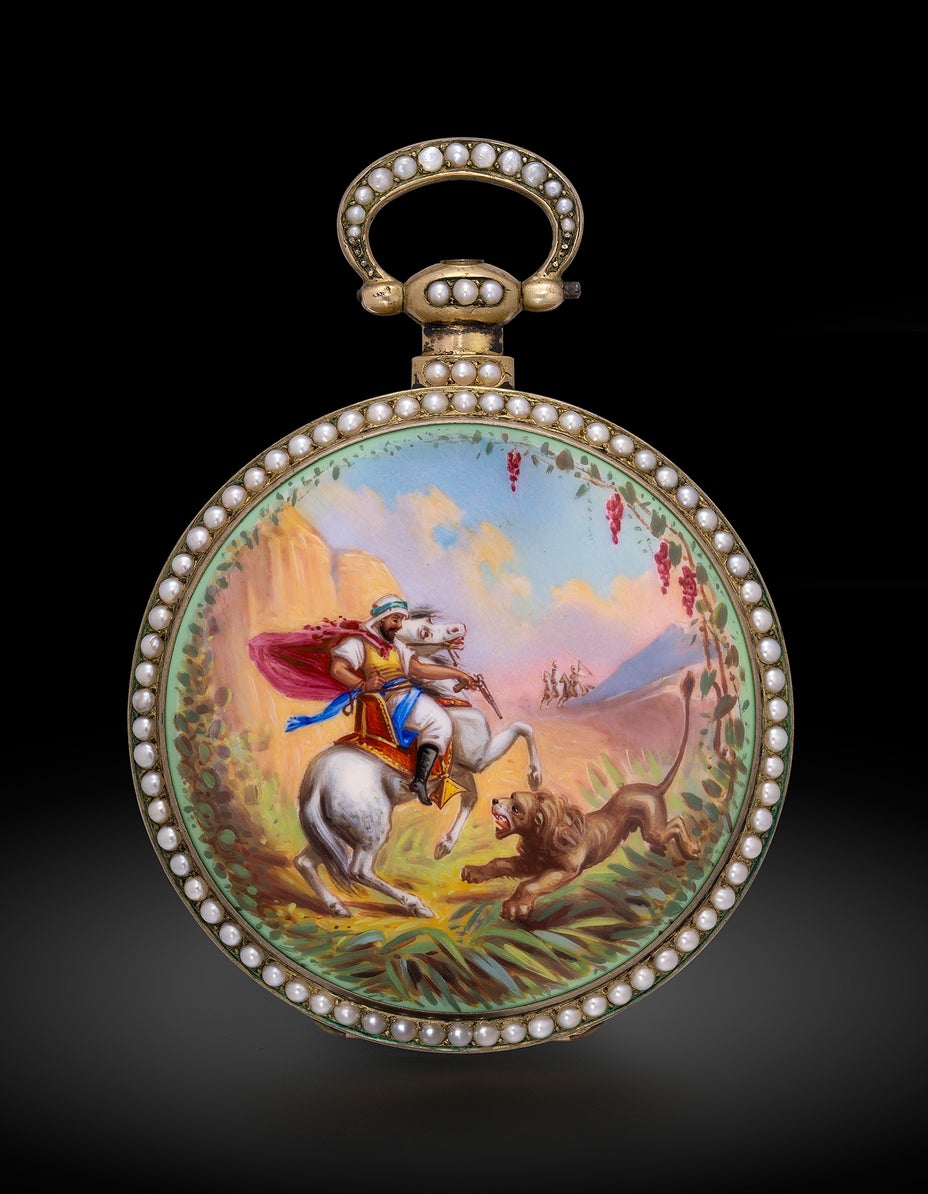
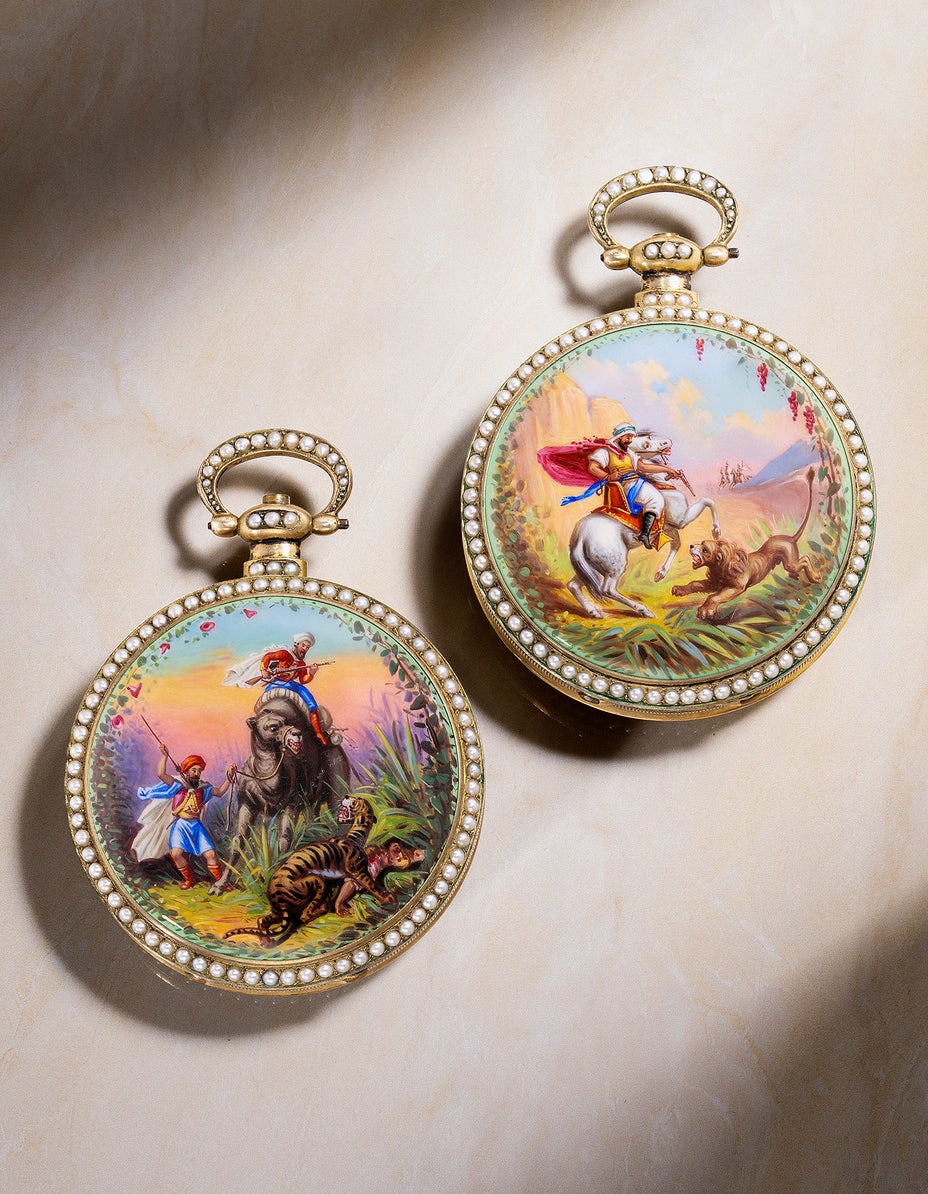
A middle eastern horse-mounted hunter battling a mountain lion in the canons. A vicious scene of a fatal man hunted by a disturbed tiger, fighting off speared and rifled hunters and camel. These elaborately painted polychrome enamel works of art satisfied the exotic taste of elites from the Chinese Society back in the 19th century. Sized at 57mm diameter each, numbered 44009 and 44012, these dates back to circa 1860s.
Attributed to Pierre-Amédée Champod (1834-1913), these gripping lifelike hunting scenes are his specialties. Champod is one of the most celebrated enamel and miniature painter of the late 19th century. The artist studied drawing first first under M. Constantin before learning the art of painting on enamel under Huguenin, then Sauerlander and finally with Charles Glardon - the latter's style being that which he adopted. At the Paris Universal Exhibition of 1900, Champod received a silver medal. His technique was outstanding, the sense of dynamics in his compositions was unrivalled.
Renowned for his ability to depict vivid imagery of landscape, animals and hunters, his works can be found on pocket watches of celebrated manufacturers for the Chinese Market such as Bovet, Vaucher, Vrard, and like the present example, Juvet.
The present pair of Empire-style pearl-set pocket watch is the works of one of the most important Swiss horological families that paved success in the Chinese Market in 1856. Edouard Juvet (1820-1883) was first established in Buttes, near Val-de-Travers in the canton of Neuchâtel Switzerland in 1824. Two years into operation, his atelier was relocated to Fleurier.
Known for his high-quality enamel pocket watches, Juvet is part of a select group of skilled artisans that worked closely with the Chinese market, so much so that his two sons, Ami-Louis and Léo travelled to China to work in the family branch based in Shanghai. There, the Juvets were rivalled only by healthy competition with the Bovets. The Maison Juvet prospered, opening branches in Tien-Tsin and Saigon, to the extent that in 1872 Léo wrote : “Our watches sell like salt”. In 1873, Edouard Juvet registered a trademark in Chinese characters, “You Wei 有喴”, which was used on the company’s products. He granted his son Léo power of attorney in November 1875, and after his death in February 1883, Léo succeeded him at the head of the firm.
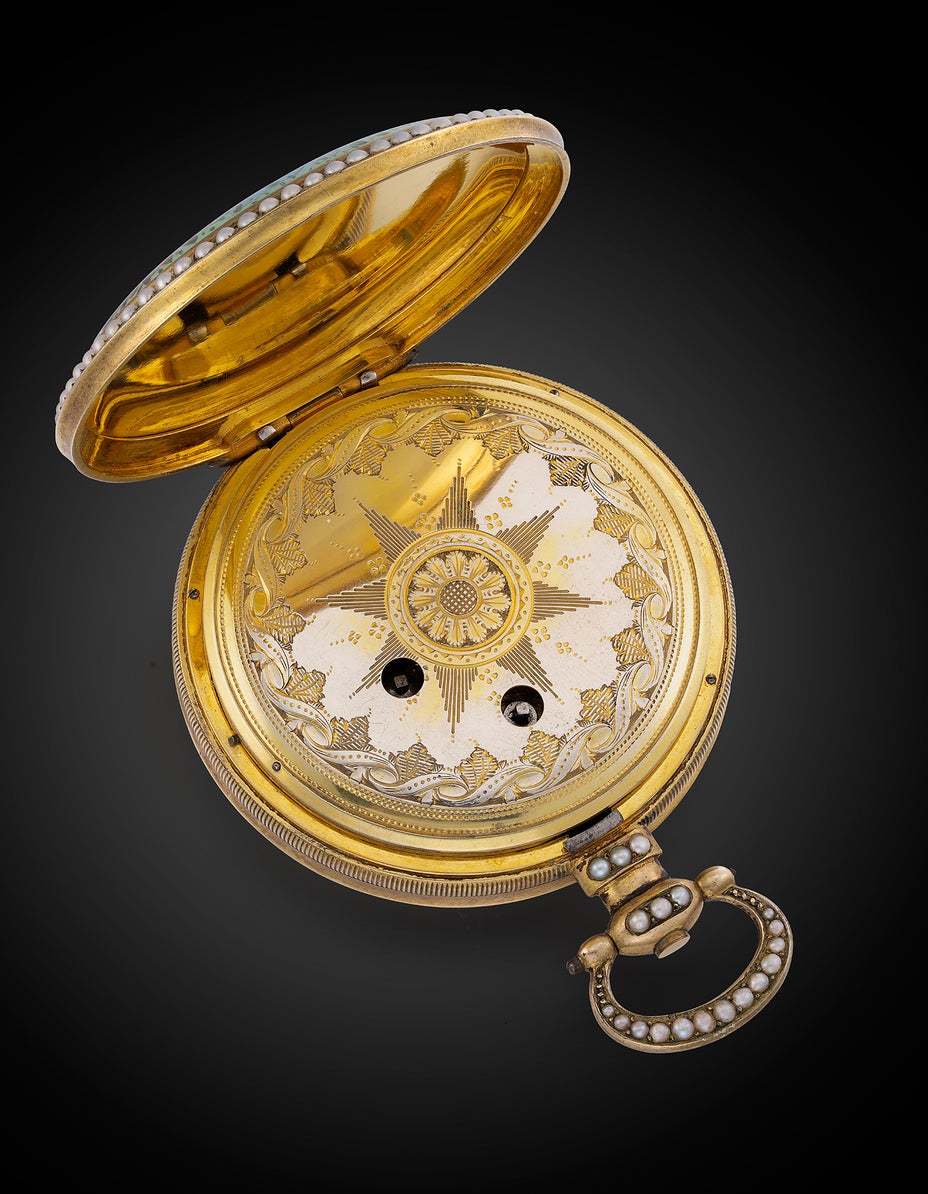
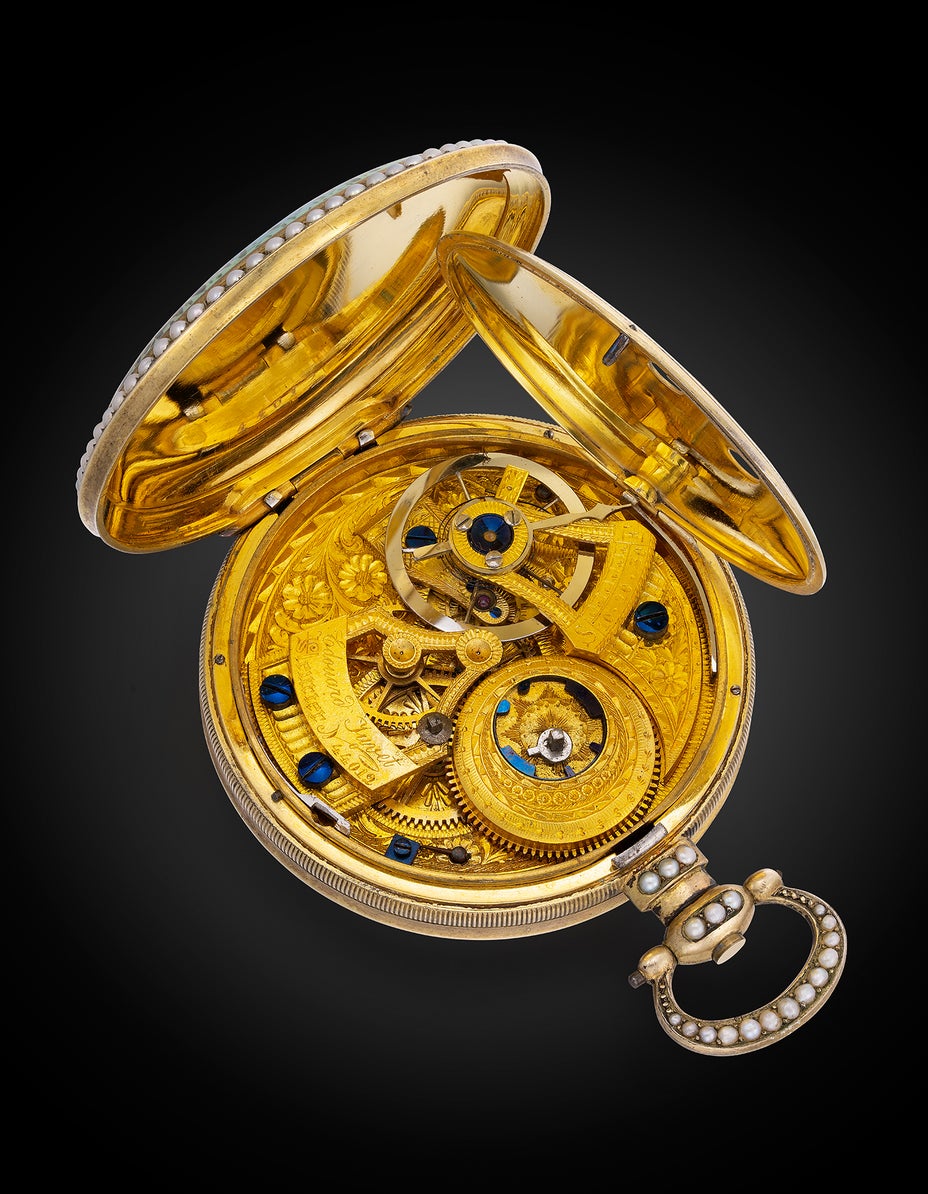
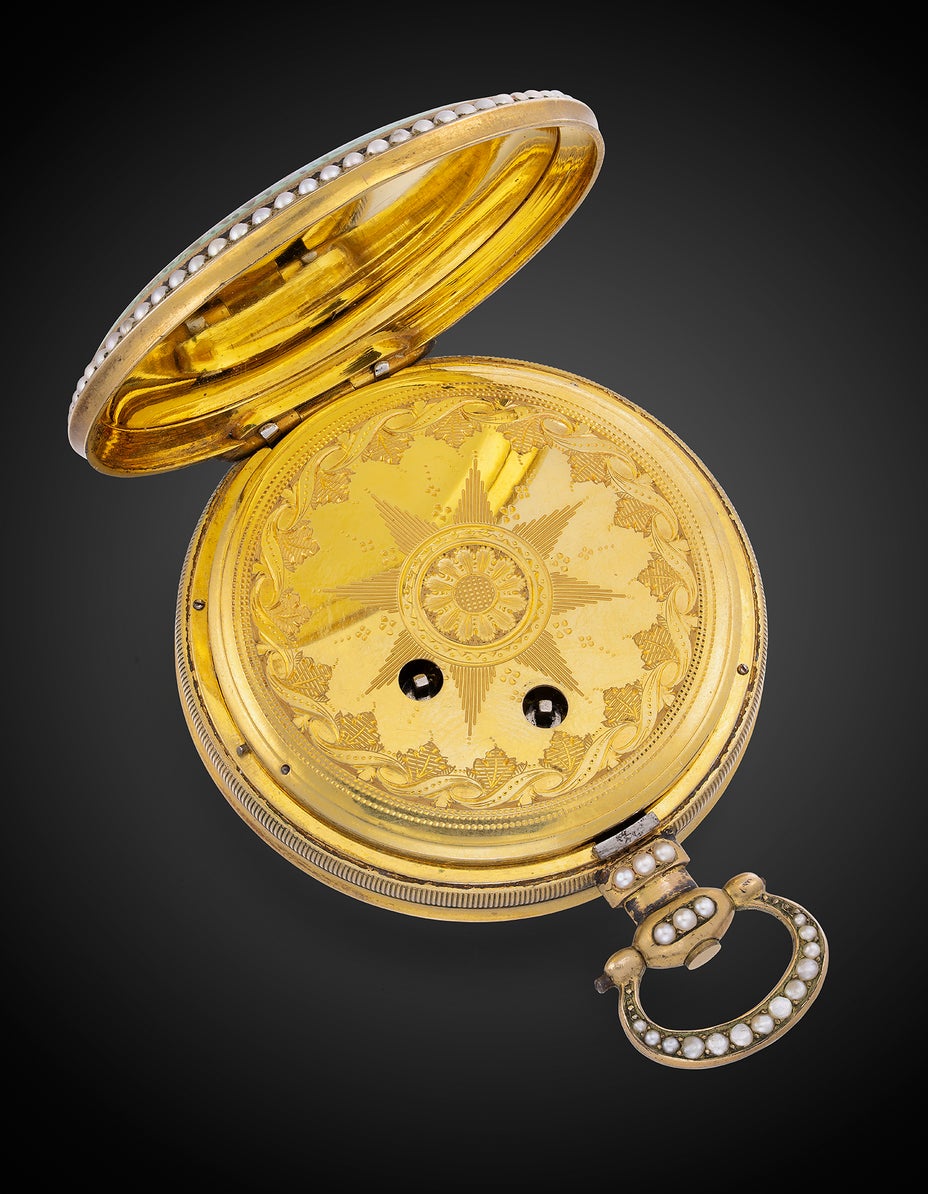
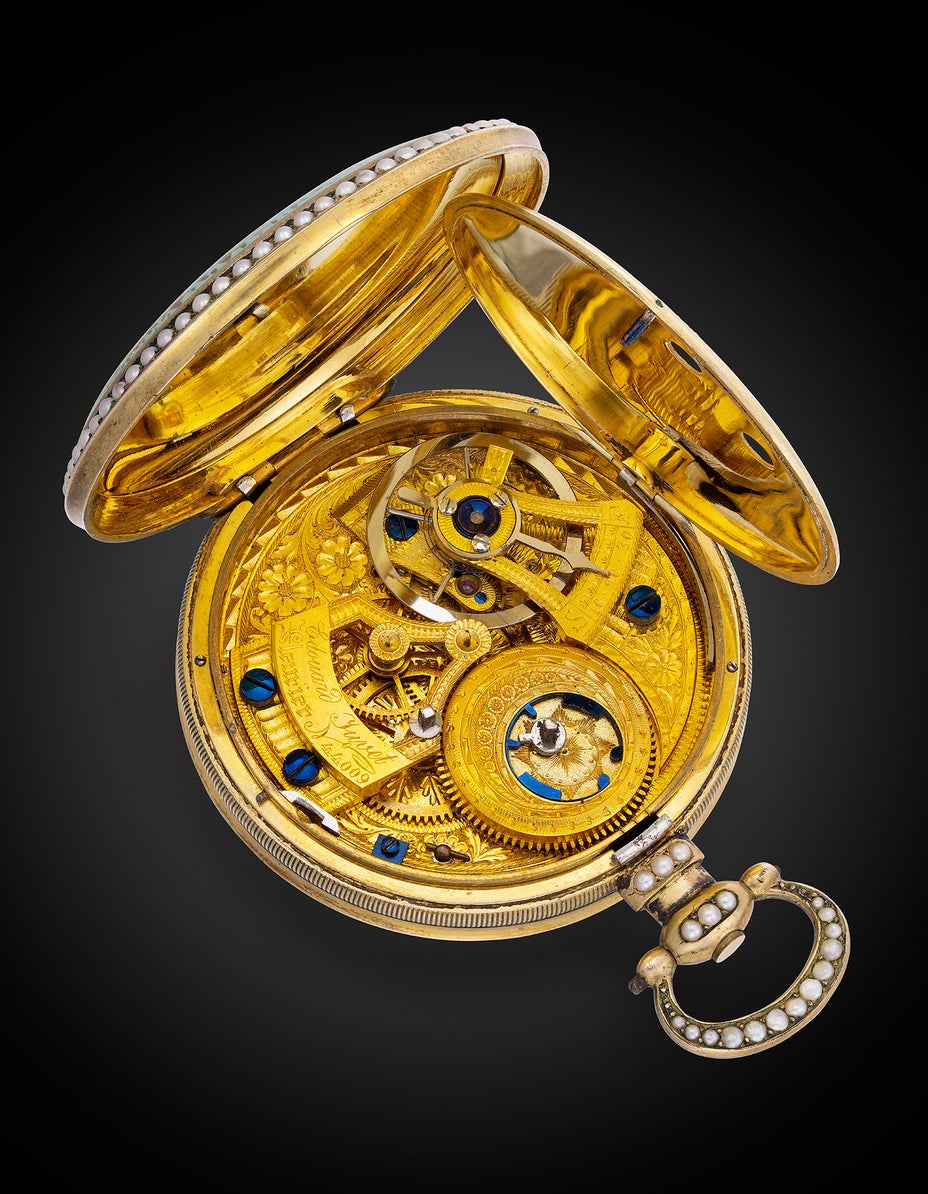
Extremely well-preserved for more than 165 years and counting, the movements sitting underneath its decorated golden cuvette is a duplex movement first invented by Robert Hooke in circa 1700, then later improved by Jean Baptiste Dutertre and Pierre Le Roy, before being perfected by Thomas Tyrer, who patented it in 1782. The Duplex escapement was difficult to make but achieved higher accuracy than the Cylinder escapement, which was also a 'Frictional-rest' escapement. Exquisitely decorated with scroll engraved plate and bridges, it features a five arm polished steel balance with ruby endstone.
Attributed to Pierre-Amédée Champod (1834-1913), these gripping lifelike hunting scenes are his specialties. Champod is one of the most celebrated enamel and miniature painter of the late 19th century. The artist studied drawing first first under M. Constantin before learning the art of painting on enamel under Huguenin, then Sauerlander and finally with Charles Glardon - the latter's style being that which he adopted. At the Paris Universal Exhibition of 1900, Champod received a silver medal. His technique was outstanding, the sense of dynamics in his compositions was unrivalled.
Renowned for his ability to depict vivid imagery of landscape, animals and hunters, his works can be found on pocket watches of celebrated manufacturers for the Chinese Market such as Bovet, Vaucher, Vrard, and like the present example, Juvet.
The present pair of Empire-style pearl-set pocket watch is the works of one of the most important Swiss horological families that paved success in the Chinese Market in 1856. Edouard Juvet (1820-1883) was first established in Buttes, near Val-de-Travers in the canton of Neuchâtel Switzerland in 1824. Two years into operation, his atelier was relocated to Fleurier.
Known for his high-quality enamel pocket watches, Juvet is part of a select group of skilled artisans that worked closely with the Chinese market, so much so that his two sons, Ami-Louis and Léo travelled to China to work in the family branch based in Shanghai. There, the Juvets were rivalled only by healthy competition with the Bovets. The Maison Juvet prospered, opening branches in Tien-Tsin and Saigon, to the extent that in 1872 Léo wrote : “Our watches sell like salt”. In 1873, Edouard Juvet registered a trademark in Chinese characters, “You Wei 有喴”, which was used on the company’s products. He granted his son Léo power of attorney in November 1875, and after his death in February 1883, Léo succeeded him at the head of the firm.
Extremely well-preserved for more than 165 years and counting, the movements sitting underneath its decorated golden cuvette is a duplex movement first invented by Robert Hooke in circa 1700, then later improved by Jean Baptiste Dutertre and Pierre Le Roy, before being perfected by Thomas Tyrer, who patented it in 1782. The Duplex escapement was difficult to make but achieved higher accuracy than the Cylinder escapement, which was also a 'Frictional-rest' escapement. Exquisitely decorated with scroll engraved plate and bridges, it features a five arm polished steel balance with ruby endstone.