
163
Audemars Piguet
Ref. 5402
Royal Oak
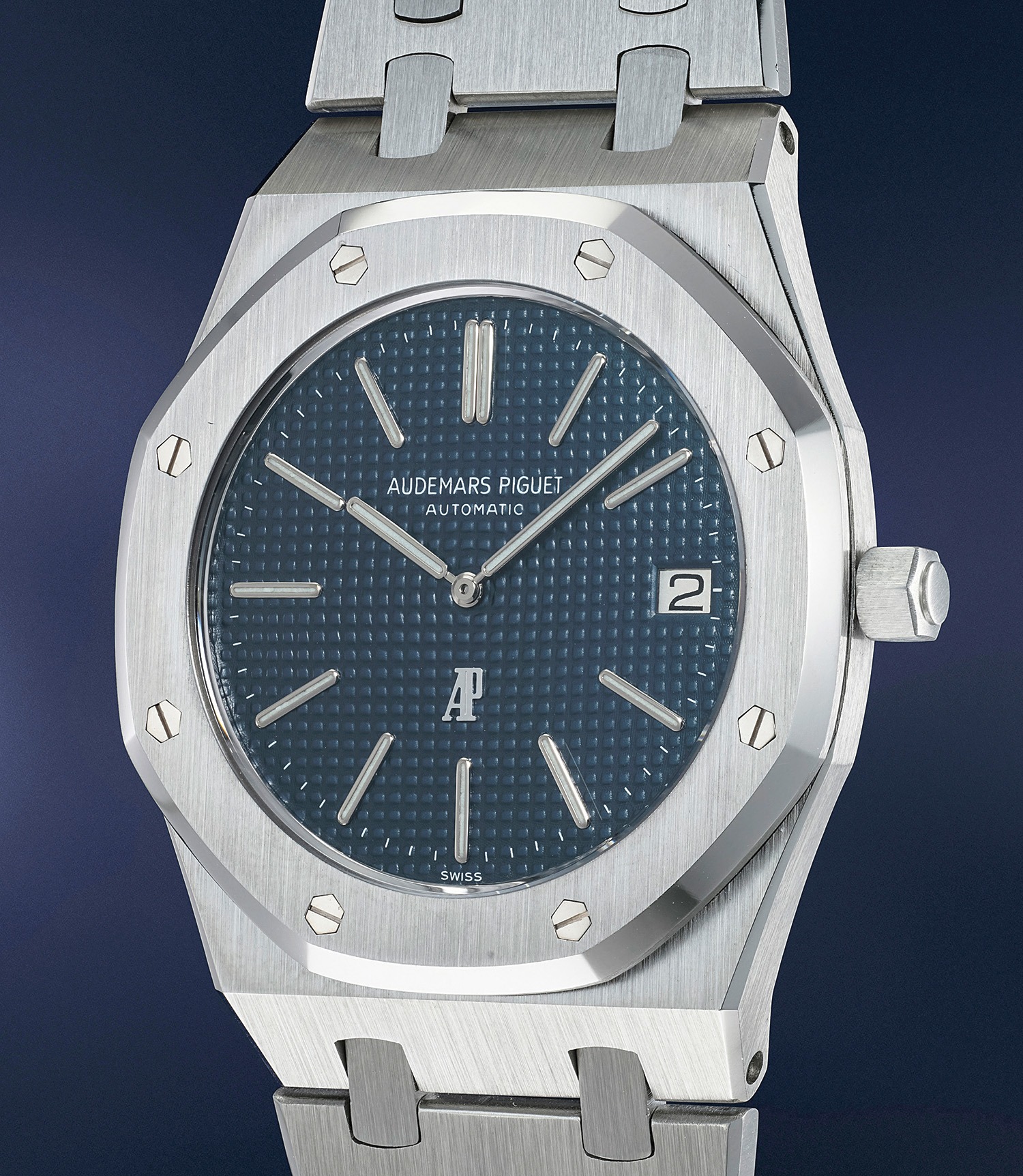
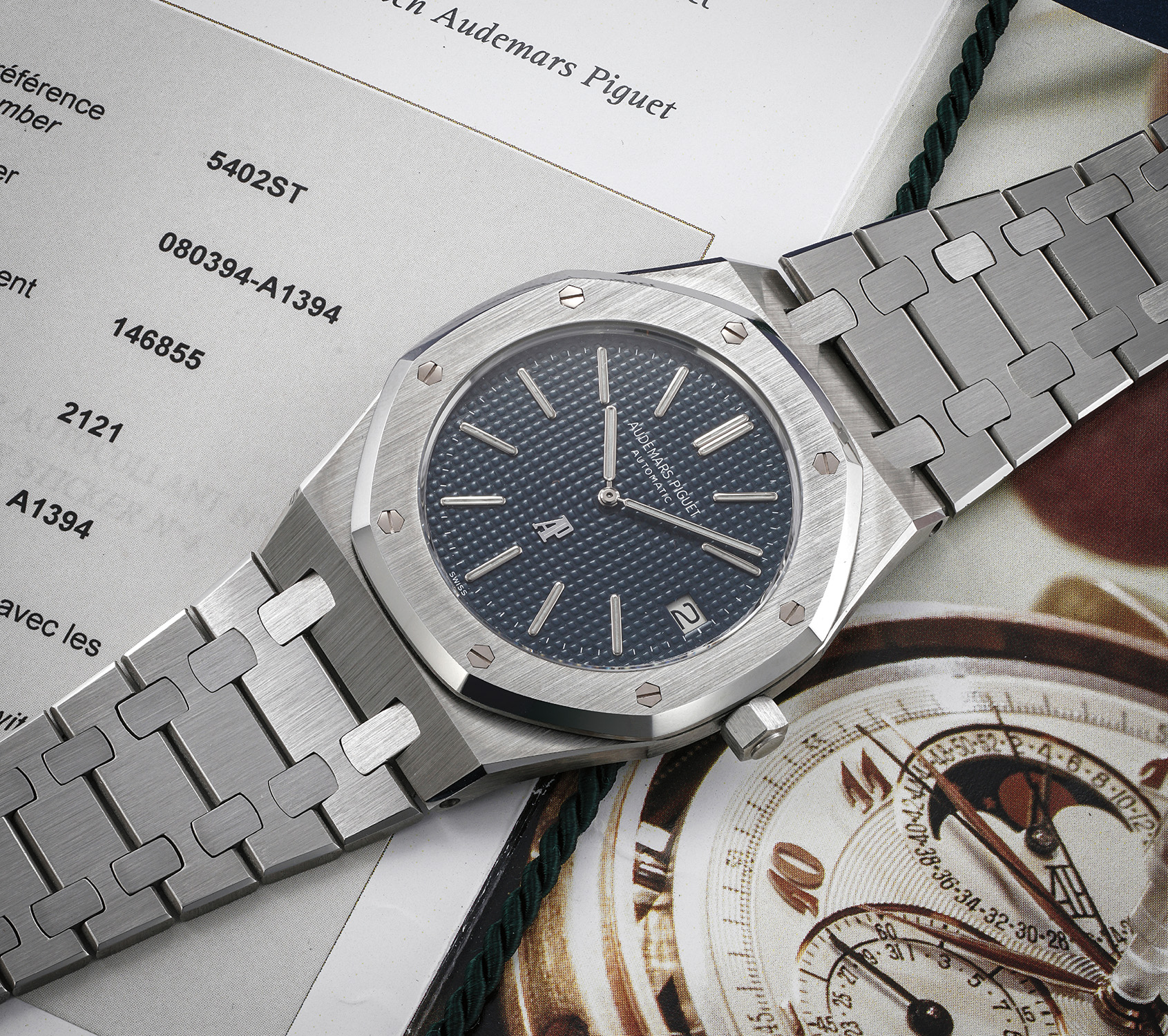
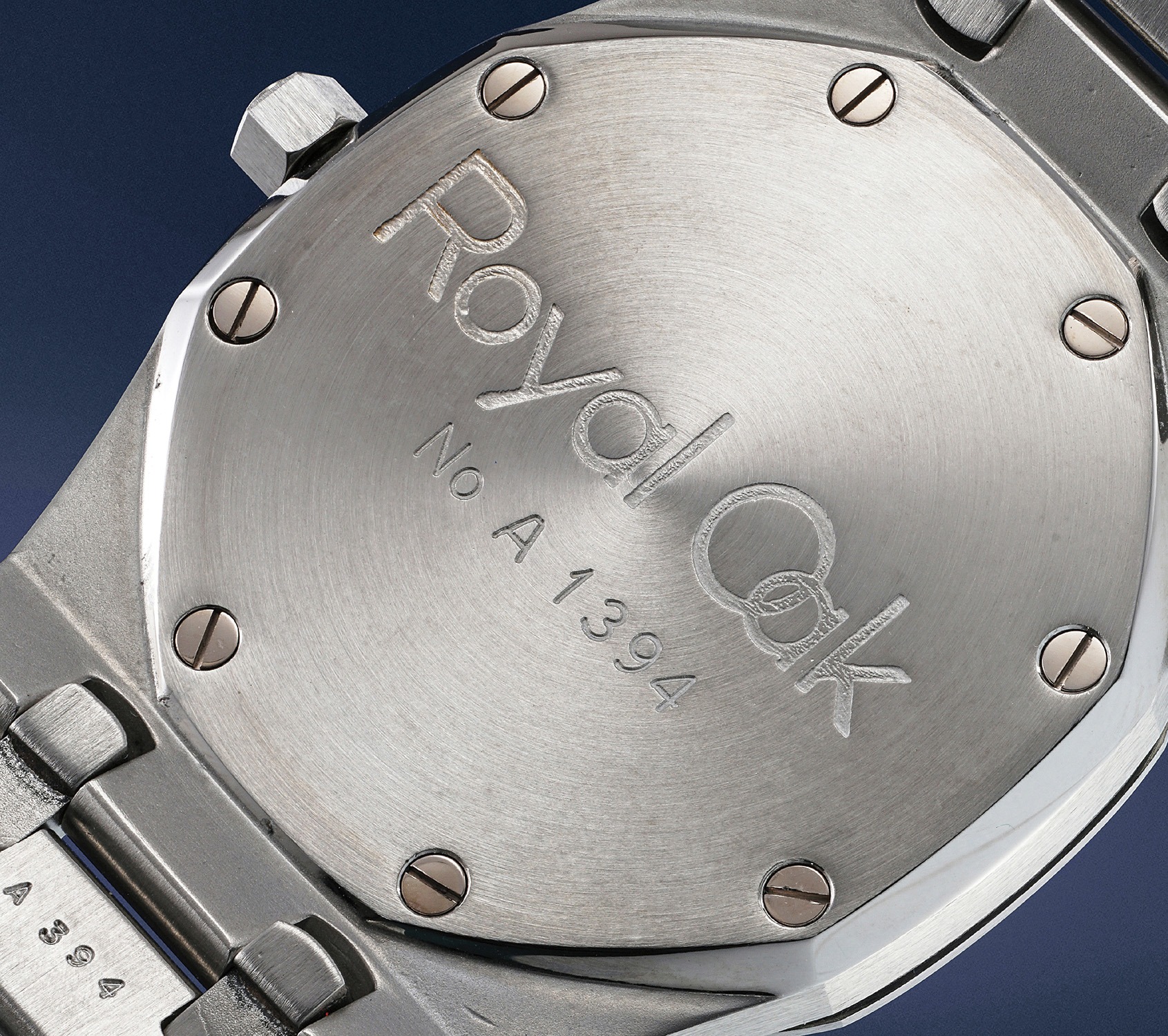
A fine and rare stainless steel wristwatch with date and bracelet
Full-Cataloguing
The present example - a representative of the famed A-series: the first batch of production of the model - is an opportunity for the collector to acquire a 5204 which has been brought back to its original glory by the manufacturer itself. The case is as flawless as it was when the watch was brand new, featuring extremely sharp corners and immaculate satin finish. The dial has - on demand of the client - not been exchanged for a service one, but rather Audemars Piguet restored the original dial completely, including graphics and finish. this treatment resulted in a dial color quite different from what the collector is used to seeing on a 5204 dial: the blue is closer to navy than to petrol, rendering this watch a practically unique pieces, merging a more modern dial color with the timeless class of the original Royal Oak 5204.
Phillips wishes to warmly thank scholar Marco "Mstanga" Stanghellini for his invaluable assistance in researching this timepiece.
Audemars Piguet
Swiss | 1881A specialist in the manufacture of complications since it was established in 1881, Audemars Piguet never ceases to impress with a rich history of creating bold, even audacious, timepieces underpinned by traditional watchmaking at its finest. This Le Brassus-based Swiss manufacturer is one of only two major manufacturers still owned by the founding family. Since its earliest days, AP is considered a leader in the field of minute repeaters and grande complication pocket and wristwatches. The brand is devoted to preserving the history of watchmaking in the Vallée de Joux, showcased at their superb museum in Le Brassus.
Today, the brand is best known for its Royal Oak models, a revolutionary luxury sports watch launched in 1972. Other key models include early minute repeating wristwatches, vintage chronograph wristwatches, such as the oversized reference 5020, perpetual calendar watches and the Royal Oak Offshore, first introduced in 1993.