907
Rolex
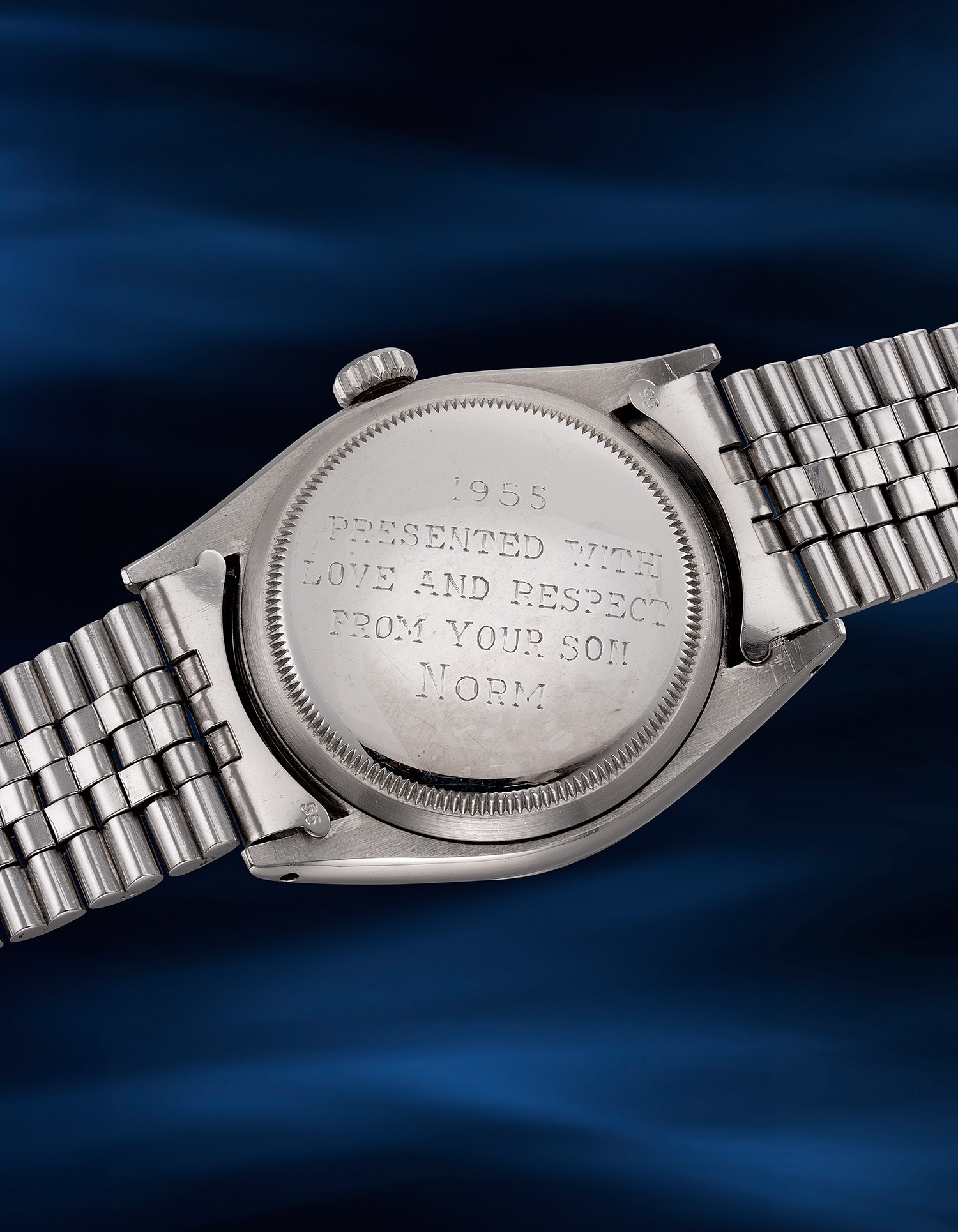
Ref. 6350, repeated inside caseback and stamped IV.53
Explorer
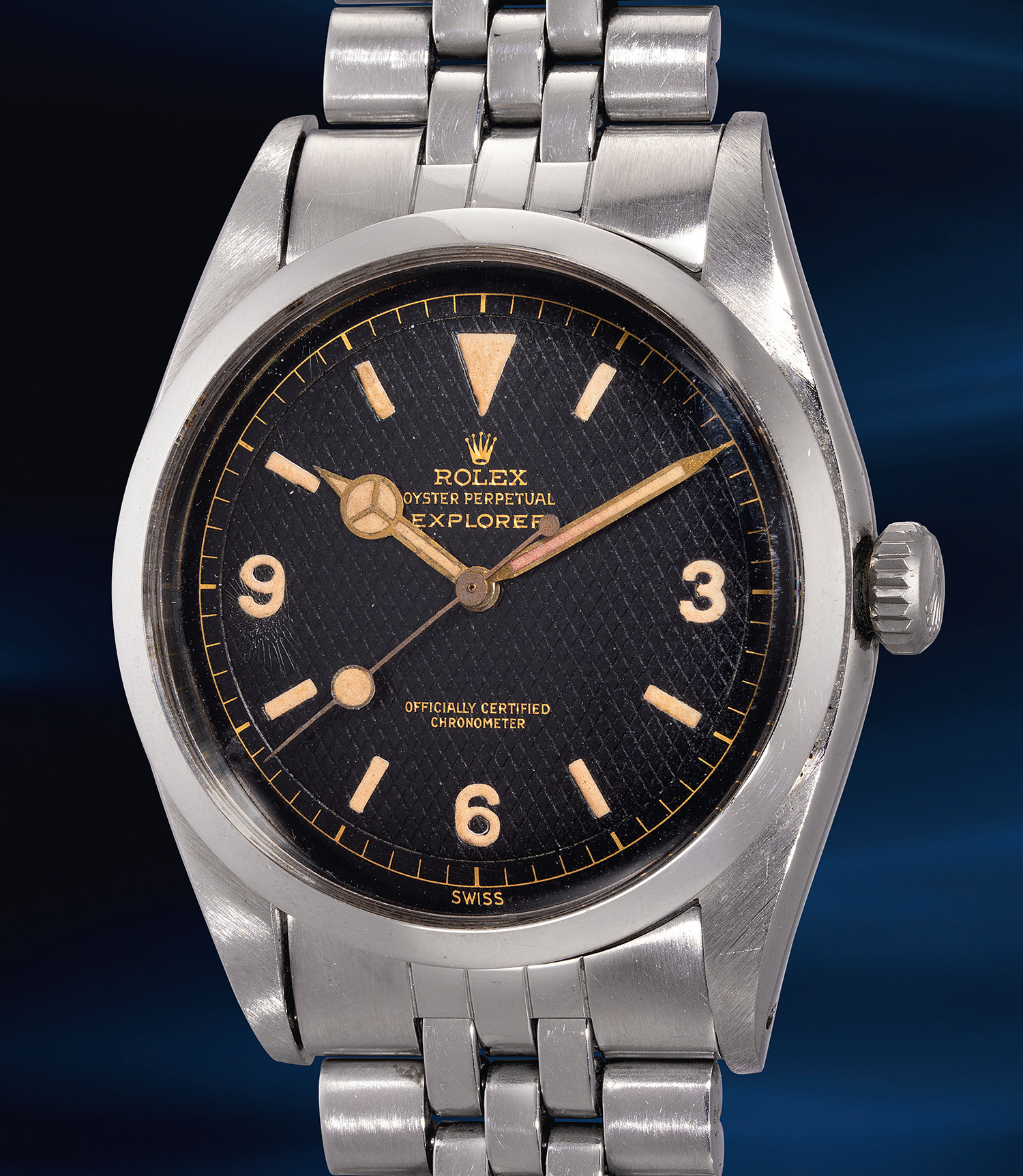
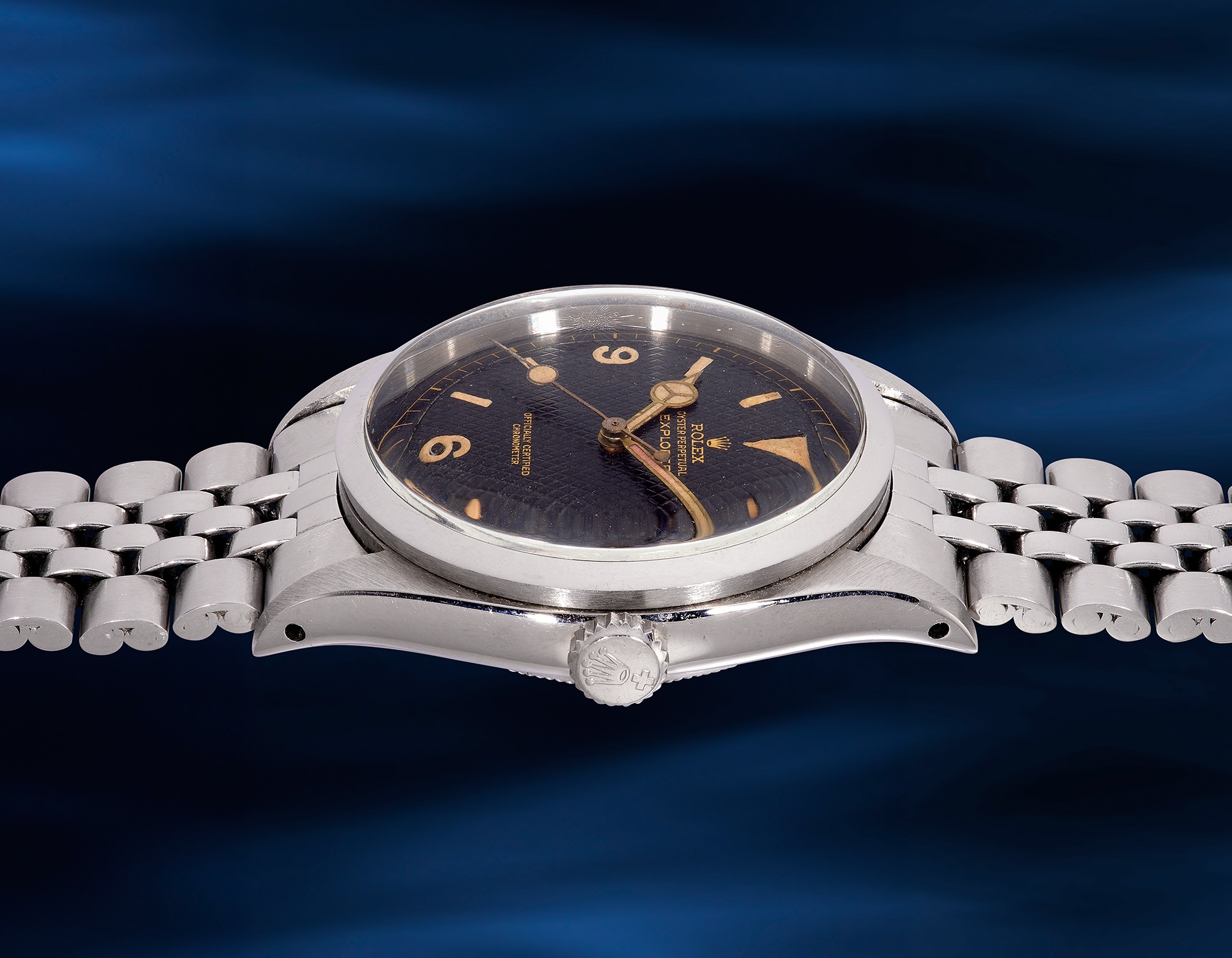
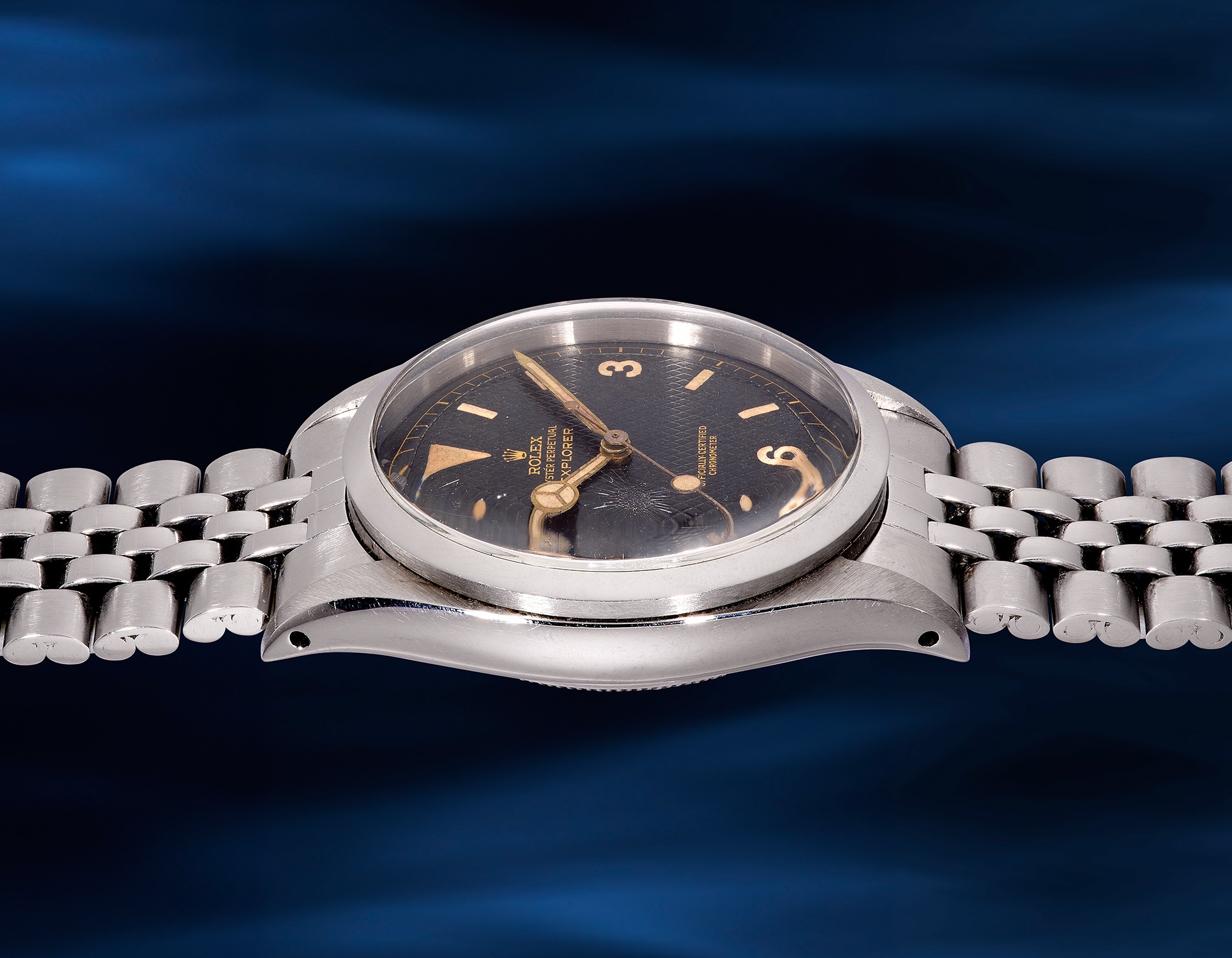
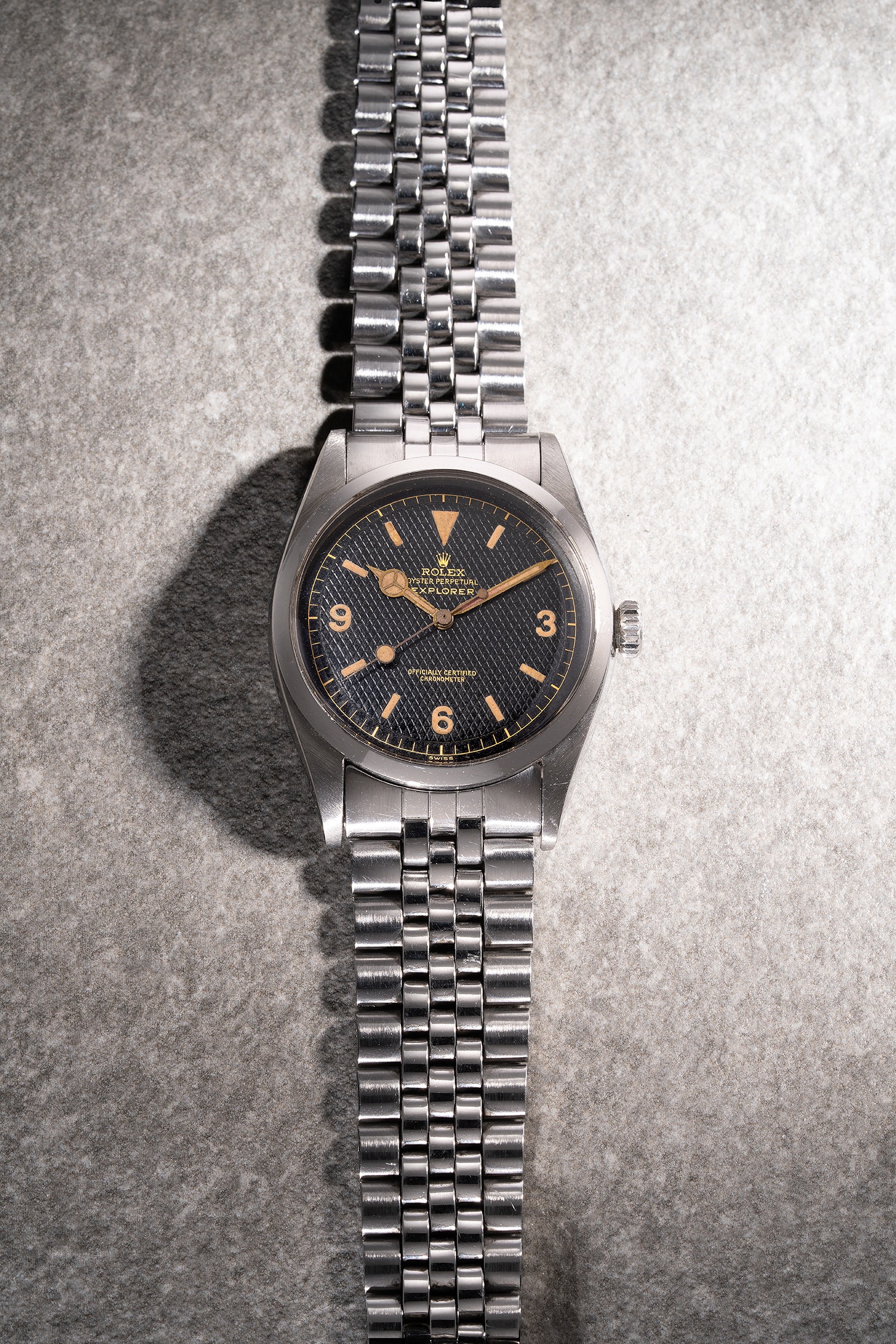
A very rare, well-preserved and attractive stainless steel wristwatch with center seconds, “Explorer” honeycomb dial and bracelet
Full-Cataloguing
The Explorer lineage traces its origins back to the "Bubbleback" wristwatches of the 1940s, which were renowned for their rugged, solid construction and self-winding capabilities. Pre-Explorer models such as the references 6150, 6098, and 6298 did not yet officially carry the "Explorer" designation on the dial, which Rolex patented in January 1953. It was not until after the successful ascent of Mount Everest by Sir Edmund Hillary and Tenzing Norgay that Rolex decided to officially print the "Explorer" name on the dial, unveiling the new reference 6350.
While the majority of reference 6350 Explorers were offered with glossy black dials featuring gilt text and a chapter ring, Rolex also produced a small number of variants with a textured "honeycomb" dial. This unique surface treatment gave the dial a matte appearance with a distinctive waffle-like pattern, creating a completely different aesthetic compared to the standard glossy black dial.
The present example is offered in attractive overall condition, boasting an impeccably preserved honeycomb dial. Featuring the correct "Swiss" dial with a chapter ring and gilt text, the radium lume on the indexes has developed a warm, orange hue with very high radium readings. The crown is also period-correct, embossed with a Brevet cross beneath the Rolex coronet.
Adding a personal touch, the caseback of this timepiece was inscribed as a gift from a son named "Norm" to his father in 1955 - a common practice to add meaningful messages and significance to a cherished watch. As a wearable mechanical object, this watch further signifies how timepieces in general can serve as important keepsakes and repositories of memory in years to come.
Rolex
Swiss | 1905Founded in 1905 England by Hans Wilsdorf and Alfred Davis as Wilsdorf & Davis, it soon became known as the Rolex Watch Company in 1915, moving its headquarters to Geneva in 1919. Like no other company, the success of the wristwatch can be attributed to many of Rolex's innovations that made them one of the most respected and well-known of all luxury brands. These innovations include their famous "Oyster" case — the world's first water resistant and dustproof watch case, invented in 1926 — and their "Perpetual" — the first reliable self-winding movement for wristwatches launched in 1933. They would form the foundation for Rolex's Datejust and Day-Date, respectively introduced in 1945 and 1956, but also importantly for their sports watches, such as the Explorer, Submariner and GMT-Master launched in the mid-1950s.
One of its most famous models is the Cosmograph Daytona. Launched in 1963, these chronographs are without any doubt amongst the most iconic and coveted of all collectible wristwatches. Other key collectible models include their most complicated vintage watches, including references 8171 and 6062 with triple calendar and moon phase, "Jean Claude Killy" triple date chronograph models and the Submariner, including early "big-crown" models and military-issued variants.