159
Andy Warhol
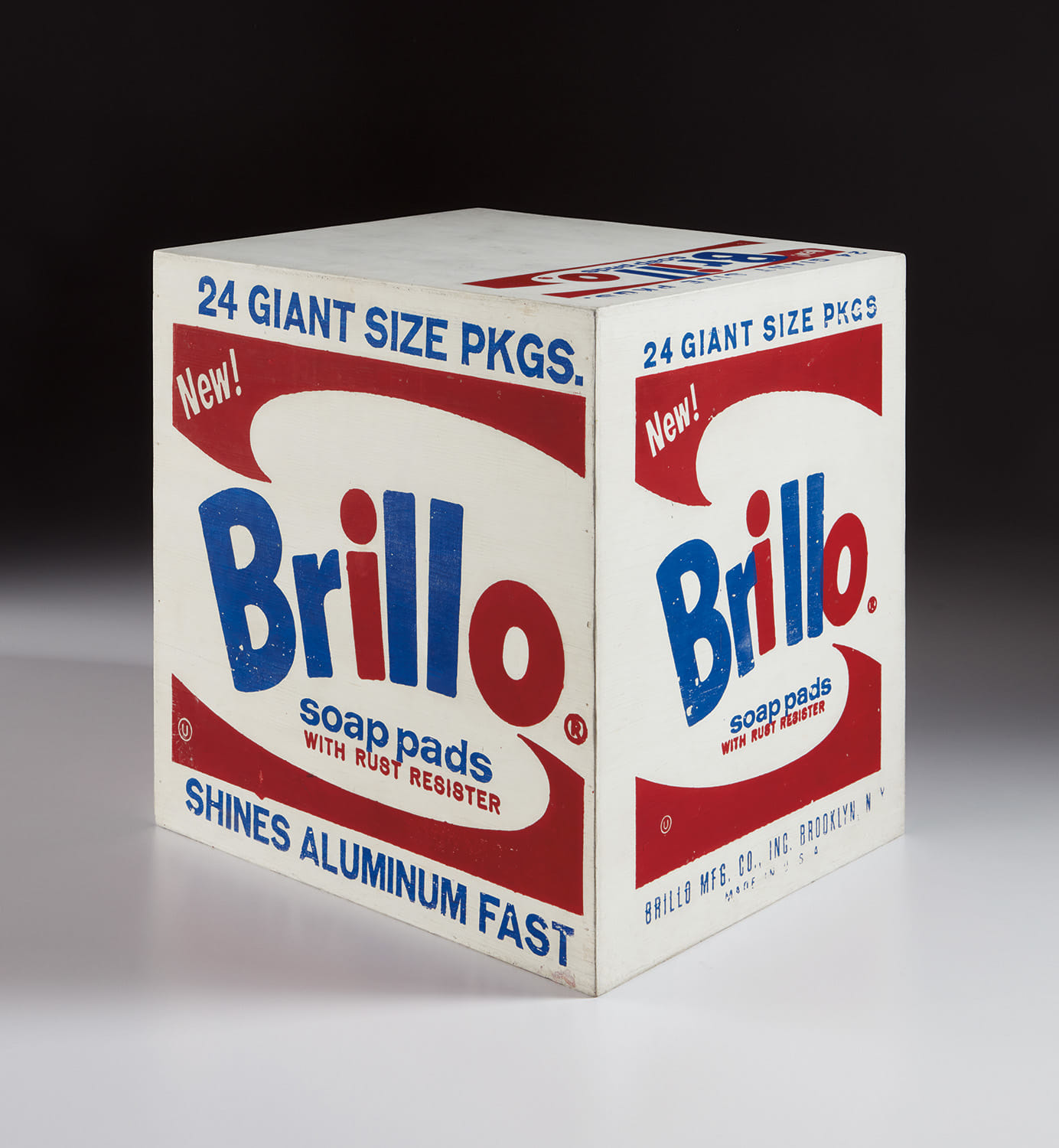
Brillo Soap Pads Box
Full-Cataloguing
Massed floor to ceiling with Warhol’s various box sculptures, the Stable Gallery was transformed into what appeared to be a supermarket stockroom. The dazzling show became a rallying point for both those for and against Pop art; as Robert Indiana remembers, “The most striking opening of that period was definitely Andy’s Brillo Box Show” (Robert Indiana, quoted in Victor Bockris, Warhol: The Biography, Cambridge, 2003, p. 198). These so-called “stable boxes” set the foundation for two further discrete iterations on the theme, created for Warhol’s 1968 exhibition at Moderna Museet in Stockholm and his 1970 retrospective at the Pasadena Museum of Art. In a cutting indictment of the values of bourgeois culture, Warhol’s Brillo Soap Pad constitutes a deadpan cultural critique of a materialistic and mass-produced society that remains unparalleled in the history of American art.
Andy Warhol
American | B. 1928 D. 1987Andy Warhol was the leading exponent of the Pop Art movement in the U.S. in the 1960s. Following an early career as a commercial illustrator, Warhol achieved fame with his revolutionary series of silkscreened prints and paintings of familiar objects, such as Campbell's soup tins, and celebrities, such as Marilyn Monroe. Obsessed with popular culture, celebrity and advertising, Warhol created his slick, seemingly mass-produced images of everyday subject matter from his famed Factory studio in New York City. His use of mechanical methods of reproduction, notably the commercial technique of silk screening, wholly revolutionized art-making.
Working as an artist, but also director and producer, Warhol produced a number of avant-garde films in addition to managing the experimental rock band The Velvet Underground and founding Interview magazine. A central figure in the New York art scene until his untimely death in 1987, Warhol was notably also a mentor to such artists as Keith Haring and Jean-Michel Basquiat.