155
Jesús Rafael Soto
Gran Marrón
Full-Cataloguing
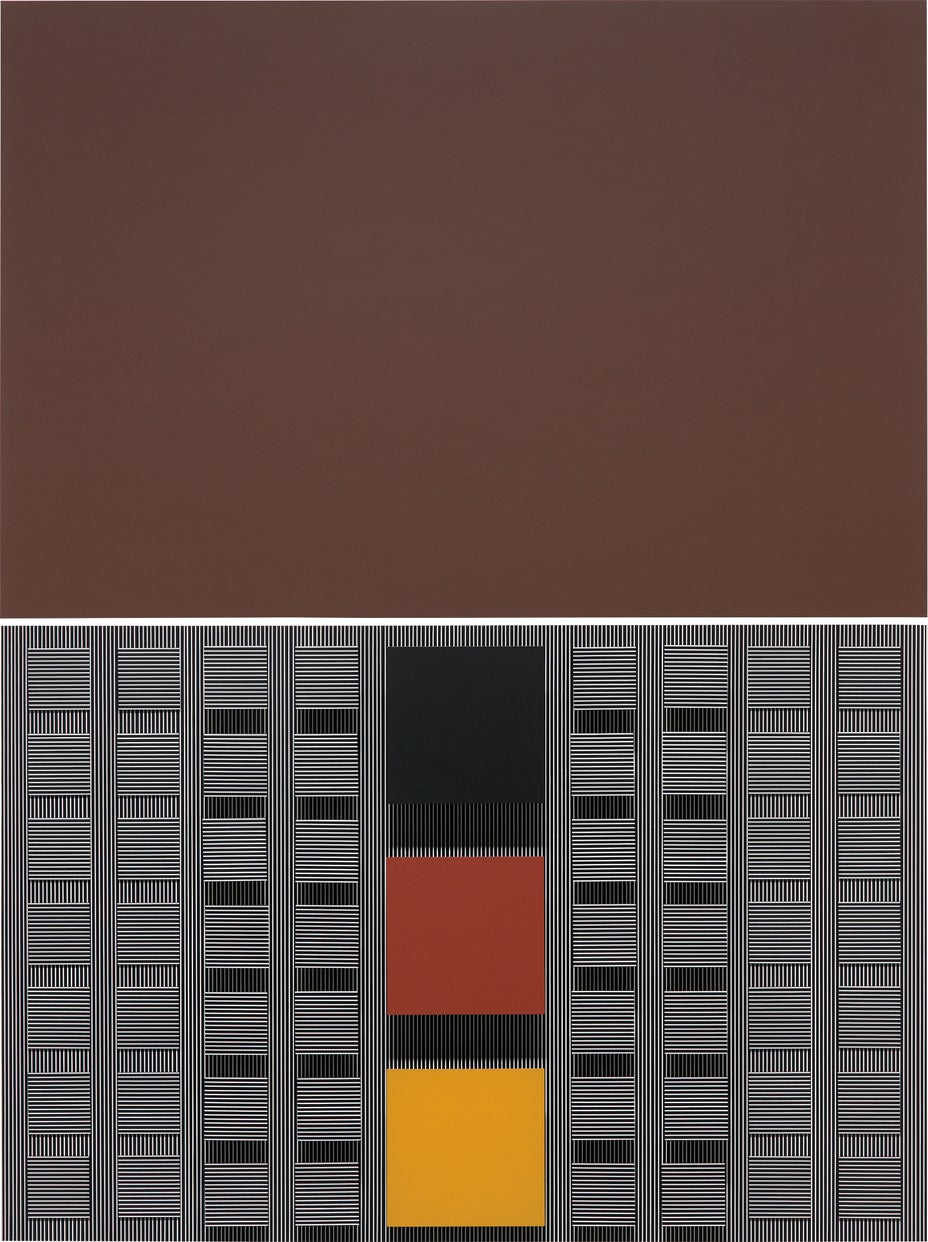
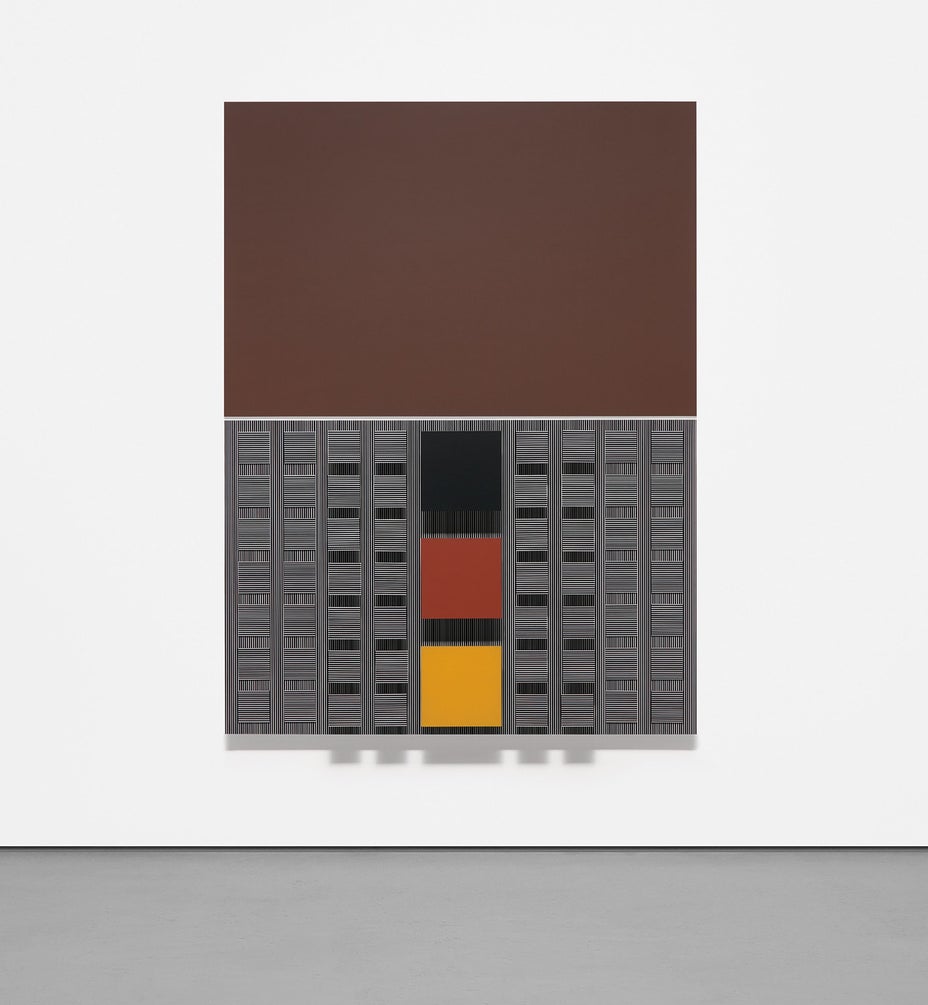
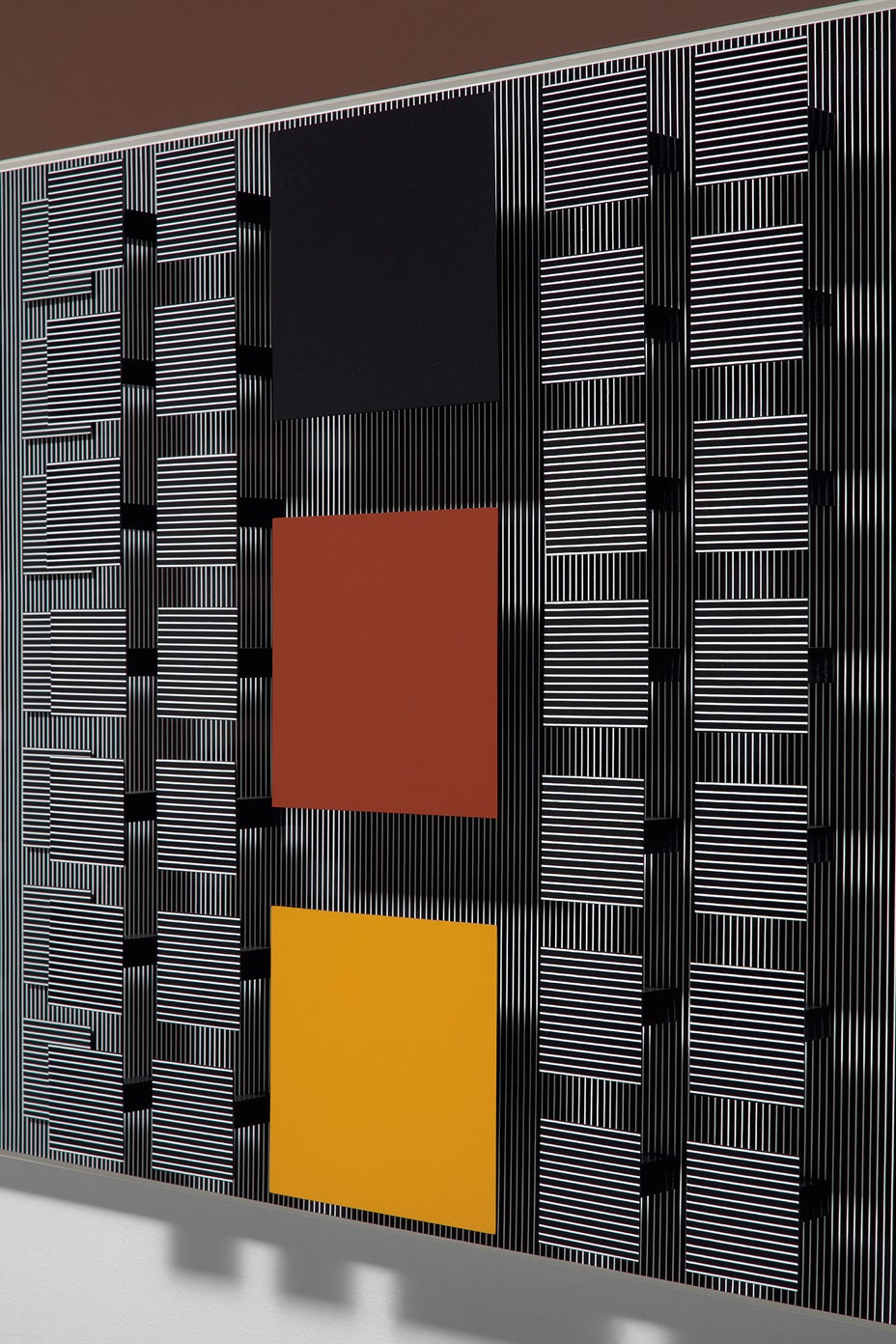
In the lower half of Gran Marrón, a restless energy is created by the contrast between the densely packed but finely painted black and white vertical and the horizontally-striped square units that are affixed to it, creating energetic disruption from the intricately ordered composition. These vibrating patterns reveal themselves to be composed of multiple planes, as the central portion extrudes even further into the viewer’s space. The black, brown and yellow squares emerge and subside through the grey haze of stripes. Through the upper half of the work, a calm swathe of iridescent brown appears peaceful and subtle, with tonal variations created from the viewer’s varying perspectives. It appears as a blend of the colours of the lower half, creating a unifying force throughout this dynamic work. A key proponent of ZERO, Soto’s hopeful vision of a new art challenged the entrenched idea of the artist as the sole author of meaning and instead necessitated viewers to activate the work through their plural experiences of the phenomena of light and space. Soto’s oeuvre crucially engages with the sensations of being experienced by an embodied viewer, as exemplified in the present work.
Jesús Rafael Soto
Venezuelan | B. 1923 D. 2005Jesús Rafael Soto was born in Ciudad Bolívar and studied at the School of Visual and Applied Arts in Caracas. During this period he became acquainted with Los Disidentes, a group of artists that included Alejandro Otero and Carlos Cruz-Diez. In addition to his fellow compatriots, Soto’'s work was influenced by Kazimir Malevich and Piet Mondrian.
The main artistic tenets evinced in Soto's works are pure abstraction, vibrations, progressions and geometric rigor. They can be seen through the use of lines and superimposed squares in his sculptures, made with paint and a series of industrial and synthetic materials. He spent much time in Europe, becoming a key member of the Group Zero movement, which included such artists as Lucio Fontana, Gunther Uecker and Yves Klein. As a result, Soto's work also incorporates modernist concepts such as light, time, movement, color manipulation and space. All of these facets place him as an important figure within the Kinetic and Op Art movements.