

28
William Eggleston
Dust Bells Volume II
- Estimate
- £80,000 - 120,000
£93,750
Lot Details
Memphis: Eggleston Artistic Trust, 2004.
10 dye transfer prints.
1965-1974
Each 30 x 45 cm (11 3/4 x 17 3/4 in.) or the reverse
Each signed in ink in the margin; each dated, numbered 1/15 in another hand in ink and Eggleston Artistic Trust copyright credit reproduction limitation stamp on the verso.
Specialist
Full-Cataloguing
Catalogue Essay
‘Eggleston’s images can trick you if you’re not careful. You have to look at them, then you have to look again and then keep looking until the reason he took the picture kind of clicks in your chest. ‘
Augusten Burroughs, The New York Times Style Magazine, 17 October 2016
William Eggleston's highly saturated, vivid images highlight the beauty in the banal. In the late 1960s, Eggleston broke away from traditional black-and-white photography and started experimenting with colour. At the time, colour photography was widely associated with commercial rather than fine art, and his defining 1976 solo exhibition at the Museum of Modern Art fundamentally shifted how colour photography was viewed, ushering in institutional acceptance and helping to ensure Eggleston's significant legacy in the history of photography.
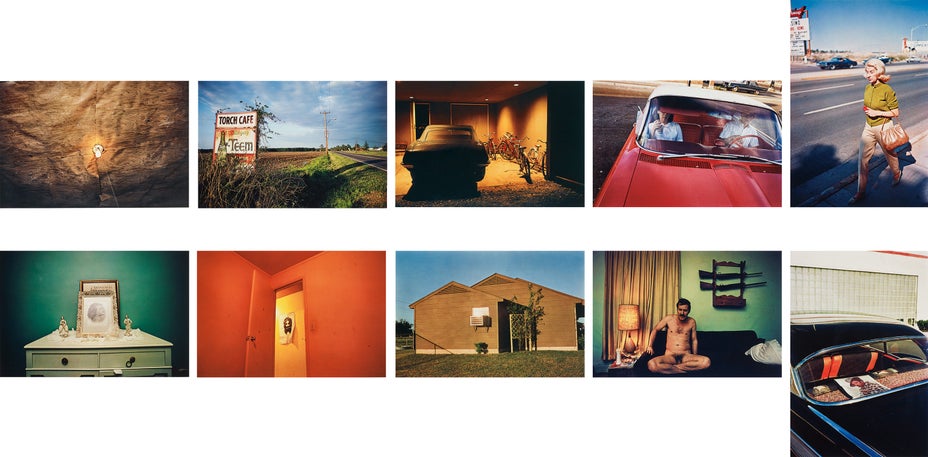
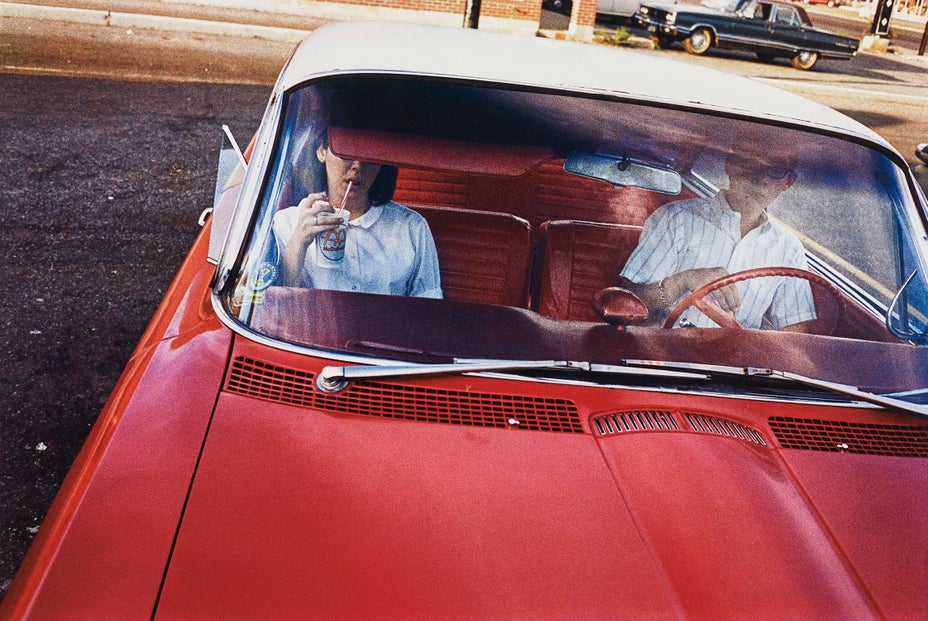
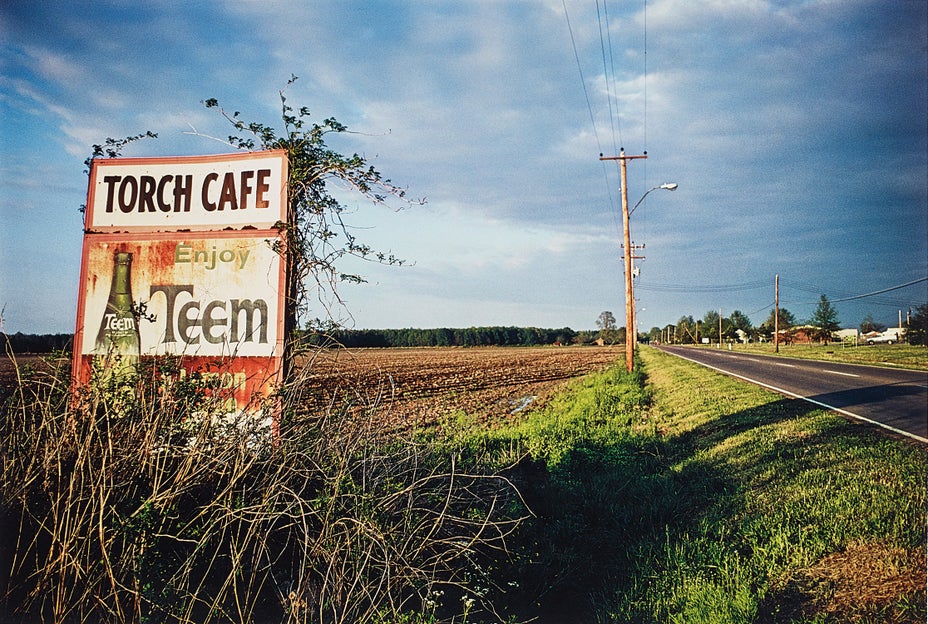
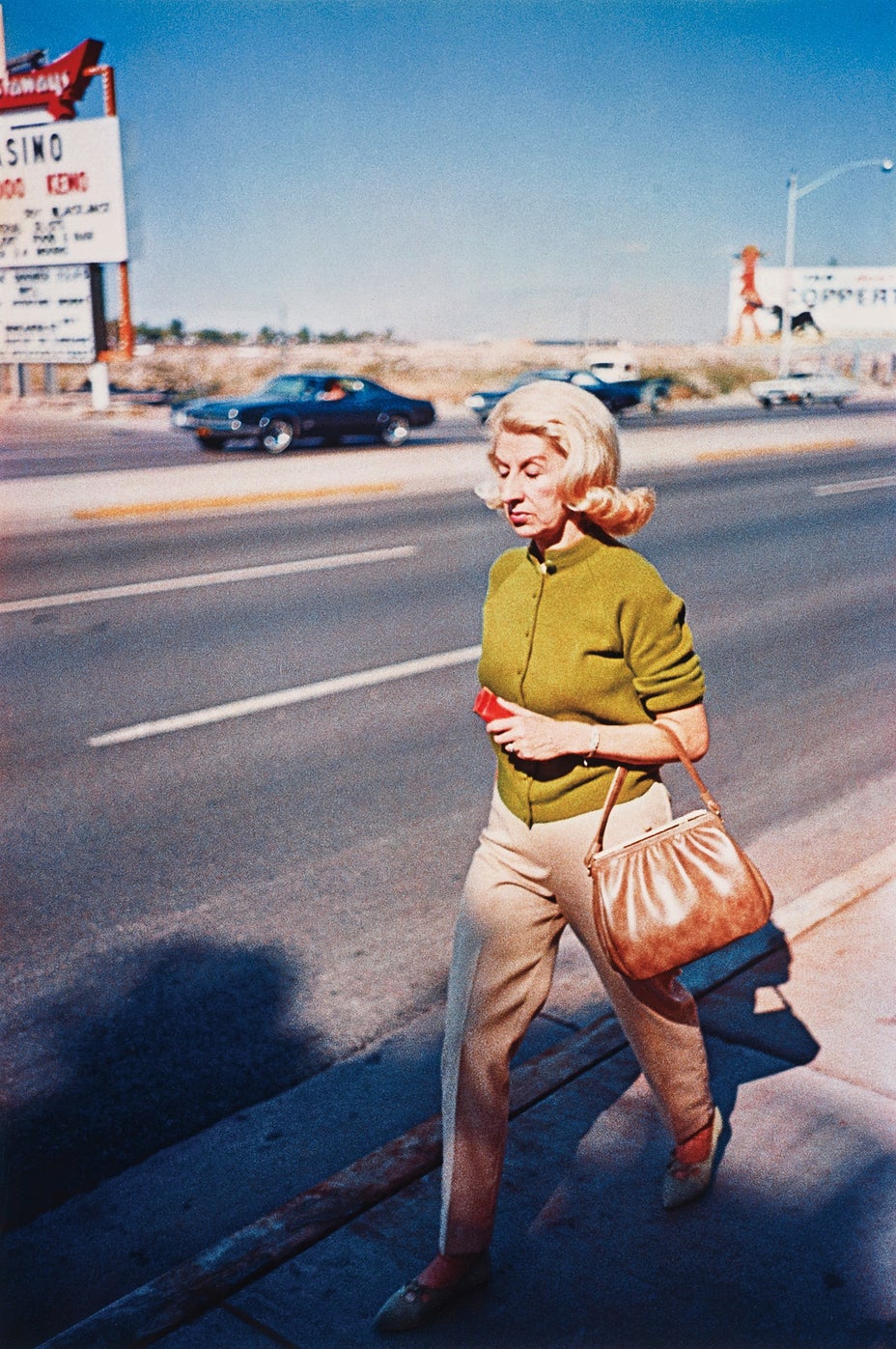
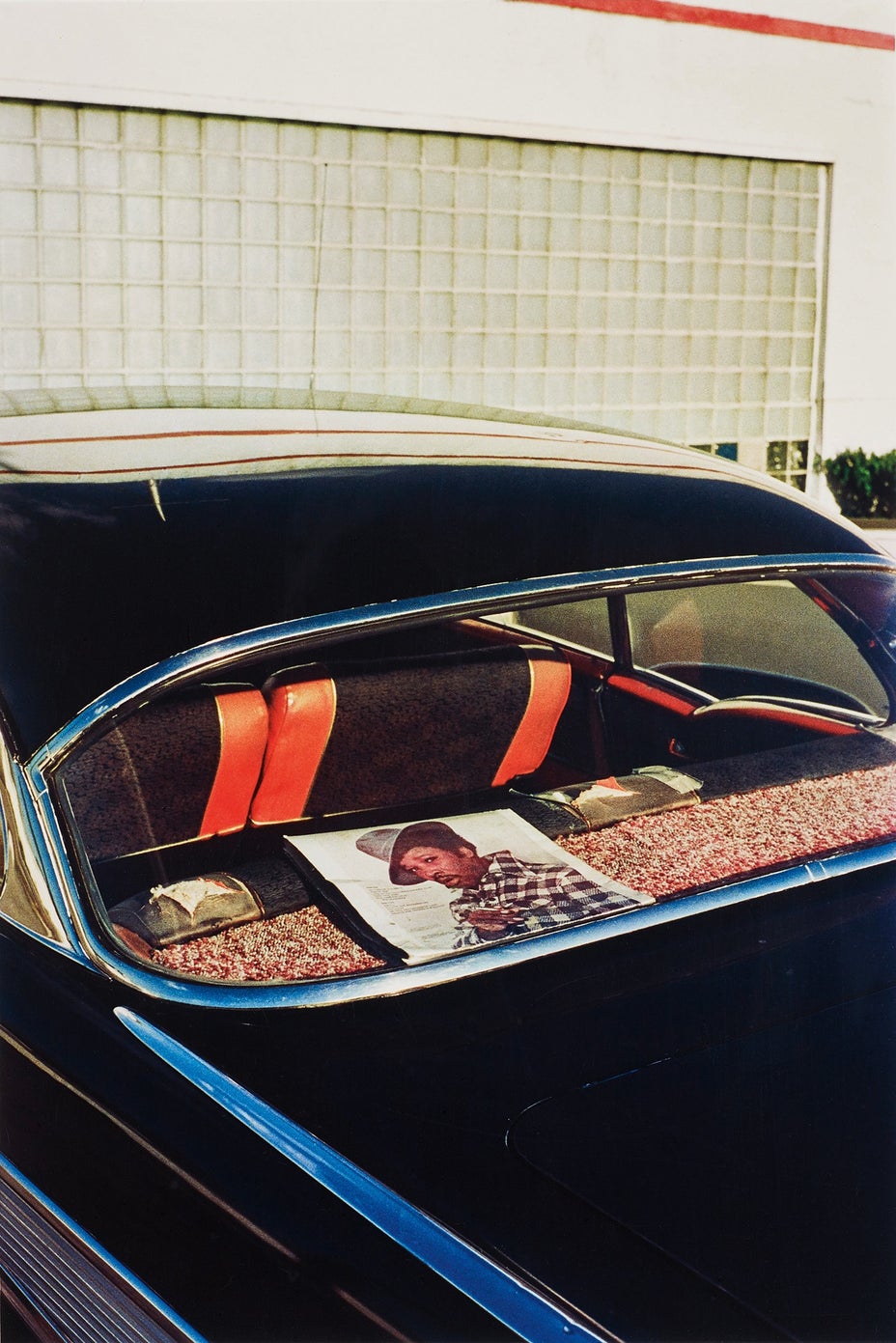
In 2004, Eggleston published two portfolios: Dust Bells Volume I and Dust Bells Volume II. Each volume comprises 10 dye-transfer prints that perfectly encapsulates why Eggleston has been nicknamed the father of colour photography. The deep blues and powerful reds found in Dust Bells Volume II, offered here, is Eggleston at his finest. These 10 images depict life the South, from 1965-74, attaching a thoughtful significance to everyday objects and actions. While passing moments – a couple eating fast food in their car, a lone sign along a highway, a magazine in the back of a car – may seem like random details, every frame is carefully composed. Eggleston treats each image like a painting, rendered with split-second confidence. His medium of choice is the dye transfer, a process that allows him to control the tone and intensity of each individual colour.
Dust Bells Volume II remains the last portfolio that the artist has compiled. This portfolio is appearing at auction for the first time.
Augusten Burroughs, The New York Times Style Magazine, 17 October 2016
William Eggleston's highly saturated, vivid images highlight the beauty in the banal. In the late 1960s, Eggleston broke away from traditional black-and-white photography and started experimenting with colour. At the time, colour photography was widely associated with commercial rather than fine art, and his defining 1976 solo exhibition at the Museum of Modern Art fundamentally shifted how colour photography was viewed, ushering in institutional acceptance and helping to ensure Eggleston's significant legacy in the history of photography.
In 2004, Eggleston published two portfolios: Dust Bells Volume I and Dust Bells Volume II. Each volume comprises 10 dye-transfer prints that perfectly encapsulates why Eggleston has been nicknamed the father of colour photography. The deep blues and powerful reds found in Dust Bells Volume II, offered here, is Eggleston at his finest. These 10 images depict life the South, from 1965-74, attaching a thoughtful significance to everyday objects and actions. While passing moments – a couple eating fast food in their car, a lone sign along a highway, a magazine in the back of a car – may seem like random details, every frame is carefully composed. Eggleston treats each image like a painting, rendered with split-second confidence. His medium of choice is the dye transfer, a process that allows him to control the tone and intensity of each individual colour.
Dust Bells Volume II remains the last portfolio that the artist has compiled. This portfolio is appearing at auction for the first time.
Provenance
Exhibited
Literature
William Eggleston
American | 1939William Eggleston's highly saturated, vivid images, predominantly capturing the American South, highlight the beauty and lush diversity in the unassuming everyday. Although influenced by legends of street photography Robert Frank and Henri Cartier-Bresson, Eggleston broke away from traditional black and white photography and started experimenting with color in the late 1960s.
At the time, color photography was widely associated with the commercial rather than fine art — something that Eggleston sought to change. His 1976 exhibition at the Museum of Modern Art, Color Photographs, fundamentally shifted how color photography was viewed within an art context, ushering in institutional acceptance and helping to ensure Eggleston's significant legacy in the history of photography.
Browse ArtistAt the time, color photography was widely associated with the commercial rather than fine art — something that Eggleston sought to change. His 1976 exhibition at the Museum of Modern Art, Color Photographs, fundamentally shifted how color photography was viewed within an art context, ushering in institutional acceptance and helping to ensure Eggleston's significant legacy in the history of photography.