807
Vianney Halter
GPVH
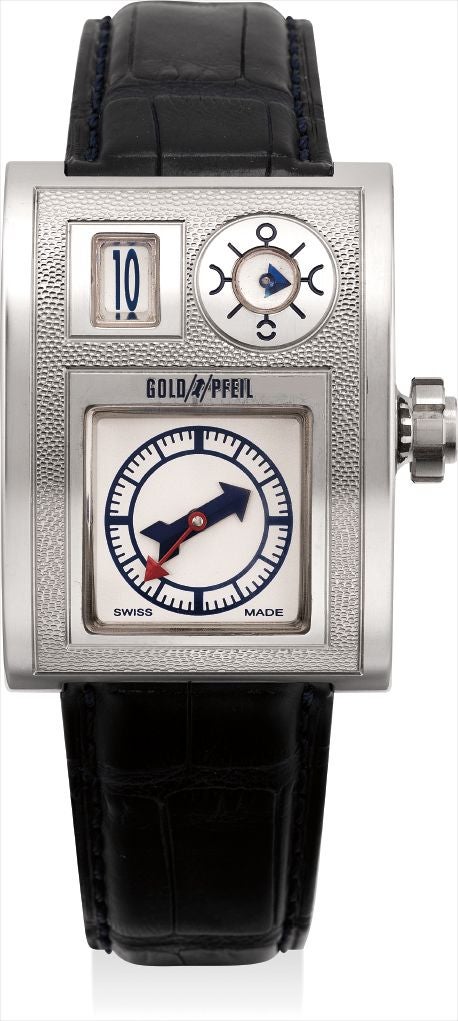
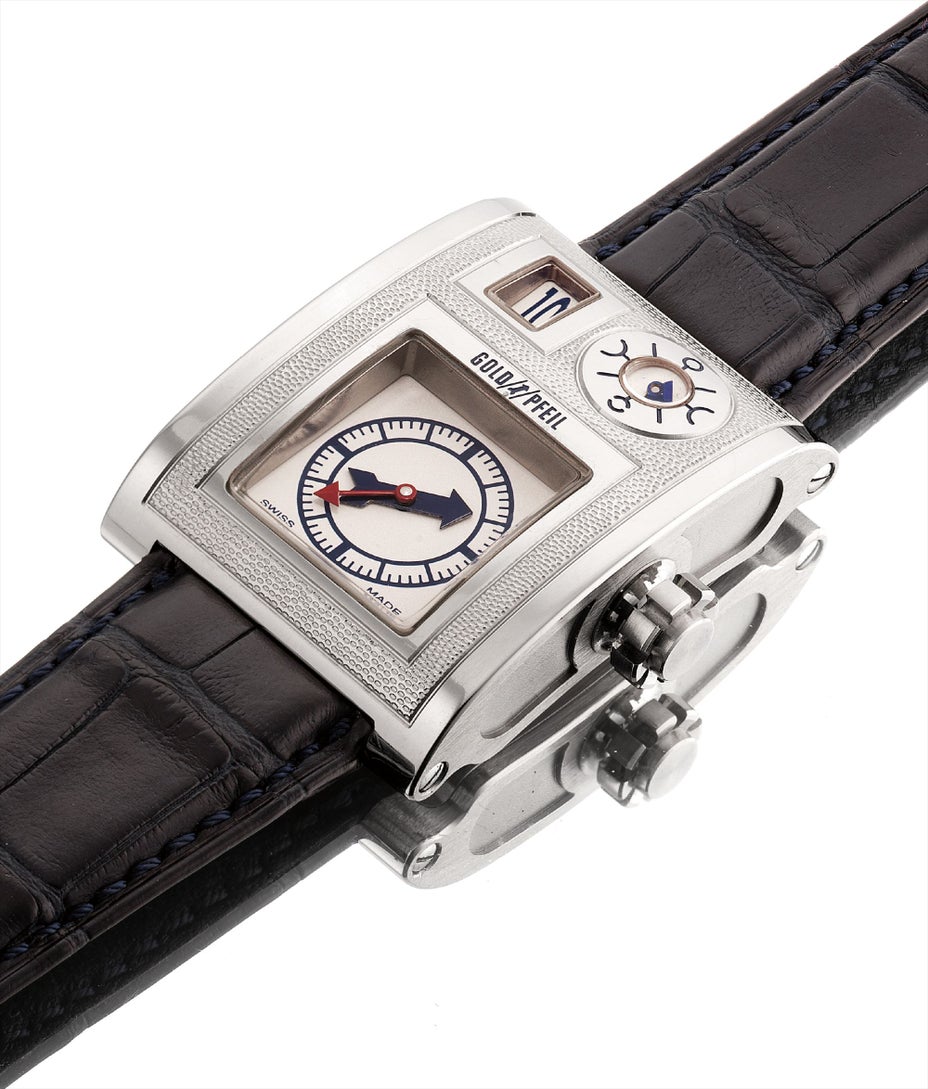
A very unusual white gold wristwatch with jump hour and moon phases, made for GoldPfeil
Estimate
HK$120,000–200,000
€13,100–21,800
$15,000–25,000
Sold For
HK$312,500
Manufacturer
Vianney Halter
Year
Circa 2001
Case No
11'144
Model Name
GPVH
Material
18k white gold
Calibre
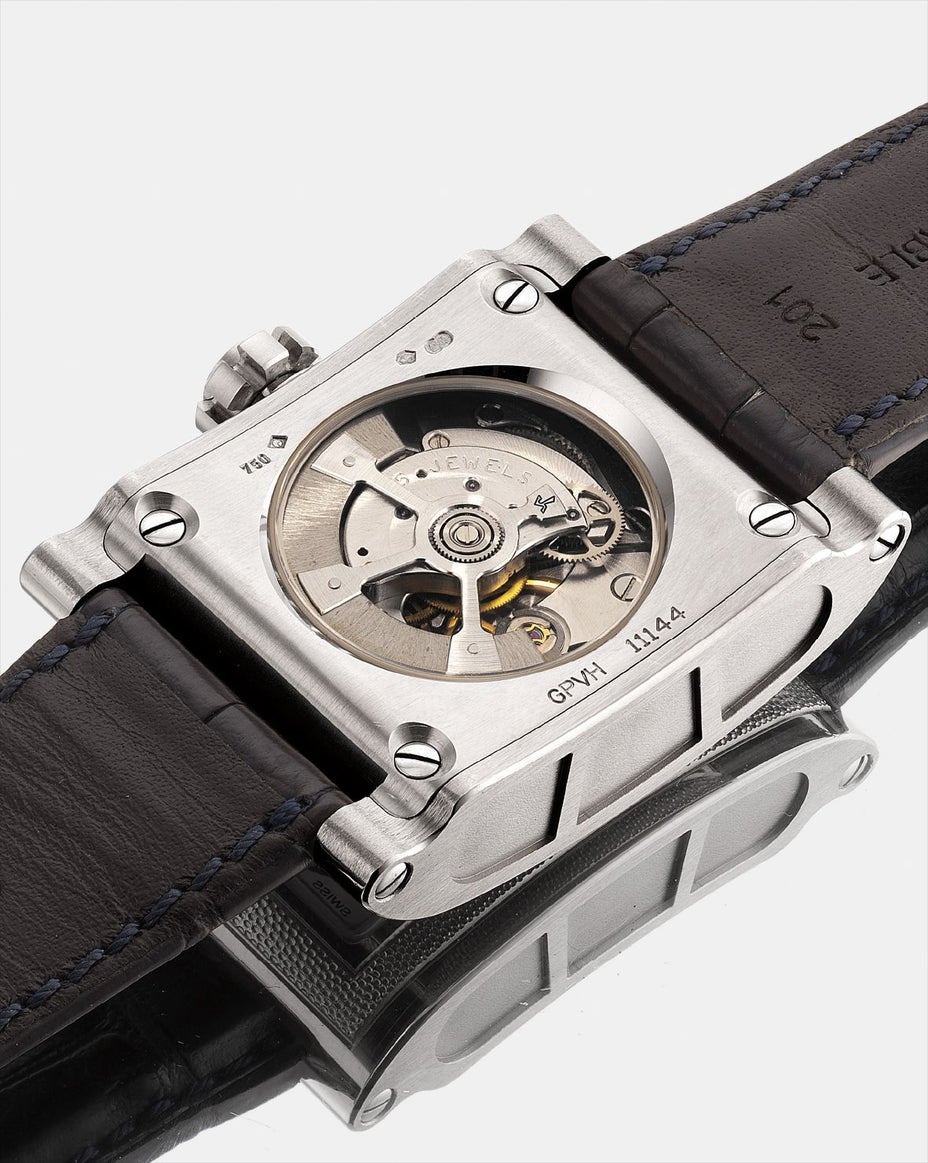
Automatic, 35 jewels
Bracelet/Strap
<em>GoldPfeil</em> midnight blue crocodile strap
Clasp/Buckle
18k white gold <em>Vianney Halter</em> buckle
Dimensions
29mm wide, 40mm long
Signed
<em>Case and movement signed by maker, case furthermore signed by <em>GoldPfeil</em></em>
Full-Cataloguing
The present example is the result of an ambitious project conceived by German luxury brand Goldpfeil in the early 2000s. Seven members of the Académie Horlogère des Créateurs Indépendants (AHCI), Sven Anderson, Martin Frei with Thomas and Felix Baumgarter, Vincent Calabrese, Vianney Halter, Frank Jutzi, Bernhard Lederer and Antoine Preziuso, were recruited to each produce a small series of unusual watches, along with a one-off piece for charity.
This particular watch is the brainchild of Vianney Halter, best known for being behind the landmark Antiqua and Harry Winston Opus 3. Halter’s imaginative creation was inspired by vintage rangefinder cameras (the consequence of Goldpfeil being a leathergoods maker). It was the most expensive of the seven watches, with a retail price of almost 65,000 Swiss francs in 2001 – necessitated by the tremendous amount of work in crafting each watch.
The front of the white gold case is covered with hundreds of micro dimples, each created by hand with a tiny hand hammer, intended to mimic the look of a leather wrap on antique cameras. The complex crown is modelled on a camera’s winding knob, while the unique white gold buckle for the strap takes its cues from the loading mechanism for film.
Halter also developed the automatic movement inside from scratch. Most notably, the moon phase is one of the most accurate ever installed in a wristwatch, deviating by a day in 139 years, compared to the 122 years of the typical moon phase in a high-end wristwatch.
The three sub-dials indicate the minutes (via the blue "Gold-Pfeil" arrow) and running seconds, jump hours in the window on the left corner, and a moon phase illustrated by stylized glyphs around the subdial. According to information released by Vianney Halter, the series consisted of 108 pieces, along with a piece unique that was bejeweled.
This particular watch is the brainchild of Vianney Halter, best known for being behind the landmark Antiqua and Harry Winston Opus 3. Halter’s imaginative creation was inspired by vintage rangefinder cameras (the consequence of Goldpfeil being a leathergoods maker). It was the most expensive of the seven watches, with a retail price of almost 65,000 Swiss francs in 2001 – necessitated by the tremendous amount of work in crafting each watch.
The front of the white gold case is covered with hundreds of micro dimples, each created by hand with a tiny hand hammer, intended to mimic the look of a leather wrap on antique cameras. The complex crown is modelled on a camera’s winding knob, while the unique white gold buckle for the strap takes its cues from the loading mechanism for film.
Halter also developed the automatic movement inside from scratch. Most notably, the moon phase is one of the most accurate ever installed in a wristwatch, deviating by a day in 139 years, compared to the 122 years of the typical moon phase in a high-end wristwatch.
The three sub-dials indicate the minutes (via the blue "Gold-Pfeil" arrow) and running seconds, jump hours in the window on the left corner, and a moon phase illustrated by stylized glyphs around the subdial. According to information released by Vianney Halter, the series consisted of 108 pieces, along with a piece unique that was bejeweled.
Vianney Halter
Swiss | 1994Vianney Halter seeks to change how we view time and creates mechanical timepieces with retro-futuristic innovative timekeeping displays. One of his most famous models, the groundbreaking Anitqua, takes inspiration from the nineteenth century with an industrial, steampunk aesthetic, using a case with four separate dial displays that wowed collectors when it was first launched in 1998. For some of Halter's creations, literature — in particular that of Jules Verne — has been a source of inspiration. Halter continues to create futuristic case designs and works with complicated movements.