147
Rolex
Ref. 2737
"Regulator"
An extremely rare and historically important stainless steel chronograph wristwatch with black lacquered regulator dial
Full-Cataloguing
- Chronograph with regulator style dial
- Probably less than 12 made
- Very well preserved
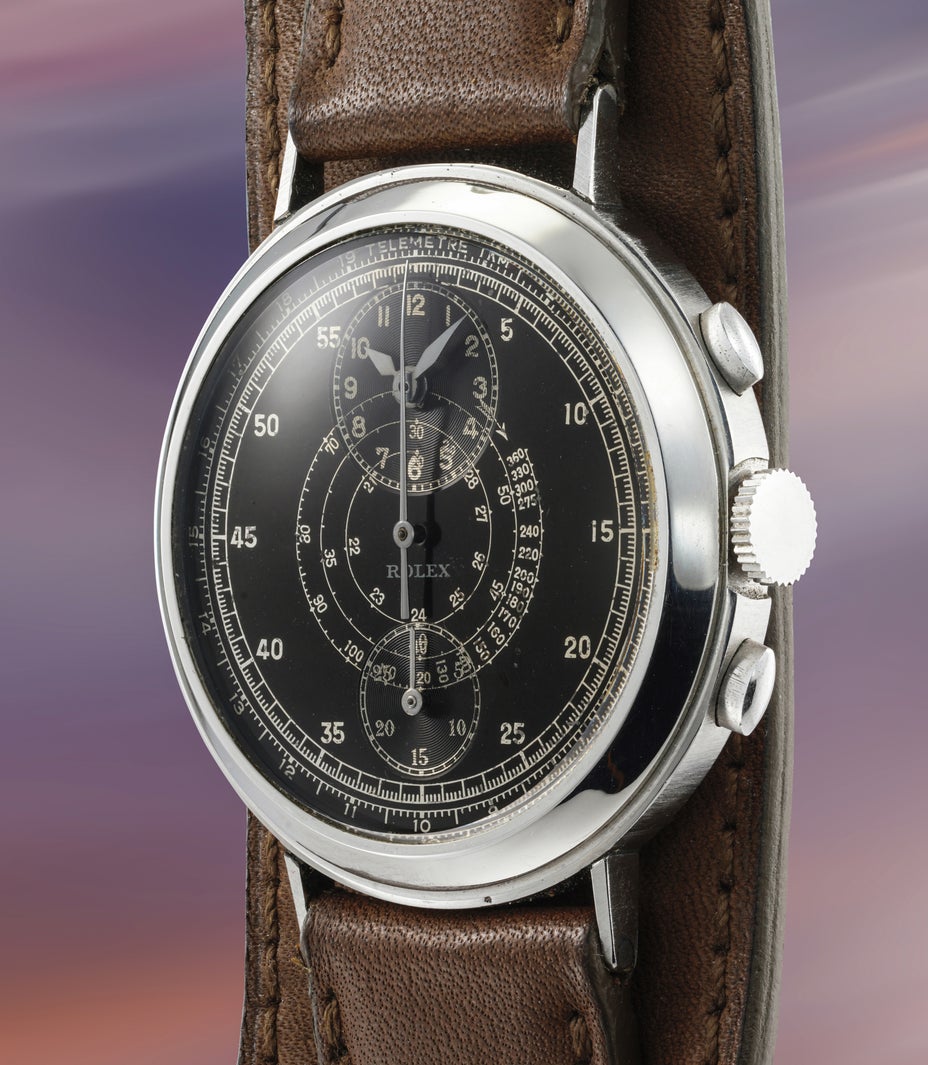
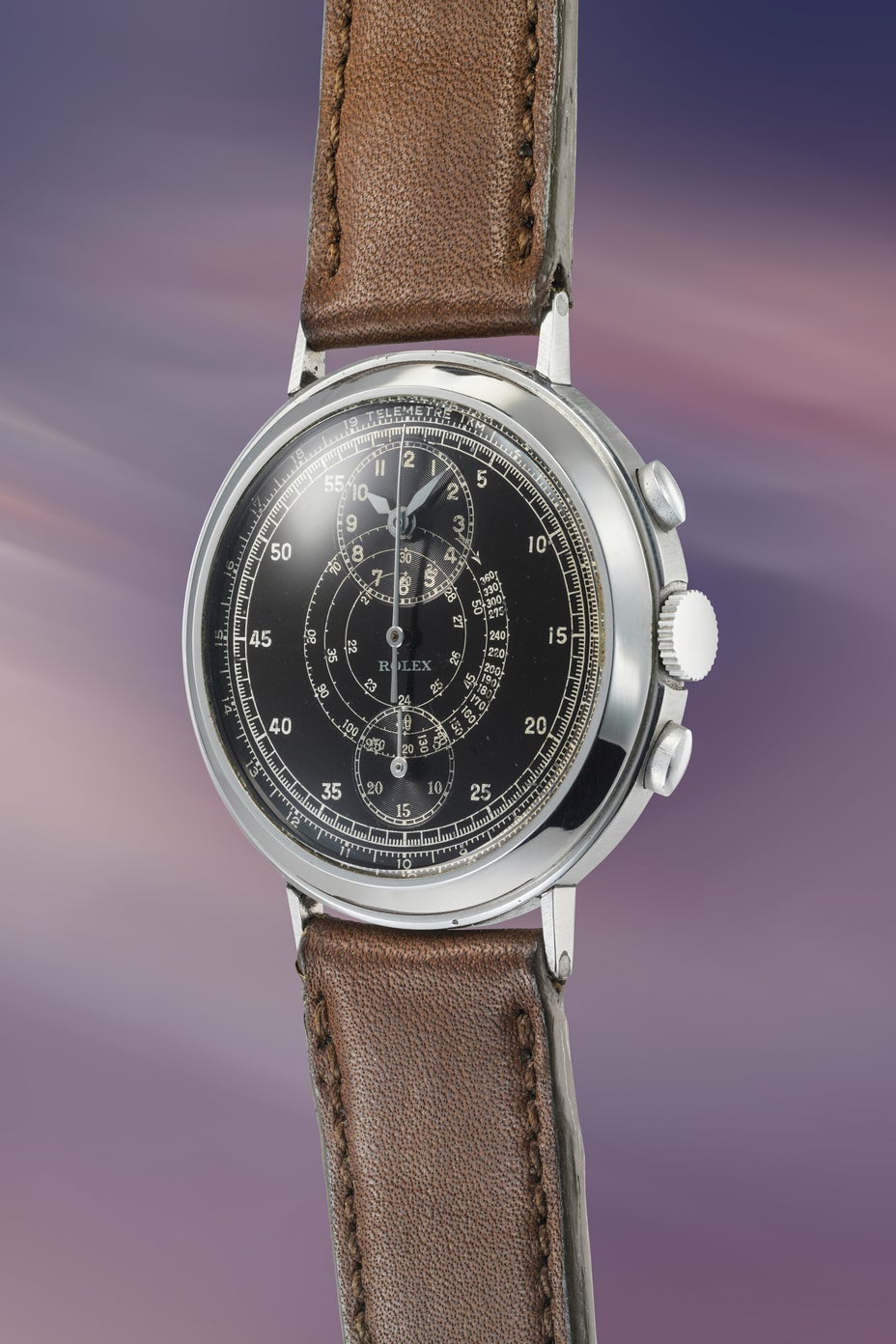
One of the rarest and most unusual chronographs ever produced by Rolex, reference 2737 is distinguished by its highly unconventional regulator-style dial, an exceptional configuration that appears to have been produced only in extremely limited numbers. Introduced in the late 1930s, the reference belongs to the fascinating period immediately preceding Rolex’s widespread adoption of the Oyster case for its chronograph wristwatches. Surviving examples are believed to date from approximately 1938 to 1940, with only around a dozen examples currently known to the market.
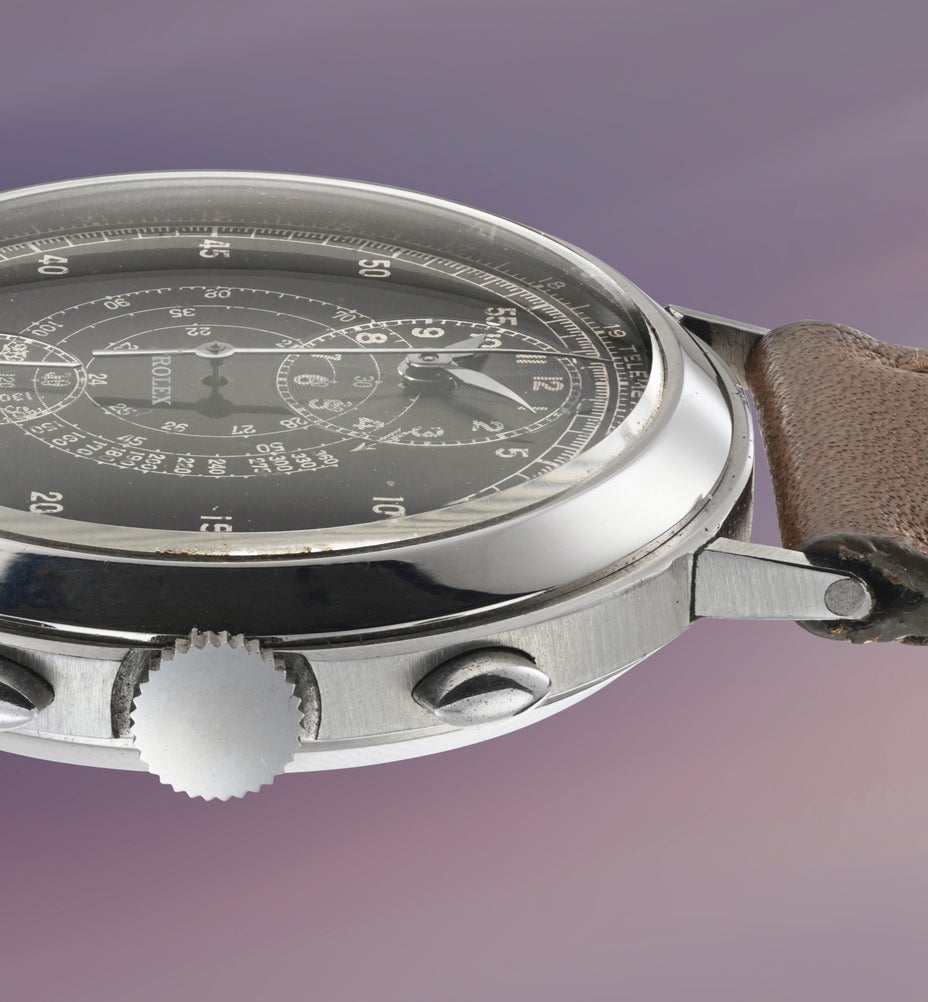
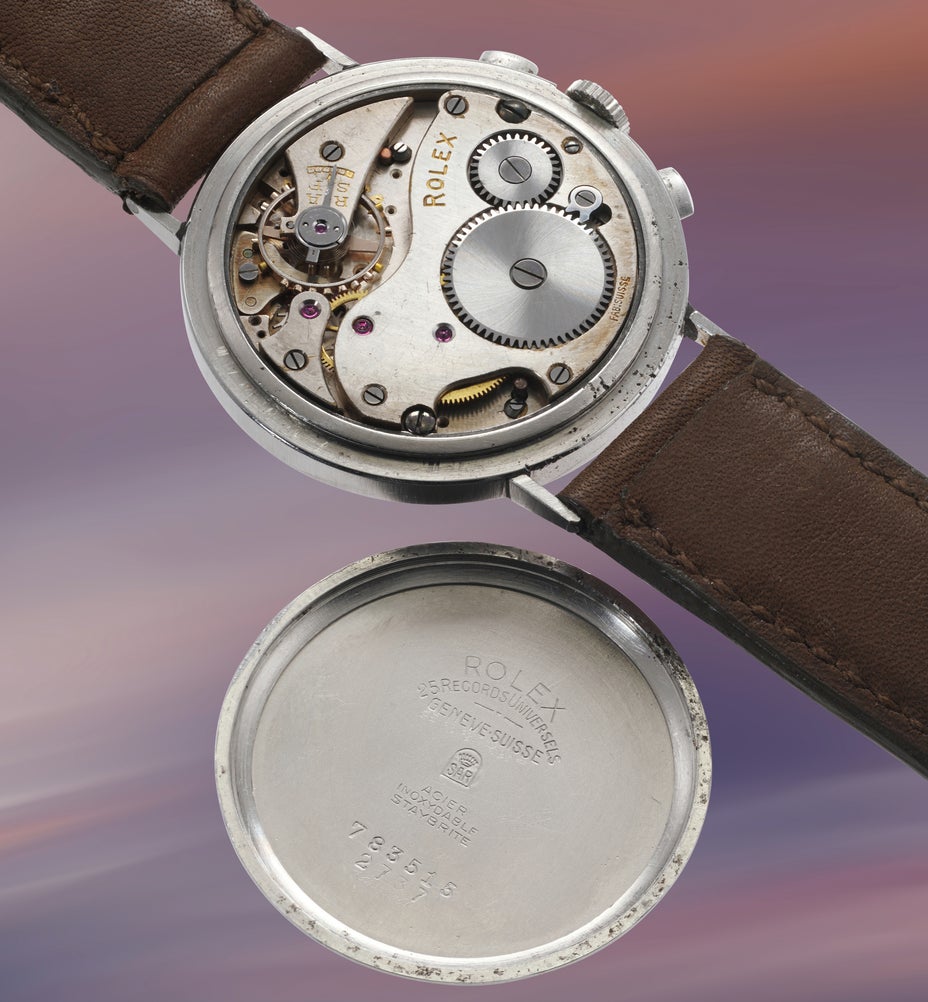
The present reference 2737 features a stainless steel three-piece 36mm case, with a polished and brushed finish, inclined bezel and recessed winding crown. Unlike Rolex’s Oyster chronographs of the period, the reference 2737 is fitted with a snap-on two-part case back, making it a particularly interesting witness to the transitional period in Rolex’s chronograph development.
Its most striking feature is undoubtedly the black regulator dial. The hours are displayed in a separate subsidiary dial positioned at 12 o’clock, while the 30-minute chronograph register occupies the 6 o’clock position. The dial is further enhanced by an outer telemeter scale and a central spiral tachymeter scale, complemented by elegant gold lozenge-shaped hands. Such a regulator configuration is exceptionally unusual within Rolex’s historical production and was never to become a recurring feature of the manufacture’s chronograph portfolio.
Interestingly, contrary to what we have come to expect in chronographs, the start/stop pusher is at 4 o’clock and the reset pusher at 2 o’clock.
Reference 2737 is consequently remarkable not only for its rarity, but also for its place in the evolution of Rolex chronograph design. Predating the celebrated Oyster chronographs, it represents a little-known chapter in the manufacture’s history, when Rolex was experimenting with distinctive dial configurations and case constructions. With only approximately twelve examples presently documented, the reference ranks among the most elusive vintage Rolex chronographs known to collectors.
Rolex
Swiss | 1905Founded in 1905 England by Hans Wilsdorf and Alfred Davis as Wilsdorf & Davis, it soon became known as the Rolex Watch Company in 1915, moving its headquarters to Geneva in 1919. Like no other company, the success of the wristwatch can be attributed to many of Rolex's innovations that made them one of the most respected and well-known of all luxury brands. These innovations include their famous "Oyster" case — the world's first water resistant and dustproof watch case, invented in 1926 — and their "Perpetual" — the first reliable self-winding movement for wristwatches launched in 1933. They would form the foundation for Rolex's Datejust and Day-Date, respectively introduced in 1945 and 1956, but also importantly for their sports watches, such as the Explorer, Submariner and GMT-Master launched in the mid-1950s.
One of its most famous models is the Cosmograph Daytona. Launched in 1963, these chronographs are without any doubt amongst the most iconic and coveted of all collectible wristwatches. Other key collectible models include their most complicated vintage watches, including references 8171 and 6062 with triple calendar and moon phase, "Jean Claude Killy" triple date chronograph models and the Submariner, including early "big-crown" models and military-issued variants.