879
Rolex
Ref. 1601
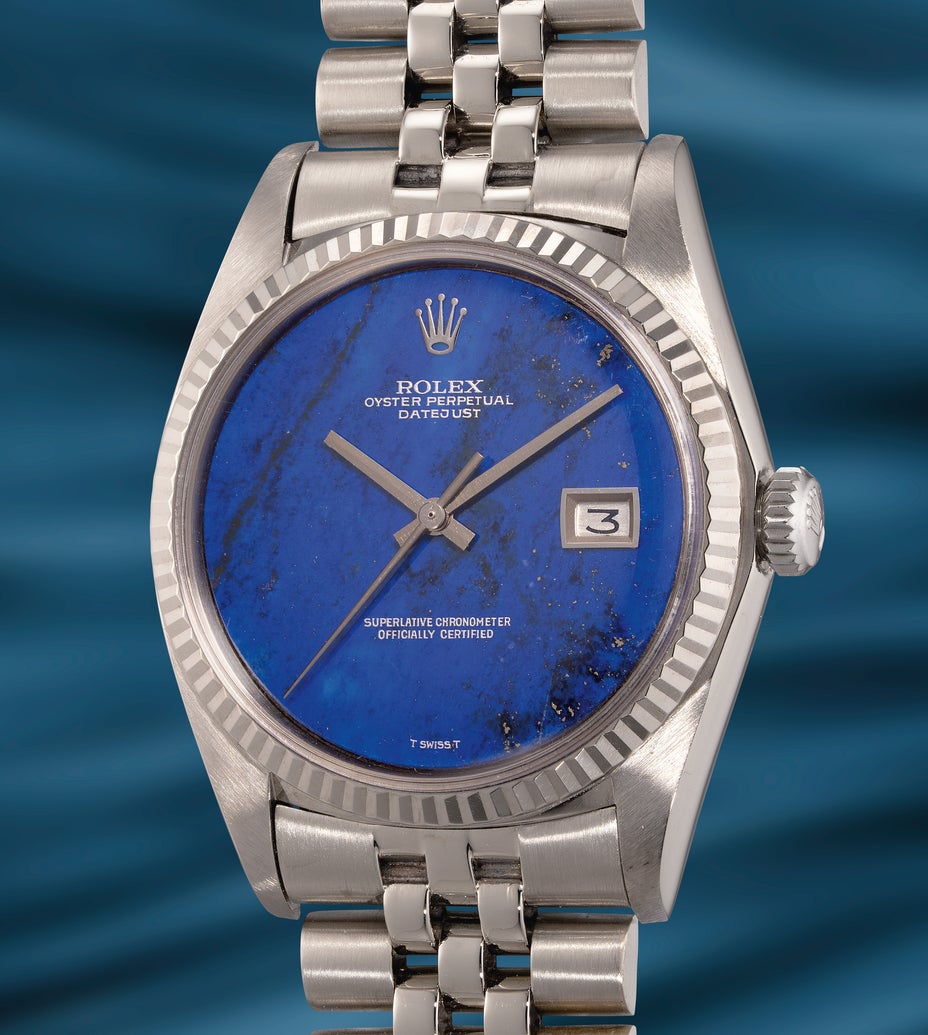
Datejust "Lapis Lazuli"
A highly rare and attractive white gold wristwatch with bracelet, lapis lazuli dial, center seconds and date
Full-Cataloguing
- Fresh to the market
- Extremely rare in white gold with Jubilee bracelet
- Rare lapis lazuli dial, flawlessly preserved
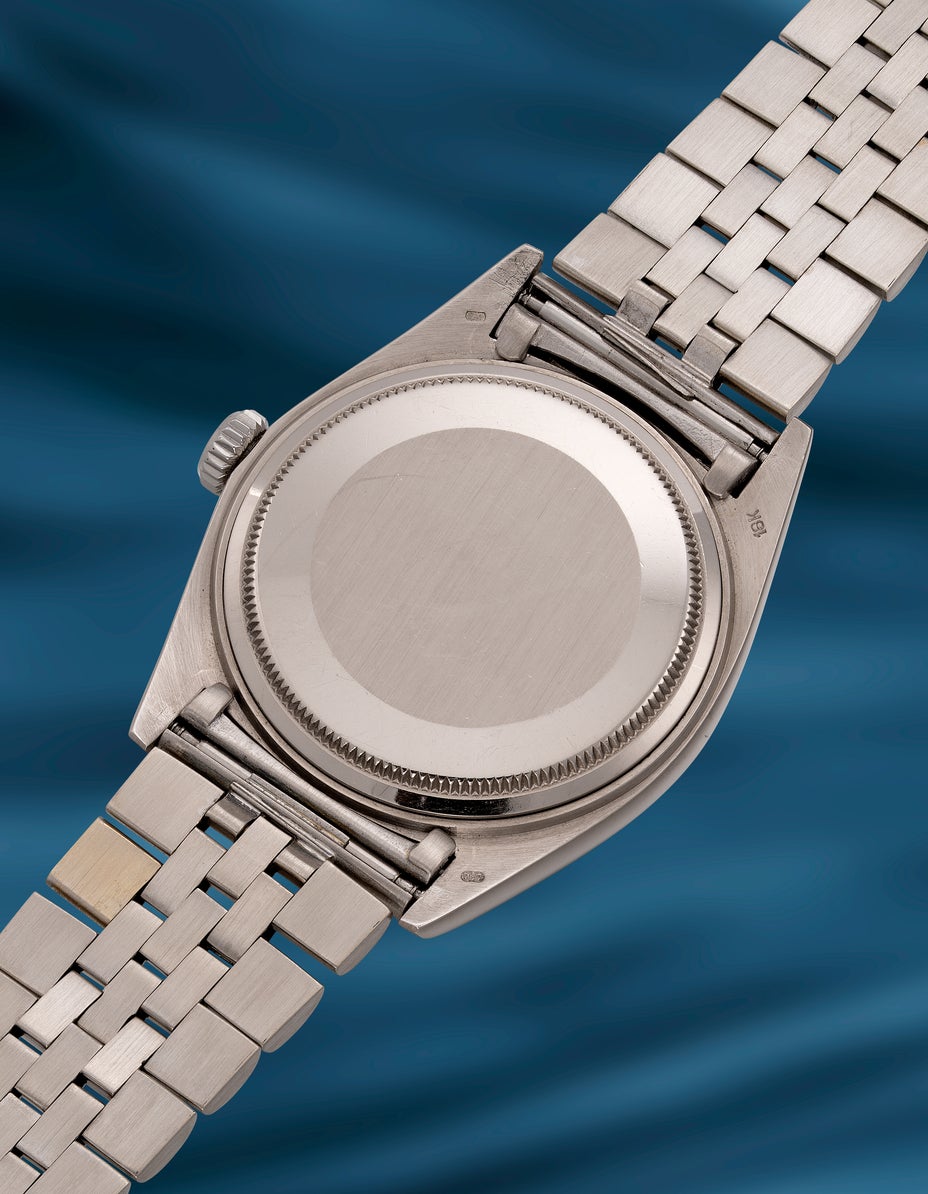
- Crisp hallmarks and numbers between the lugs
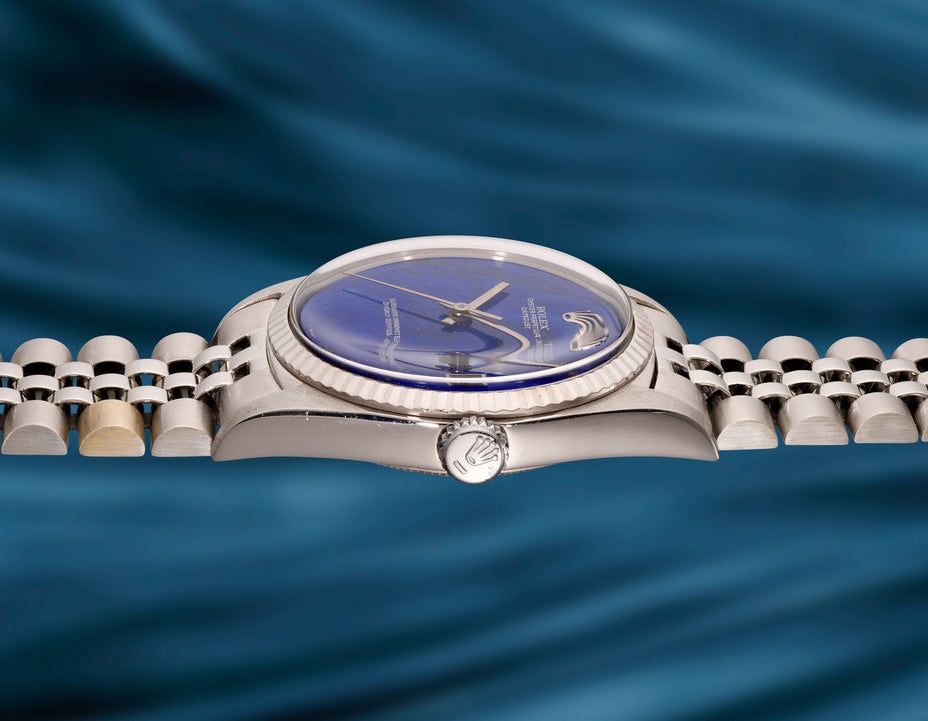
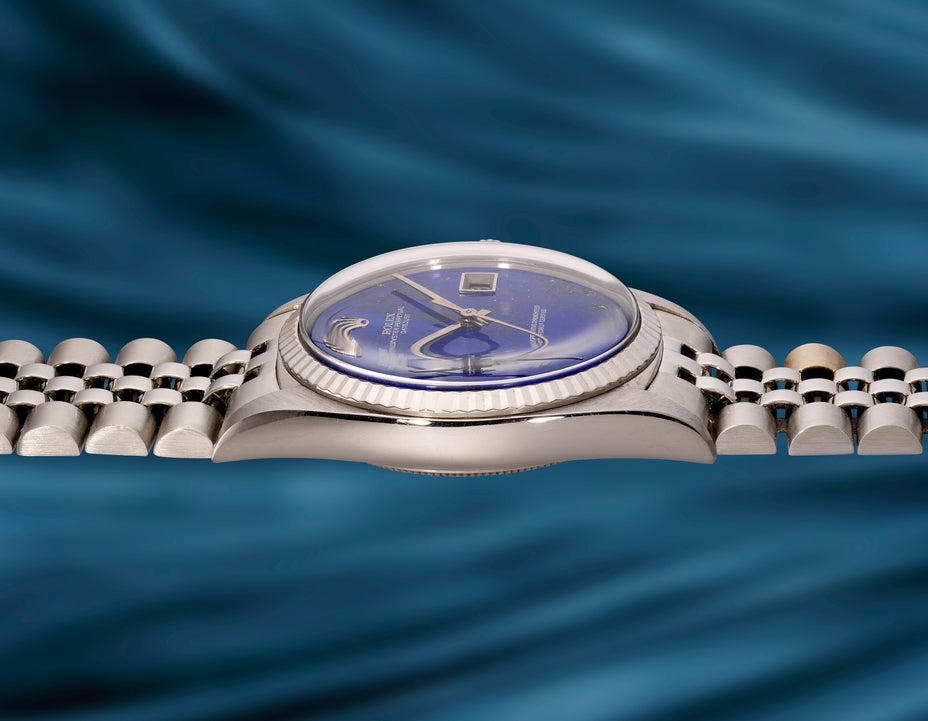
Offered in excellent condition, the present example from circa 1977 showcases an ultra-rare lapis lazuli dial, remarkable for its high level of preservation. Most notably, it is cased in white gold—an exceptionally rare combination, as the majority of lapis lazuli dials found today are housed in yellow gold cases. Crucially, the dial graphics are printed in silver, confirming it was factory-destined for a white metal case. By contrast, lapis lazuli dials fitted in yellow gold cases feature gold printing and appear more frequently on the market.
The lapis lazuli dial itself remains fully intact, displaying no cracks or fissures. Because no two natural hardstone dials are identical, each possesses its own distinct character. Composed of metamorphic rock, lapis lazuli has long been associated with truth, wisdom and inner power. A comparable 18K white gold reference 1601 Datejust with a lapis lazuli dial was offered at The Geneva Watch Auction: XX in 2024, achieving an impressive CHF 120,650. Fresh to the market and a timeless classic, this Datejust is sure to captivate collectors with its enduring style and stunning dial execution.
Rolex
Swiss | 1905Founded in 1905 England by Hans Wilsdorf and Alfred Davis as Wilsdorf & Davis, it soon became known as the Rolex Watch Company in 1915, moving its headquarters to Geneva in 1919. Like no other company, the success of the wristwatch can be attributed to many of Rolex's innovations that made them one of the most respected and well-known of all luxury brands. These innovations include their famous "Oyster" case — the world's first water resistant and dustproof watch case, invented in 1926 — and their "Perpetual" — the first reliable self-winding movement for wristwatches launched in 1933. They would form the foundation for Rolex's Datejust and Day-Date, respectively introduced in 1945 and 1956, but also importantly for their sports watches, such as the Explorer, Submariner and GMT-Master launched in the mid-1950s.
One of its most famous models is the Cosmograph Daytona. Launched in 1963, these chronographs are without any doubt amongst the most iconic and coveted of all collectible wristwatches. Other key collectible models include their most complicated vintage watches, including references 8171 and 6062 with triple calendar and moon phase, "Jean Claude Killy" triple date chronograph models and the Submariner, including early "big-crown" models and military-issued variants.