187
Rolex
Ref. 6239
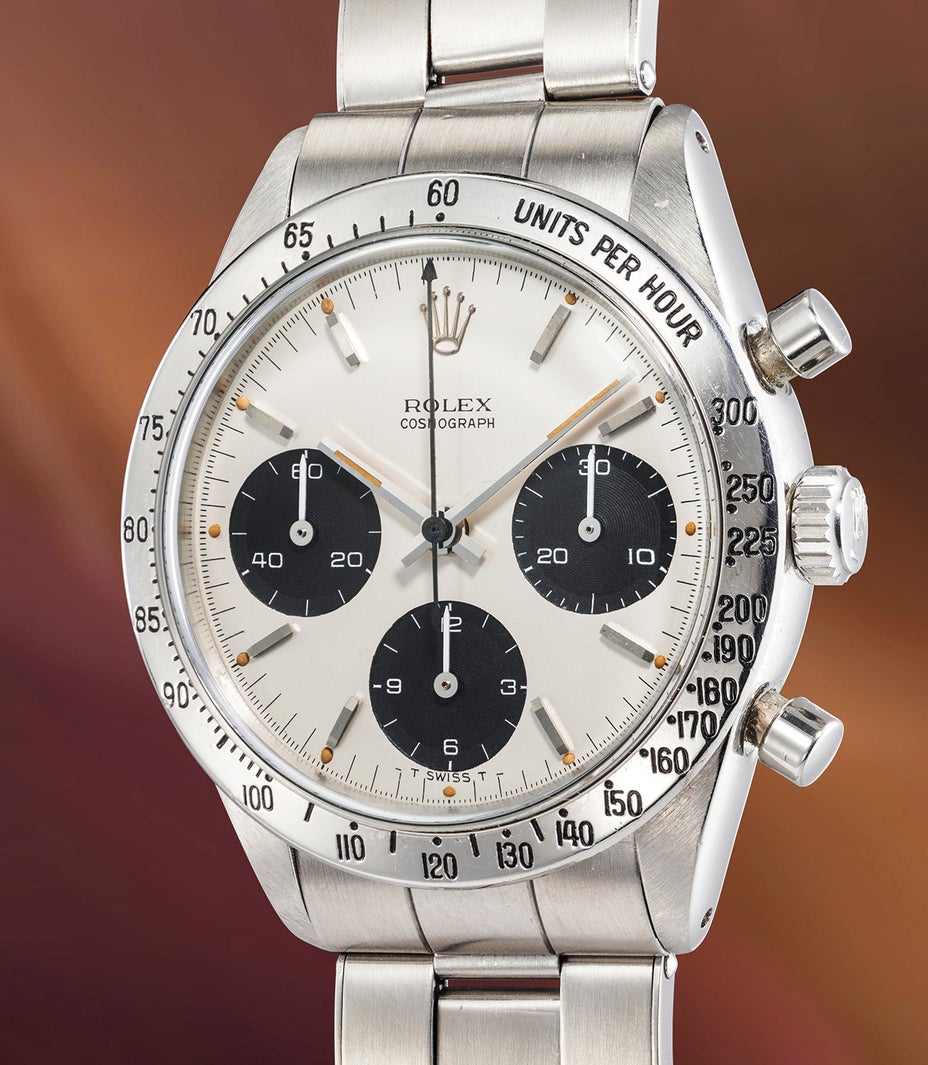
Cosmograph Daytona "Double T Swiss T"
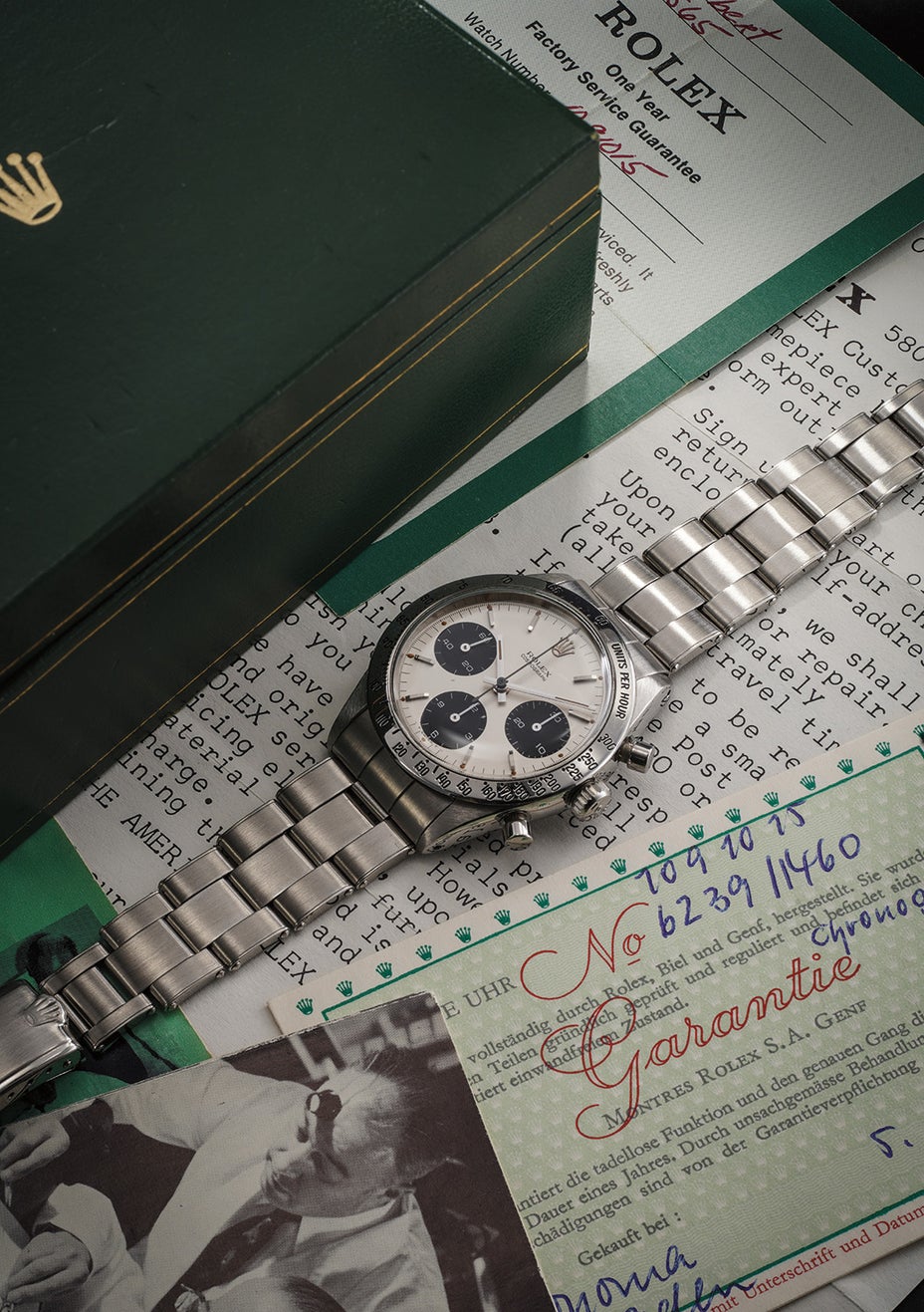
A superbly well preserved, possibly unique and extremely collectible stainless steel chronograph wristwatch with "Double T Swiss T" dial, bracelet, guarantee and presentation box
Full-Cataloguing
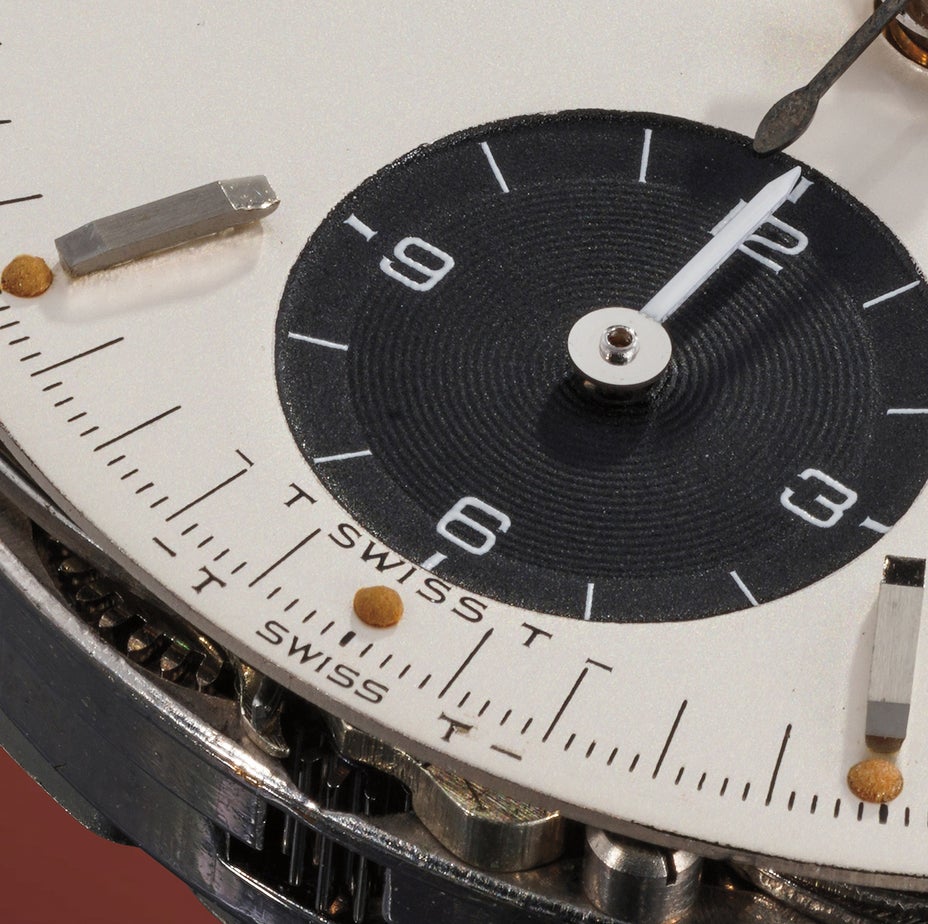
While the "Double Swiss" dial, is well known (Double Swiss dials are identified by having two "Swiss" designations at 6 o'clock, one visible and the other hidden by the case), the present specimen however features the a double "T Swiss T designation" (indicating the adoption of tritium rather than radium). Introduced around 1963, the year of production of this watch, it is virtually unheard of to find a dial with this later designation repeated twice. It seems that for a short period, Rolex changed the placement of the "Swiss" designation, only to have to alter it to accommodate the introduction of tritium luminous material and the introduction of the "T". Beyond its unicity, the quality of the dial as well is stunning, featuring a virtually unmarred grené finish with black serifed graphics which grants the watch an incredible vintage appearance
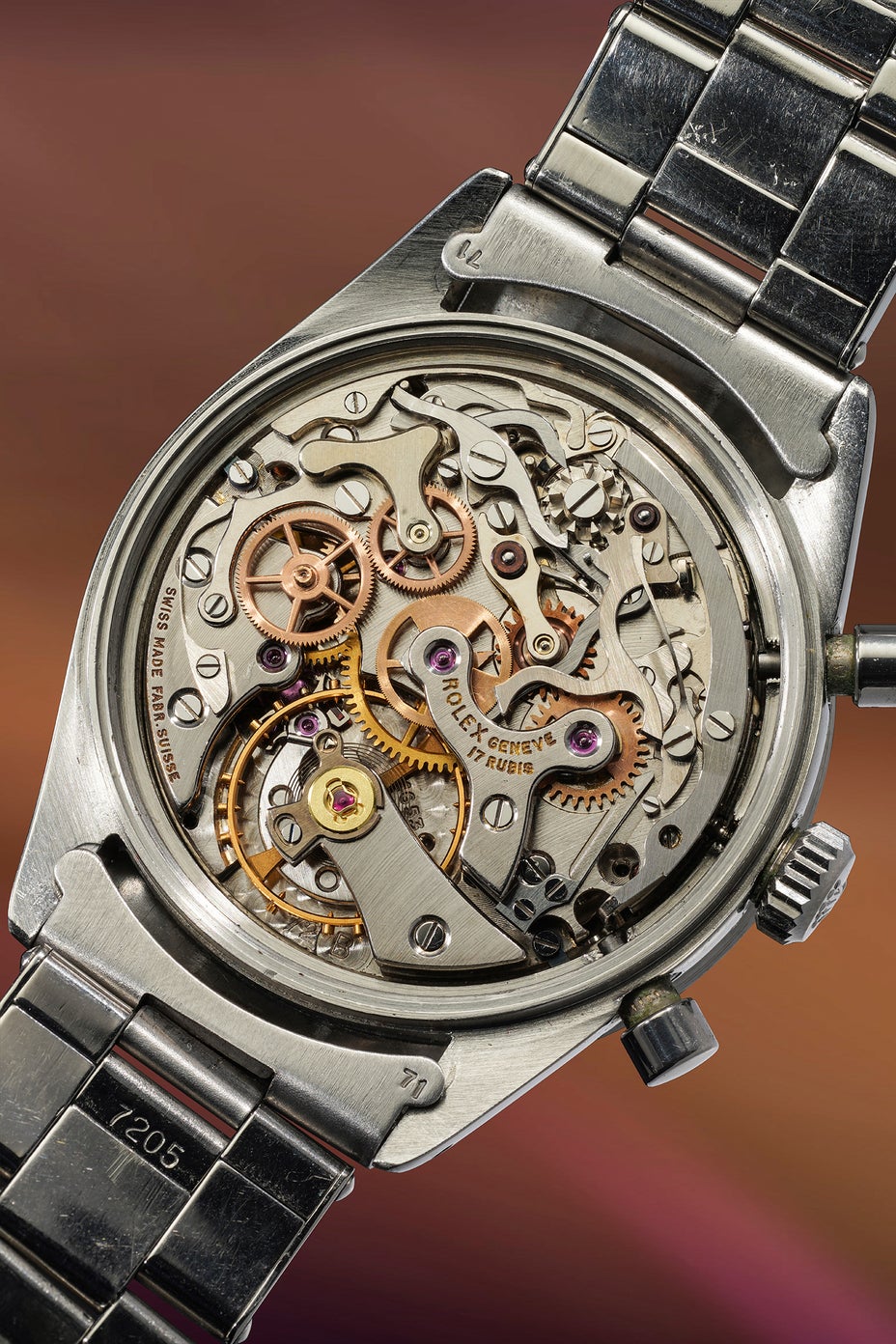
The bezel as well is a very early MKII specimen, featuring a dot for the 275 mark, and also the movement impresses the connoisseur with its caliber 72B, the earliest calibre employed in the Daytona, only found in very early specimens and soon abandoned for cal 722, 722-1 and later 727.
A final detail for the most completist of the collectors is not only the presence of the original Warranty, but also the papers (quote, report and Service Warranty) from a 1968 overhaul. Beyond the historical pleasure of having such documents, their presence underline the utmost care the original owner had for this watch, preserving for decades every piece of documentation regarding it - an unusual occurrence today, imagine back in the 1960s when watch collecting was nonexistant.
Rolex
Swiss | 1905Founded in 1905 England by Hans Wilsdorf and Alfred Davis as Wilsdorf & Davis, it soon became known as the Rolex Watch Company in 1915, moving its headquarters to Geneva in 1919. Like no other company, the success of the wristwatch can be attributed to many of Rolex's innovations that made them one of the most respected and well-known of all luxury brands. These innovations include their famous "Oyster" case — the world's first water resistant and dustproof watch case, invented in 1926 — and their "Perpetual" — the first reliable self-winding movement for wristwatches launched in 1933. They would form the foundation for Rolex's Datejust and Day-Date, respectively introduced in 1945 and 1956, but also importantly for their sports watches, such as the Explorer, Submariner and GMT-Master launched in the mid-1950s.
One of its most famous models is the Cosmograph Daytona. Launched in 1963, these chronographs are without any doubt amongst the most iconic and coveted of all collectible wristwatches. Other key collectible models include their most complicated vintage watches, including references 8171 and 6062 with triple calendar and moon phase, "Jean Claude Killy" triple date chronograph models and the Submariner, including early "big-crown" models and military-issued variants.