885
Rolex
Ref. 228235
Day-Date 40
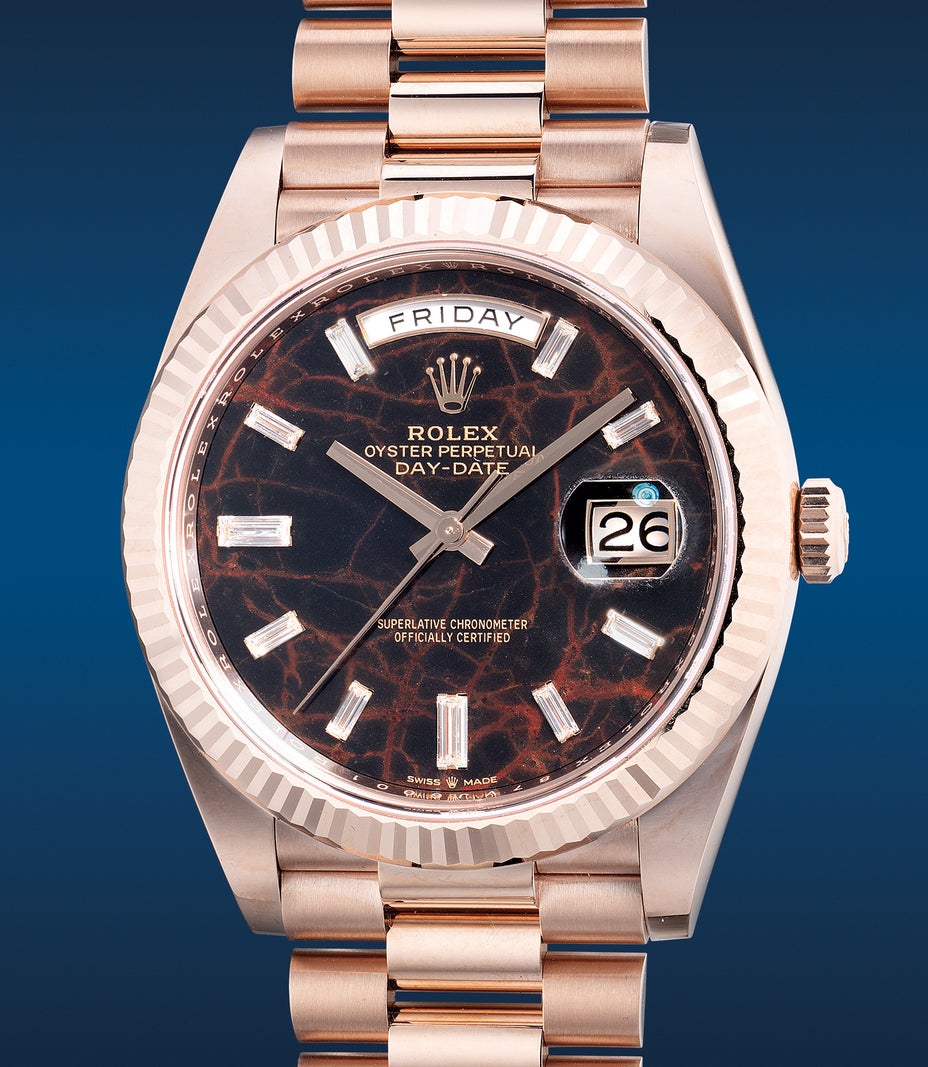
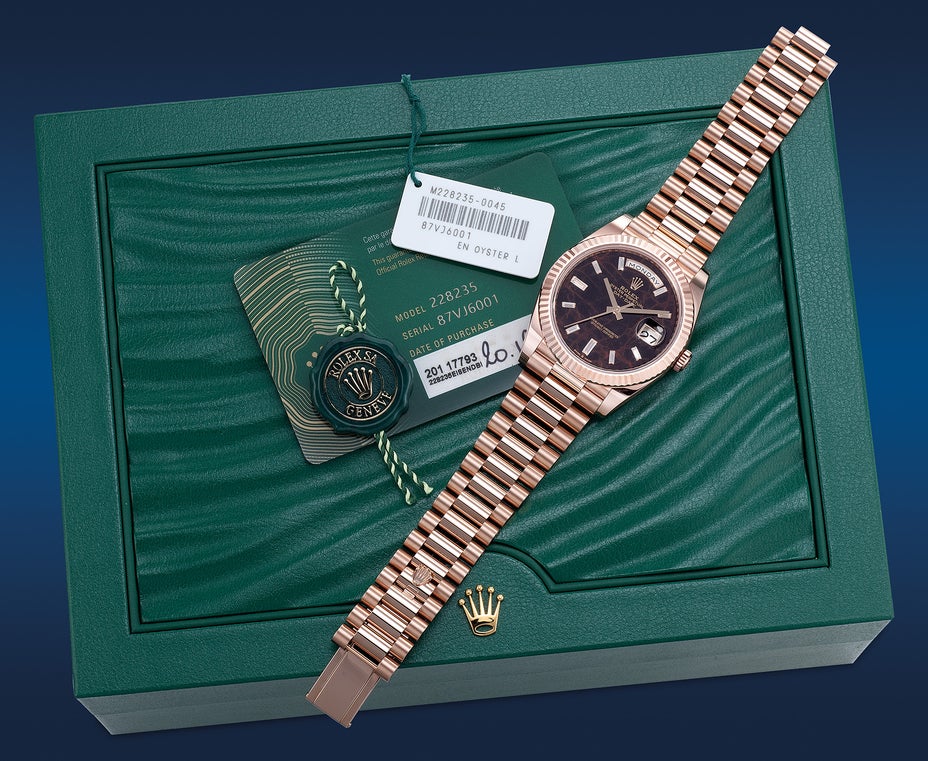
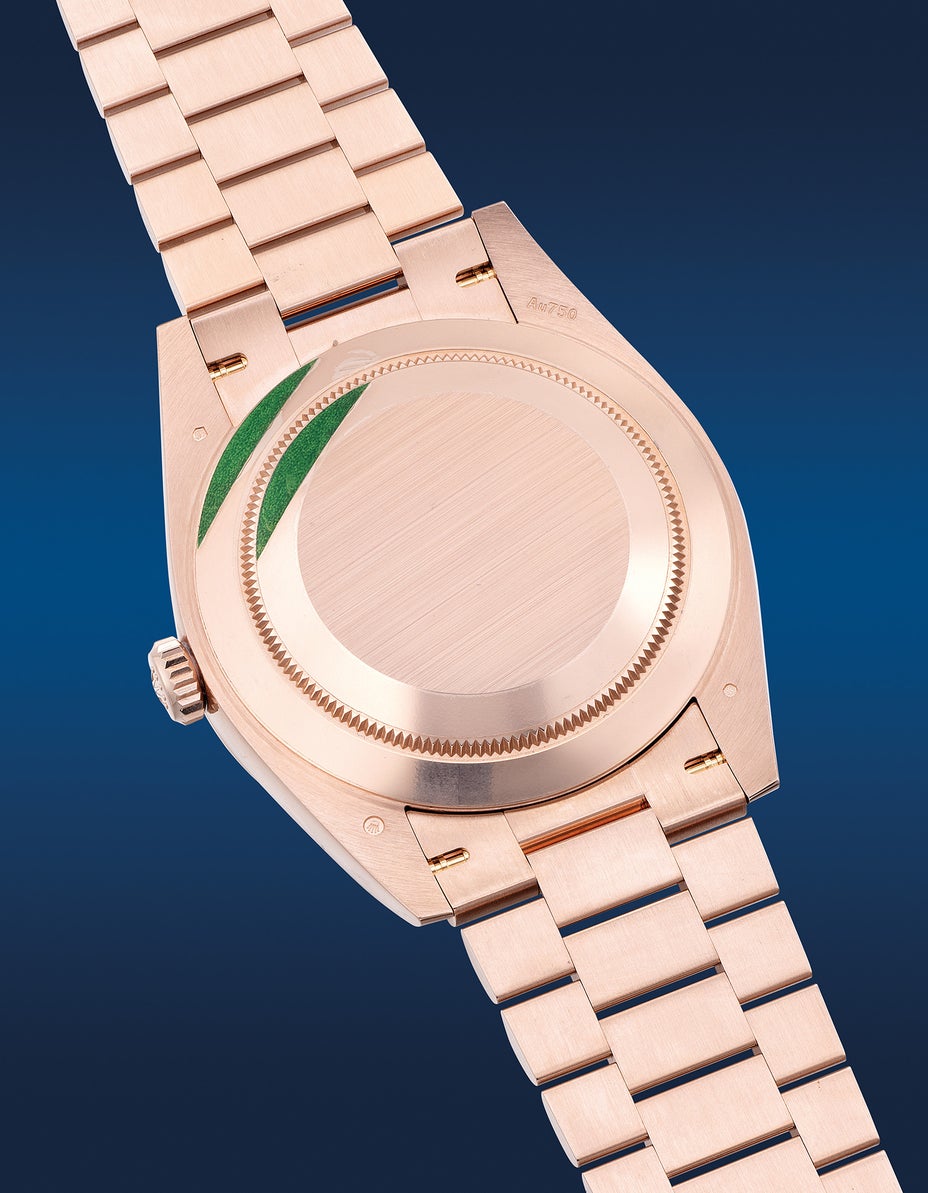
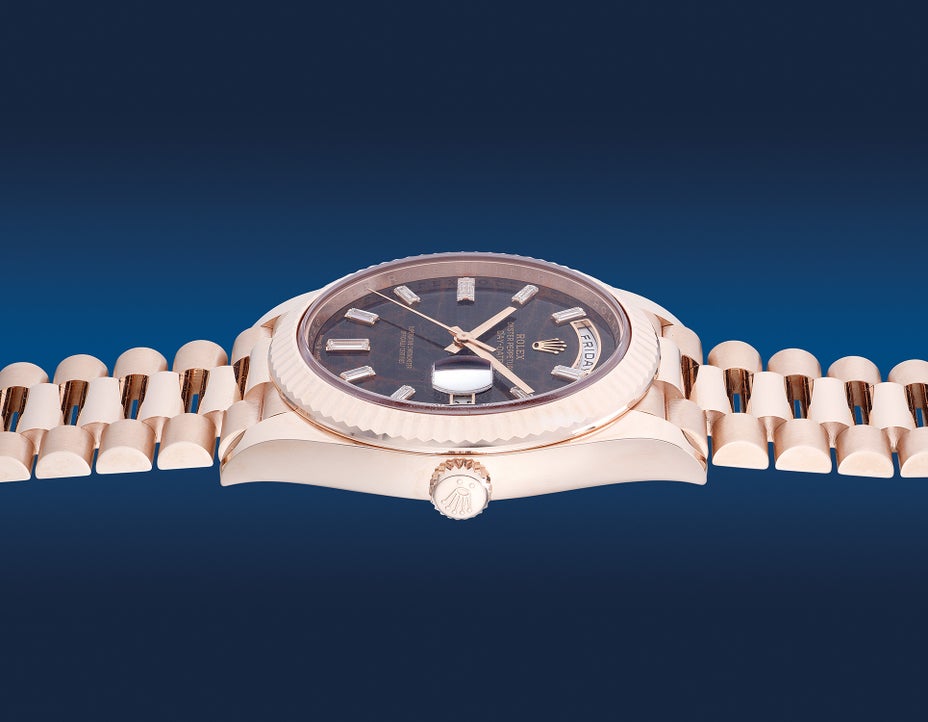
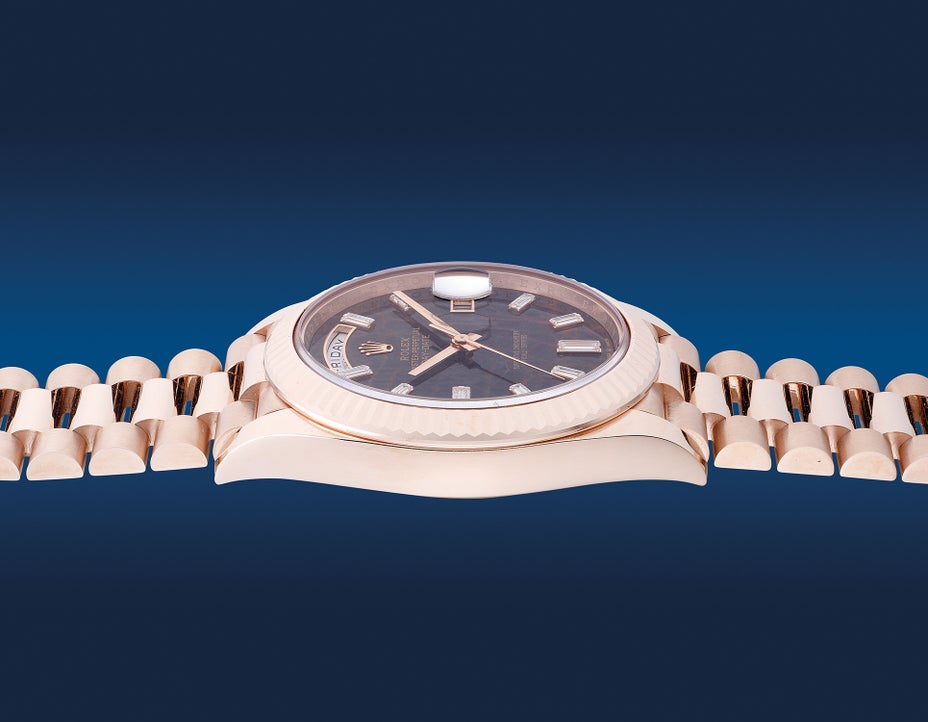
A "like new", attractive and rare pink gold wristwatch with center seconds, day, date, Eisenkiesel dial, diamond-set indexes, bracelet, guarantee and presentation box
Full-Cataloguing
Rolex has always been known for their ingenuity in incorporating new materials such as the use of hardstone dials, collectors today have grown an appreciation for them due to its uniqueness, rarity and craftsmanship. While the firm has incorporated a total of 24 different hardstones in their exquisite timepieces, it was in 2021 when the firm subtly released their newest species, Eisenkiesel. Being the 25th hardstone to be featured in a Rolex timepiece, Eisenkiesel belongs to the family of quartz with iron inclusions that is normally found in yellow, red or brown hues. The source for this semi-precious stone can be found in Germany, Namibia, Russia and Spain. Measuring a 7 in the Mohs scale of hardness, it is not the most fragile hardstone to be featured in a Rolex. Paired beautifully against its pink gold case, the dial is further adorned with 11 baguette-cut diamond indexes, elevating its luxurious appeal to another level.
Offered for the first time at auction and preserved in “like new” overall condition with its full set of accessories intact from circa 2021, the present Rolex Day-Date 40 ref. 228235 with the newly incorporated Eisenkiesel dial will surely impress collectors of Day-Dates and moreover provides an opportunity for collectors to skip the long waiting list at the boutique to acquire one at instance.
Rolex
Swiss | 1905Founded in 1905 England by Hans Wilsdorf and Alfred Davis as Wilsdorf & Davis, it soon became known as the Rolex Watch Company in 1915, moving its headquarters to Geneva in 1919. Like no other company, the success of the wristwatch can be attributed to many of Rolex's innovations that made them one of the most respected and well-known of all luxury brands. These innovations include their famous "Oyster" case — the world's first water resistant and dustproof watch case, invented in 1926 — and their "Perpetual" — the first reliable self-winding movement for wristwatches launched in 1933. They would form the foundation for Rolex's Datejust and Day-Date, respectively introduced in 1945 and 1956, but also importantly for their sports watches, such as the Explorer, Submariner and GMT-Master launched in the mid-1950s.
One of its most famous models is the Cosmograph Daytona. Launched in 1963, these chronographs are without any doubt amongst the most iconic and coveted of all collectible wristwatches. Other key collectible models include their most complicated vintage watches, including references 8171 and 6062 with triple calendar and moon phase, "Jean Claude Killy" triple date chronograph models and the Submariner, including early "big-crown" models and military-issued variants.