252
Ray K. Metzker
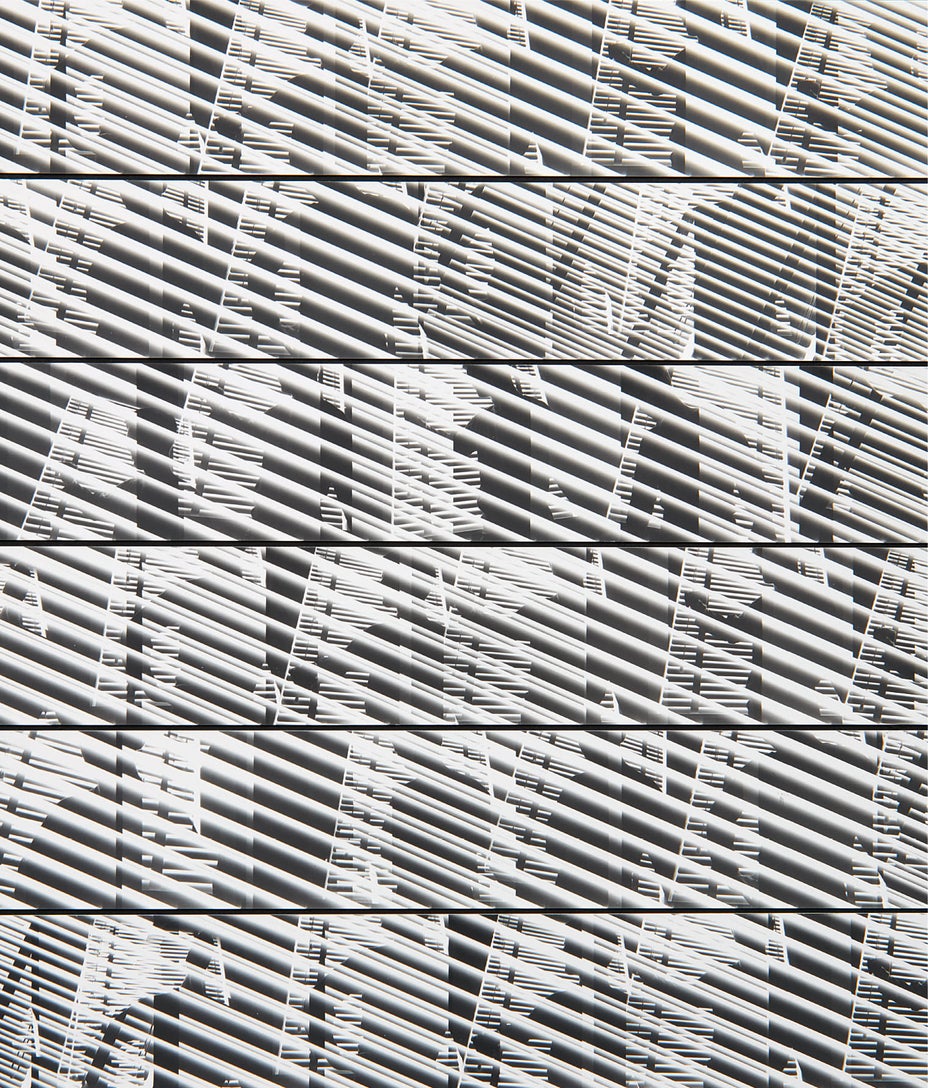
Blind Man's Bluff
Estimate
$20,000–30,000
1966
Composite of six gelatin silver prints, printed and assembled 1990, mounted together on board.
Each 1 5/8 x 8 5/8 in. (4.1 x 21.9 cm)
Composite 10 x 8 5/8 in. (25.4 x 21.9 cm)
Overall 19 3/4 x 17 3/4 in. (50.2 x 45.1 cm)
Composite 10 x 8 5/8 in. (25.4 x 21.9 cm)
Overall 19 3/4 x 17 3/4 in. (50.2 x 45.1 cm)
Signed and numbered 3/10 in pencil on the mount; printed credit, title, date and number 3/10 on a gallery label affixed to the reverse of the frame.
Please note only 5 composites from the edition of 10 were realized.
Please note only 5 composites from the edition of 10 were realized.
Full-Cataloguing
Combining multiple exposures, repetition of imagery and stark tonal variation, Ray Metzker’s composites transform his photographs into abstract representations of form and, in doing so, highlight the medium’s possibilities beyond mere documents of reality. While photography’s innate process results in the isolation of a single moment from its greater context, Metzker looks to “investigate the possibilities of synthesis,” offering a confluence of moments and ideas within a single work, as evident here in Blind Man’s Bluff.
Metzker studied at Chicago’s Institute of Design from 1956-1959 in a program developed by Harry Callahan and Aaron Siskind. The images used in this 1990 composite were taken in 1966, the year before his groundbreaking exhibition of composites—then referred to as photographic mosaics—at The Museum of Modern Art, New York. Another example of this work is in the collection of the Art Institute of Chicago.
Metzker studied at Chicago’s Institute of Design from 1956-1959 in a program developed by Harry Callahan and Aaron Siskind. The images used in this 1990 composite were taken in 1966, the year before his groundbreaking exhibition of composites—then referred to as photographic mosaics—at The Museum of Modern Art, New York. Another example of this work is in the collection of the Art Institute of Chicago.