957Σ︎
Patek Philippe
Ref. 1436 "Pink on Pink"
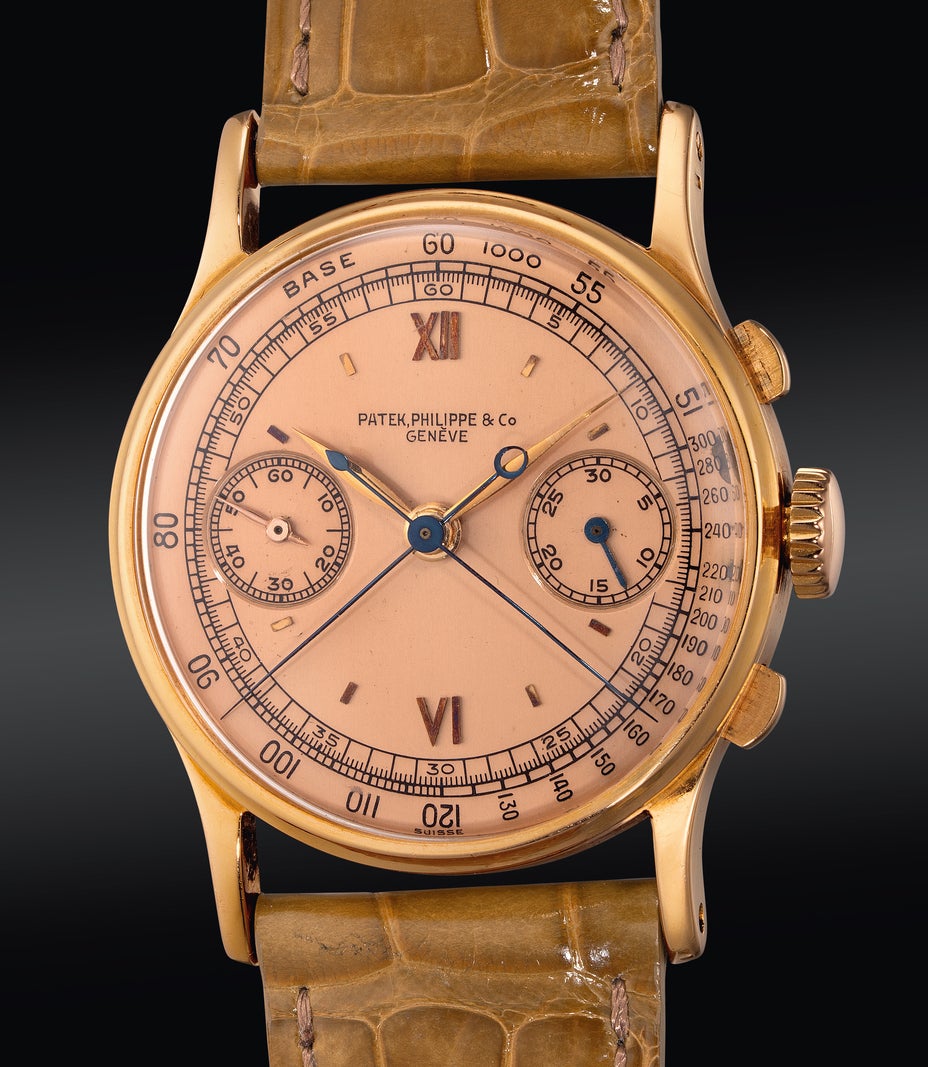
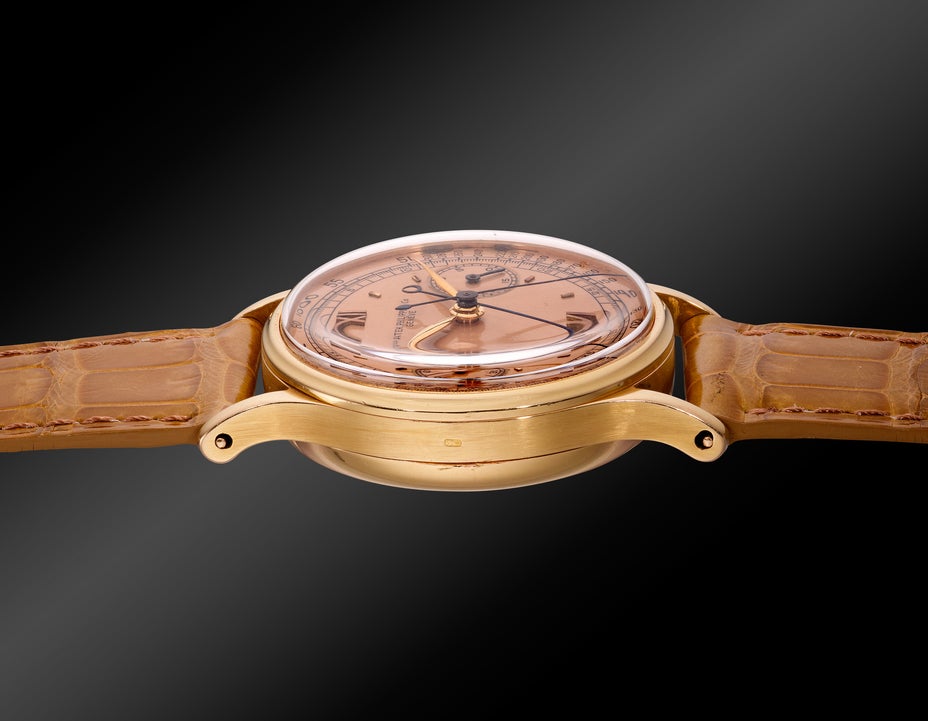
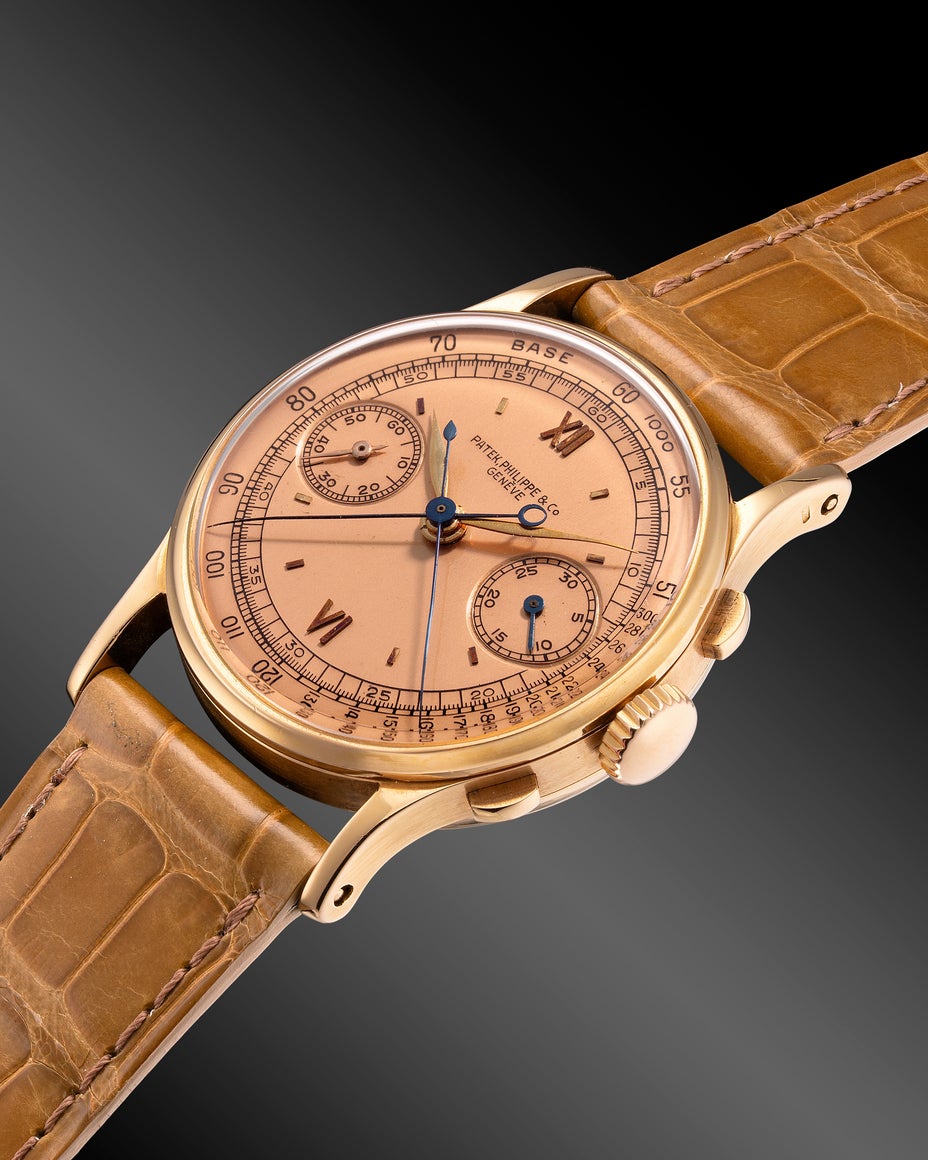
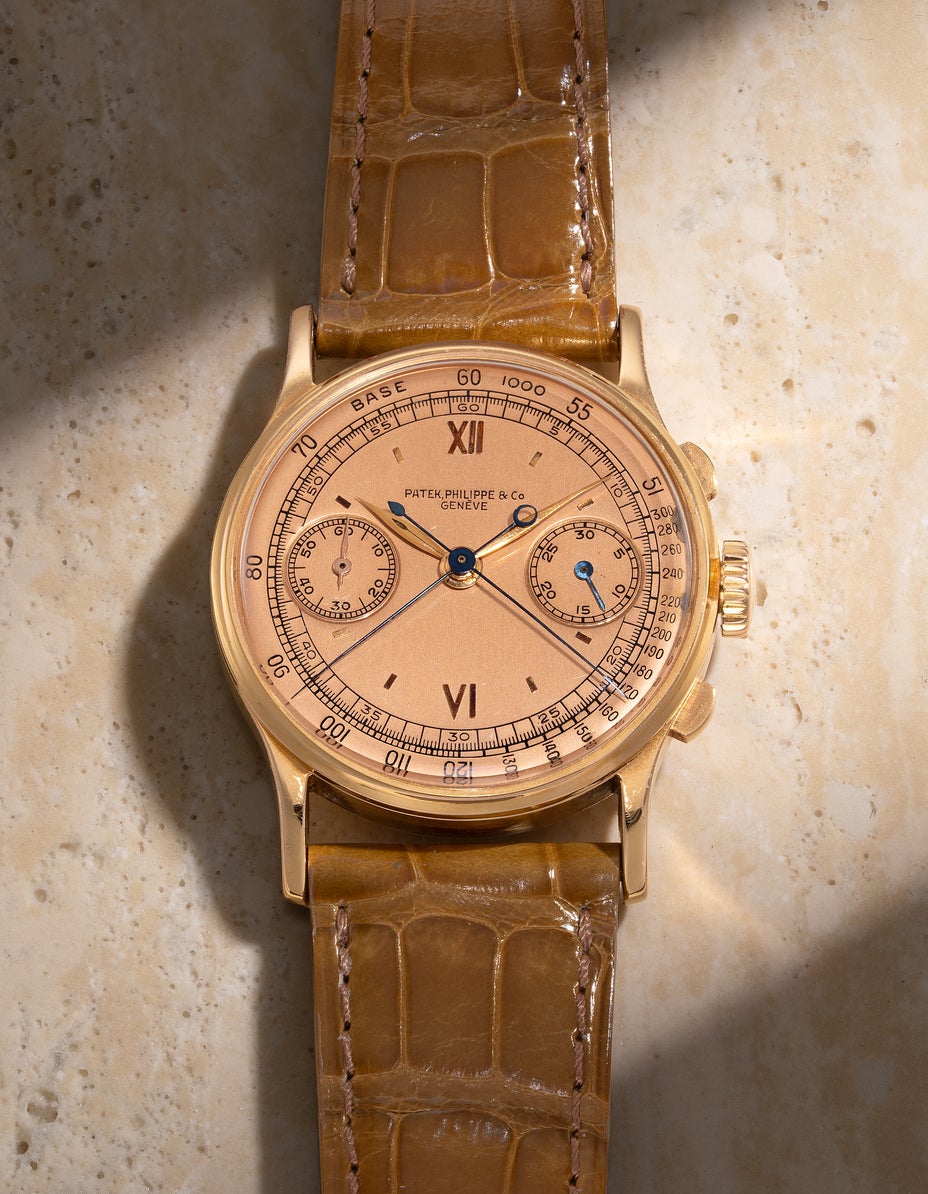
An important, extremely well-preserved and scarce pink gold split-seconds chronograph wristwatch with pink dial and tachymeter scale, one of five "Pink on Pink" examples known
Full-Cataloguing
- One of 5 and earliest known “Pink on Pink” example
- Extremely well-preserved first-generation Vichet case
- Extraordinary pink dial with long signature
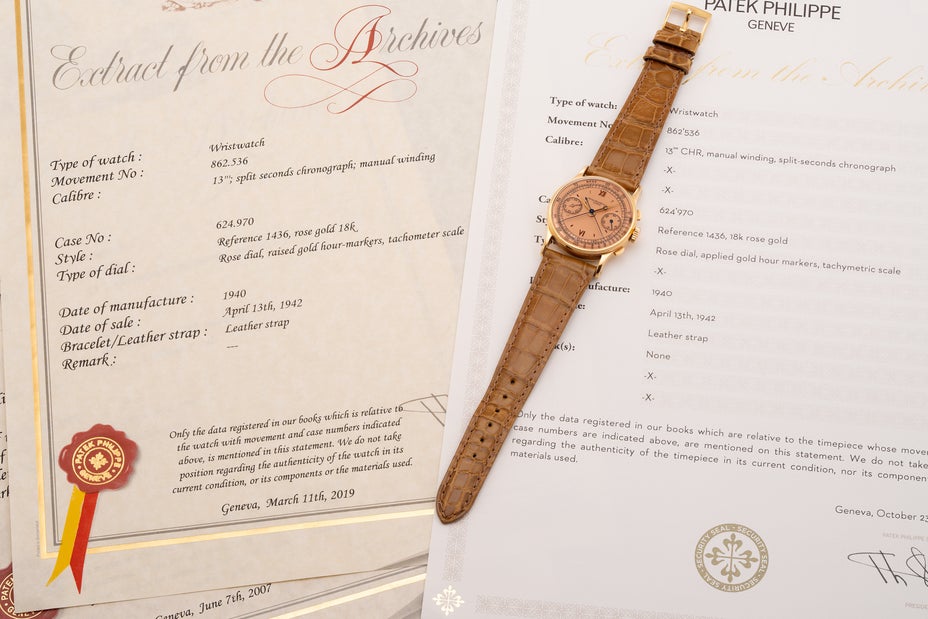
- Accompanied by Extract from the Archives confirming all the attributes
Reference 1436 stands as one of the most elegant, rare and historically important vintage Patek Philippe models ever created. Shortly after introducing the chronograph reference 130 in 1934, Patek Philippe recognized the demand for a split-seconds execution. The “rattrapante” mechanism was indispensable for technical timing, widely used to measure simultaneous events such as horse races, motor sports and scientific trials.
Developed in collaboration with the renowned workshops of Victorin Piguet, reference 1436 represents a masterly synthesis of aesthetic design and mechanical complexity. Due to the extreme difficulty of assembling a split-seconds movement, total production over its approximately 33-year lifespan is estimated at about 140 examples. Launched in 1938, it holds immense historical value as Patek Philippe's very first serially produced split-seconds chronograph wristwatch—a legacy that remained unmatched until the release of reference 5370 in 2015.
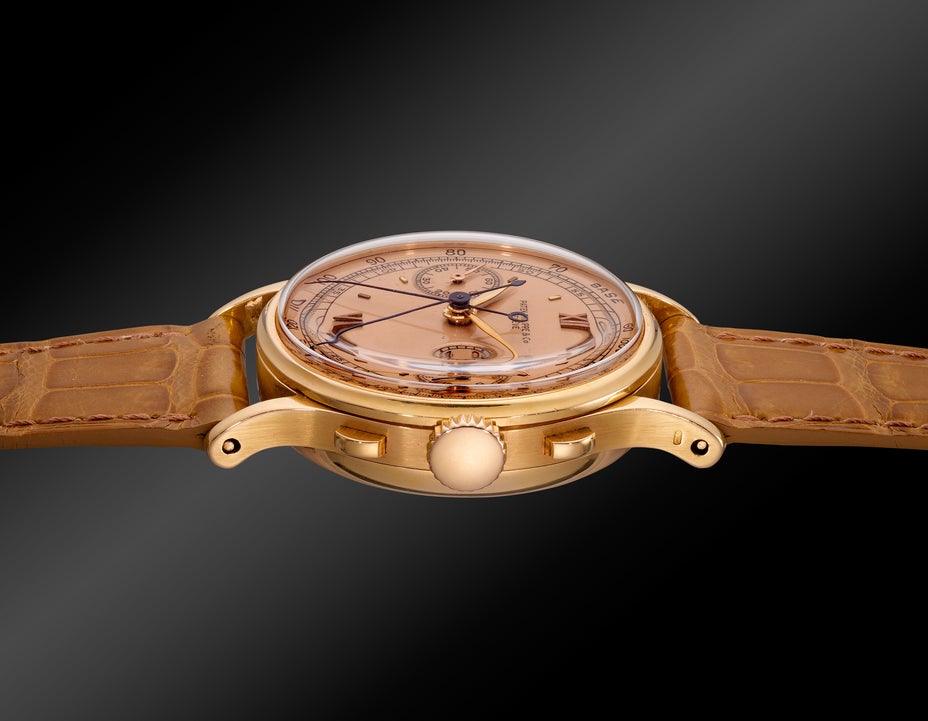
Remarkably, this intricate split-seconds mechanism is housed within a compact 33mm case. While the majority of production was cased in yellow gold, pink gold examples were made in exceptionally small numbers. Research indicates only nine pink gold examples have survived to this day, with only five known to feature a matching and sought-after pink dial—including the present timepiece.
Ref. 1436 "Pink on Pink" known to the market:
Movement No. 862’536, Case No. 624’970, 1940 (Present watch)
Movement No. 862’781, Case No. 638’790, 1941
Movement No. 863’786, Case No. 646’712, Circa 1945
Movement No. 867’193, Case No. 646’714, 1947
Movement No. 868’329, Case No. 676’627, 1952
"Pink-on-pink" configurations represent the absolute peak of collector desirability and the present lot is the earliest known example to have surfaced on the market. This piece features a first-generation case crafted by Emile Vichet (identified by Key Number 9), prior to later production being handled by Ponti, Gennari & Cie. In line with early series configurations, the correct unsigned crown itself functions as the pusher to split and reunite the chronograph hands, pre-dating the later introduction of a co-axial button.
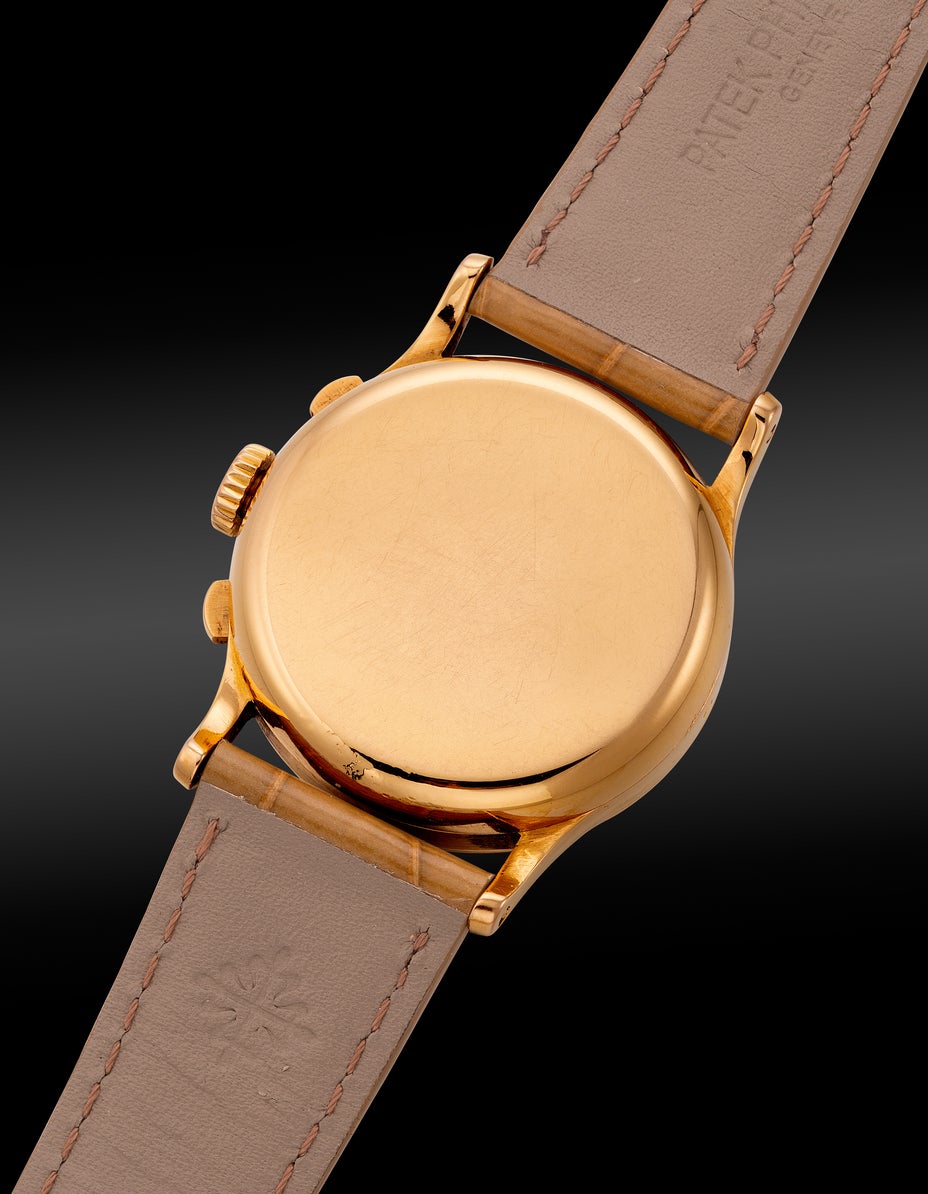
The present pink gold case retains impressive proportions, displaying sharp facets and crisp finishes. Hallmarks remain crisp and clearly visible on the left caseband and the upper right lug. The original pink dial is equally extraordinary, featuring the correct long Patek Philippe signature with all original accents and commas intact. Crucially, the Extract from the Archives that come with the watch explicitly confirm that it was manufactured in 1940 with a rose dial and tachymeter scale—an invaluable reassurance that elevates its rarity and appeal.
First consigned at auction by the original owner's family in 2007 and last appearing on the market in 2023, the watch is accompanied by three Extracts from the Archives validating its original attributes, providing an unbroken trail of provenance for the most discerning Patek Philippe connoisseur.
Patek Philippe
Swiss | 1839Since its founding in 1839, this famous Geneva-based firm has been surprising its clientele with superbly crafted timepieces fitted with watchmaking's most prestigious complications. Traditional and conservative designs are found across Patek Philippe's watches made throughout their history — the utmost in understated elegance.
Well-known for the Graves Supercomplication — a highly complicated pocket watch that was the world’s most complicated watch for 50 years — this family-owned brand has earned a reputation of excellence around the world. Patek's complicated vintage watches hold the highest number of world records for results achieved at auction compared with any other brand. For collectors, key models include the reference 1518, the world's first serially produced perpetual calendar chronograph, and its successor, the reference 2499. Other famous models include perpetual calendars such as the ref. 1526, ref. 3448 and 3450, chronographs such as the reference 130, 530 and 1463, as well as reference 1436 and 1563 split seconds chronographs. Patek is also well-known for their classically styled, time-only "Calatrava" dress watches, and the "Nautilus," an iconic luxury sports watch first introduced in 1976 as the reference 3700 that is still in production today.