95
Patek Philippe
Ref. 1436
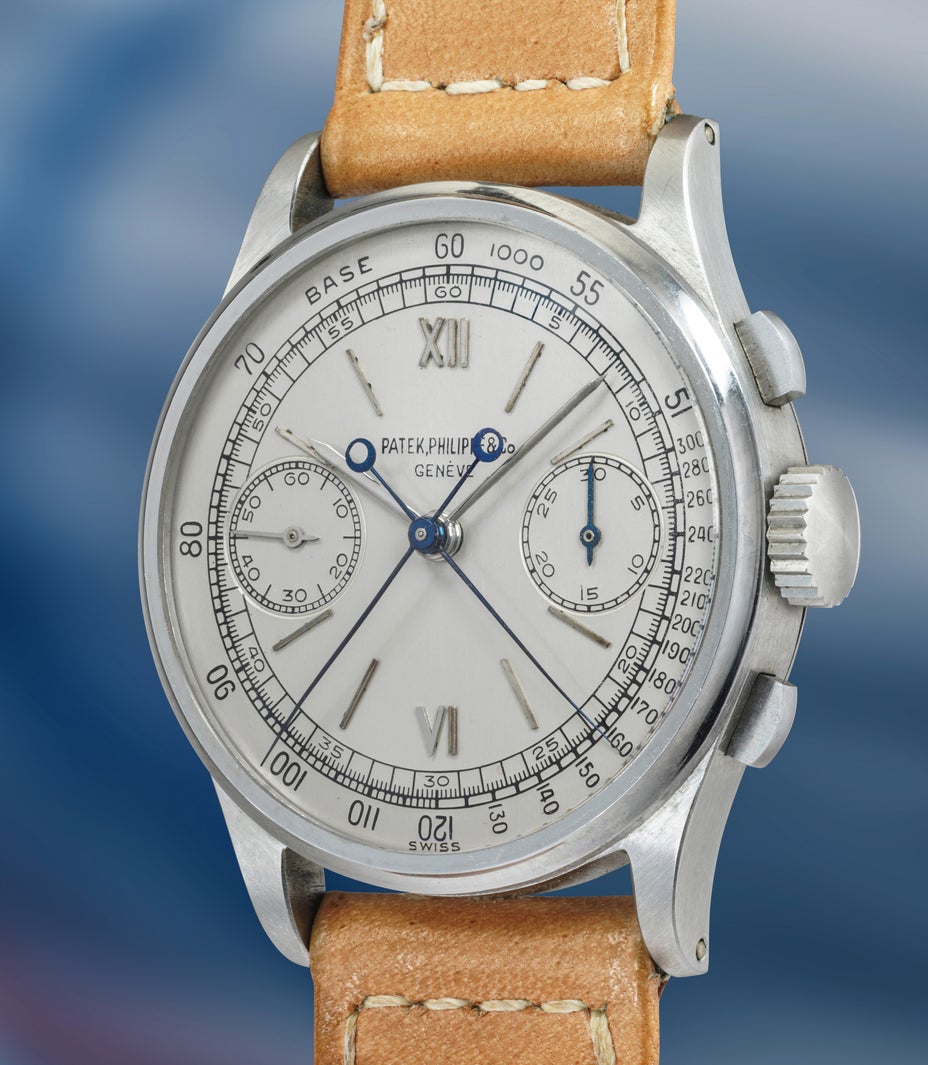
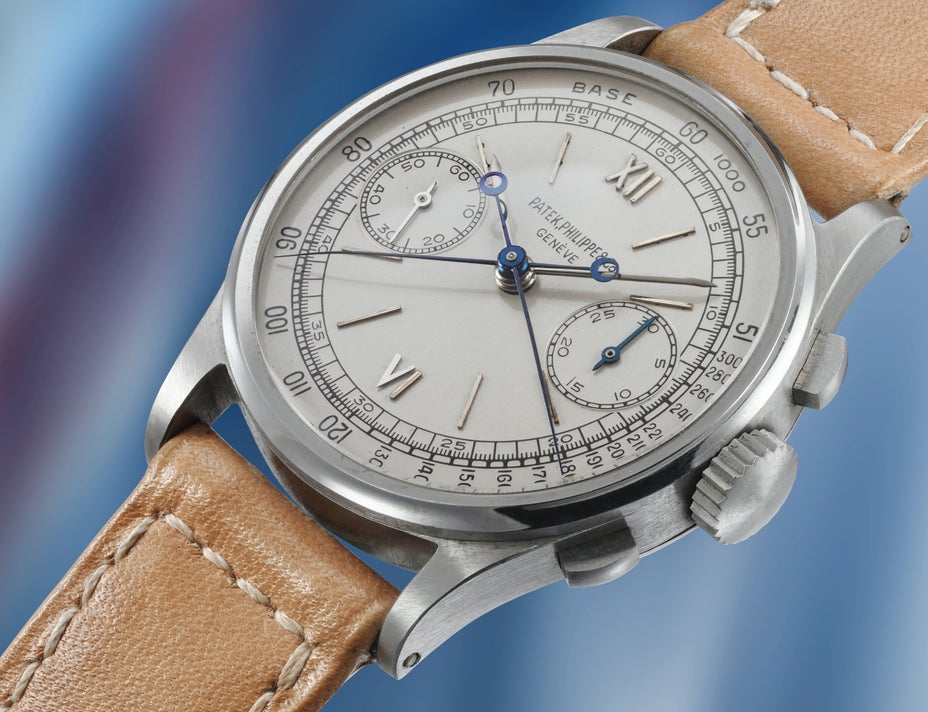
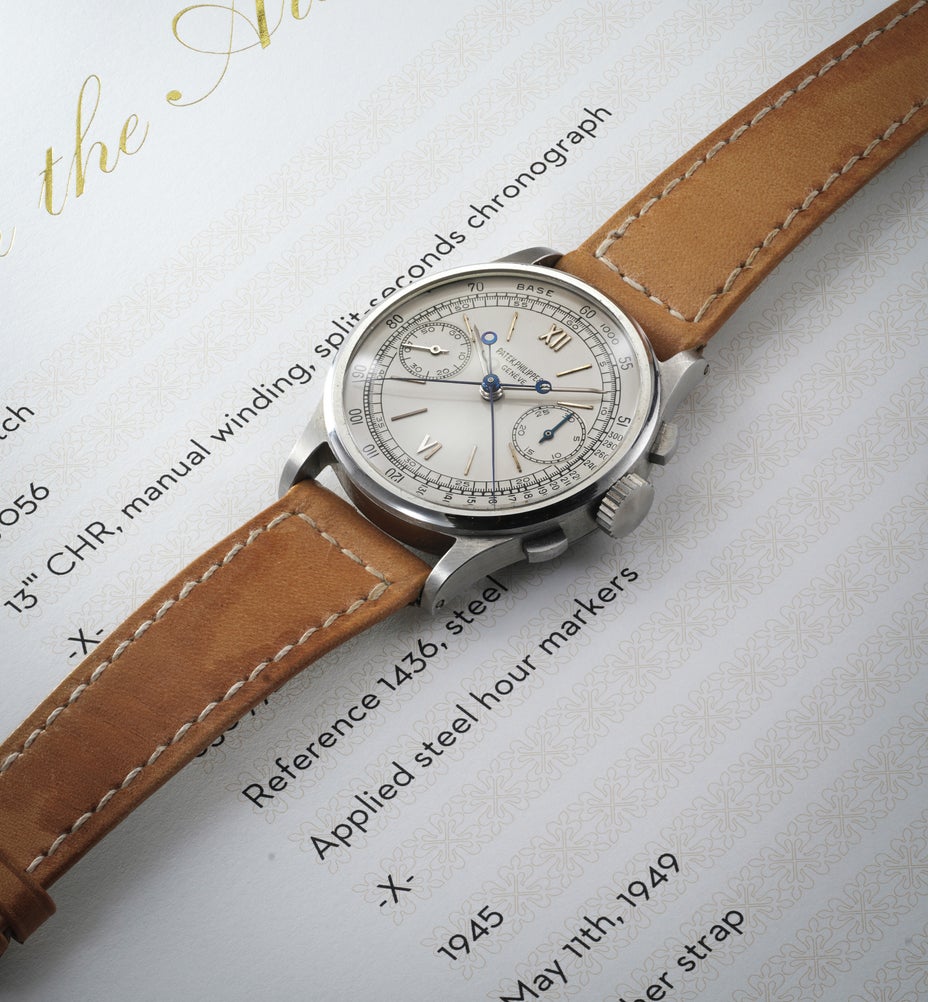
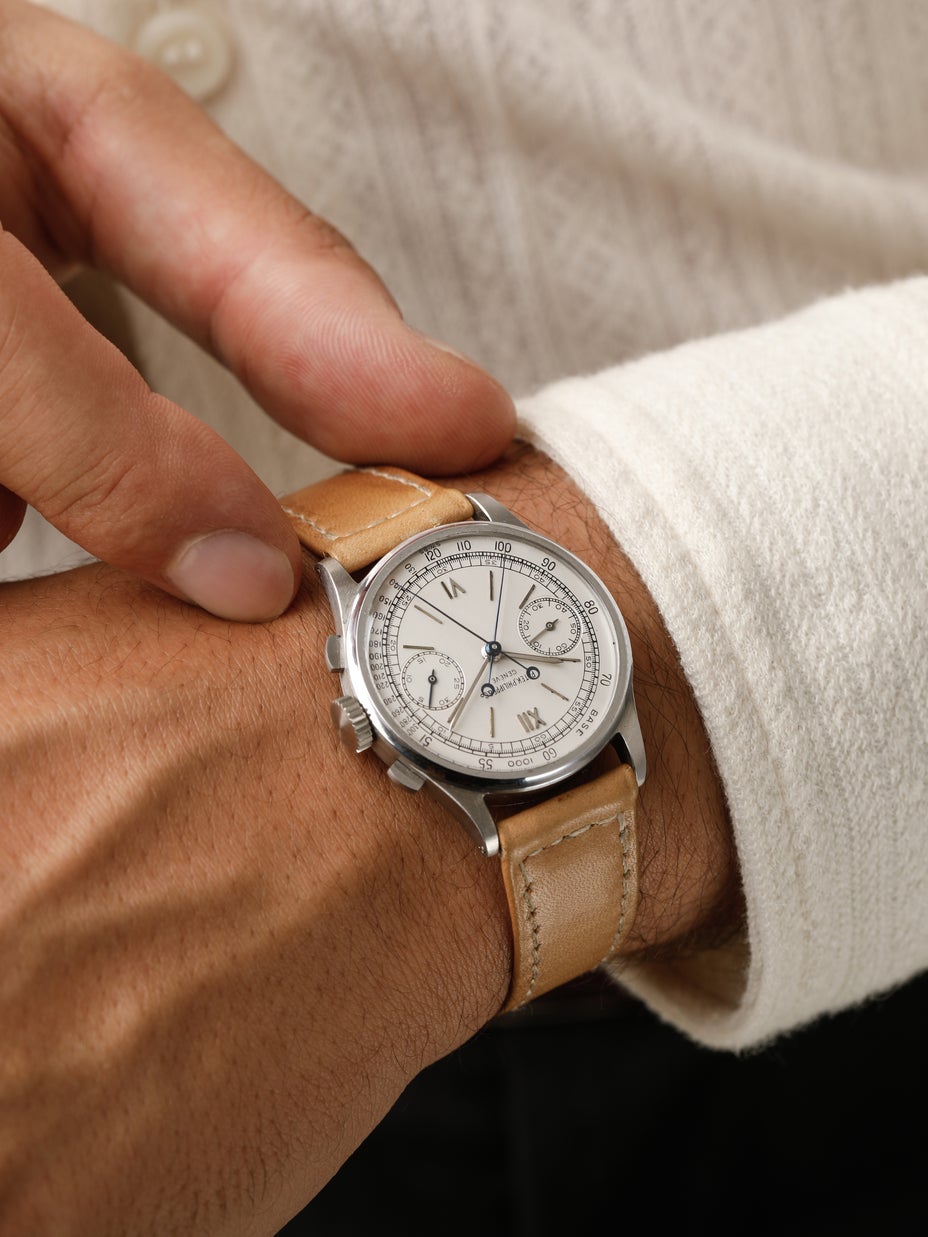
A historically important and incredibly rare stainless steel split-seconds chronograph wristwatch with silvered dial, raised steel hour markers and tachymeter scale
Full-Cataloguing
- Iconic split-seconds chronograph model
- One of only 2 known surviving references 1436 in stainless steel born as in today’s configuration
- Preserved in incredible condition
In the realm of vintage Patek Philippe collecting, complicated pieces represent the Himalayas and amongst the complicated pieces there is an even rarer category of stratospheric heights: complicated watches cased stainless steel.
We know today of only one stainless steel perpetual calendar, reference 1591, only one example of a stainless steel reference 1526, and only four examples of the legendary perpetual calendar chronograph reference 1518. These watches are today crowning either the world's most important and prestigious private collections, or are safely protected on exhibit in Patek Philippe’s own museum in Geneva. What they all have in common is that they are prominently illustrated and described in John Goldberger’s reference book for collectors of Patek Philippe Steel watches, and are the material of which horological dreams are made of.
The present reference 1436 in stainless steel is amongst this elite and highly elusive category. According to scholarship, a small quantity of stainless steel cases was made during the first half of the 1940s, but just a small handful were actually ever used and fitted with movements.
In fact, only 2 references 1436 cased in stainless steel are known today – and are certified as born in the exact configuration:
- Case number 626’222 with tachymeter scale, signed Astrua Torino made in 1940
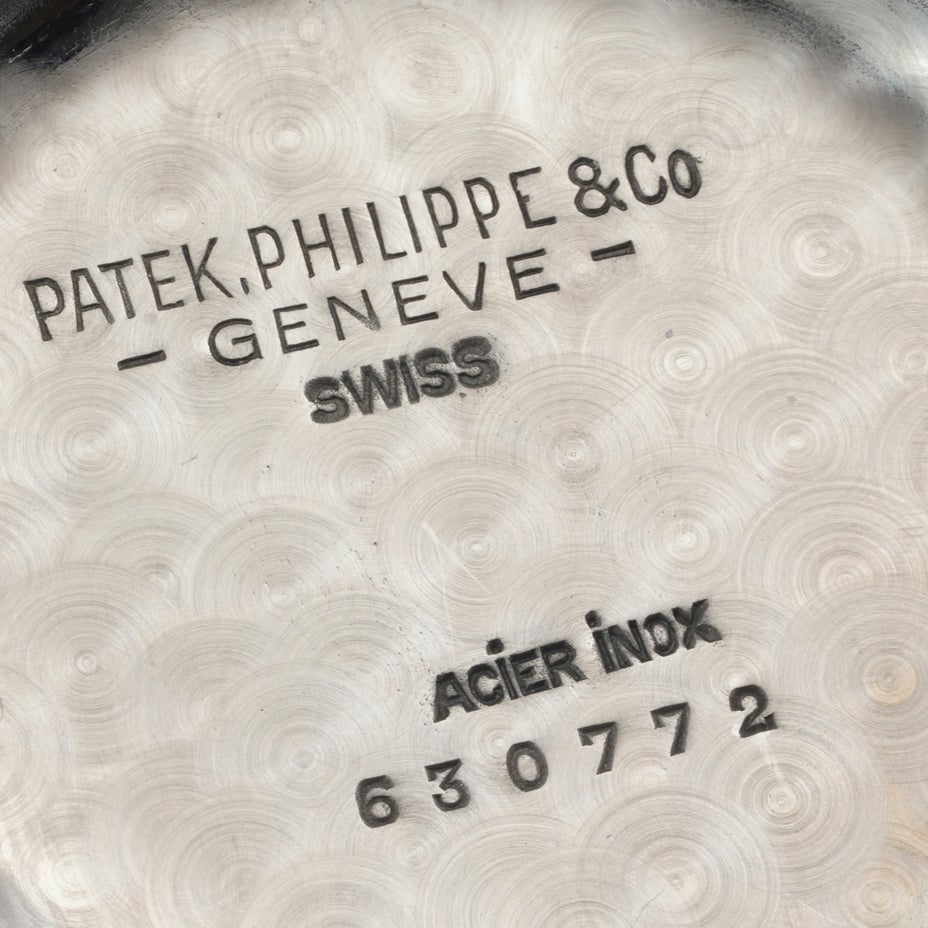
- Case number 630'772: with tachymeter scale (the present watch) made in 1945
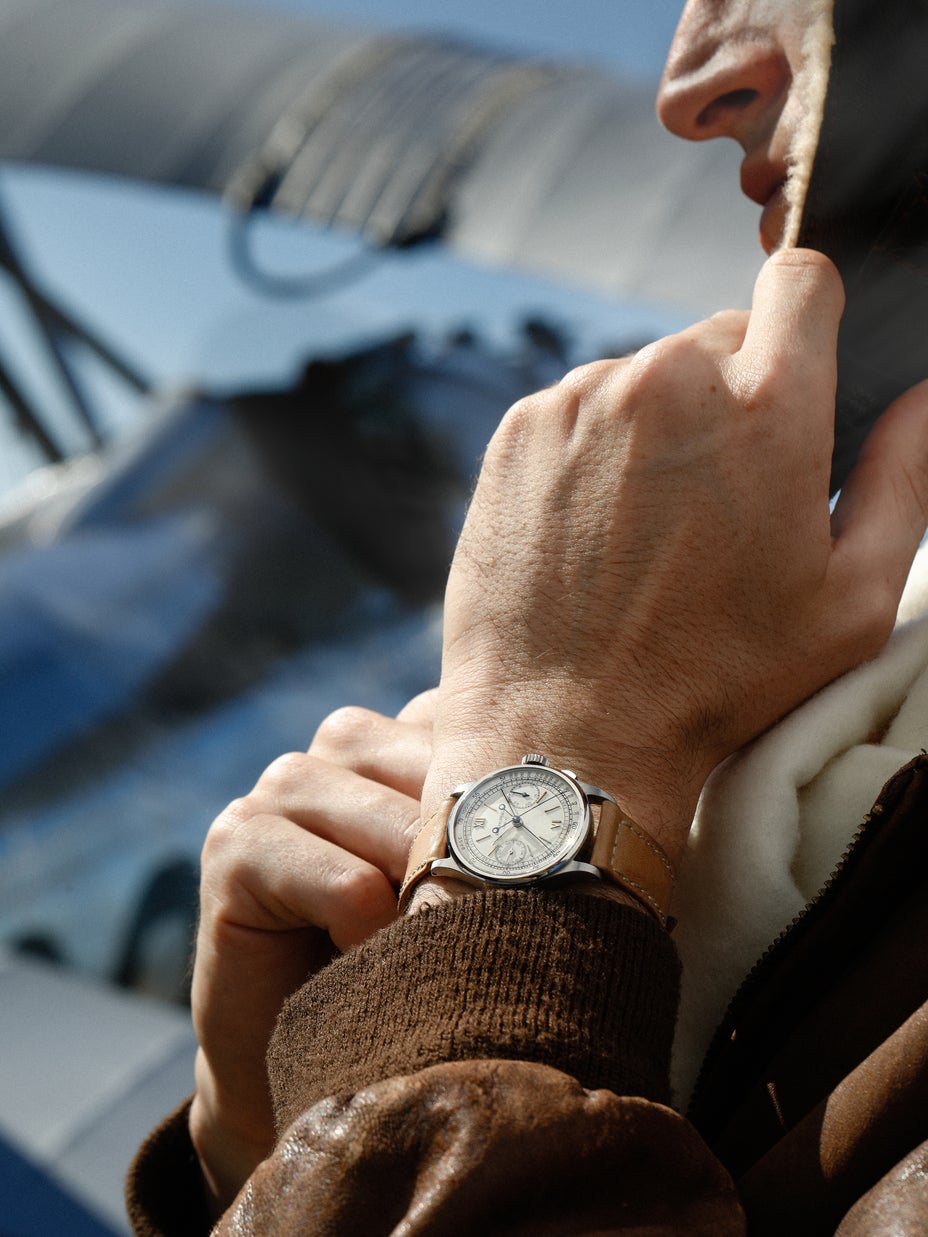
Reference 1436 is one of the most elegant, rare, important and collectible vintage Patek Philippe models. Shortly after the launch of the chronograph reference 130 in mid-1930s, the manufacturer noticed that a split-second version had a potential market. Indeed, the “rattrapante” mechanism was particularly useful for technical purposes, such as timing horse or automobile races, as well measuring scientific experiments. Thus, in 1938 the firm introduced ref. 1436, to this day considered one of the most refined models ever produced by the firm. Not only it represents an ineffable merging of design and technical proficiency, it is furthermore one of the scarcest models made by the firm.
Given the difficulty of assembling a split-second movement, research suggests that the total output for the model is a humble 140 examples, produced throughout the reference's approximate 33 years of manufacture. That means that Patek Philippe produce only a microscopic average of 4 watches per year. This is an exceedingly limited number, even by the production standards of the mid-to-late 20th century.
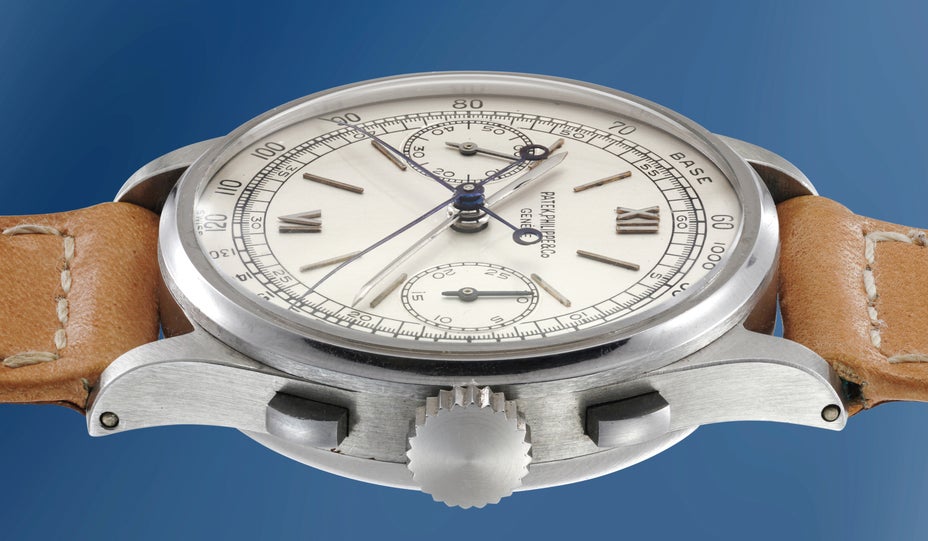
While earlier example feature a crown which also acts as split-second pusher (like the present example), second generation examples of reference 1436 feature a co-axial button within the crown, giving the watch a more sporty appeal.
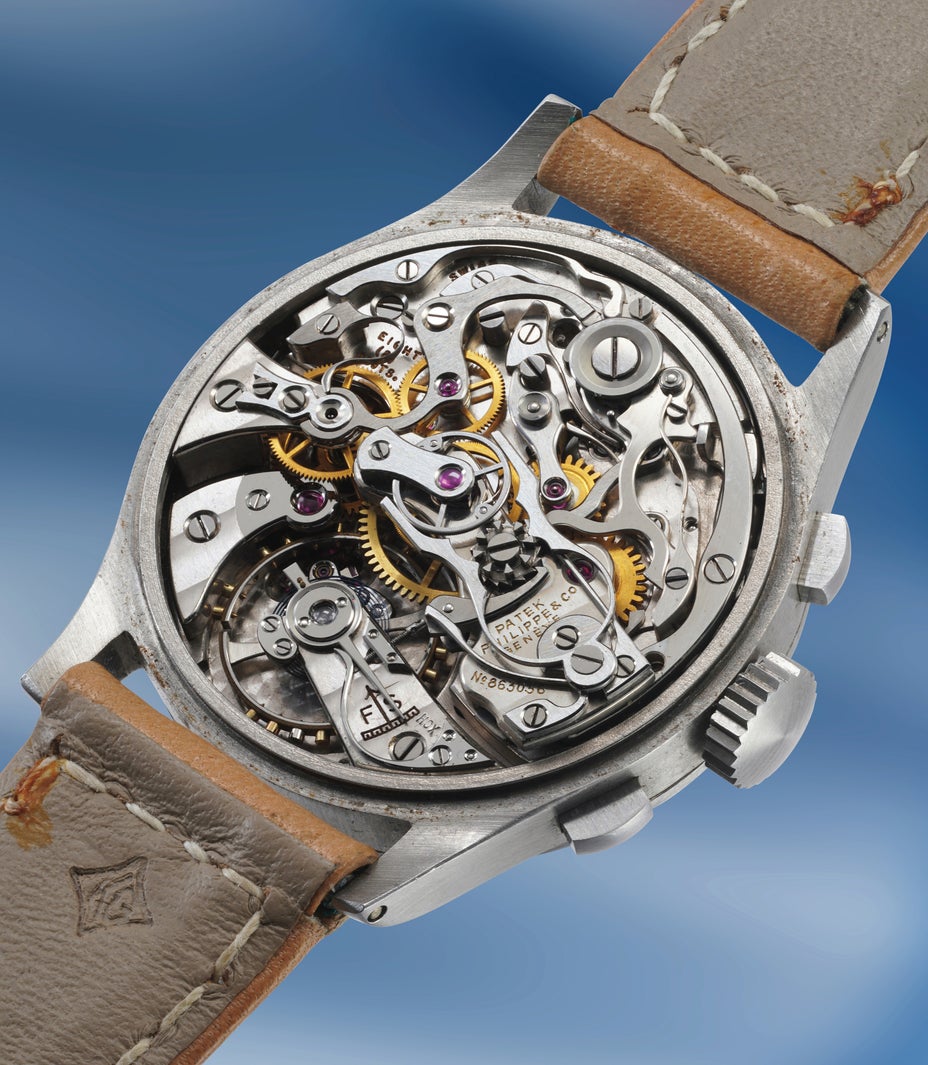
The present watch was originally sold to the Henry Stern Watch Agency, exclusive importers of Patek Philippe watches to the U.S.A., clearly denoted by the stamped HOX denomination on the balance bridge.
The present reference 1436 also impresses thanks to its incredible state of preservation. The case is crisp with thick lugs and original proportions. Inside the caseback there are no traces of any watchmaker's interventions, and it is possible, given the extraordinary condition of the movement that it has never been dismantled or worked on since leaving Patek Philippe’s workshops in 1945. The dial is in outstandingly beautiful condition for a watch of its age, and the signature and scales are all incredible crisp, well defined and in raised black hard enamel.
Given the watch’s supreme rarity, beauty, and importance, it comes as no surprise that John Goldberger has dedicated four pages to the presentation of this treasure, a privilege only shared with a handful of other watches in his book.
Patek Philippe
Swiss | 1839Since its founding in 1839, this famous Geneva-based firm has been surprising its clientele with superbly crafted timepieces fitted with watchmaking's most prestigious complications. Traditional and conservative designs are found across Patek Philippe's watches made throughout their history — the utmost in understated elegance.
Well-known for the Graves Supercomplication — a highly complicated pocket watch that was the world’s most complicated watch for 50 years — this family-owned brand has earned a reputation of excellence around the world. Patek's complicated vintage watches hold the highest number of world records for results achieved at auction compared with any other brand. For collectors, key models include the reference 1518, the world's first serially produced perpetual calendar chronograph, and its successor, the reference 2499. Other famous models include perpetual calendars such as the ref. 1526, ref. 3448 and 3450, chronographs such as the reference 130, 530 and 1463, as well as reference 1436 and 1563 split seconds chronographs. Patek is also well-known for their classically styled, time-only "Calatrava" dress watches, and the "Nautilus," an iconic luxury sports watch first introduced in 1976 as the reference 3700 that is still in production today.