953
Patek Philippe
Rock Crystal Dial
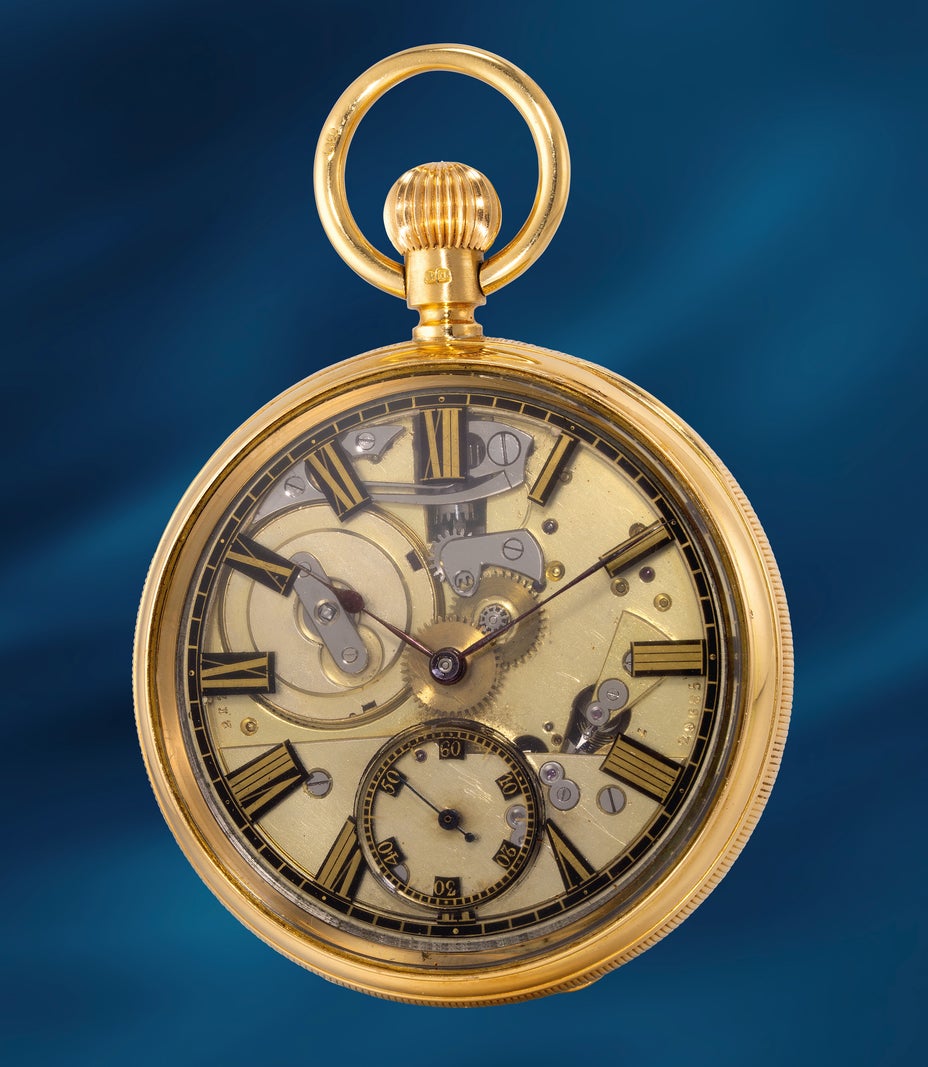
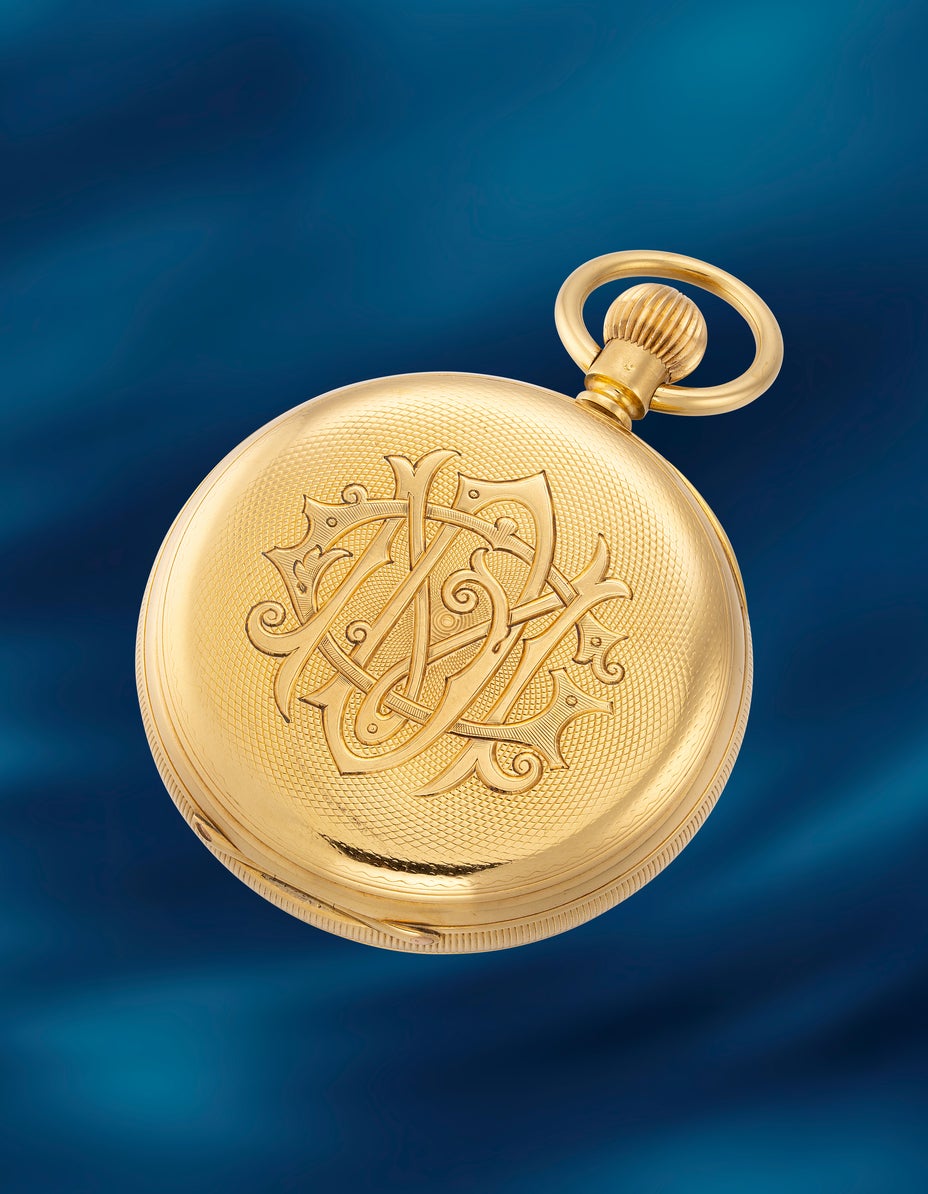
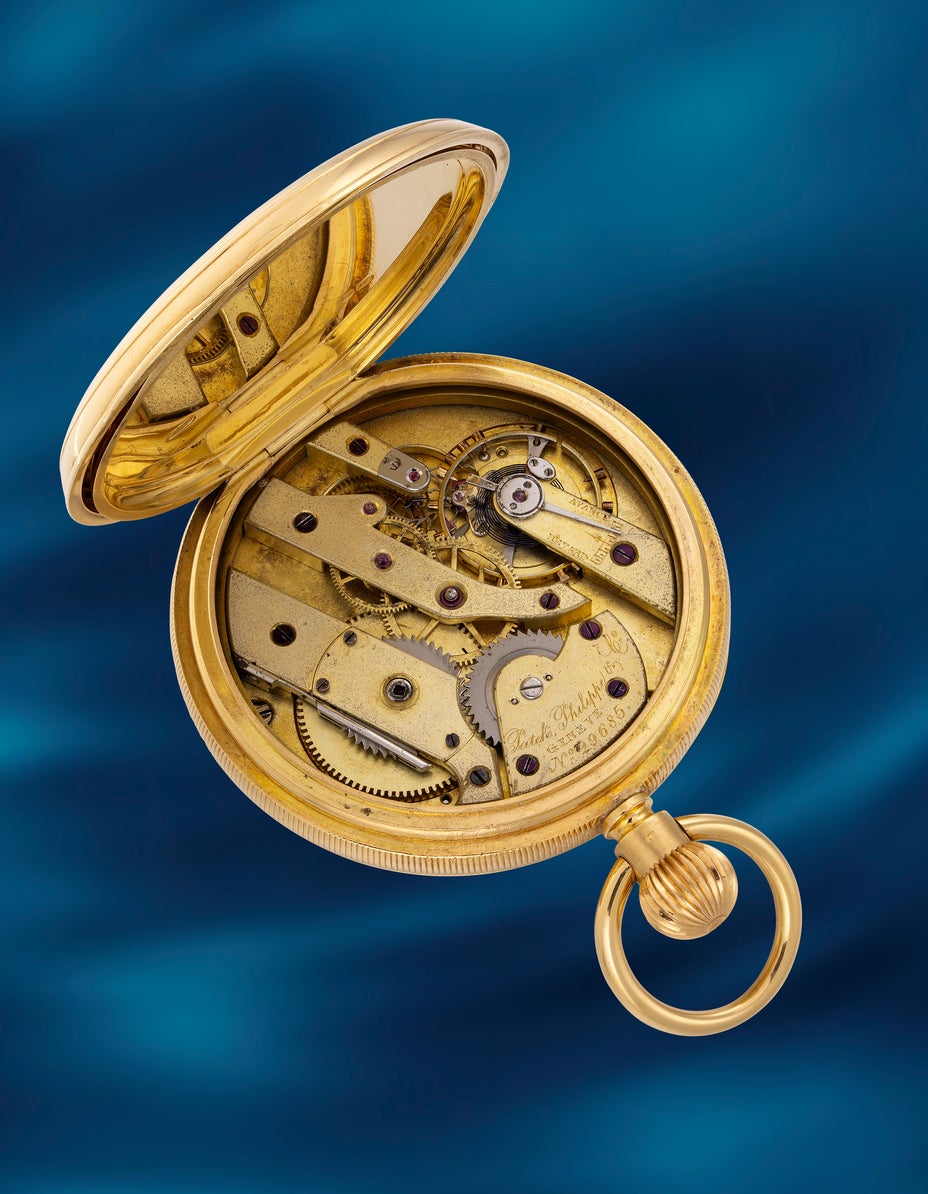
An unusual and rare yellow gold keyless open-faced semi-skeletonized pocket watch with rock crystal dial and engraved monogram
Full-Cataloguing
- Rare rock crystal dial from the era
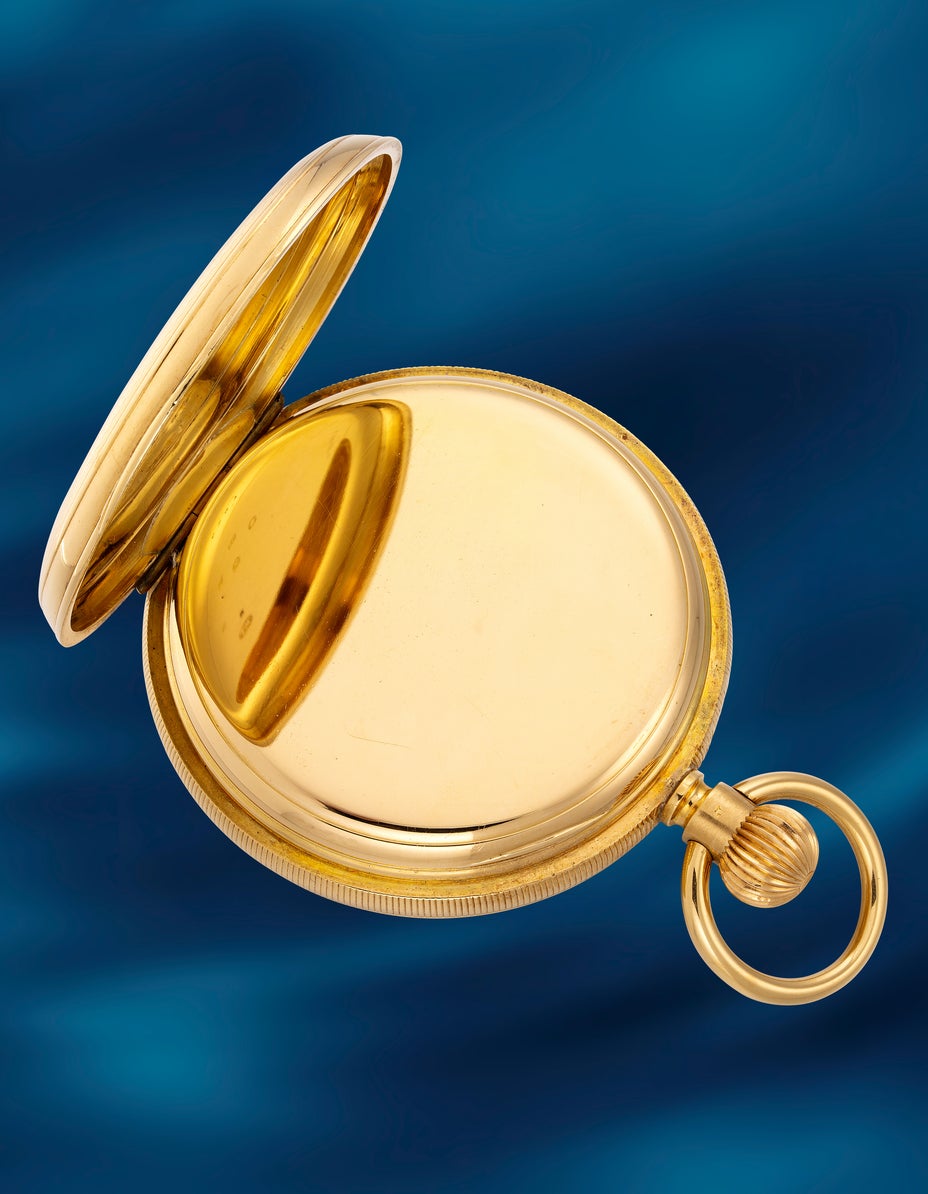
- Exported to United Kingdom and stamped with London hallmarks (John Woodman)
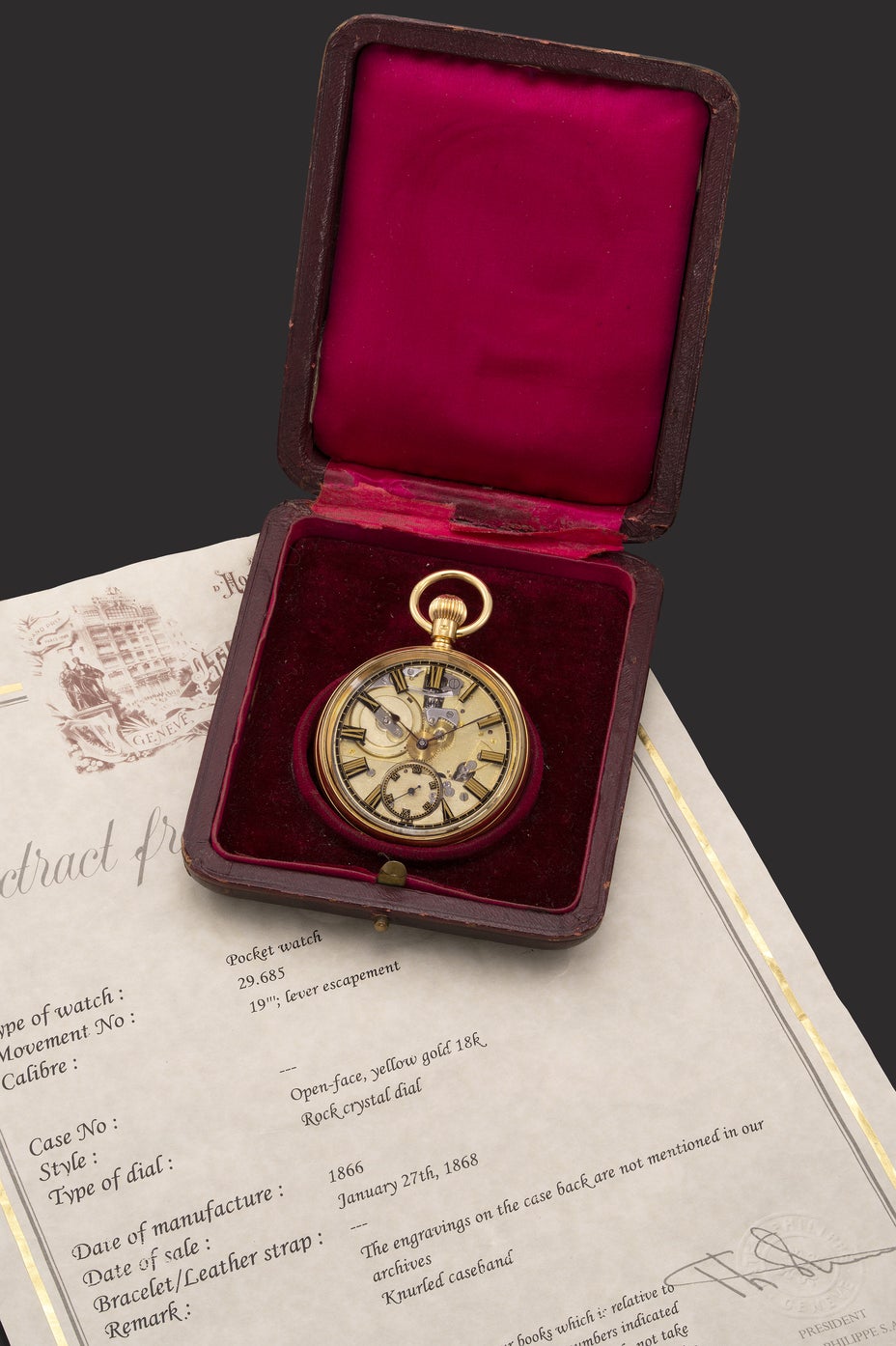
- Confirmed by the Patek Philippe Extract from the Archives
Collectors who love mechanics have always sought the privilege of seeing a movement live and work. In the mid-to-late nineteenth century, rock crystal stood as a material of rare distinction. Prized for its crystalline clarity, hardness, and quiet associations with purity, it had once framed the earliest watch movements so that their intricate life could be seen and admired. By the 1860s its appearance on a dial was already exceptional, reserved for pieces that dared to turn transparency into poetry.
This open-face keyless lever pocket watch by Patek Philippe is precisely the unusual specimen whose exposed design invites the eye deeper. Manufactured in 1866, according to research it is the largest and earliest of only three known examples of its kind made by the Patek Philippe in the nineteenth century. The dial becomes a window, revealing the architecture of its generous 19-ligne calibre in a way no ordinary watch permits.
Only a handful of comparable timepieces left the manufacture even into the 1970s and 1980s. The two other pre-1900 half-skeleton watches with rock crystal dials are both fitted with smaller 12-ligne movements. This watch, therefore, stands alone in scale and presence a first to appear in the market.
Its later history adds further intrigue. Bearing 1888 London hallmarks and the maker’s mark JW (possibly John Woodman), the case reveals that the watch reached English hands. The Archives confirm it originally left Geneva in 18K yellow gold with a knurled caseband. The engravings, absent from the records, show that its English owner could had the case remade to his own taste some twenty years later.
Patek Philippe
Swiss | 1839Since its founding in 1839, this famous Geneva-based firm has been surprising its clientele with superbly crafted timepieces fitted with watchmaking's most prestigious complications. Traditional and conservative designs are found across Patek Philippe's watches made throughout their history — the utmost in understated elegance.
Well-known for the Graves Supercomplication — a highly complicated pocket watch that was the world’s most complicated watch for 50 years — this family-owned brand has earned a reputation of excellence around the world. Patek's complicated vintage watches hold the highest number of world records for results achieved at auction compared with any other brand. For collectors, key models include the reference 1518, the world's first serially produced perpetual calendar chronograph, and its successor, the reference 2499. Other famous models include perpetual calendars such as the ref. 1526, ref. 3448 and 3450, chronographs such as the reference 130, 530 and 1463, as well as reference 1436 and 1563 split seconds chronographs. Patek is also well-known for their classically styled, time-only "Calatrava" dress watches, and the "Nautilus," an iconic luxury sports watch first introduced in 1976 as the reference 3700 that is still in production today.