938
Omega
Ref. CK 2077
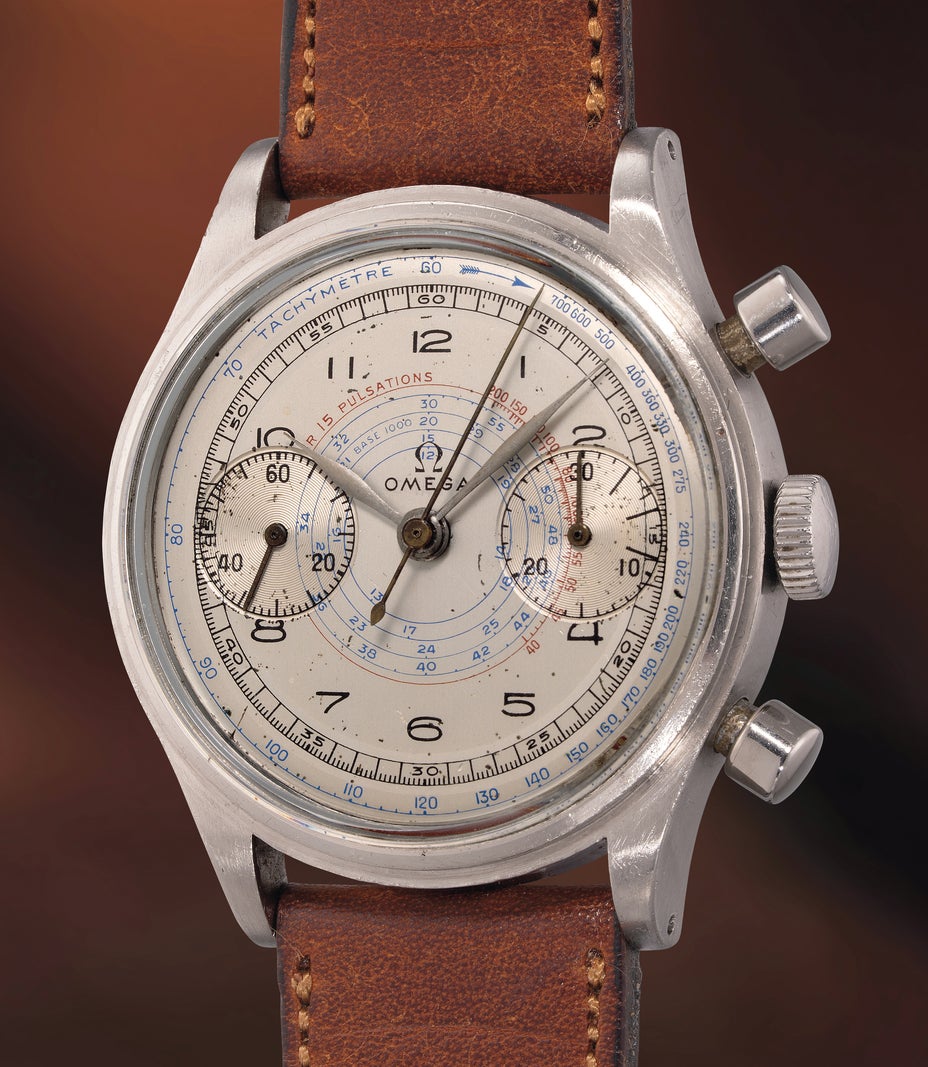
A very rare and remarkable stainless steel chronograph wristwatch with two-tone silvered dial, tachymeter and pulsometer scale
Full-Cataloguing
- First water-resistant chronograph by Omega
- Two-tone silvered dial with multi-scale
- Legendary cal. 33.3 CHRO, predecessor of the cal. 321
- Well-preserved condition with case retaining its original condition
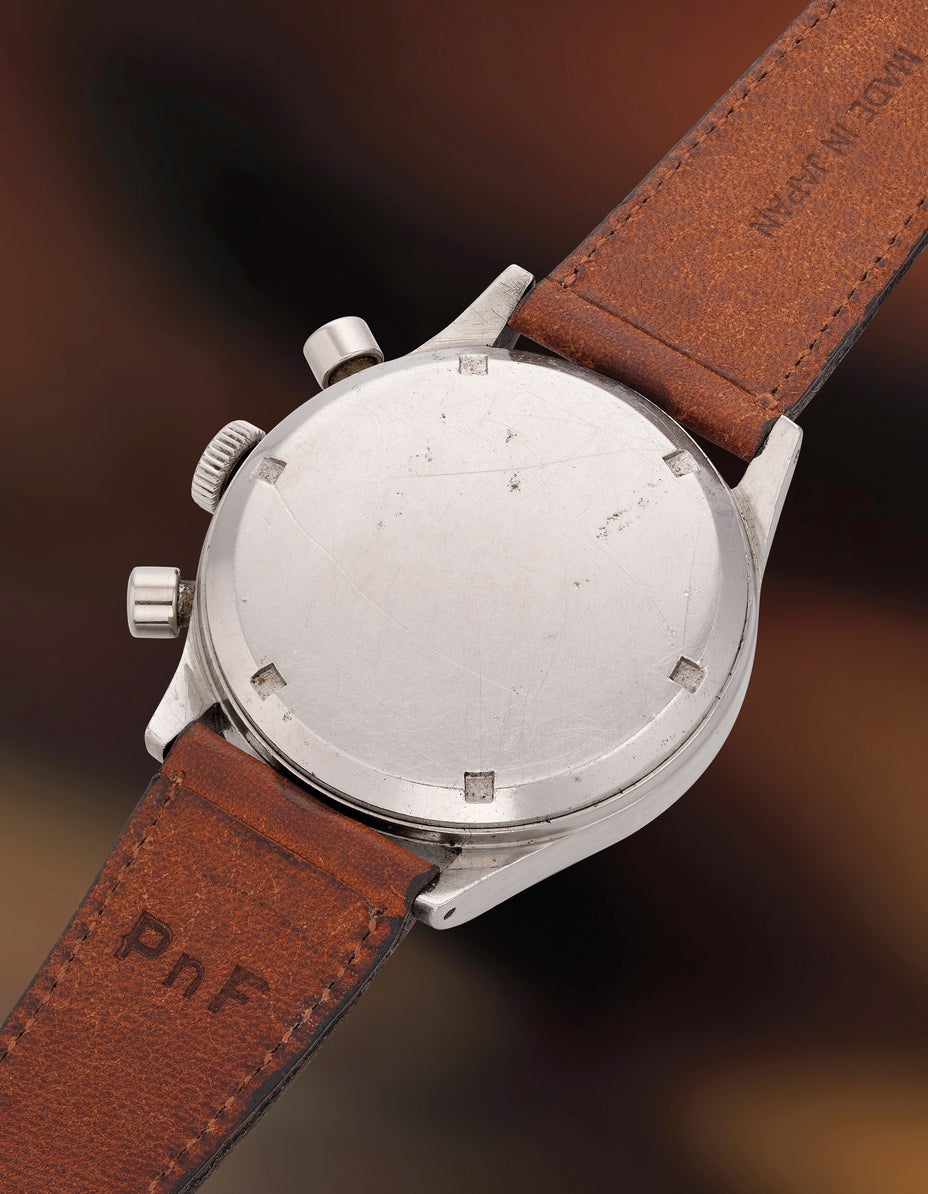
The ref. CK 2077 is regarded as the grail watch of Omega chronographs by many collectors, released initially in 1938. Before the Speedmaster series, the ref. CK 2077 stood as the ground-breaking tool watch by the manufacturer. It was Omega’s first water-resistant chronograph wristwatch with screw back and round chronograph pushers. By inspecting the inner caseback, stamped “2077-3”, it is most likely from the third iteration of the reference.
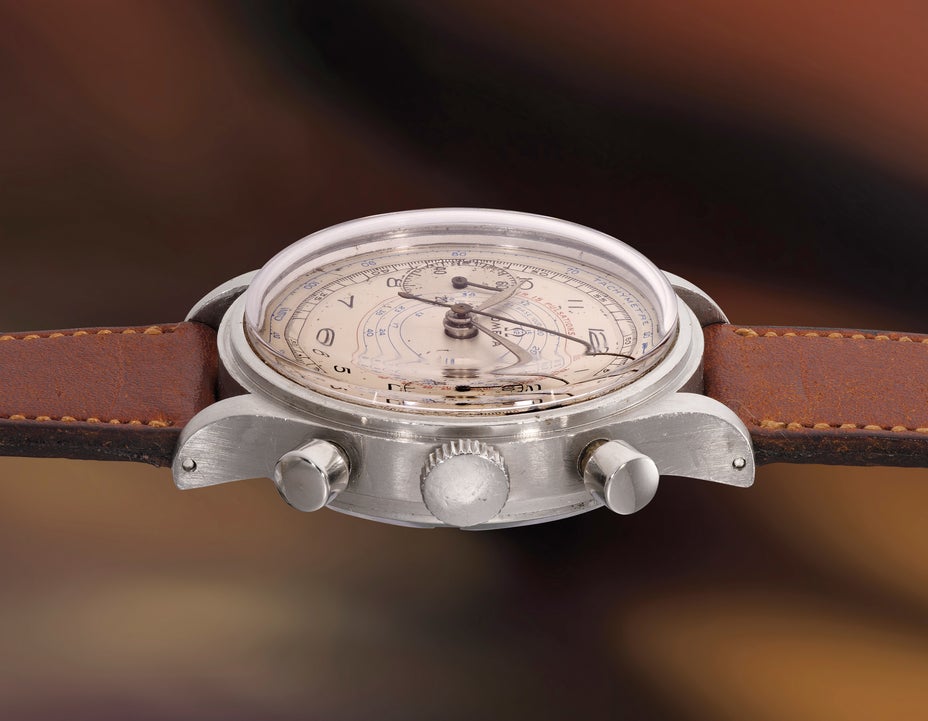
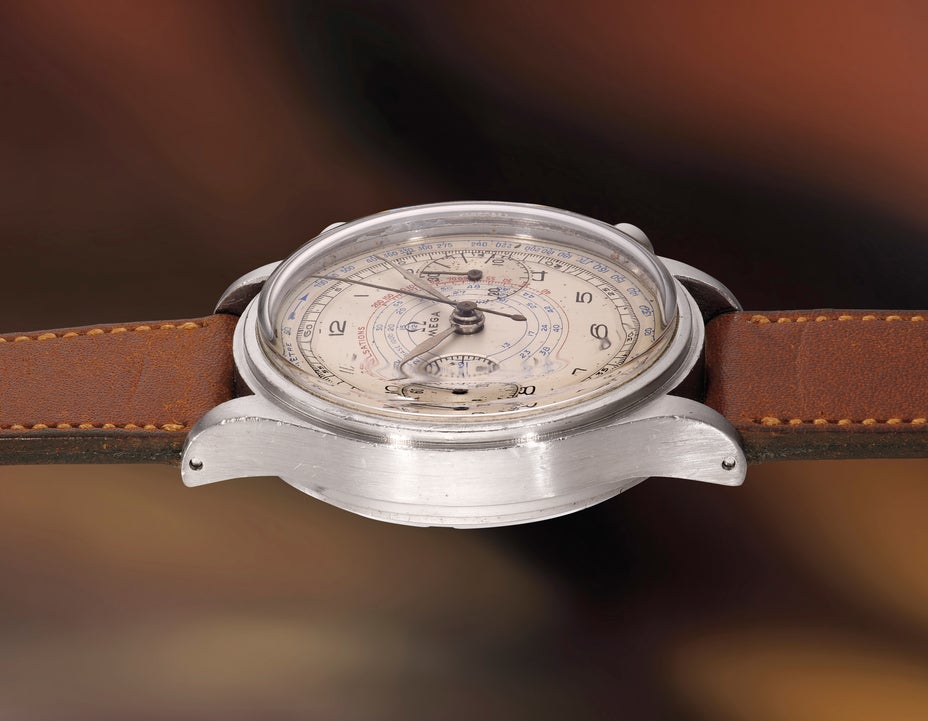
Being a late-30s and war-time period watch, the reference is exceptionally rare and is even more scarce in its original condition. Featuring an oversized 38mm monoblock steel case with screw-down caseback, this is an early, purpose-driven tool watch with its multi-scale dial and robust, highly water-resistant case construction. The two-tone silvered dial is in well-preserved condition for a watch of its age, featuring a tachymeter and pulsometer scale, with engine-turned sub-registers.
Omega chronographs are always highly praised by watch enthusiasts. Before the celebrated cal. 321, there was the legendary cal. 33.3 CHRO. Based on the Lemania cal. 15 CHT, introduced in the early 1930s, it was originally as a monopusher chronograph; however by the late 1930s, the brand redesigned it, and used the movement in some of its finest two-pusher chronographs. Later, the caliber was fitted into the emblematic ref. CK 2077.
It is also worth noting the Omega pin buckle, made by Edmond Kehrer, in a late 1930s design. It is made of Staybrite, a steel alloy that is corrosion resistant. The mark Staybrite has a missing “S”, which is an interesting find in EK buckles.
Offered in well-preserved condition, this present ref. CK 2077 retains its lovely ageing and historic traits and is unlikely polished and adulterated. Being one of Omega’s most recognizable chronographs, it is not just a timepiece but a time capsule wearable on the wrist.
Omega
Swiss | 1848Omega's rich history begins with its founder, Louis Brandt, who established the firm in 1848 in La Chaux de Fonds. In 1903, the company changed its name to Omega, becoming the only watch brand in history to have been named after one its own movements. A full-fledged manufacturer of highly accurate, affordable and reliable watches, its sterling reputation enabled them to be chosen as the first watch company to time the Olympic Games beginning in 1932. Its continued focus on precision and reliability ultimately led their Speedmaster chronograph wristwatch to be chosen by NASA in 1965 — the first watch worn on the moon.
Key models sought-after by collectors include their first, oversized water-resistant chronograph — the reference 2077, early Speedmaster models such as the CK 2915 and 2998, military-issued versions of the Seamaster and oversized chronometer models such as those fitted with their prestigious caliber 30T2Rg.