949Σ︎
Jaeger-LeCoultre
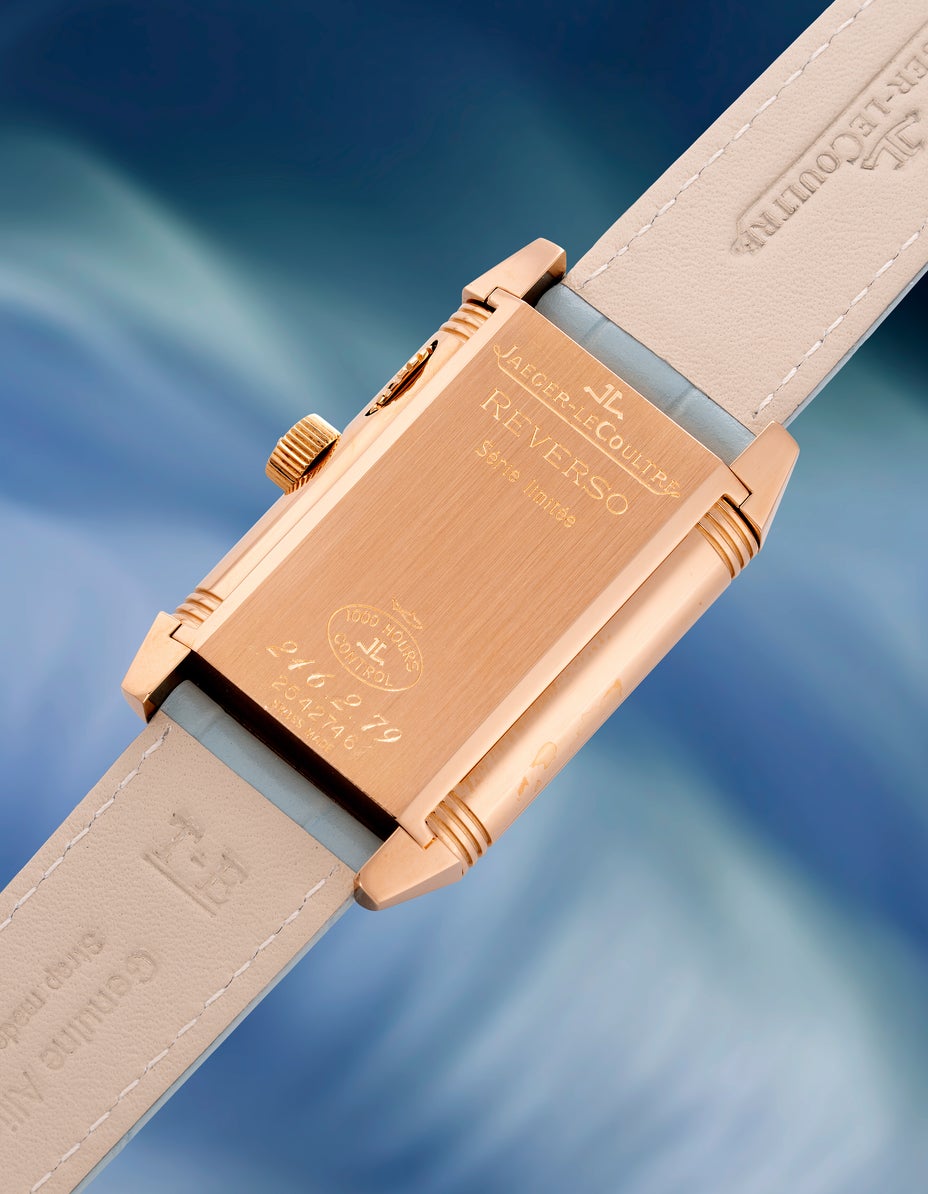
Ref. 246.2.79
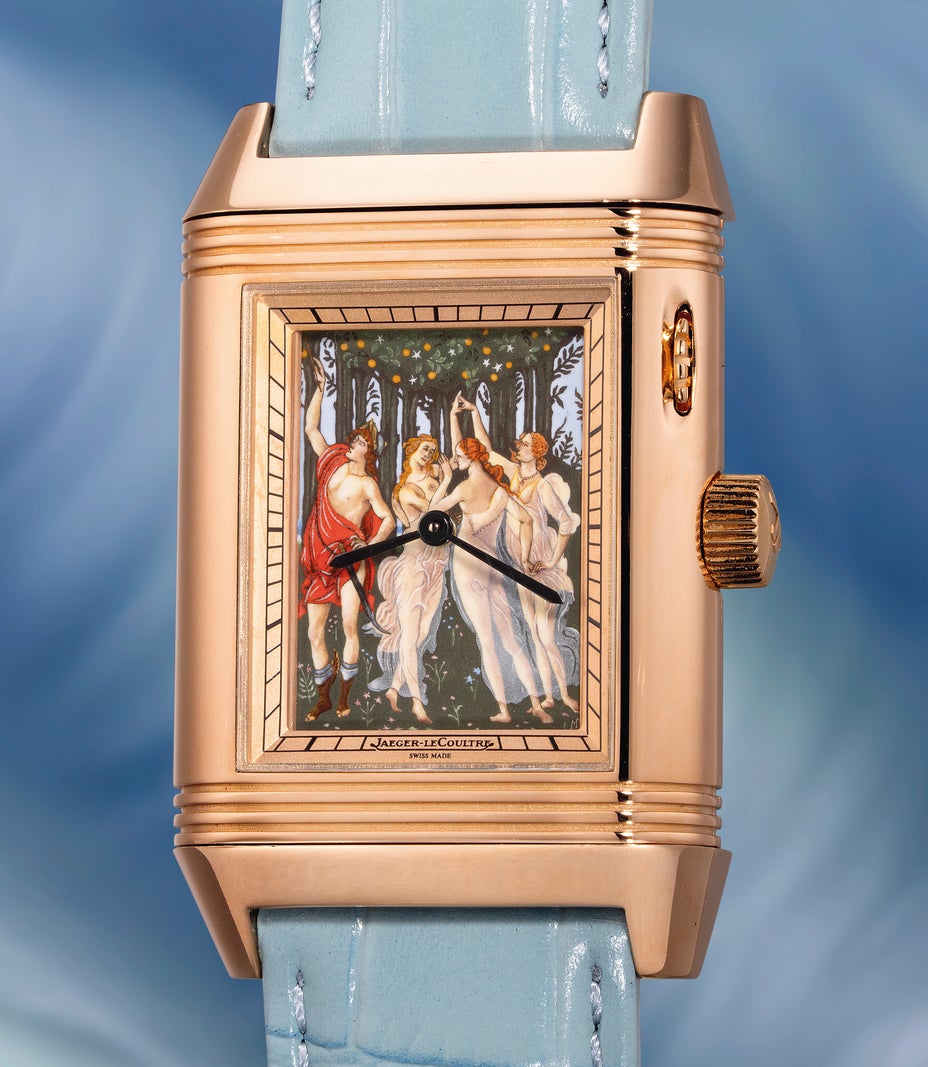
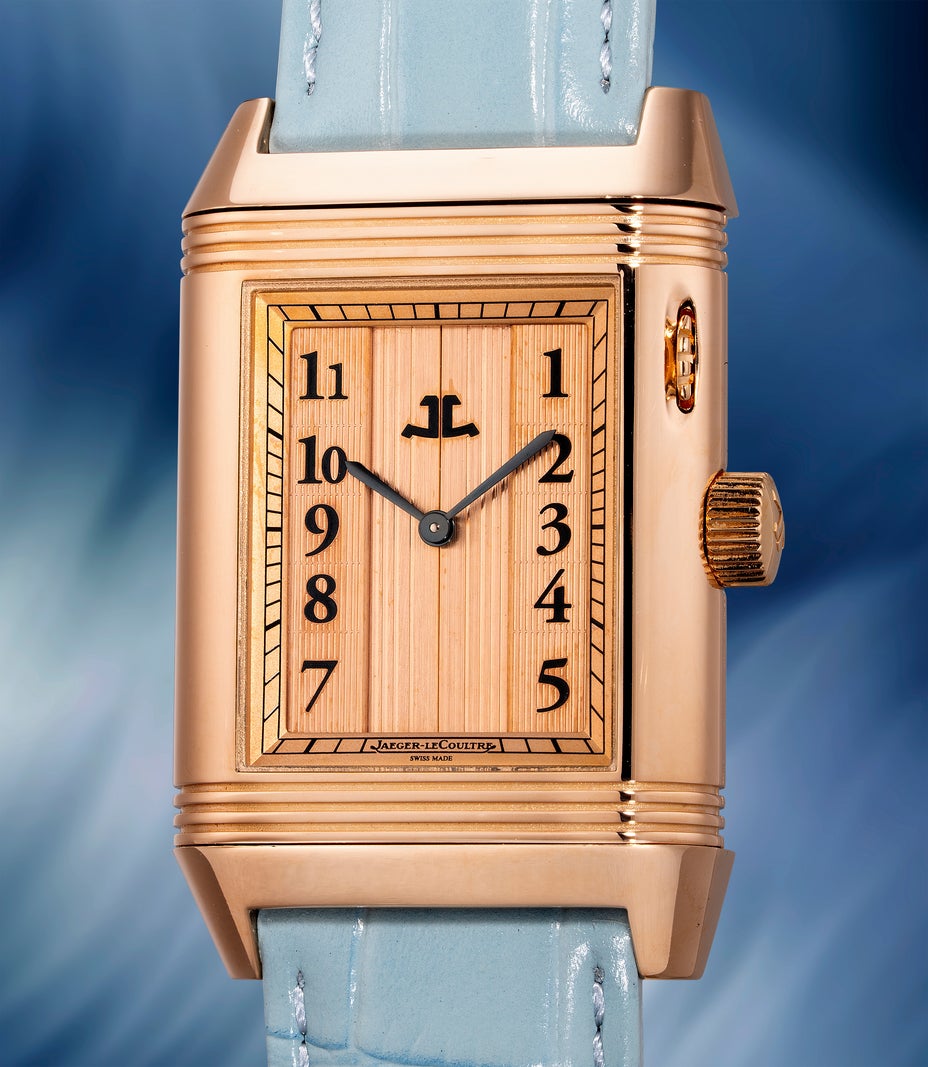
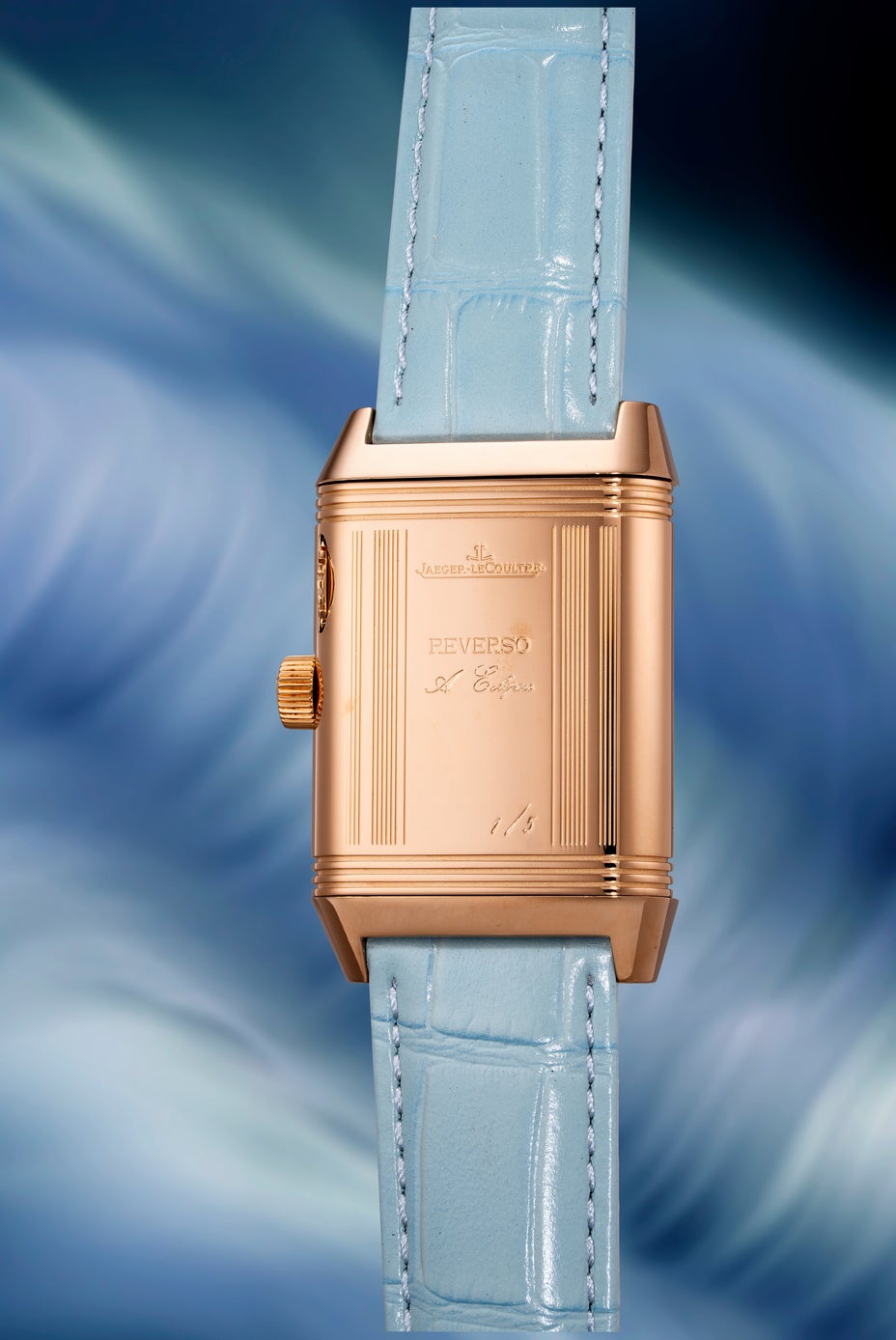
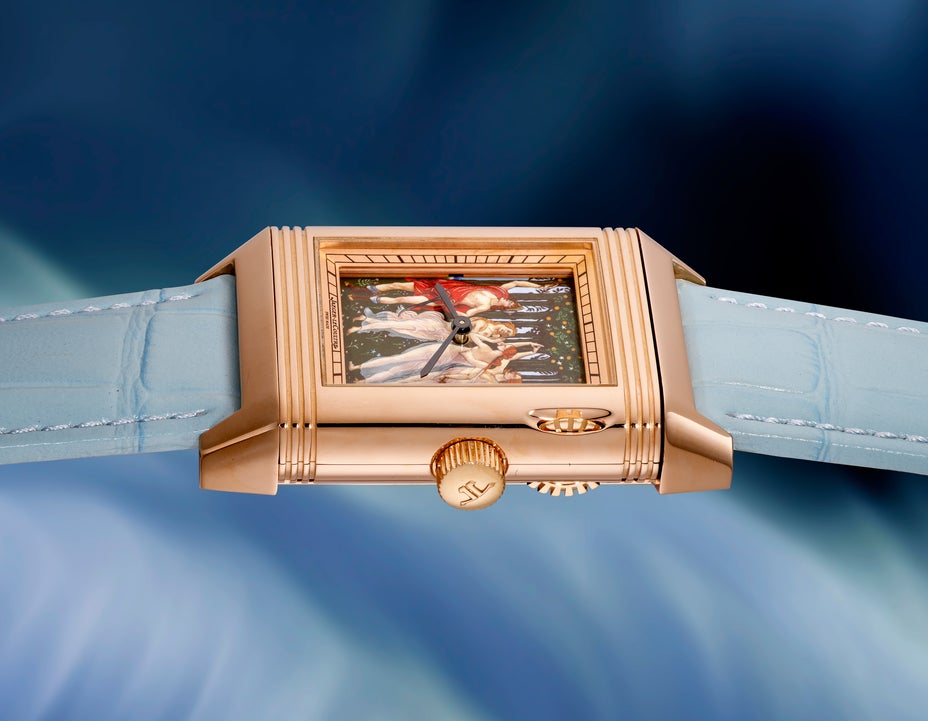
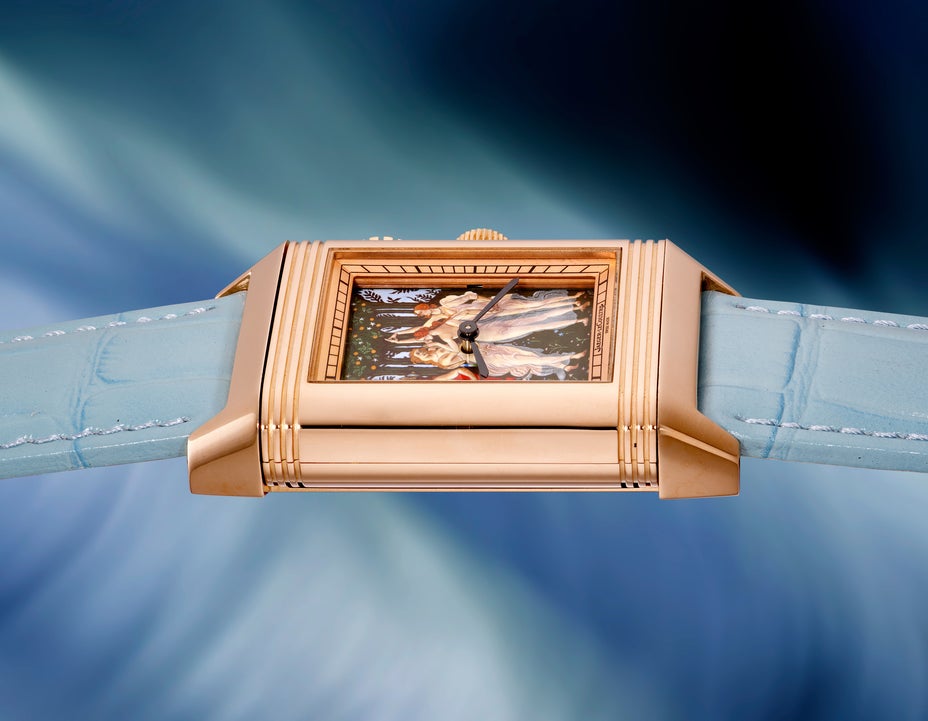
Reverso à éclipses “Famous Nudes, Primavera”
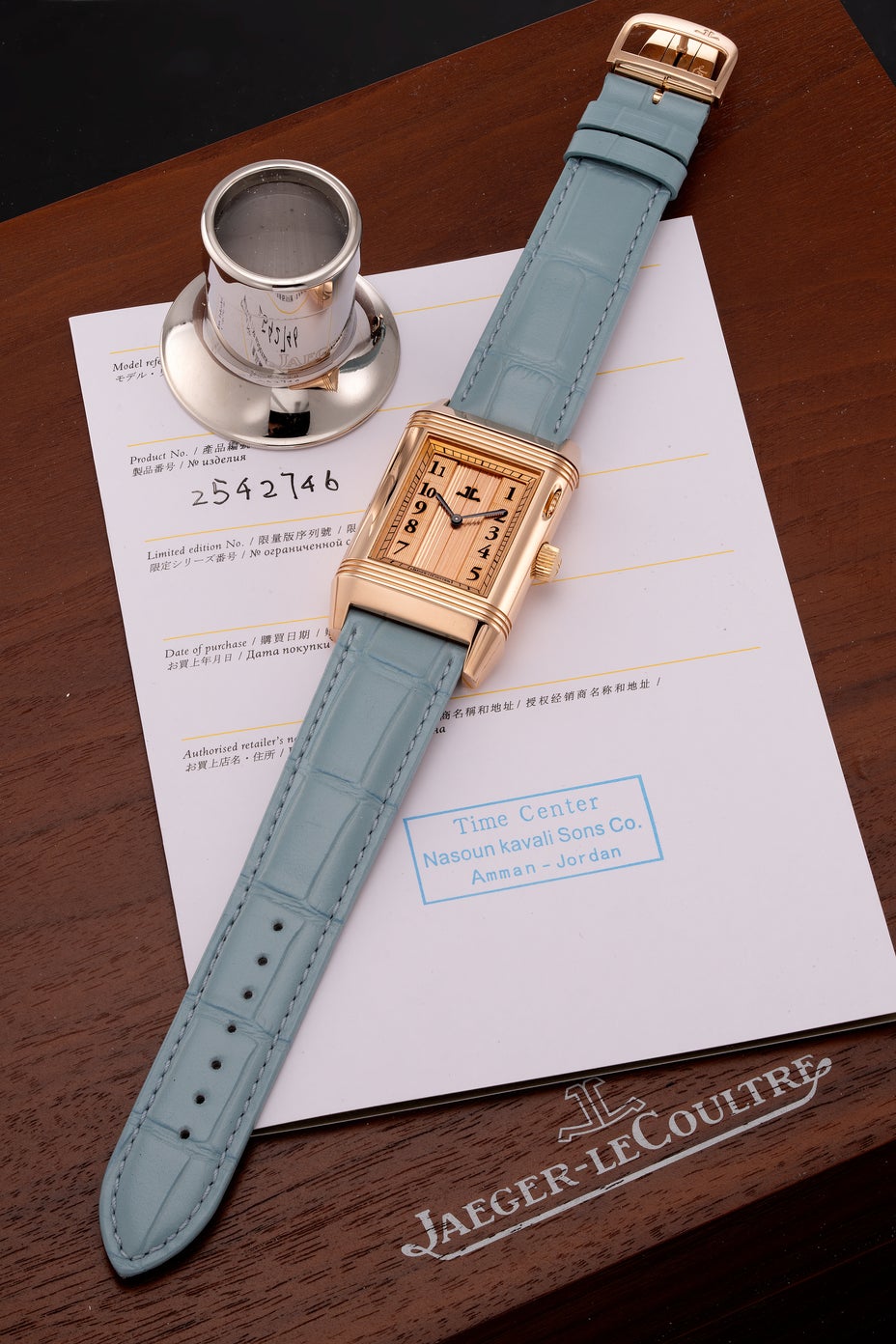
A “like-new”, incredibly rare and refined limited edition pink gold rectangular-shaped reversible wristwatch with concealed miniature enamel dial depicting Sandro Botticelli’s “Primavera”, certificate and presentation box, numbered 1 of a limited edition of 5 pieces
Full-Cataloguing
- Sandro Botticelli’s iconic Primavera executed by master enameller Miklos Merczel
- Extremely well-preserved and numbered 1 from the series
- First time to appear at auction
- Signed MM on the bottom corner
This particular example belongs to the extremely exclusive “Nus Célébres” (Famous Nudes) series of 2006, a suite of only eight designs. Each features a miniature enamel reproduction of a celebrated nude from the Western canon — works by Renoir, Klimt, Botticelli, Ingres, and even a scene from the Kama Sutra. While platinum examples were limited to 3 pieces per design, the pink gold variant were in limited edition of 5 pieces. The present watch conceals Sandro Botticelli’s iconic Primavera, rendered in painstaking detail through the demanding technique of miniature enamel painting.
The artistic soul of these watches was shaped by Miklos Merczel, the Hungarian-born former watchmaker who, largely through self-taught experimentation, founded Jaeger-LeCoultre’s in-house enamel workshop in the early 1990s. Working in the Vallée de Joux, Merczel revived and perfected the rare art of miniature enamel painting, transforming the Reverso into a stage for museum-quality art. Under his direction, the manufacture became one of the very few Swiss houses capable of producing such work entirely in-house — long before métiers d’art became fashionable. Like the present example, works by the master enameller were usually signed “MM” on the corner of each masterpiece.
In Merczel’s miniature, the luminous drapery of Botticelli's Primavera is captured with remarkable sensitivity: the soft, spring-like colours, the delicate folds of fabric, and the almost translucent gowns that cling and flow around the figures, revealing the graceful forms beneath. Preserved in “like-new” condition and numbered 1 of the series, this Primavera in pink gold makes its debut in auction market. To wear this watch is to carry one of the world’s most celebrated paintings on the wrist, a private gallery of Renaissance beauty that remains, for its owner alone the most valuable masterpiece of all.
Jaeger-LeCoultre
Swiss | 1833Not all companies in the watchmaking field have been able to stand the test of time quite like Jaeger LeCoultre, also known as the "watchmaker's watchmaker." Founded in 1833 by Antoine LeCoultre and originally named LeCoutre, the firm provided watchmaking's top brands, such as Patek Philippe, Vacheron Constantin and Audemars Piguet, the high-grade, unfinished mechanical movements with which they completed their watches.
In the early 1900s, Cartier's watch supplier Edmond Jaeger sought out LeCoultre's help in creating the world's thinnest watches. The collaboration resulted in the creation of Cartier's earliest Tank and Santos watches, all housed with LeCoultre movements. The duo decided to merge in 1937, and the firm officially became the Jaeger-LeCoultre brand by which collectors know and adore it today. Some of the firm's most significant and important timepieces include the Reverso, the Memovox, the Atmos clock and, among modern watches, their Master Complications.