91
Ferdinand Berthoud
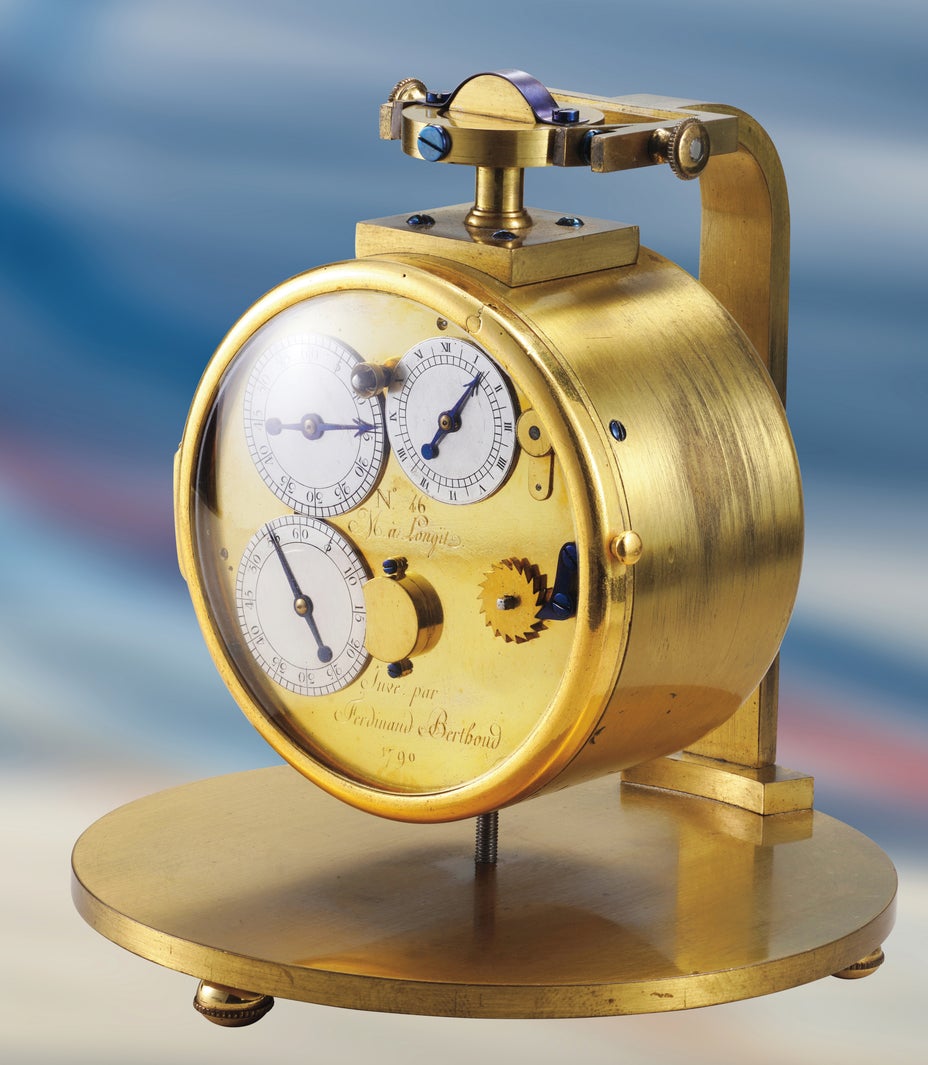
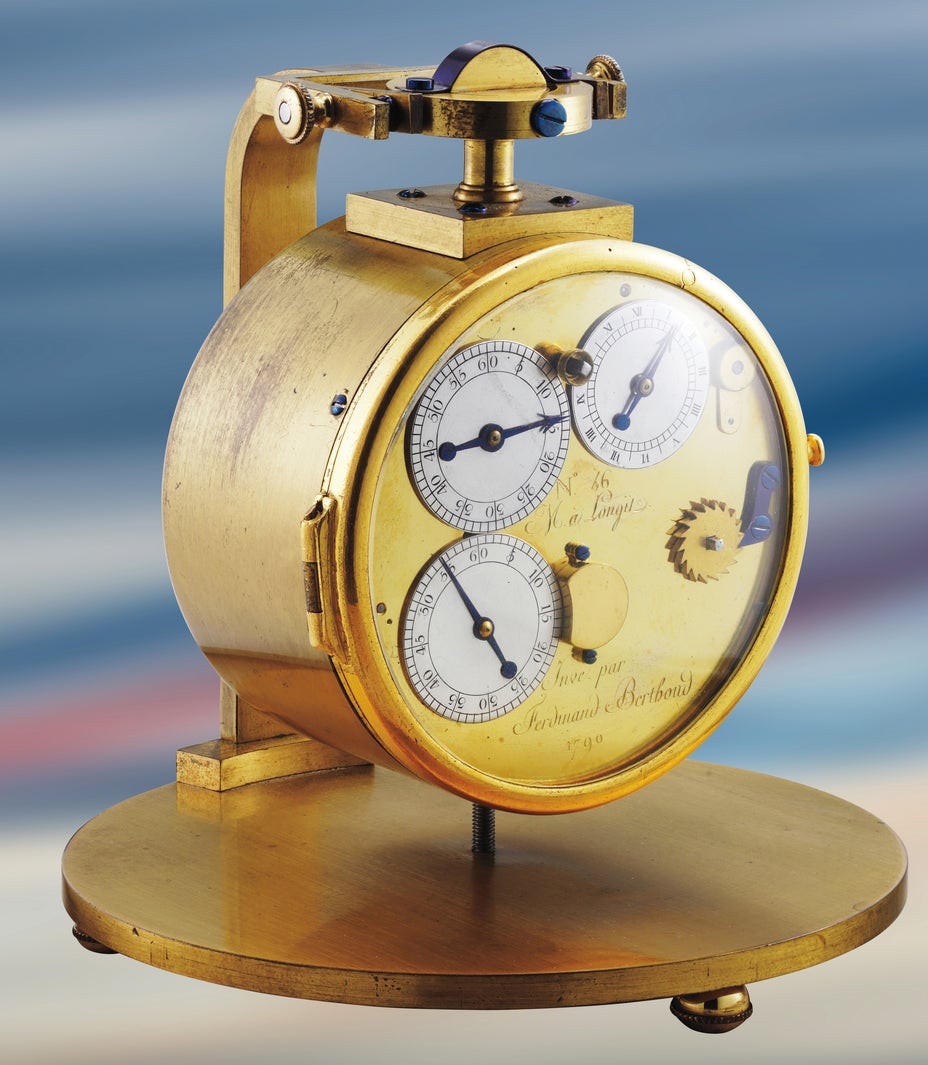
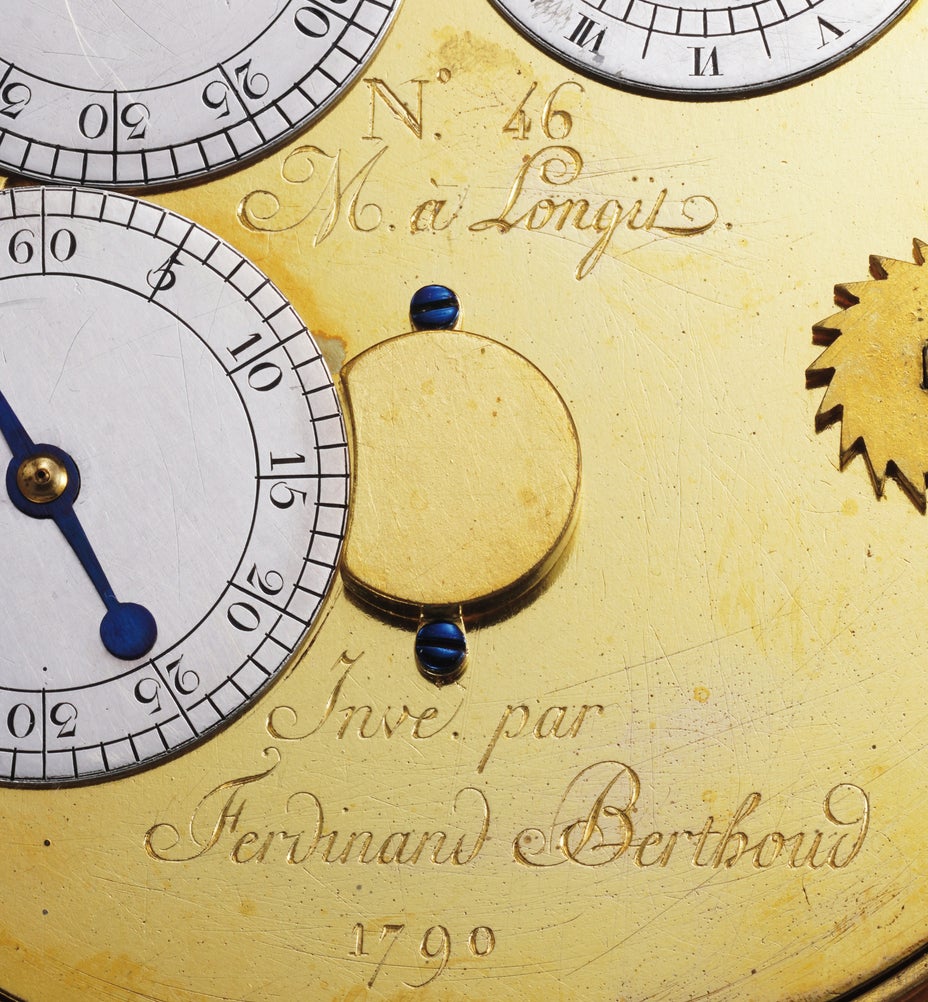
La Montre à Longitude Verticale No. 46, 1790
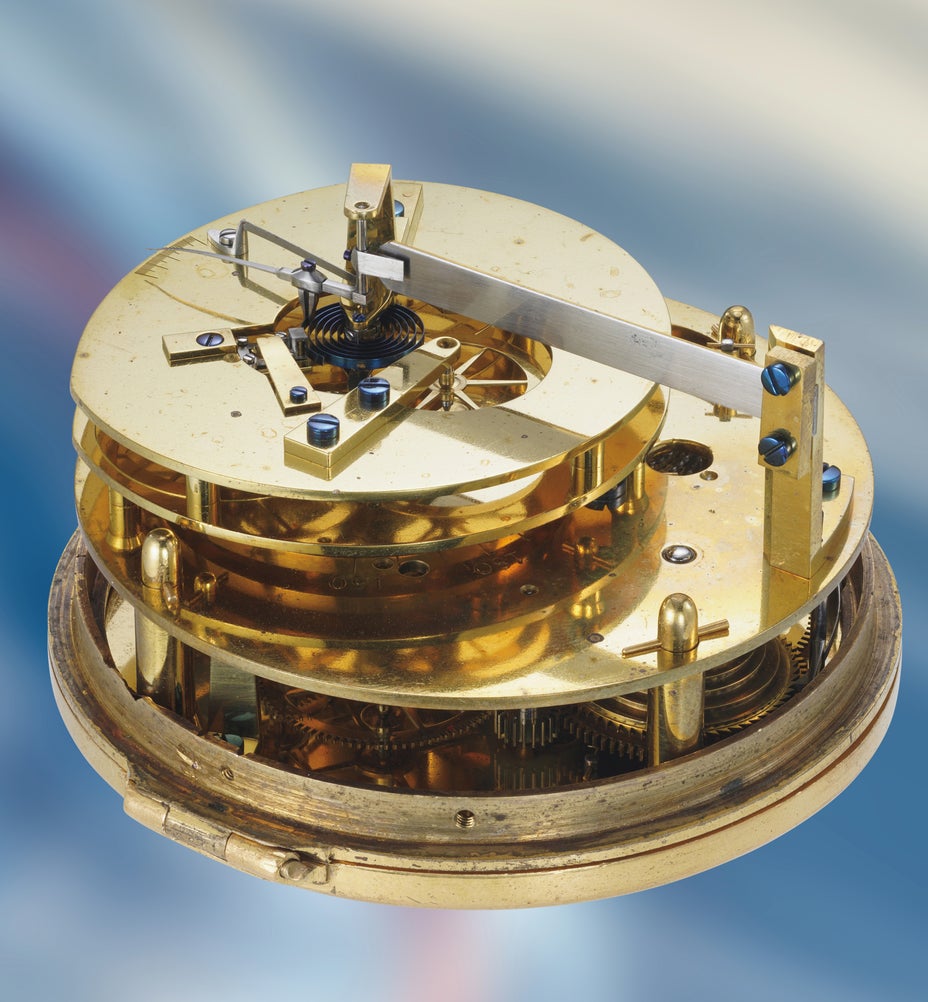
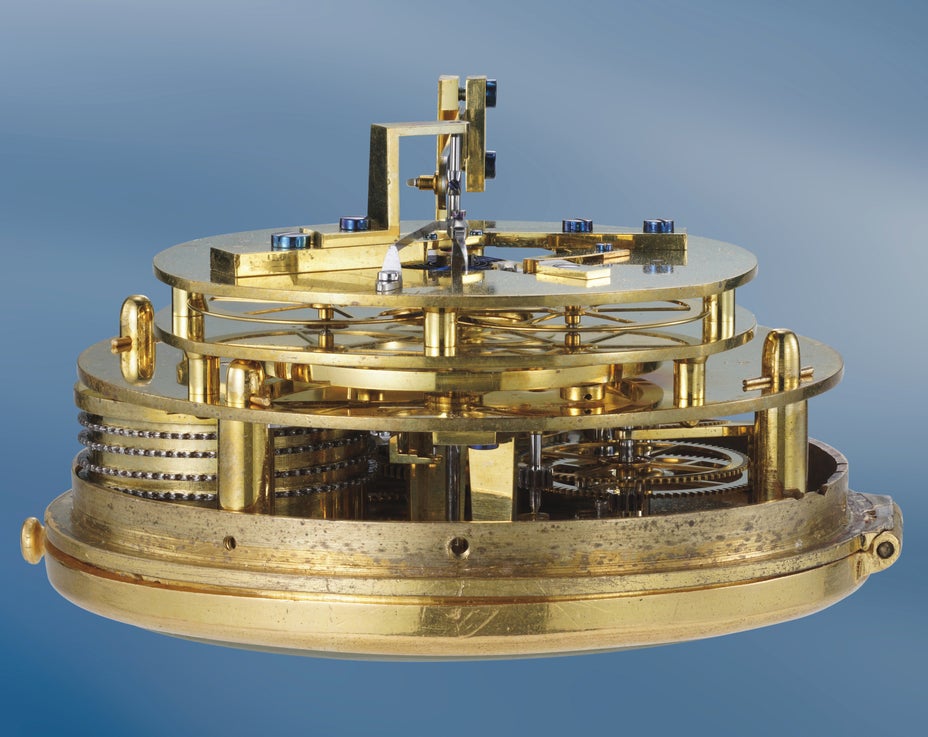
A historically important and extremely rare brass marine chronometer with fusée and chain, detached pivoted detent escapement
Estimate
CHF100,000–200,000
€108,000–215,000
$121,000–241,000
Manufacturer
Ferdinand Berthoud
Year
1790
Case No
46
Model Name
La Montre à Longitude Verticale No. 46, 1790
Material
Brass
Calibre
Manual
Dimensions
72mm diameter
Accessories
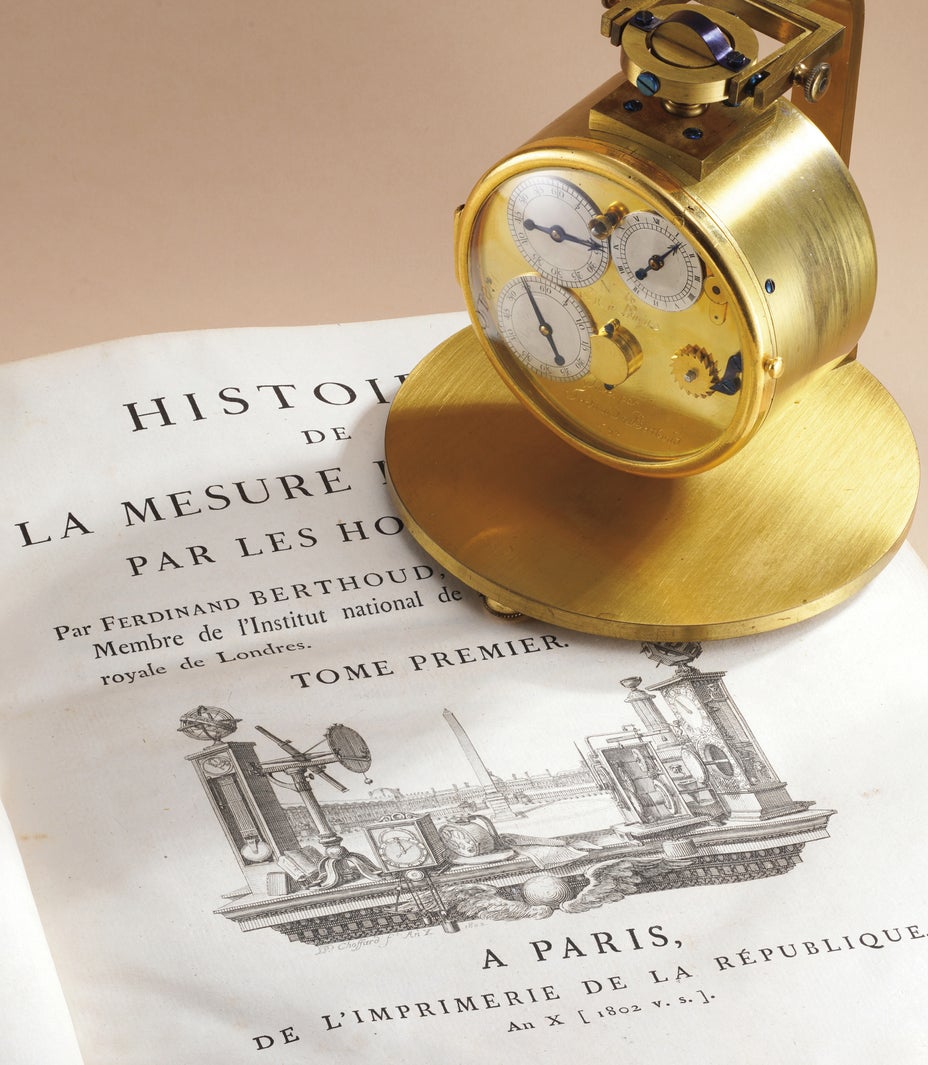
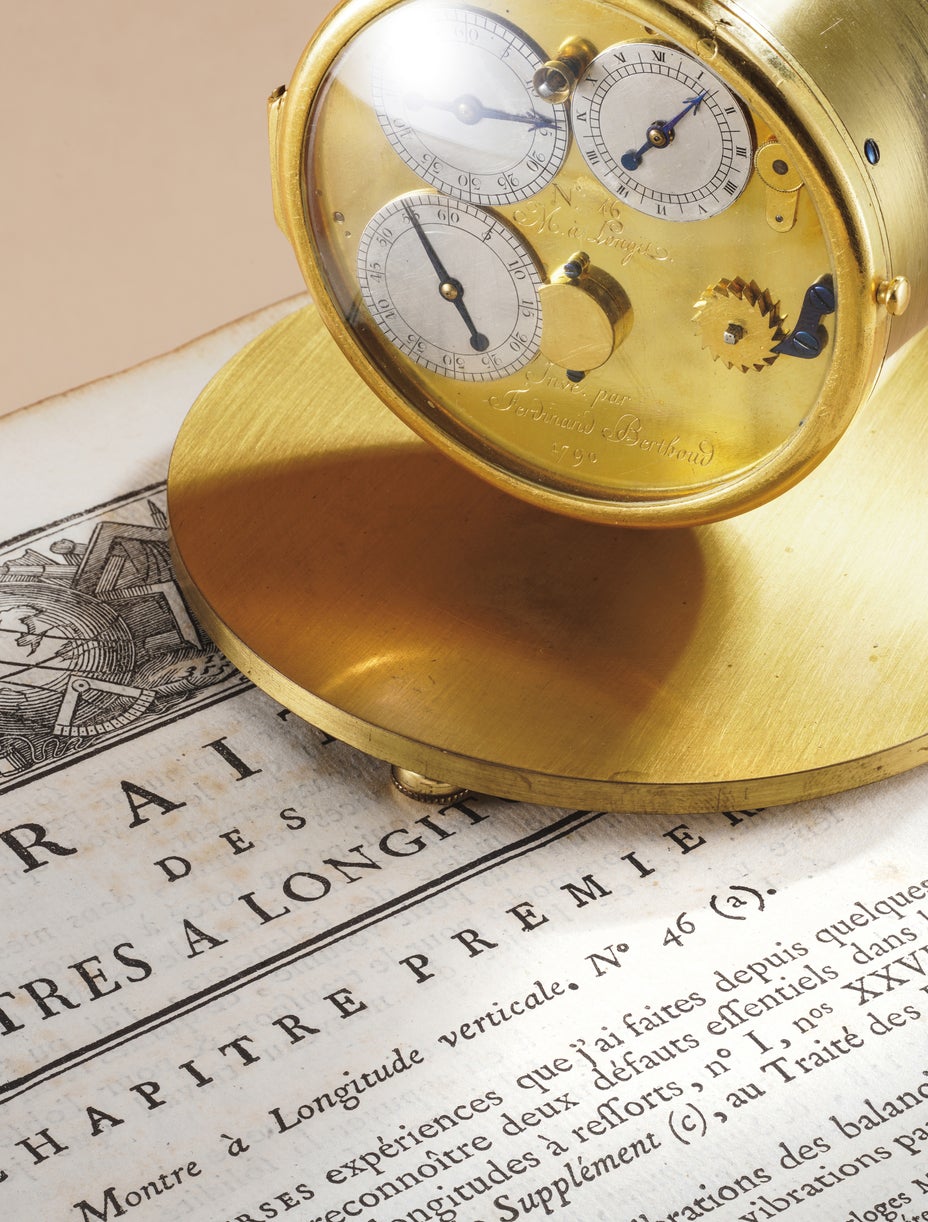
Accompanied by brass stand (modern recreation), and following leather bound books by Ferdinand Berthoud: Traité des Montres à Longitude (1792) and Histoire de la Mesure du Temps Tomes 1 & 2 (1802)
Full-Cataloguing
Good to Know:
- Vertical Marine Chronometer
- Detached pivoted detent escapement
- 22 pages of Traité des Montres à Longitudes, by Ferdinand Berthoud published in 1792, are devoted to the present chronometer
Ferdinand Berthoud (1727–1807) – considered as one of the greatest French clockmakers occupies a singular position in the history of precision timekeeping. Born in Plancemont, near Le Locle, the son of an architect and magistrate, he was apprenticed to his elder brother Jean-Henri at the age of fourteen. In 1745, he travelled to Paris, where he is believed to have worked for a period in the celebrated workshop of Julien Le Roy. His intellectual curiosity extended well beyond horology: Berthoud studied astronomy, mathematics and physics, disciplines that would inform his lifelong pursuit of accurate timekeeping, particularly for use at sea.
Berthoud was also an exceptionally prolific author. Between 1759 and 1802, he published some four thousand pages of horological literature, documenting his experiments, observations and inventions. Among his most important works is the Traité des Montres à Longitudes, published in 1792, the opening 22 pages of which are devoted to the present chronometer, No. 46. A copy of this important publication accompanies the present lot.
Completed in 1790, M.M. No. 46 represents one of Berthoud’s most ambitious attempts to create a versatile and practical marine timekeeper. Unlike many of his earlier experimental chronometers, it was conceived to serve several purposes: primarily as a precision instrument for determining longitude at sea, but also as a deck or pocket watch and, when secured in its stand, as a desk timepiece. Its ingenious gimballed mounting allowed the chronometer to be readily detached, while the same system provided the stability required for marine use. It was in fact a multi-purpose marine chronometer combining several uses within a single instrument, its detachable gimballed mounting allowing it to serve both at sea and as a portable or table timekeeper.
The chronometer was constructed by Vincent Martin, Berthoud’s foremost pupil and horloger de la Marine in Brest, according to Berthoud’s precise specifications. Its construction and purpose are described in detail by Berthoud in the Traité des Montres à Longitudes, providing unusually valuable contemporary documentation for the present timepiece. Berthoud further records that a second example was to be made by Cayetano Sanchez, a Spanish watchmaker sent by his government to study under him before continuing his training with the English horologist Josiah Emery.
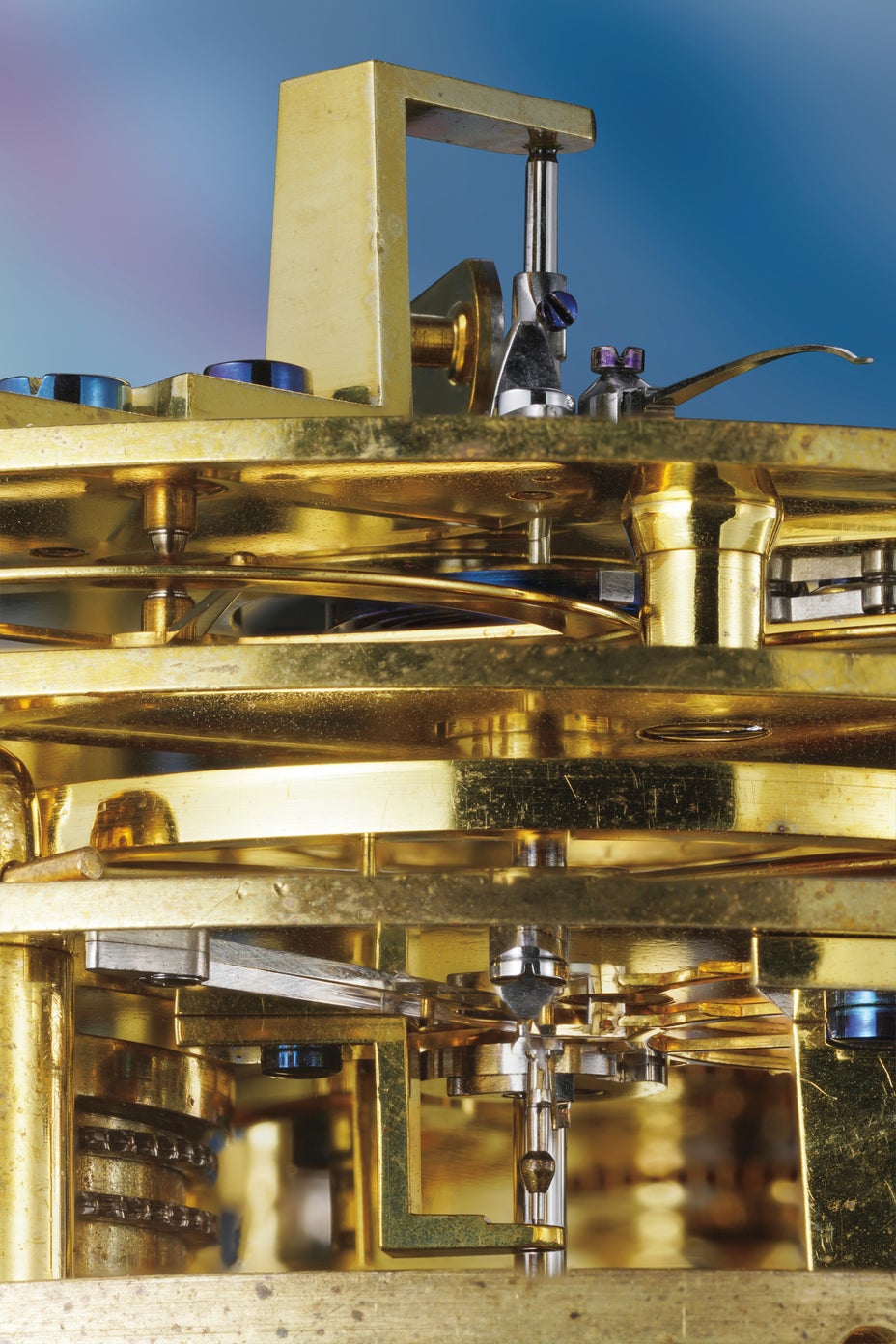
M.M. No. 46 is particularly significant for the number of technical solutions Berthoud incorporated into its design. Seeking to improve both precision and reliability, he adopted a smaller and lighter balance beating at a frequency of 2 Hz (14,400 vph) rather than the more common 3Hz (21,600vph), introduced anti-friction rollers and replaced the traditional grid-iron temperature compensation with a simpler system employing steel and copper. The chronometer also features a detached pivoted detent escapement and a fusee with maintaining power, allowing the mainspring to be adjusted while preserving the continuity of the going train.
The importance of No. 46 is further underscored by its place in Berthoud’s own published work. Although John Harrison’s H4 had undergone its celebrated sea trials in 1761 and Berthoud’s M.M. No. 3 had been tested on expeditions from 1763, marine chronometry remained very much an experimental field. Berthoud himself regarded No. 46 as one of his most important timekeepers and devoted considerable attention to explaining its construction and advantages. Significantly, he selected it for inclusion in the frontispiece of his Histoire de la Mesure du Temps, published in 1802, a copy of which is also offered with the present lot.
Few of Berthoud’s early marine chronometers remain in private hands today. Many of the surviving examples are preserved in institutions including the Patek Philippe Museum, Musée des Arts et Métiers in Paris, the Musée International d’Horlogerie in La Chaux-de-Fonds and the British Museum. The survival of M.M. No. 46, accompanied by the two seminal works in which Berthoud himself documented and illustrated the timepiece, therefore offers a particularly compelling opportunity to study the work of one of the founding figures of marine chronometry.
- Vertical Marine Chronometer
- Detached pivoted detent escapement
- 22 pages of Traité des Montres à Longitudes, by Ferdinand Berthoud published in 1792, are devoted to the present chronometer
Ferdinand Berthoud (1727–1807) – considered as one of the greatest French clockmakers occupies a singular position in the history of precision timekeeping. Born in Plancemont, near Le Locle, the son of an architect and magistrate, he was apprenticed to his elder brother Jean-Henri at the age of fourteen. In 1745, he travelled to Paris, where he is believed to have worked for a period in the celebrated workshop of Julien Le Roy. His intellectual curiosity extended well beyond horology: Berthoud studied astronomy, mathematics and physics, disciplines that would inform his lifelong pursuit of accurate timekeeping, particularly for use at sea.
Berthoud was also an exceptionally prolific author. Between 1759 and 1802, he published some four thousand pages of horological literature, documenting his experiments, observations and inventions. Among his most important works is the Traité des Montres à Longitudes, published in 1792, the opening 22 pages of which are devoted to the present chronometer, No. 46. A copy of this important publication accompanies the present lot.
Completed in 1790, M.M. No. 46 represents one of Berthoud’s most ambitious attempts to create a versatile and practical marine timekeeper. Unlike many of his earlier experimental chronometers, it was conceived to serve several purposes: primarily as a precision instrument for determining longitude at sea, but also as a deck or pocket watch and, when secured in its stand, as a desk timepiece. Its ingenious gimballed mounting allowed the chronometer to be readily detached, while the same system provided the stability required for marine use. It was in fact a multi-purpose marine chronometer combining several uses within a single instrument, its detachable gimballed mounting allowing it to serve both at sea and as a portable or table timekeeper.
The chronometer was constructed by Vincent Martin, Berthoud’s foremost pupil and horloger de la Marine in Brest, according to Berthoud’s precise specifications. Its construction and purpose are described in detail by Berthoud in the Traité des Montres à Longitudes, providing unusually valuable contemporary documentation for the present timepiece. Berthoud further records that a second example was to be made by Cayetano Sanchez, a Spanish watchmaker sent by his government to study under him before continuing his training with the English horologist Josiah Emery.
M.M. No. 46 is particularly significant for the number of technical solutions Berthoud incorporated into its design. Seeking to improve both precision and reliability, he adopted a smaller and lighter balance beating at a frequency of 2 Hz (14,400 vph) rather than the more common 3Hz (21,600vph), introduced anti-friction rollers and replaced the traditional grid-iron temperature compensation with a simpler system employing steel and copper. The chronometer also features a detached pivoted detent escapement and a fusee with maintaining power, allowing the mainspring to be adjusted while preserving the continuity of the going train.
The importance of No. 46 is further underscored by its place in Berthoud’s own published work. Although John Harrison’s H4 had undergone its celebrated sea trials in 1761 and Berthoud’s M.M. No. 3 had been tested on expeditions from 1763, marine chronometry remained very much an experimental field. Berthoud himself regarded No. 46 as one of his most important timekeepers and devoted considerable attention to explaining its construction and advantages. Significantly, he selected it for inclusion in the frontispiece of his Histoire de la Mesure du Temps, published in 1802, a copy of which is also offered with the present lot.
Few of Berthoud’s early marine chronometers remain in private hands today. Many of the surviving examples are preserved in institutions including the Patek Philippe Museum, Musée des Arts et Métiers in Paris, the Musée International d’Horlogerie in La Chaux-de-Fonds and the British Museum. The survival of M.M. No. 46, accompanied by the two seminal works in which Berthoud himself documented and illustrated the timepiece, therefore offers a particularly compelling opportunity to study the work of one of the founding figures of marine chronometry.