


No Reserve
35
Cartier
Ref. 9118
Prism Desk Clock
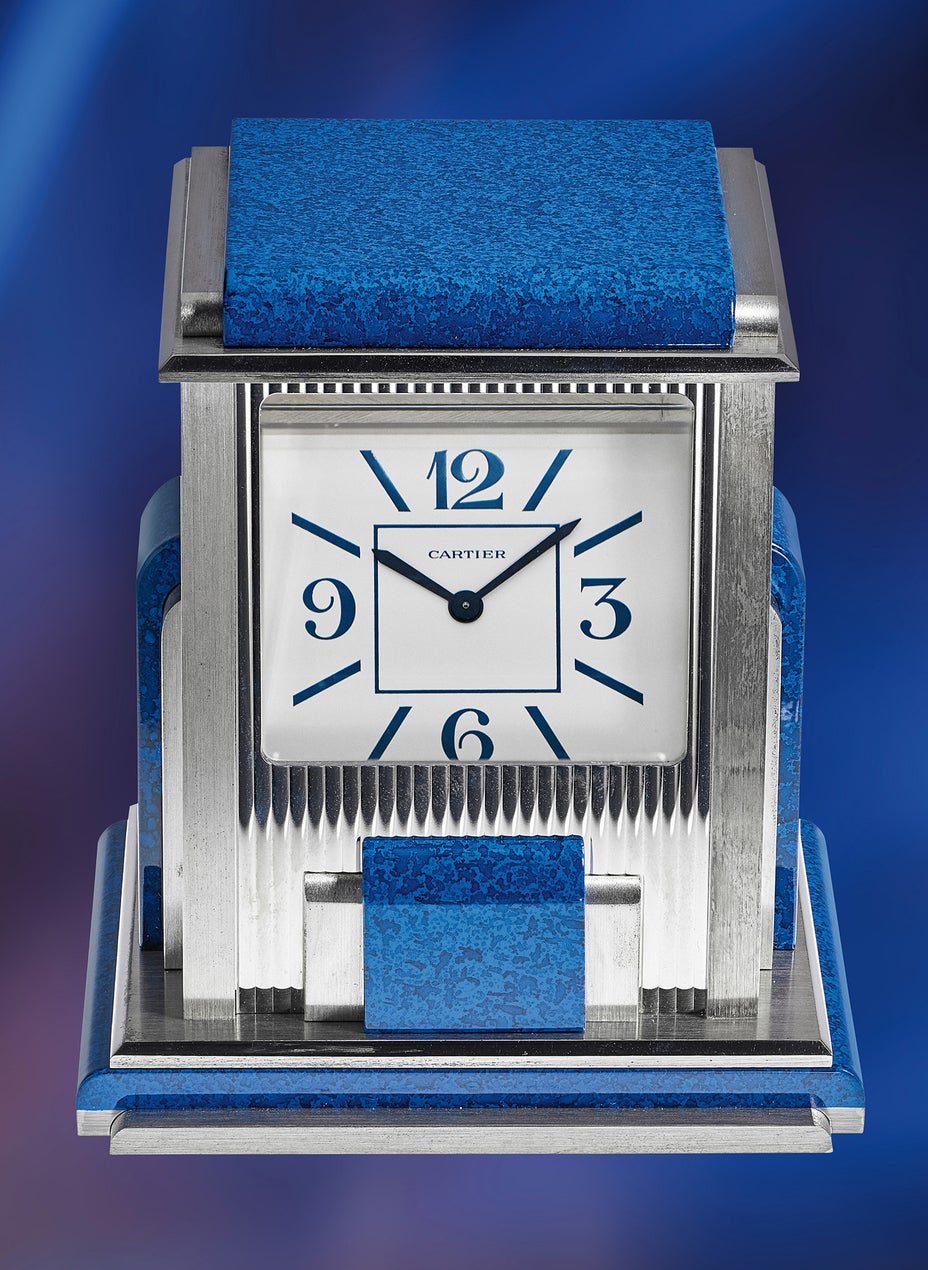
An attractive and rarely seen silver-plated prism desk clock with decorative simulated lapis lazuli
- Estimate
- $5,000 - 10,000•
$8,255
Lot Details
- Manufacturer
- Cartier
- Year
- Circa 1990s
- Reference No
- 9118
- Case No
- 91’180’476
- Model Name
- Prism Desk Clock
- Material
- Silver-plated brass
- Calibre
- Quartz, cal. 90/150
- Dimensions
- 80mm length x 88 width x 108mm height
- Signed
- Dial and clock body signed.
Specialist
Full-Cataloguing
Catalogue Essay
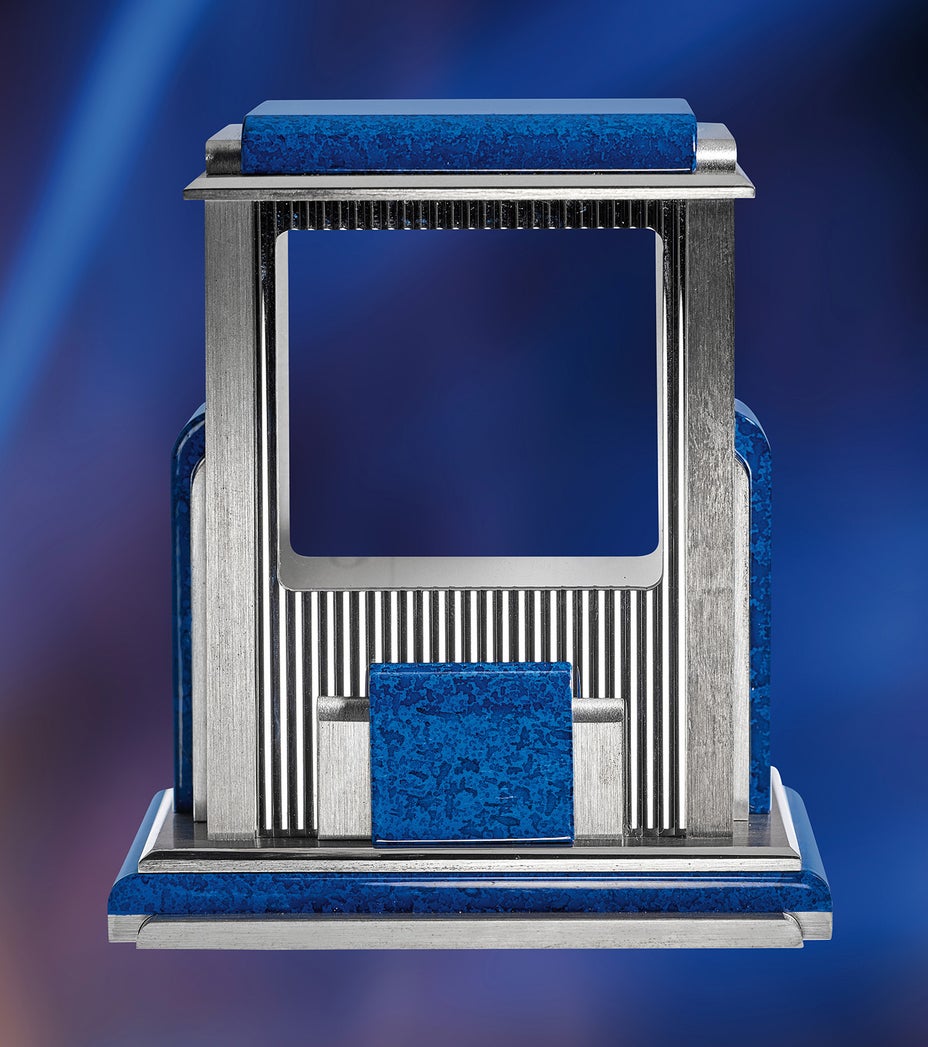
Glass prisms hold a mesmerizing charm, captivating imaginations with their ability to transform light. Their intriguing properties have inspired many to explore their applications in art and everyday life. One notable example was Cartier, renowned not only for its opulent Mystery clocks but also for its elegant prism clocks that demonstrated their mastery of illusionism. The present prism clock from the 1990s is a reinterpretation of the original design, invented and patented by Gaston Cusin—a colleague of Maurice Couet, and the creator of Cartier’s well-known Mystery clock. Similar to the Mystery clock, Cartier’s prism clocks employ a clever optical illusion that upon first glance, appears transparent. Through its use of mirrors, the dial reveals itself at certain angles, leaving onlookers utterly fascinated.
Boasting a silver and blue color scheme that is often associated with neo-vintage Cartier pieces, such as the lapis Tank must de Cartier or the CPCP Monopoussoir Tortue in white gold, the present desk clock has a silver-plated case with decorative lapis lazuli panels, resulting in a harmonious aesthetic. The dial of this prism desk clock also features blue Arabic quarter numerals against a silver dial.
Viewable only at a specific angle due to the construction of the desk clock, the present example will be a wonderful addition to the desks of any Cartier enthusiast.
Boasting a silver and blue color scheme that is often associated with neo-vintage Cartier pieces, such as the lapis Tank must de Cartier or the CPCP Monopoussoir Tortue in white gold, the present desk clock has a silver-plated case with decorative lapis lazuli panels, resulting in a harmonious aesthetic. The dial of this prism desk clock also features blue Arabic quarter numerals against a silver dial.
Viewable only at a specific angle due to the construction of the desk clock, the present example will be a wonderful addition to the desks of any Cartier enthusiast.
Cartier
FrenchWith the Constitution of 1848 came a new standard for luxury in France. Founded one year prior by Louis-Francois Cartier, the house of Cartier was one of the first to use platinum in jewelry making. This incredibly expensive material became the stepping-stone for Cartier to experiment in form, mechanisms and attitude. It helped men move from pocket watches to wristwatches, effectively making the watch much more functional and prominent in a man's overall wardrobe.Cartier did not only touch on functionality. Inspired by a commissioned painting by George Barbier featuring a black panther at the feet of an elegantly bejeweled woman, Cartier began incorporating wild animals in his designs—most notably, Cartier Panthère rings, bangle bracelets and watches. Yet it wasn't until the late 1960s that the house of Cartier debuted their iconic yellow and rose gold LOVE collection, which includes the famous bracelet that only a special screwdriver can open.
Browse Maker