955
Cartier
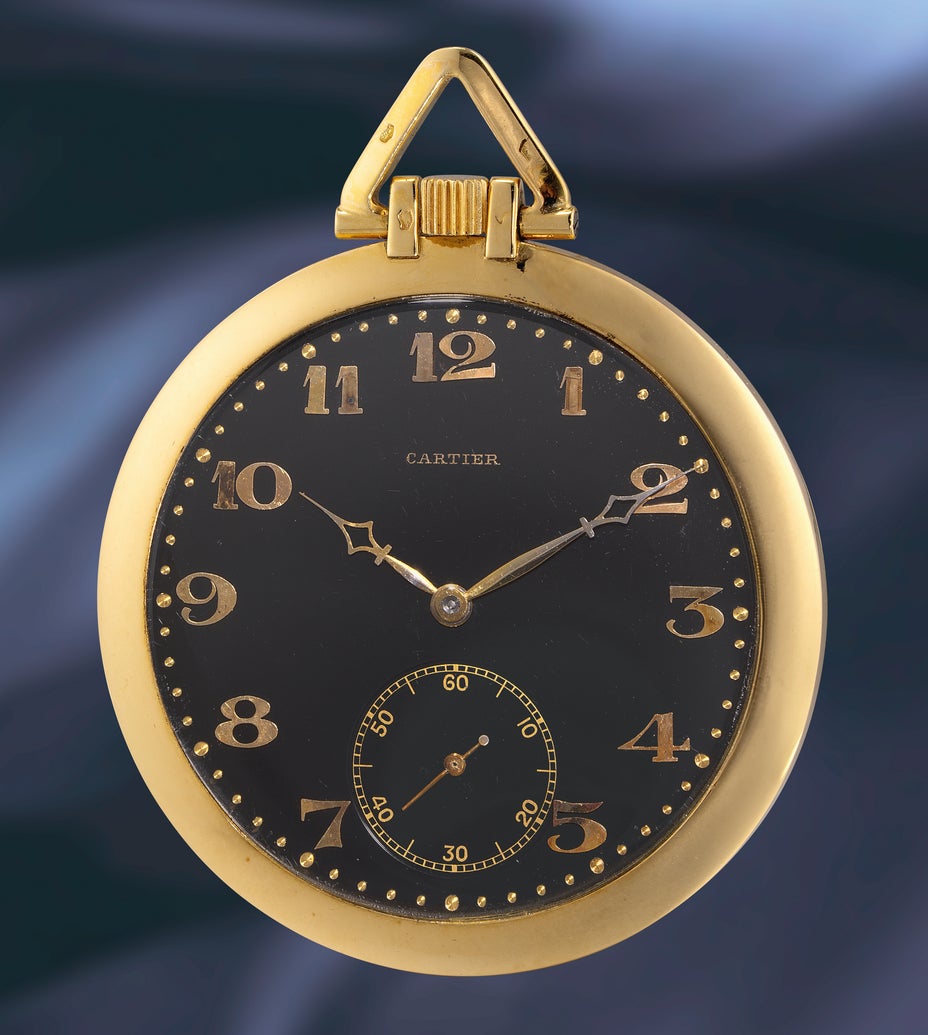
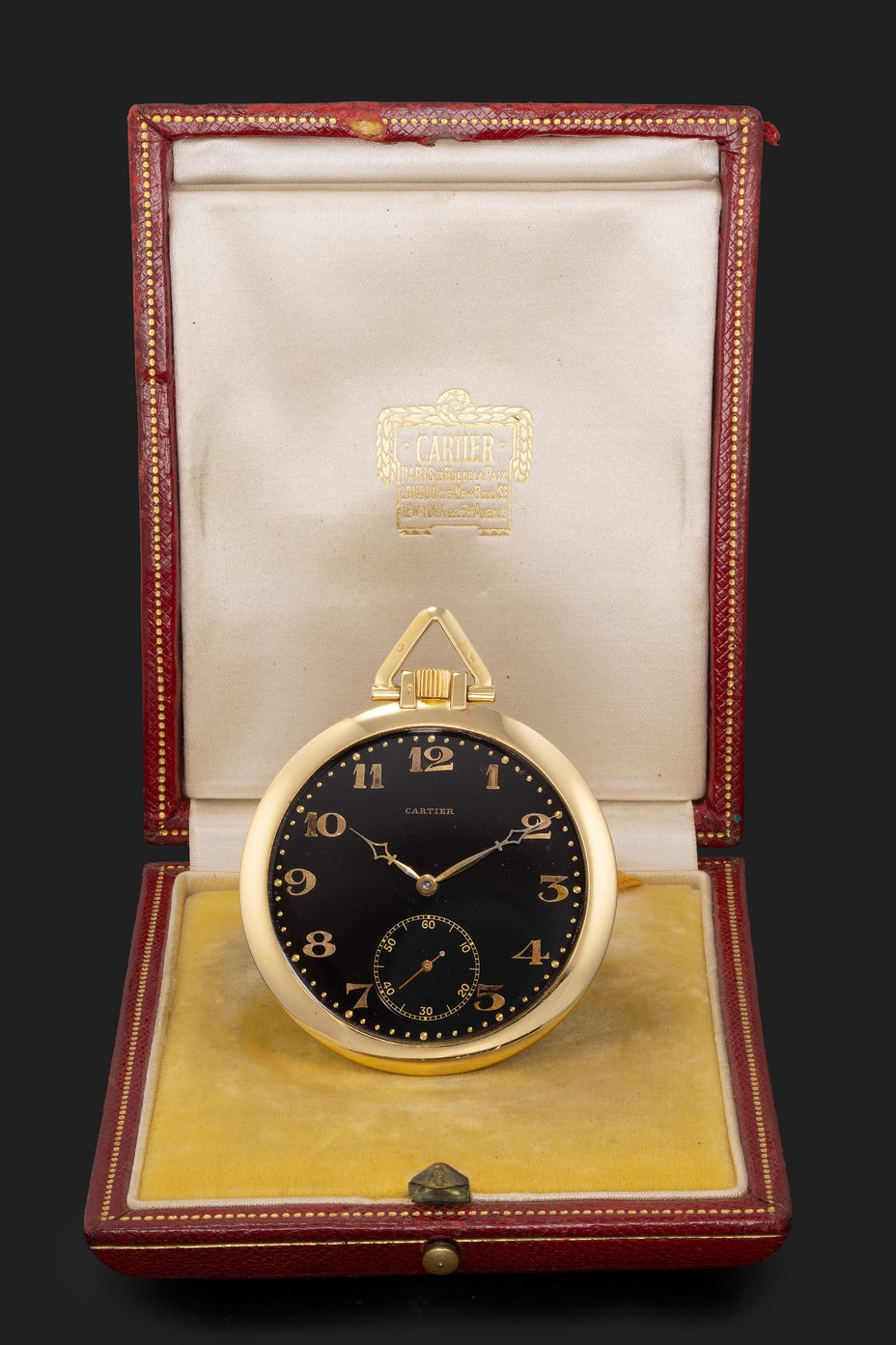
A very rare and elegant keyless open-faced yellow gold pocket watch with black gilt dial, Breguet numerals, small seconds and presentation box
Full-Cataloguing
- Extremely rare Cartier pocket watch with gilt dial from the 1930s
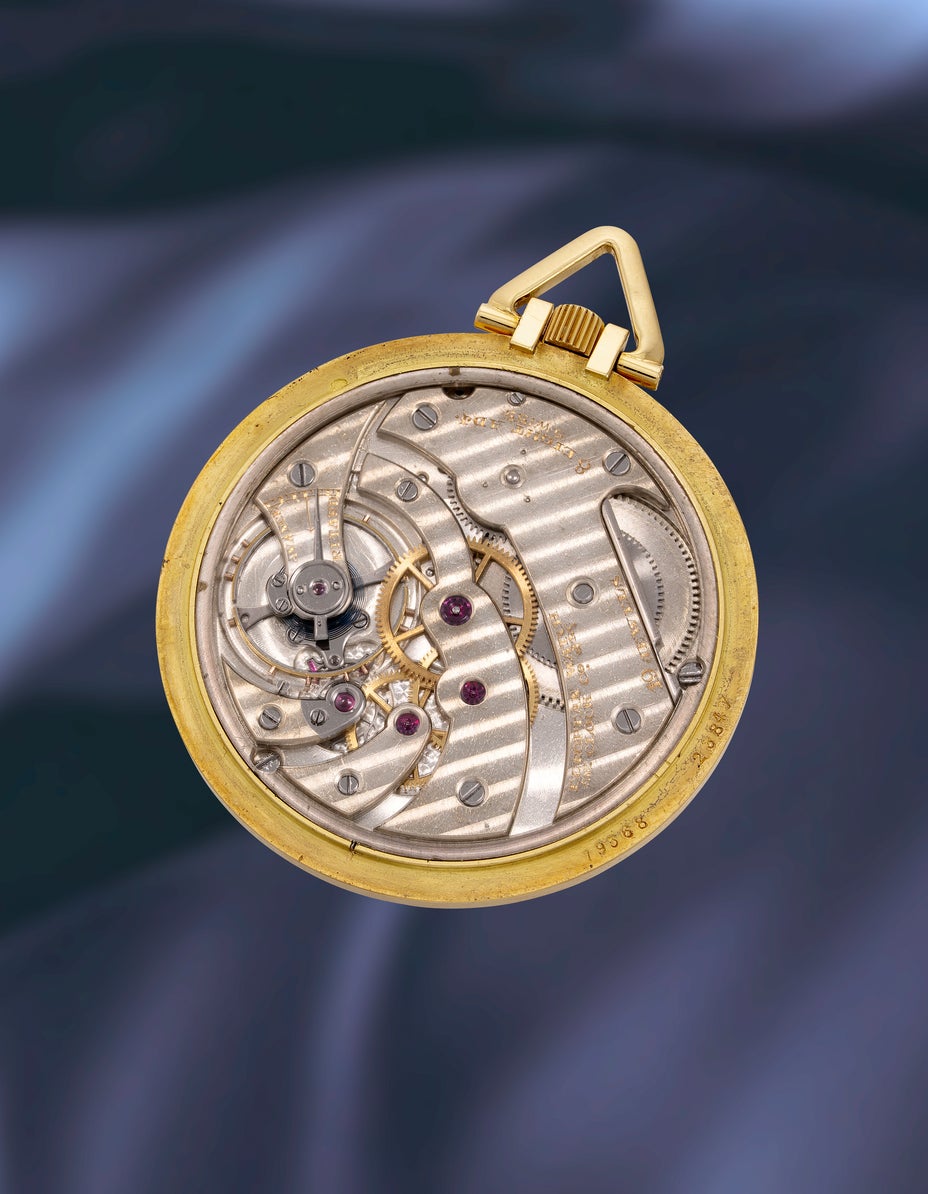
- Ultra-thin movement by European Watch & Clock Co. Inc.
- Slim profile carried out by yellow gold case by Ed. Jaeger SA
Cartier pocket watches from the 1920s and 1930s are not often seen in the market, and the present watch with a gilt black dial is even more rare.
Manufactured by Stern Frères, the black gilt dial is one of the spotlights of the watch. The dial was gilded and submerged in black galvanization solution, creating a deep black colour surface with shiny pearled minute track. The Breguet numerals, that have developed a nice patina, match well with the golden diamond styled hands. The dial, though looks simple, is truly a work of art.
This pocket watch houses a 17 lignes movement stamped the European Watch & Clock Co. Inc., in which the company was a partnership between Cartier and Edmond Jaeger, supplying movements to the Maison. The ultra-thin movement manufactured by LeCoultre allows the pocket watch to have a slim profile. Most of Cartier’s high-end watches came to feature EWC movements. Manufactured to the highest standards within the LeCoultre (later Jaeger-LeCoultre) facility, these movements earned a reputation for exceptional quality and precision, and watches with such movements are highly sought after, regarded as among the most authentic and original examples.
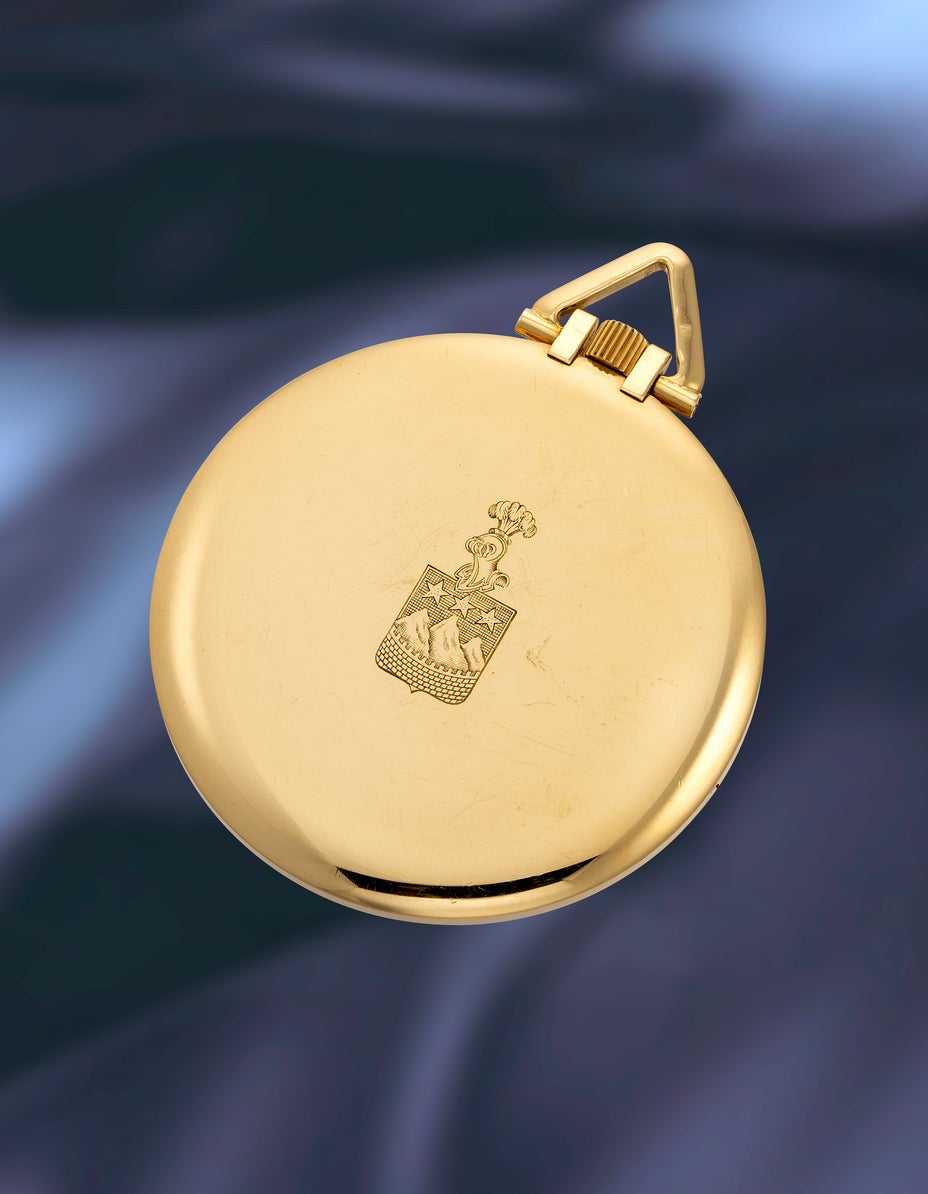
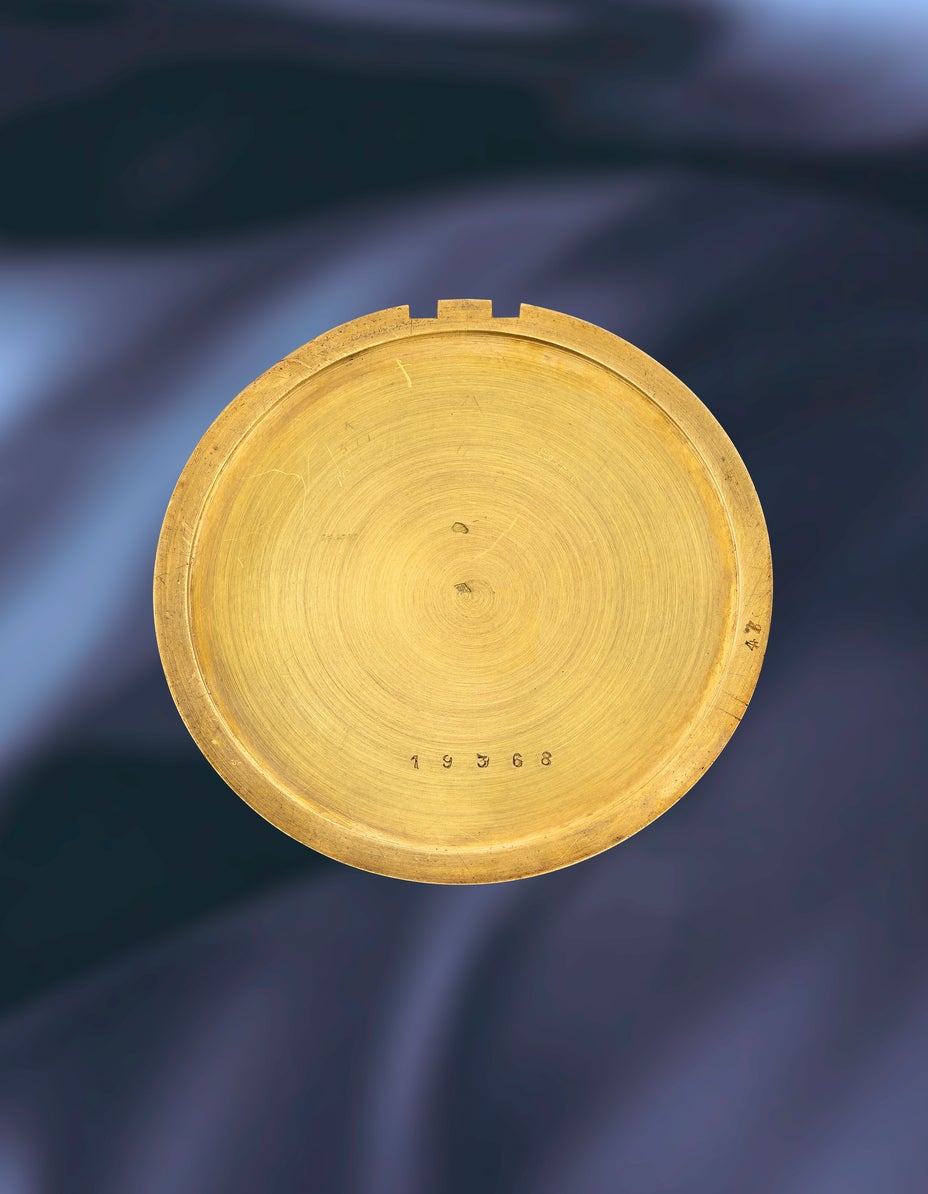
Cased in 18K yellow gold, though not in fully Art Deco, the pocket watch still shows traits of the style, as seen in the bold, triangular bow. Every part was so well-made that the caseback is as thin as a knife. On the inner side of the caseback, the 18K gold French Eagle’s Head assay mark can be seen, as well as the “EJ” hallmark by Ed. Jaeger SA.
Cartier
FrenchWith the Constitution of 1848 came a new standard for luxury in France. Founded one year prior by Louis-Francois Cartier, the house of Cartier was one of the first to use platinum in jewelry making. This incredibly expensive material became the stepping-stone for Cartier to experiment in form, mechanisms and attitude. It helped men move from pocket watches to wristwatches, effectively making the watch much more functional and prominent in a man's overall wardrobe.
Cartier did not only touch on functionality. Inspired by a commissioned painting by George Barbier featuring a black panther at the feet of an elegantly bejeweled woman, Cartier began incorporating wild animals in his designs—most notably, Cartier Panthère rings, bangle bracelets and watches. Yet it wasn't until the late 1960s that the house of Cartier debuted their iconic yellow and rose gold LOVE collection, which includes the famous bracelet that only a special screwdriver can open.