983
Cartier
Ref. 78101
Fabergé
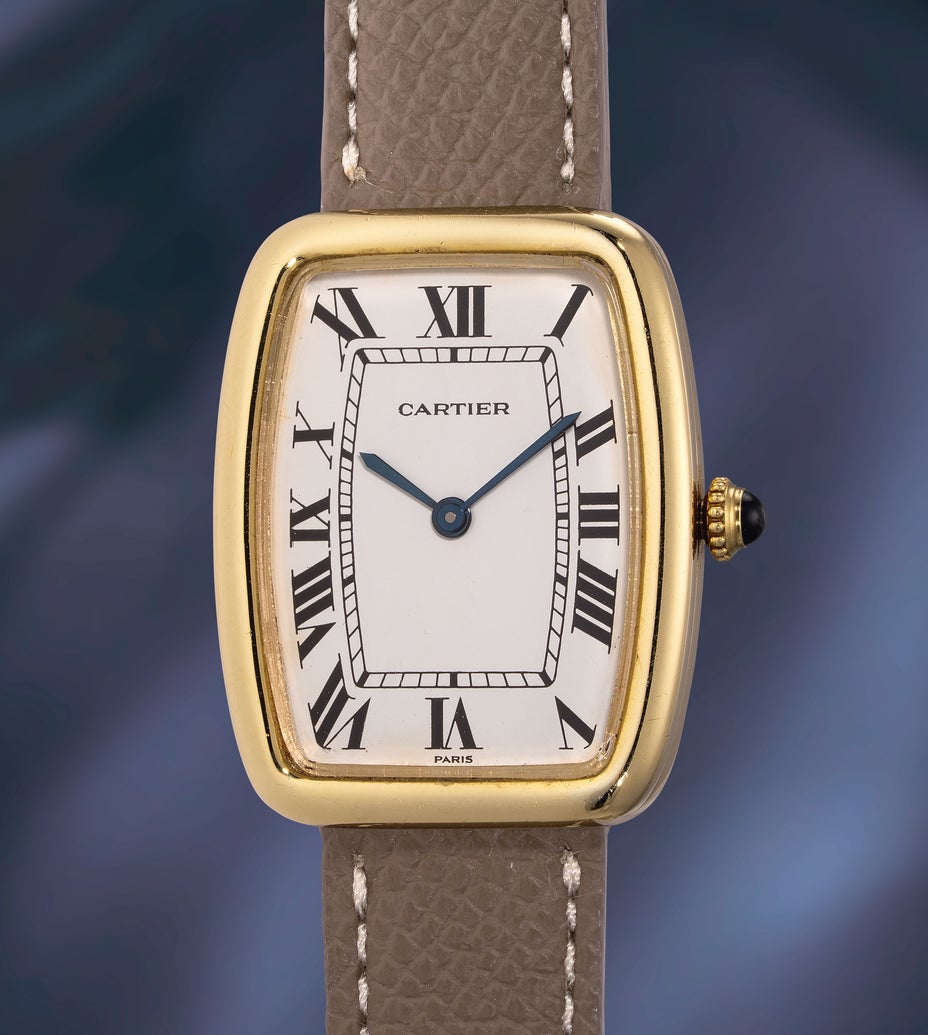
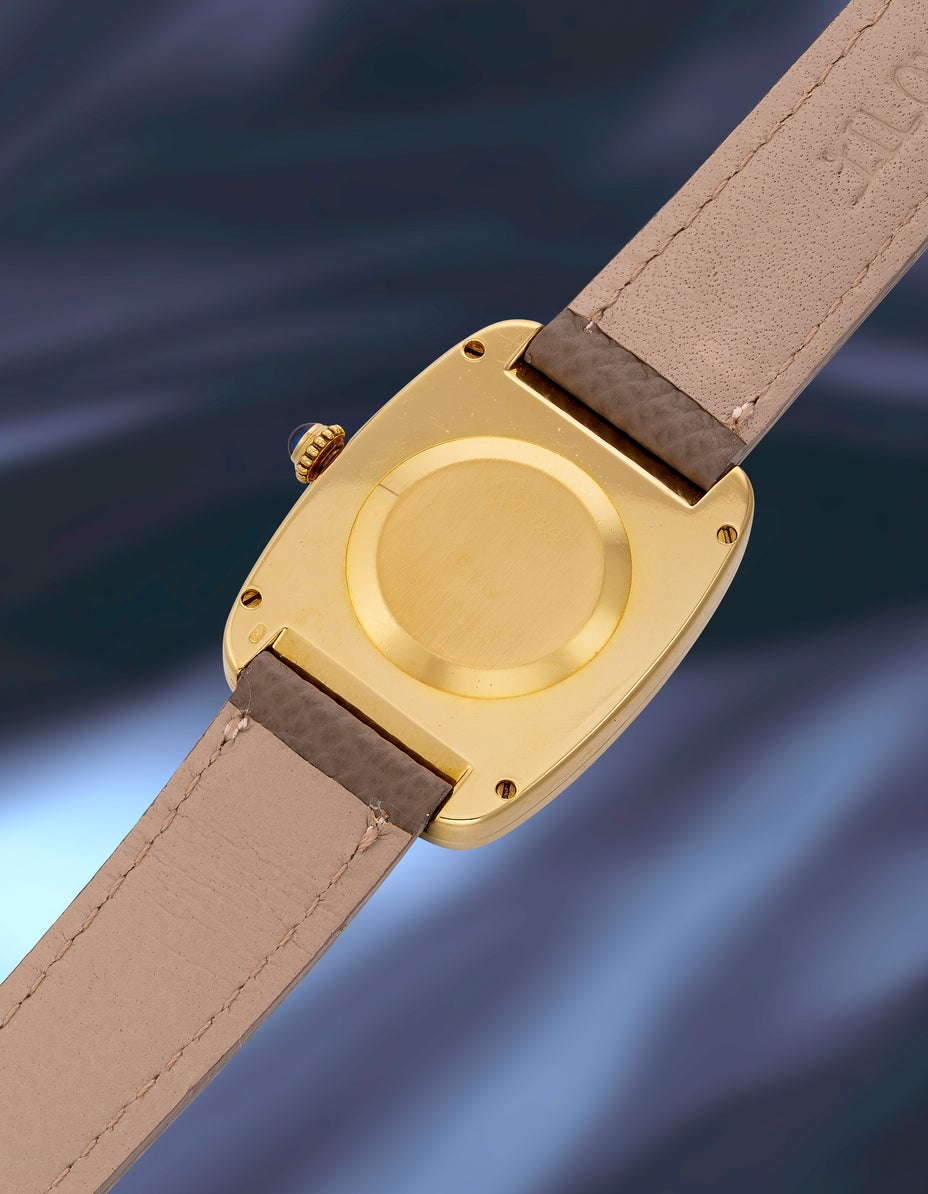
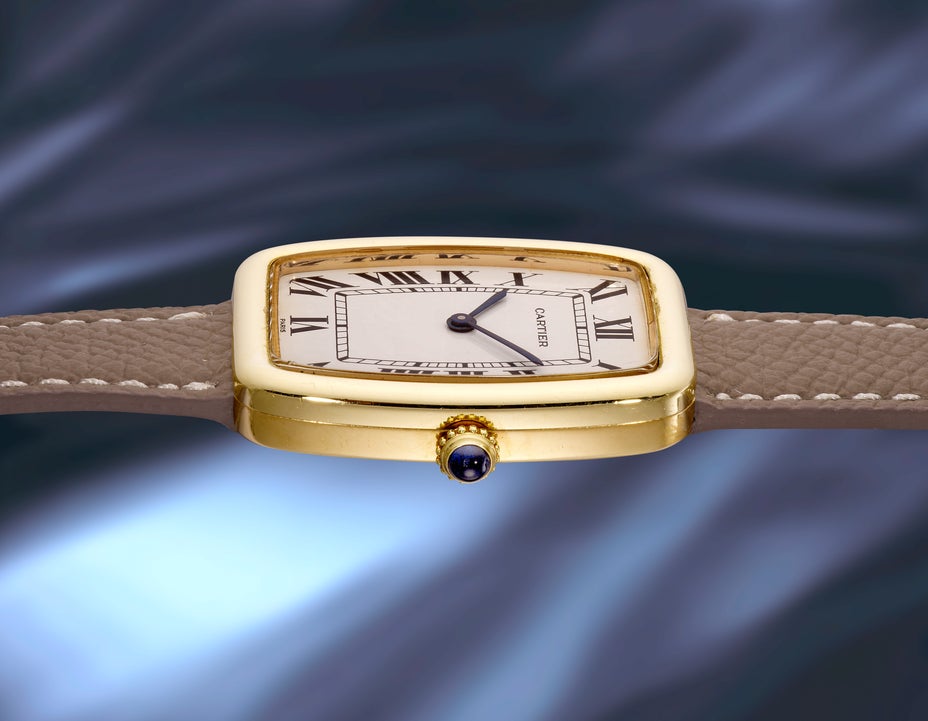
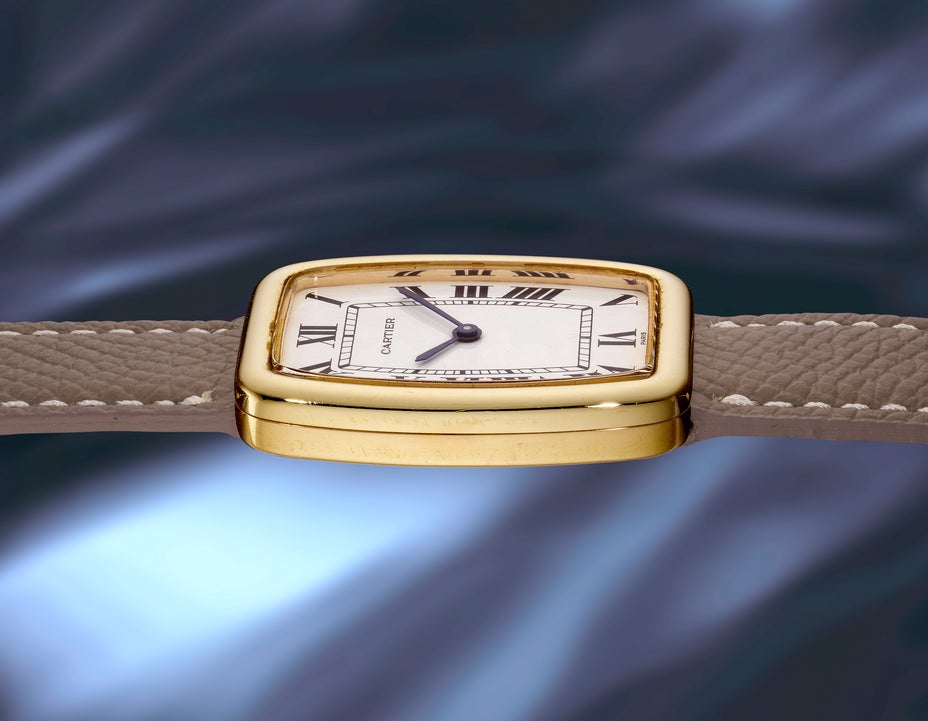
A very rare and attractive yellow gold curved rectangular-shaped wristwatch
Full-Cataloguing
- Introduced in the 1973 Louis Cartier Collection
- Rare variation of the Tank, with a curved rectangular shape
Cartier watches are known for variety and creative designs, such as the asymmetric Tank Asymétrique and irregular Crash, establishing it as a jewellery house that presents some of the most aesthetically pleasing timepieces in the category. In the 1960s, Cartier released another variation of the iconic Tank with a tubular bezel, introducing the curved rectangular-shaped Square Incurvée.
In 1973, the first historical collection of Cartier, the Louis Cartier Collection, was released, featuring 12 watches that shaped the golden years of the Maison. The larger Square Incurvée “Grand Modèle” was chosen and named Fabergé in the Collection, releasing the ref. 78101, which drew inspiration from the renowned Russian court jeweller Peter Carl Fabergé. The Cartier Fabergé has curved edges as if the Tank is merged with Peter Fabergé’s most well-known highly decorated jewellery encrusted eggs.
The ref. 78101, like other watches from the Louis Cartier Collection, features an enamel dial with Roman numerals, chemin de fer minute track, and paired with epée hands. Note that the dial of the present example is “Paris” signed with pointy Cartier “A”, and without the hidden signature at VII implemented in the late 1970s.
Offered in excellent condition, this Cartier Fabergé is a glimpse of the age of design experimentation in the 1970s. Unavailable in modern lines of collections, it is a rarity that watch and Cartier connoisseurs should not miss.
Cartier
FrenchWith the Constitution of 1848 came a new standard for luxury in France. Founded one year prior by Louis-Francois Cartier, the house of Cartier was one of the first to use platinum in jewelry making. This incredibly expensive material became the stepping-stone for Cartier to experiment in form, mechanisms and attitude. It helped men move from pocket watches to wristwatches, effectively making the watch much more functional and prominent in a man's overall wardrobe.
Cartier did not only touch on functionality. Inspired by a commissioned painting by George Barbier featuring a black panther at the feet of an elegantly bejeweled woman, Cartier began incorporating wild animals in his designs—most notably, Cartier Panthère rings, bangle bracelets and watches. Yet it wasn't until the late 1960s that the house of Cartier debuted their iconic yellow and rose gold LOVE collection, which includes the famous bracelet that only a special screwdriver can open.