982
Cartier
Baguette Coulissante “Duoplan”
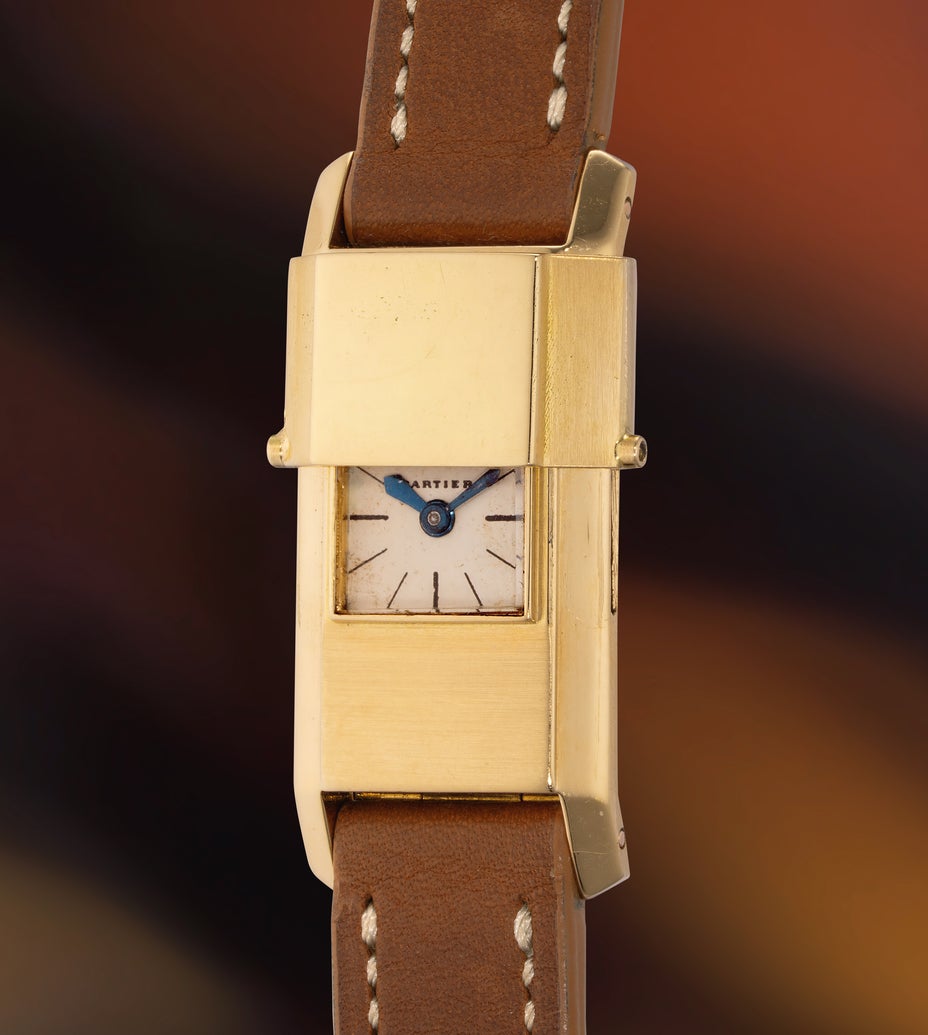
A very rare and mysterious rectangular-shaped yellow gold wristwatch with concealed dial and Duoplan movement
Full-Cataloguing
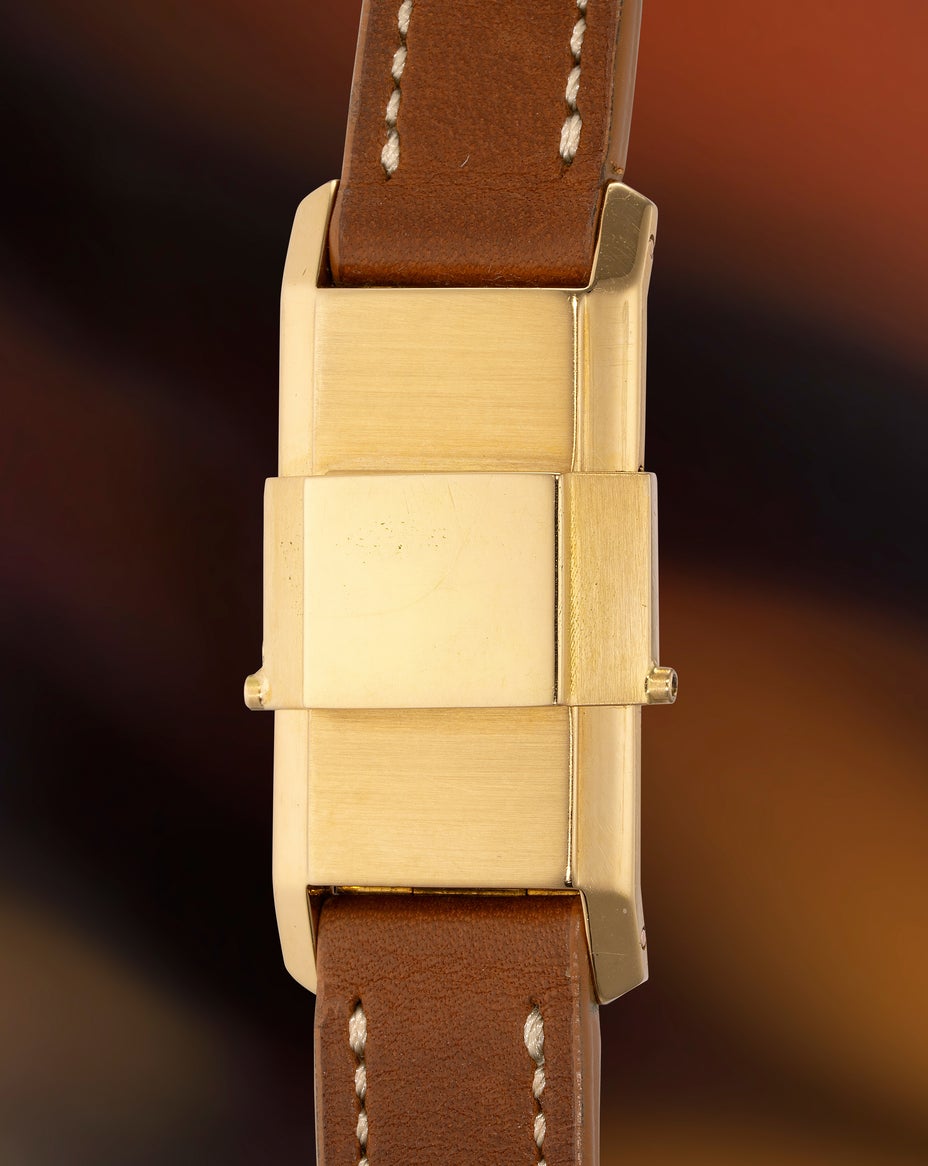
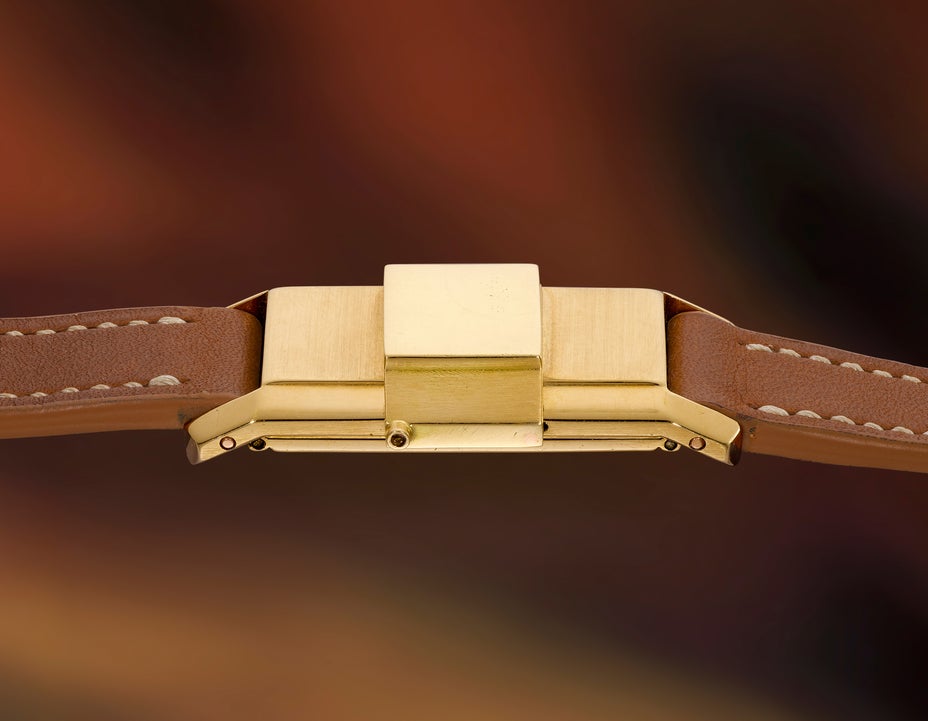
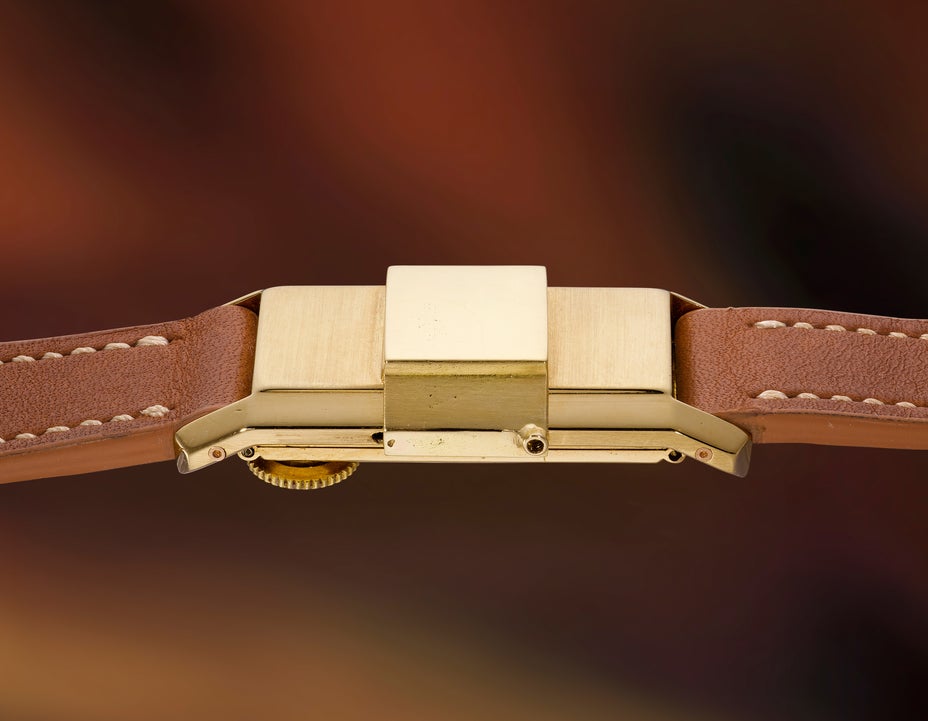
- Very rare Cartier timepiece with “Coulissante” sliding cover concealed dial
- Sliding cover designed patented by Ed. Jaeger SA
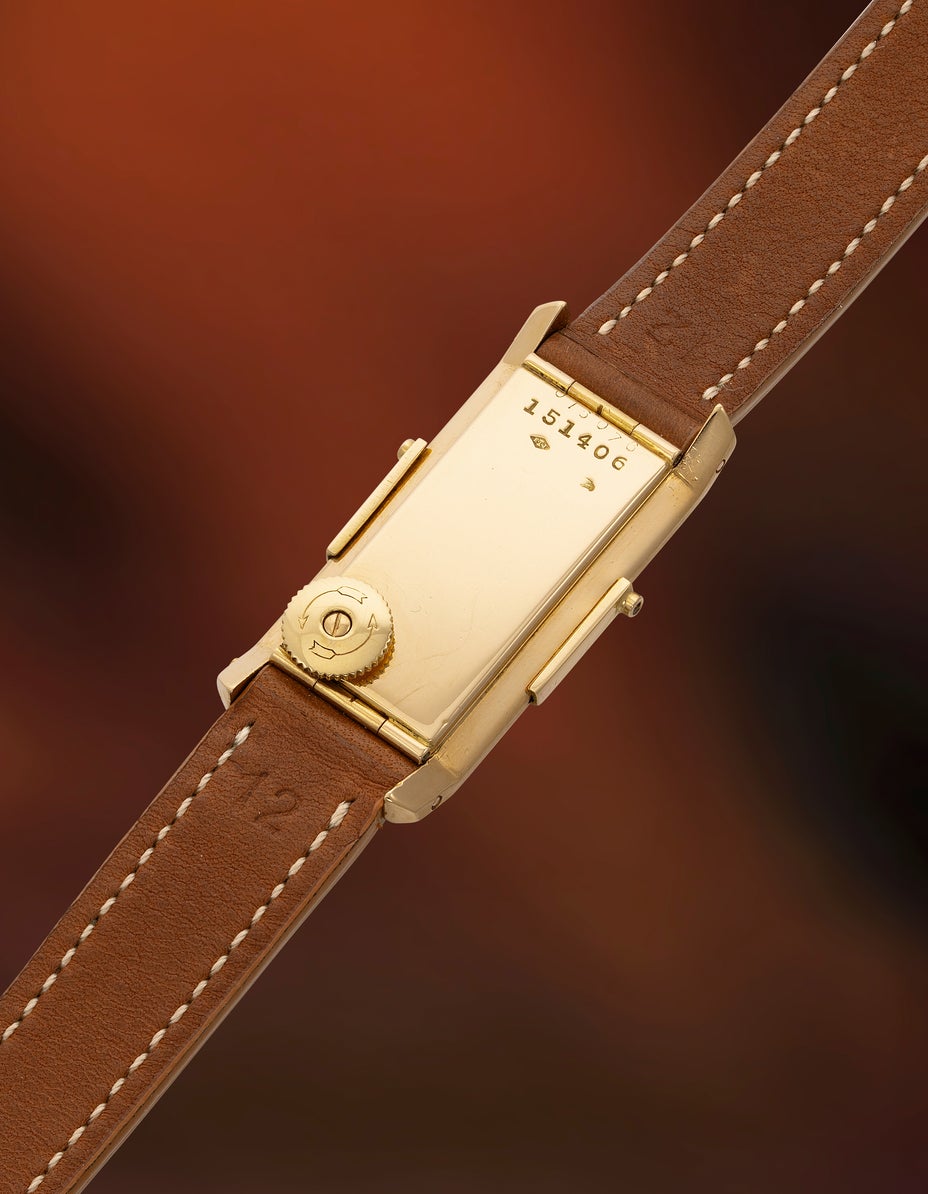
- Duoplan movement stamped by European Watch & Clock Co.
In the early 20th century when wristwatches were gradually taking the place of pocket watches, watch companies introduced timepieces of different shapes and forms, Cartier which had long been regarded as a jewellery house with innovative designs, made no exception in introducing some of the most intriguing watch designs.
The present example is a rectangular, or baguette-shaped, wristwatch with a concealed dial. It is called “Coulissante” due to the sliding cover on top, which was a design patented by Ed. Jaeger SA in 1931. By pushing the cover, it reveals the Cartier dial in nicely aged condition and the iconic blued steel épée hands.
This Cartier Coulissante houses the EWC cal. 409 Duoplan movement, in which the European Watch & Clock Co. was a partnership between Cartier and Edmond Jaeger, supplying movements to the Maison. The movement, Duoplan, is an innovative two-level mechanical movement originally invented by Henri Rodanet, technical director at Ed. Jaeger SA in the mid-1920s, maintaining chronometric performance without compromising the form and shape of the watch. After acquiring the rights, LeCoultre started manufacturing the Duoplan movements for ultra-small wristwatches.
Offered in excellent condition, this watch is not only a representation of Cartier’s excellence in watches as a fashionable item, it also embeds the early history of watchmaking in wristwatches and the backstory of Ed. Jaeger SA, LeCoultre, and now Jaeger-LeCoultre.
Cartier
FrenchWith the Constitution of 1848 came a new standard for luxury in France. Founded one year prior by Louis-Francois Cartier, the house of Cartier was one of the first to use platinum in jewelry making. This incredibly expensive material became the stepping-stone for Cartier to experiment in form, mechanisms and attitude. It helped men move from pocket watches to wristwatches, effectively making the watch much more functional and prominent in a man's overall wardrobe.
Cartier did not only touch on functionality. Inspired by a commissioned painting by George Barbier featuring a black panther at the feet of an elegantly bejeweled woman, Cartier began incorporating wild animals in his designs—most notably, Cartier Panthère rings, bangle bracelets and watches. Yet it wasn't until the late 1960s that the house of Cartier debuted their iconic yellow and rose gold LOVE collection, which includes the famous bracelet that only a special screwdriver can open.