219
Cartier
Tank Cintrée Réédition
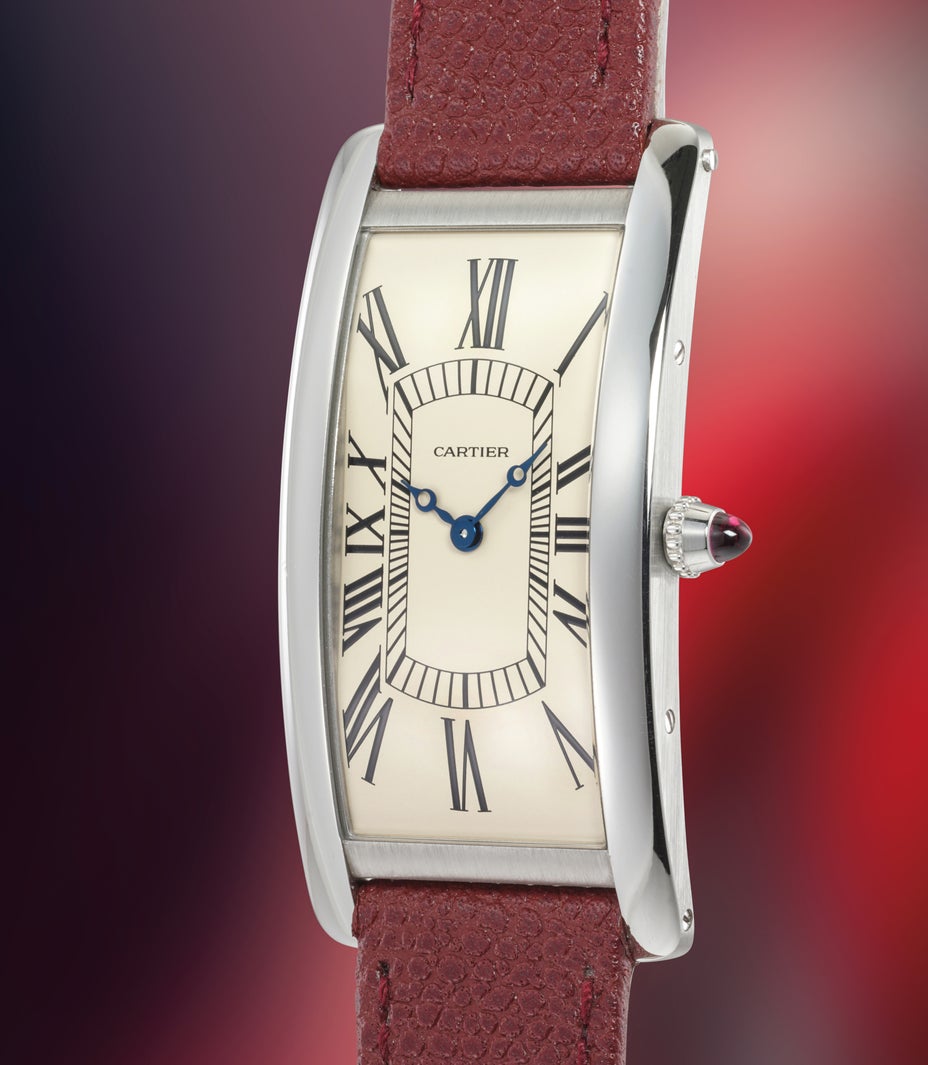
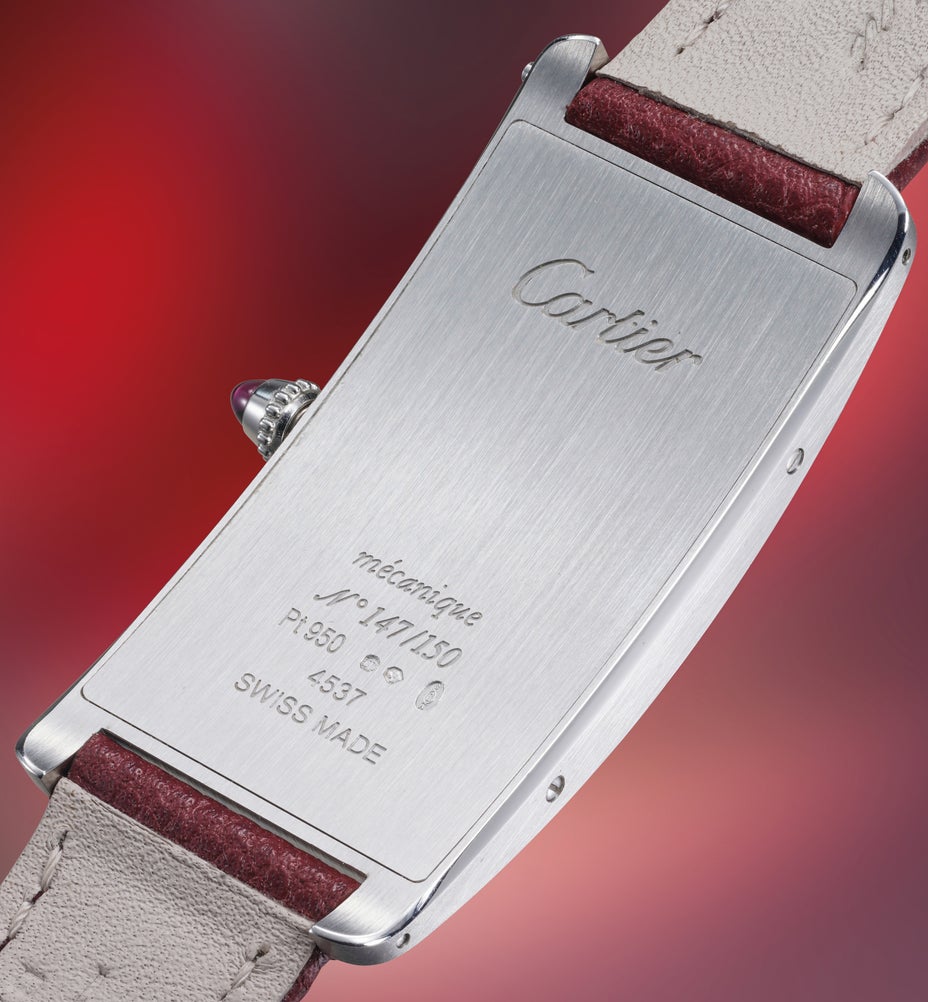
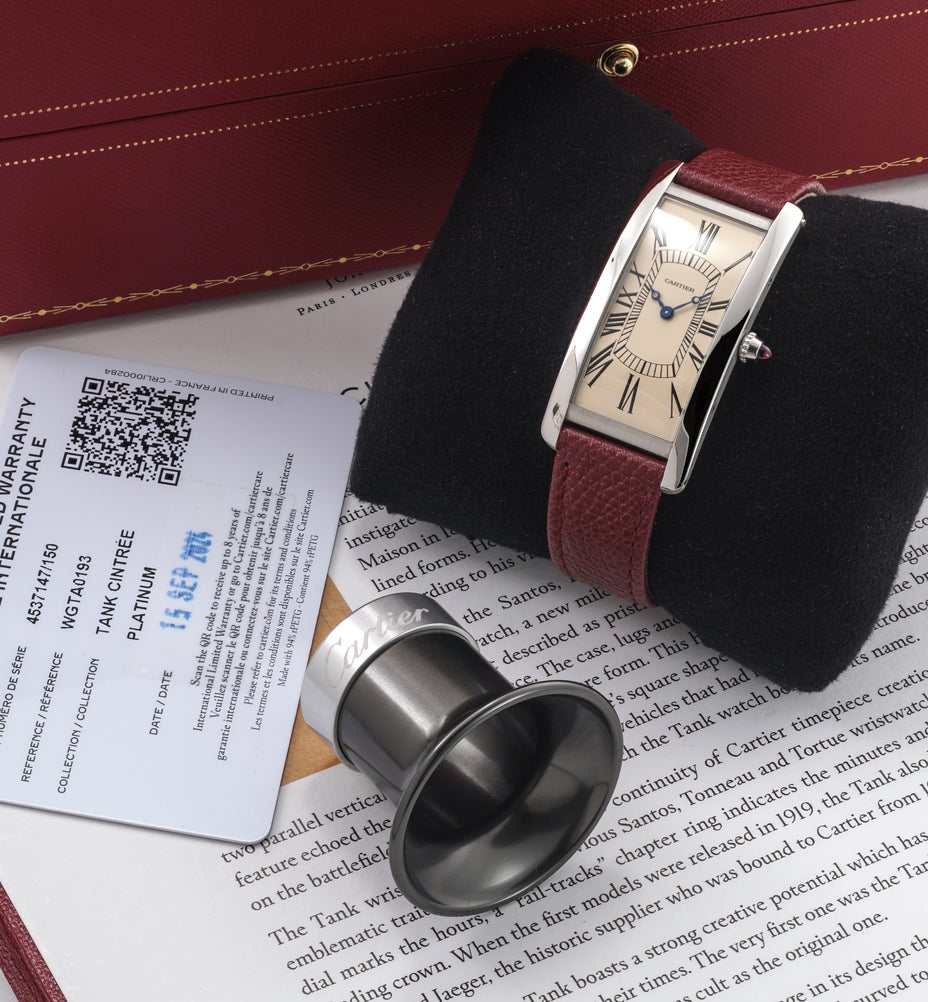
An exclusive, attractive and very rare platinum rectangular wristwatch with ruby-set crown, number 147 of a 150-piece limited edition
Full-Cataloguing
- Time only
- Platinum edition of the Tank Cintrée Réédition, limited to 150 pieces, celebrating the 100th anniversary of the model's 1921 debut
- Ultra-thin 950 platinum case, 6.03mm thick
The Cartier Tank stands among the most significant watch designs of the twentieth century, and the Tank Cintrée occupies a privileged place within that lineage. Introduced in 1921 as the first true evolution of the original 1917 Tank Normale, the Cintrée introduced an elongated, curved case that hugs the wrist — "cintrée" meaning "curved" in French — and in doing so laid the groundwork for later icons such as the Tank Américaine.
The present watch belongs to the platinum Réédition launched to mark the Cintrée's centenary, following an earlier yellow gold limited edition. True to the spirit of the 1920s originals, it reproduces the slender rectangular silhouette with its signature curved profile, polished brancards, and a beaded crown set with a ruby cabochon. At just 6.03mm thick, the case is even slimmer than its gold-cased predecessor.
The eggshell-toned dial, with printed black Roman numerals, railway track, and blued steel apple hands, faithfully echoes the vintage examples of the 1920s. Within beats an ultra-thin hand-wound movement supplied by Jaeger-LeCoultre, continuing a partnership that dates back to the earliest Cintrée examples.
Numbered 147/150, the present watch is offered as a superb representative of one of Cartier's most quietly sophisticated modern reissues.
Cartier
FrenchWith the Constitution of 1848 came a new standard for luxury in France. Founded one year prior by Louis-Francois Cartier, the house of Cartier was one of the first to use platinum in jewelry making. This incredibly expensive material became the stepping-stone for Cartier to experiment in form, mechanisms and attitude. It helped men move from pocket watches to wristwatches, effectively making the watch much more functional and prominent in a man's overall wardrobe.
Cartier did not only touch on functionality. Inspired by a commissioned painting by George Barbier featuring a black panther at the feet of an elegantly bejeweled woman, Cartier began incorporating wild animals in his designs—most notably, Cartier Panthère rings, bangle bracelets and watches. Yet it wasn't until the late 1960s that the house of Cartier debuted their iconic yellow and rose gold LOVE collection, which includes the famous bracelet that only a special screwdriver can open.