
96
Cartier
Louis Cartier Tank
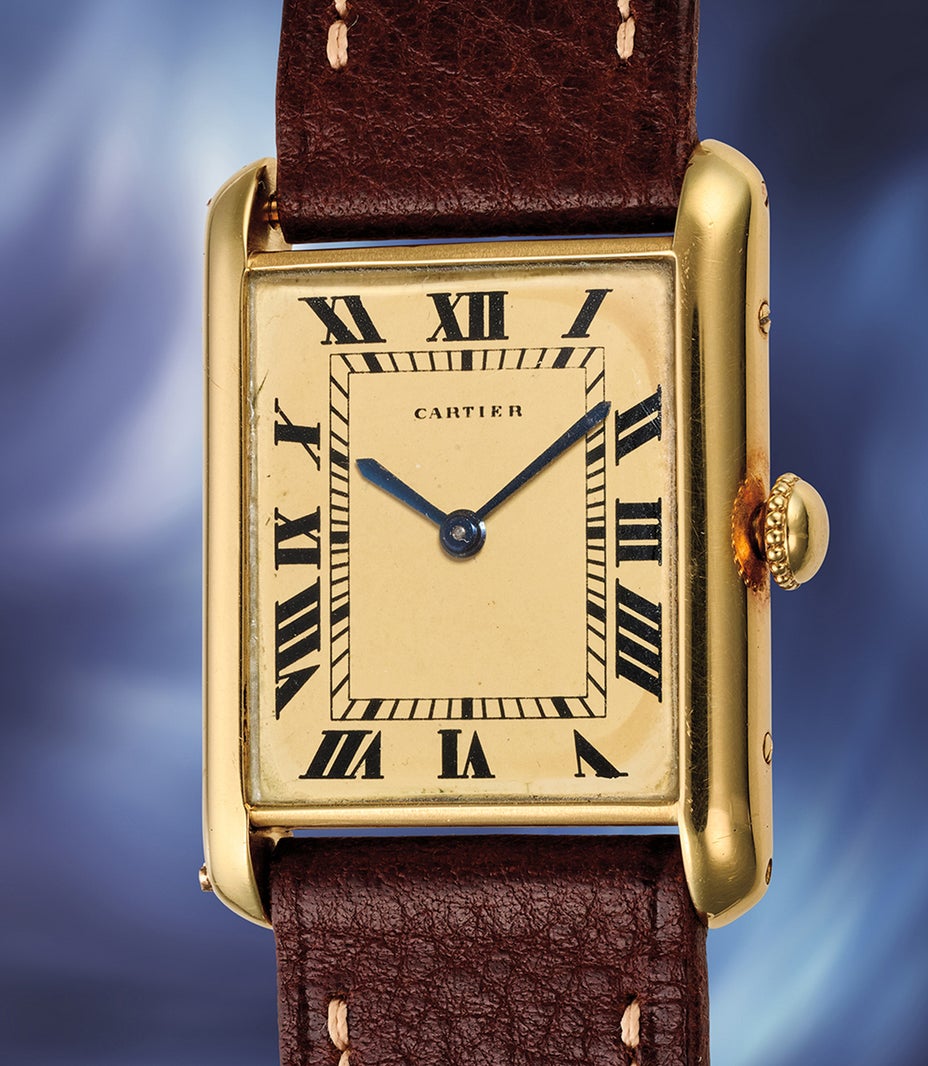
An attractive and rare yellow gold rectangular wristwatch with unusual patina
Full-Cataloguing
• Original dial with a beautiful and even champagne-colored patina
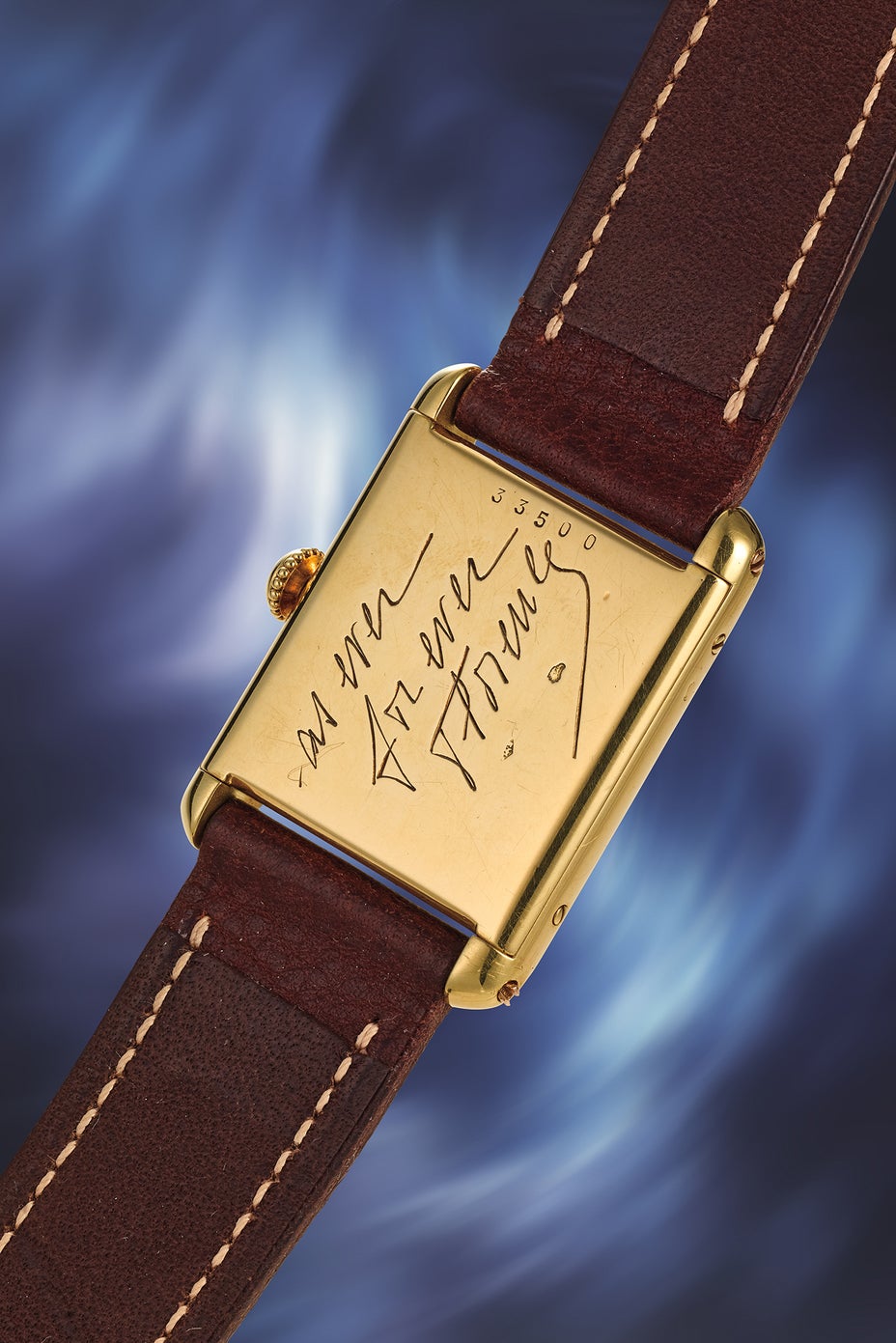
• Strong case with crisp hallmarks, including clearly defined French eagle head stamps
The Tank Louis Cartier stands among the most enduring icons of 20th-century design, a creation that perfectly encapsulates the maison’s longstanding reputation as the King of Jewellers and the Jeweller of Kings. Since its inception in the early 1920s, the model, originally known as the Tank à Bords Arrondis, introduced a softened and more refined interpretation of the original Tank aesthetic, distinguished by its elegantly curved brancards and harmonious proportions. Officially renamed the Tank Louis Cartier in 1924, it has since become the purest expression of Cartier’s design language, uniting geometry, elegance, and timeless restraint.
The present example, dating to the mid 1940s, is a particularly compelling survivor from this important period. Crafted in 18K yellow gold, the case displays beautifully rounded edges and retains strong, crisp definition throughout. Especially noteworthy are the sharply preserved hallmarks, including the French eagle head assay marks, which remain clearly visible and deeply struck. The watch is fitted with the original deployant clasp with non-matching serial numbers - correct for Cartier Paris and New York watches which used differing inventory codes.
The dial, signed Cartier and featuring radial Roman numerals with a chemin-de-fer minute track, is complemented by blued steel épée hands, all classic signatures of the maison. Most captivating, however, is the dial’s surface, which has developed an exceptionally attractive and even patina. This natural aging process has imparted a warm, nuanced tone that enhances the visual depth of the dial while remaining remarkably uniform. Such patina is entirely unique and cannot be replicated, making this example a singular expression shaped by time.
Cartier
FrenchWith the Constitution of 1848 came a new standard for luxury in France. Founded one year prior by Louis-Francois Cartier, the house of Cartier was one of the first to use platinum in jewelry making. This incredibly expensive material became the stepping-stone for Cartier to experiment in form, mechanisms and attitude. It helped men move from pocket watches to wristwatches, effectively making the watch much more functional and prominent in a man's overall wardrobe.
Cartier did not only touch on functionality. Inspired by a commissioned painting by George Barbier featuring a black panther at the feet of an elegantly bejeweled woman, Cartier began incorporating wild animals in his designs—most notably, Cartier Panthère rings, bangle bracelets and watches. Yet it wasn't until the late 1960s that the house of Cartier debuted their iconic yellow and rose gold LOVE collection, which includes the famous bracelet that only a special screwdriver can open.