949
Bovet
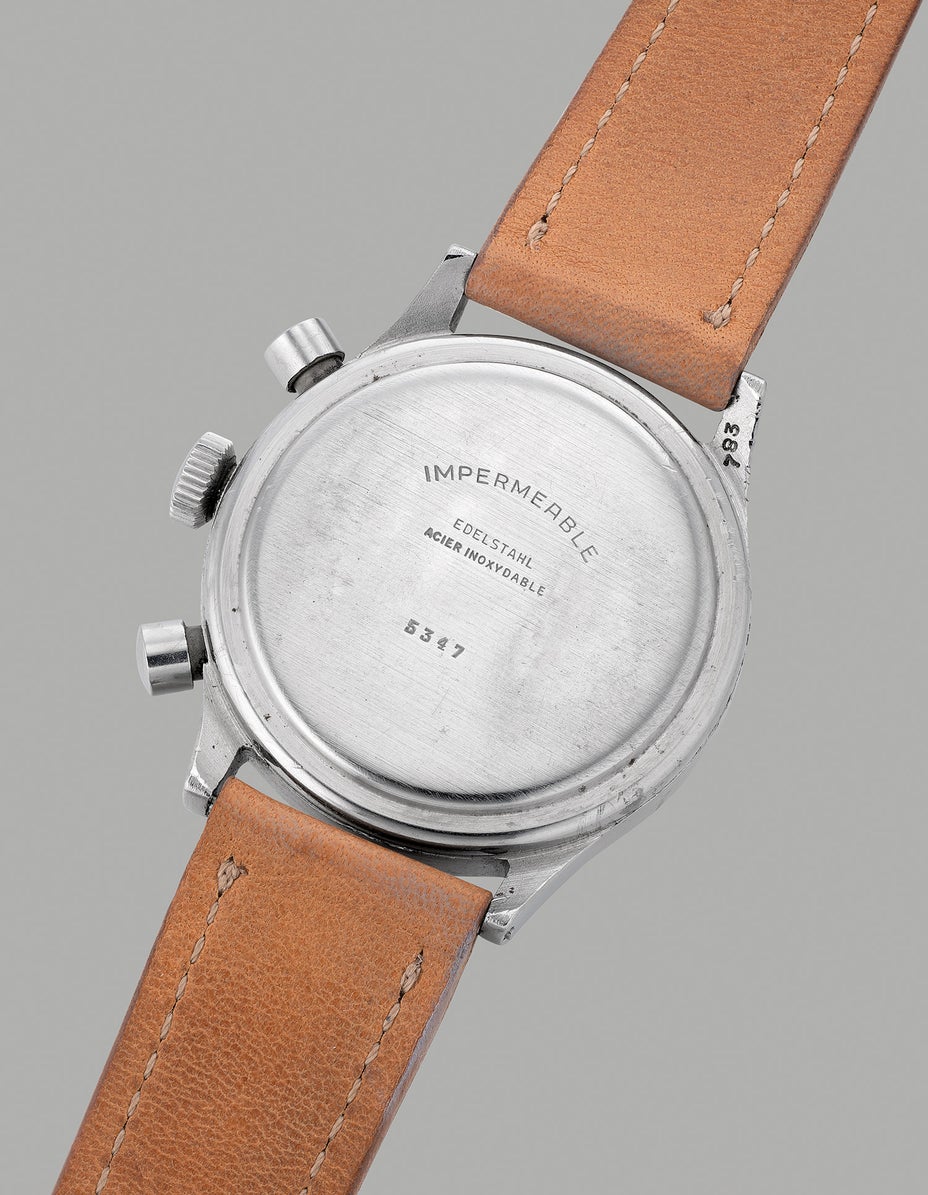
Ref. 5347
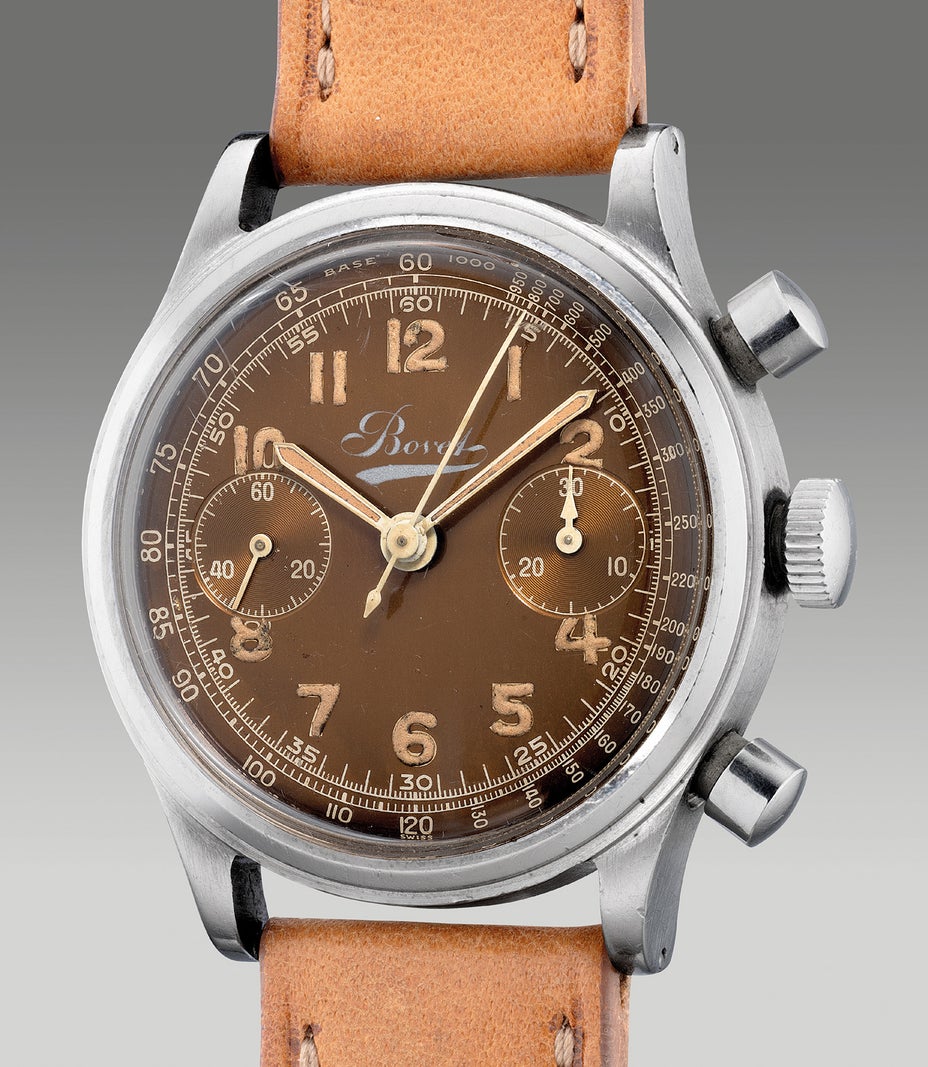
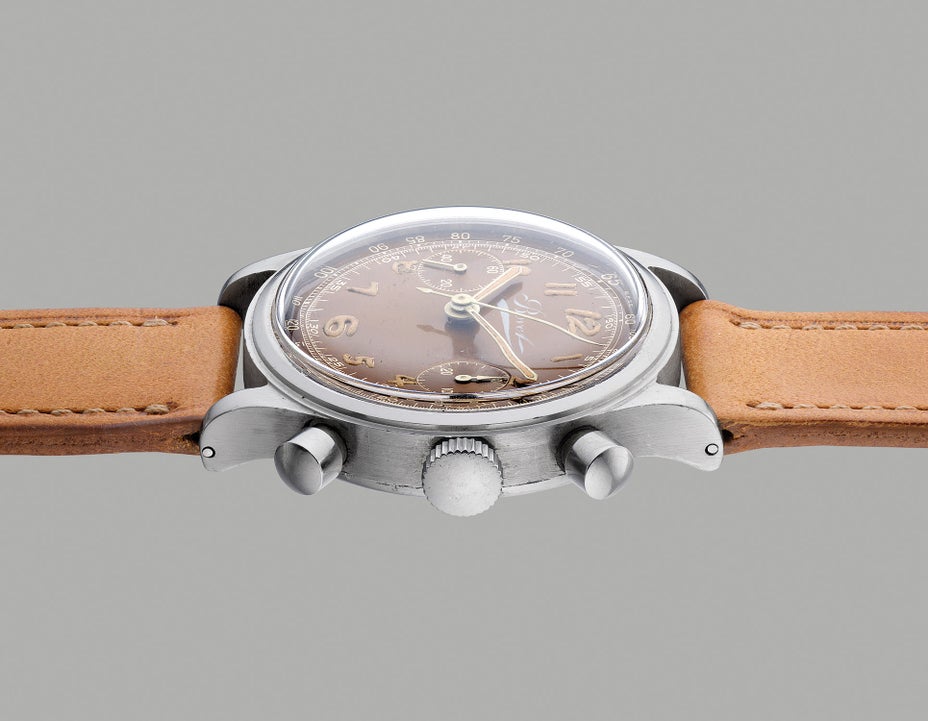
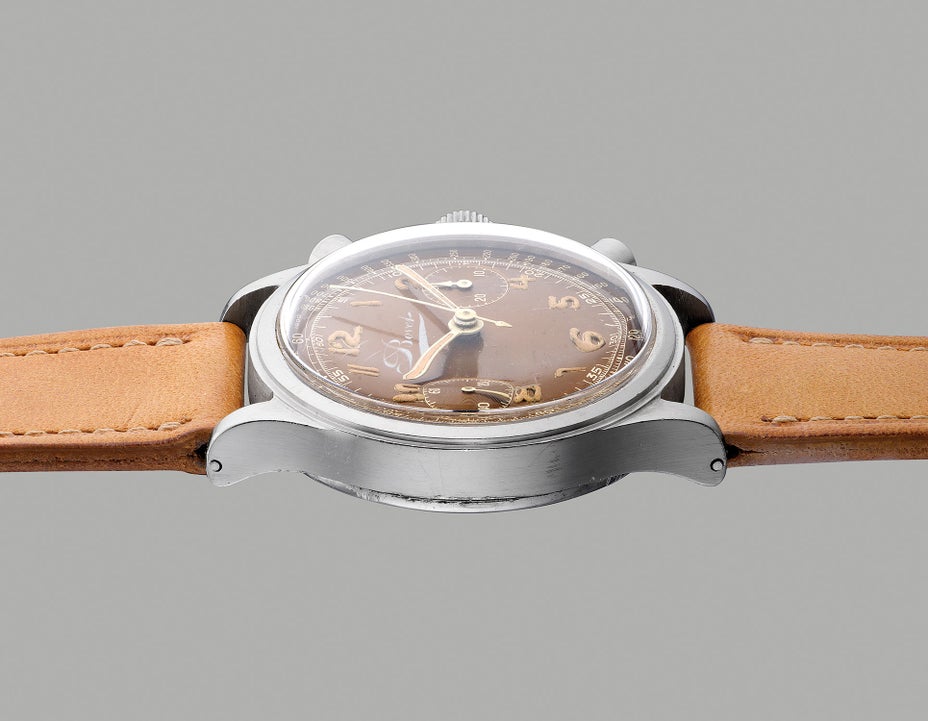
An attractive and rare stainless steel mono-rattrapante chronograph wristwatch with tachymeter scale and “tropical” gilt dial
Full-Cataloguing
The present example features a beautiful and intense “tropical” brown dial that has aged consistently and uniformly. With original radium luminous material on the dial, the Geiger reading is indeed impressive. With an exemplified vintage appeal with a case design typical of the respective era, the present tasteful example is surely impress vintage chronograph collectors.
Bovet
Swiss | 1822The firm Bovet 1822 has a rich, centuries-long history beginning when Edouard Bovet sold four decorative pocket watches in Canton Asia for what would today equal $1 million. By 1822, Edouard, with his brothers, registered the company in London, which at the time was an important center for watches and clocks. That same year, they moved their manufacturing center to the Swiss municipality Fleurier. Bovet became known for their highly decorative pocket watches for the Chinese market. Their richly engraved movements were so important to the watch that Bovet created the concept of the transparent watch back so owners could see the beauty of the movement. Bovet's oversized chronograph wristwatches, such as the Mono Rattrapante chronograph, are especially sought-after. Today, the firm continues their tradition of exquisitely enameled watches.