933
Bovet
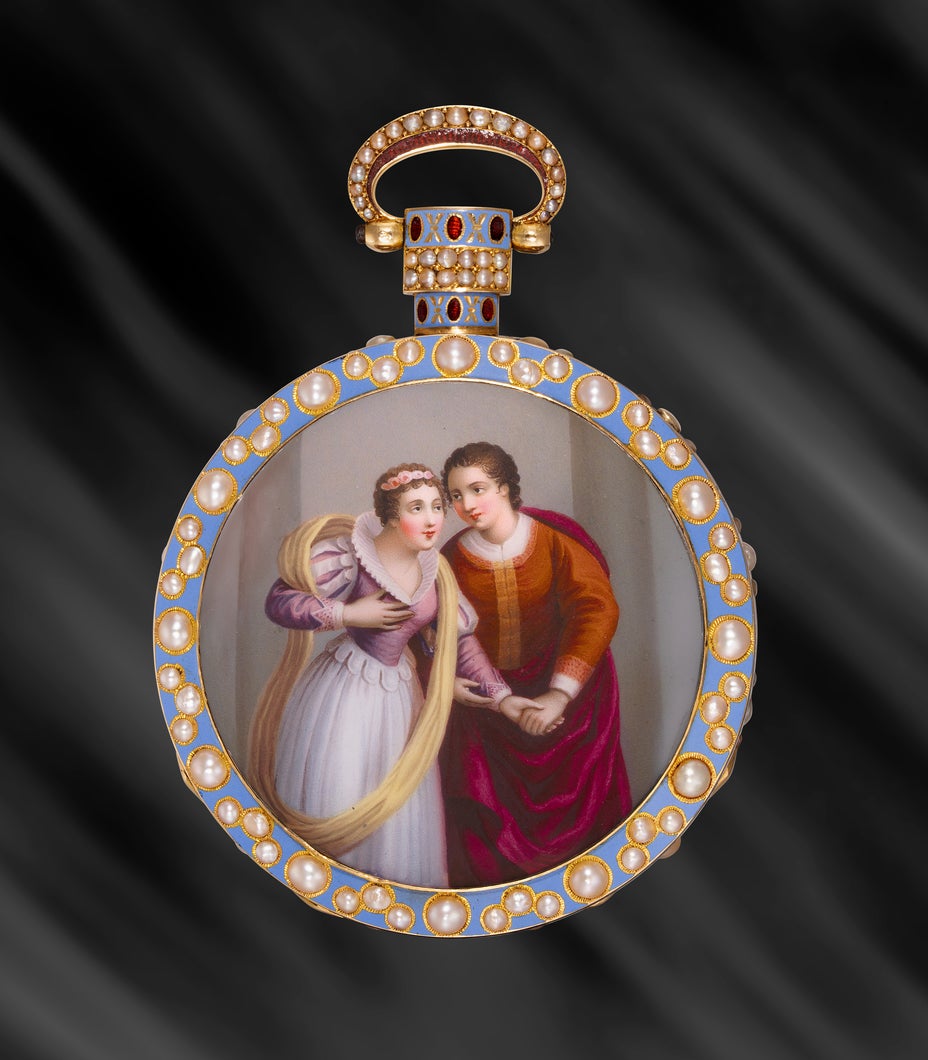
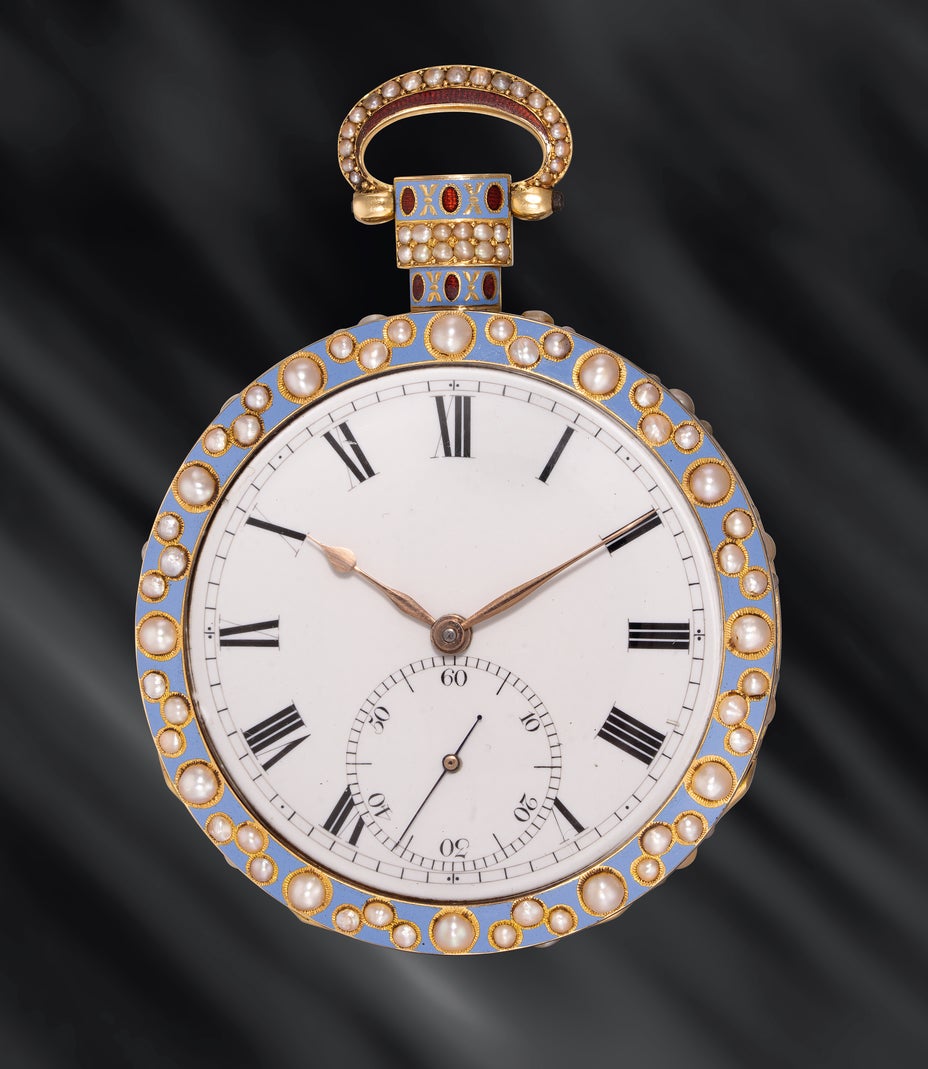
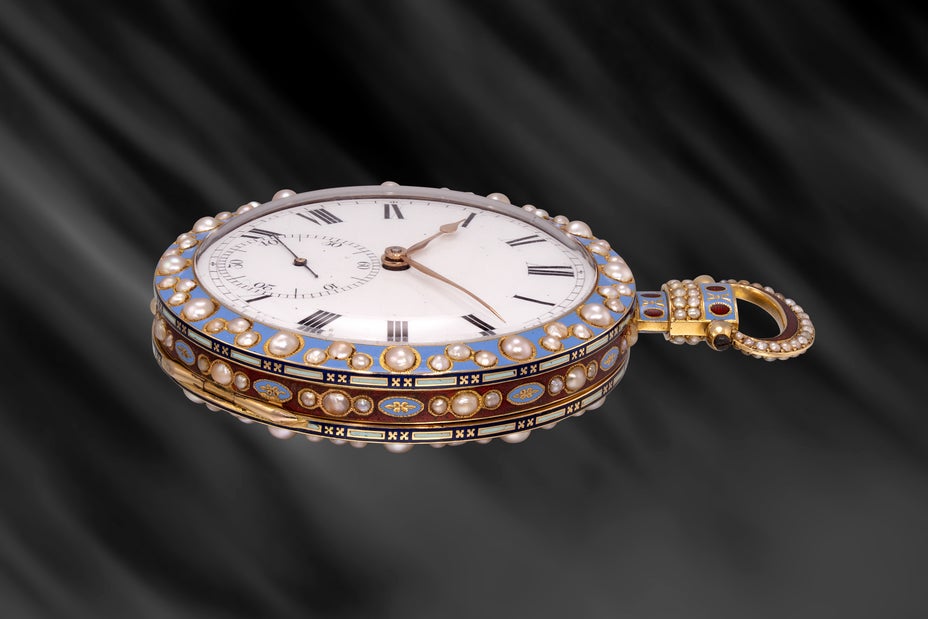
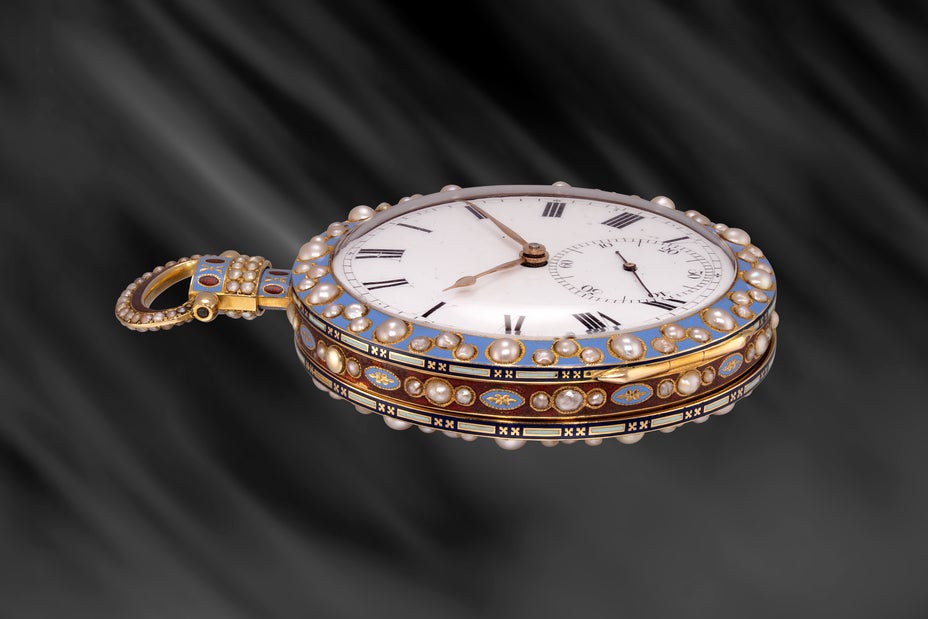
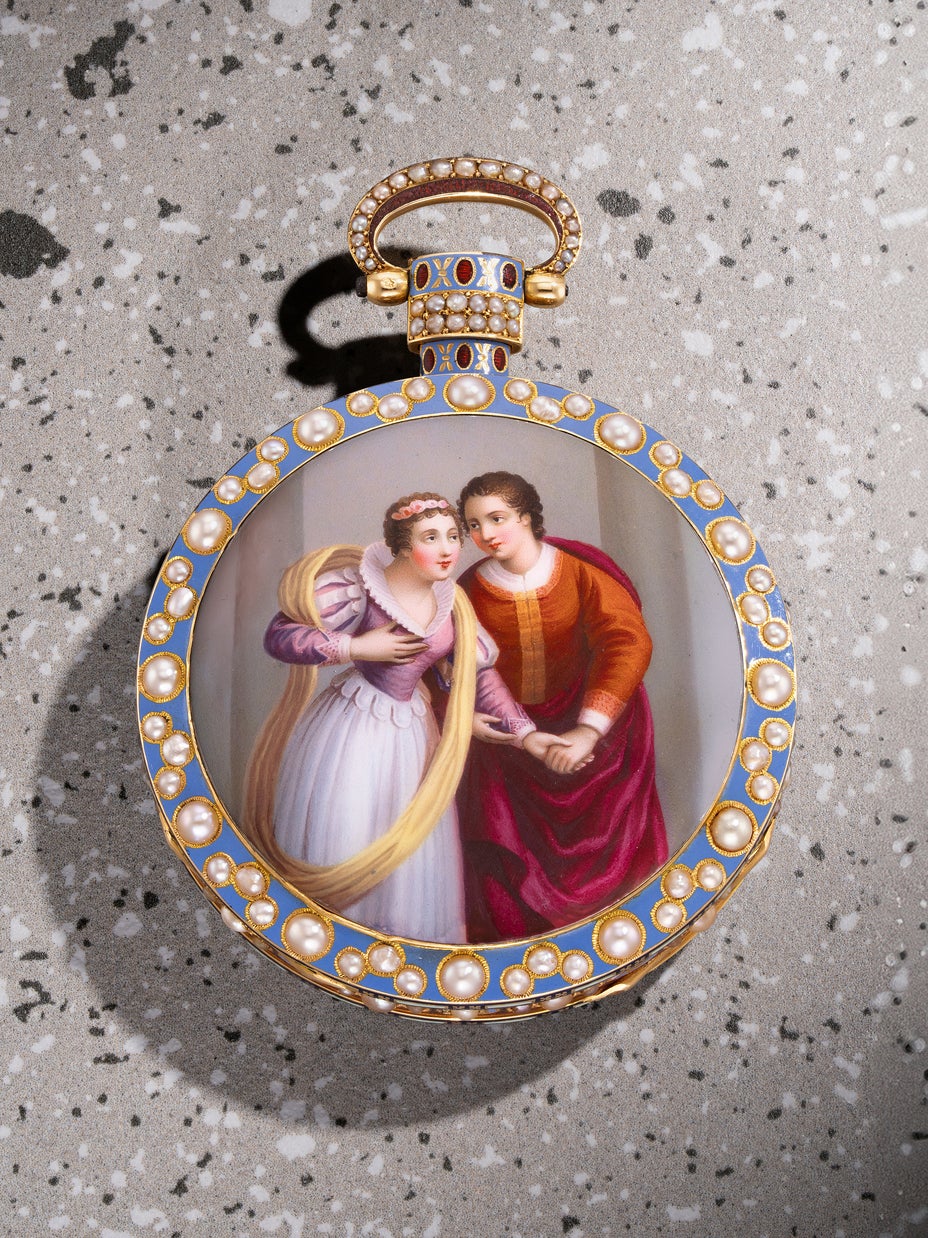
A highly rare and attractive pearl-set yellow gold openface Empire-styled pocket with white enamel dial, small seconds, duplex escapement, polychrome enamel painting attributed to Jean-Francois-Victor Dupont made for the Chinese Market
Full-Cataloguing
- Attributed to Jean-François-Victor Dupont
- Depicting lovers in polychrome enamel painting
- Kept in a private collection for 13 years
The story of Bovet’s legendary Chinese calibre begins with Edouard Bovet (1797–1849). In 1818, the 21-year-old Swiss watchmaker arrived in Canton and, within days, sold four timepieces for 10,000 francs — the equivalent of over one million US dollars today. Buoyed by this extraordinary success, he founded a trading company in Canton in 1822 together with his brothers.
Before long, the name “Bo Wei” became synonymous with timepieces across China. In the final turbulent years of the Qing dynasty, Bovet watches circulated widely as a trusted form of currency. Meanwhile, the quiet village of Fleurier in Switzerland’s Val-de-Travers transformed into Europe’s premier hub for crafting these opulent timepieces destined for the Imperial Chinese market.
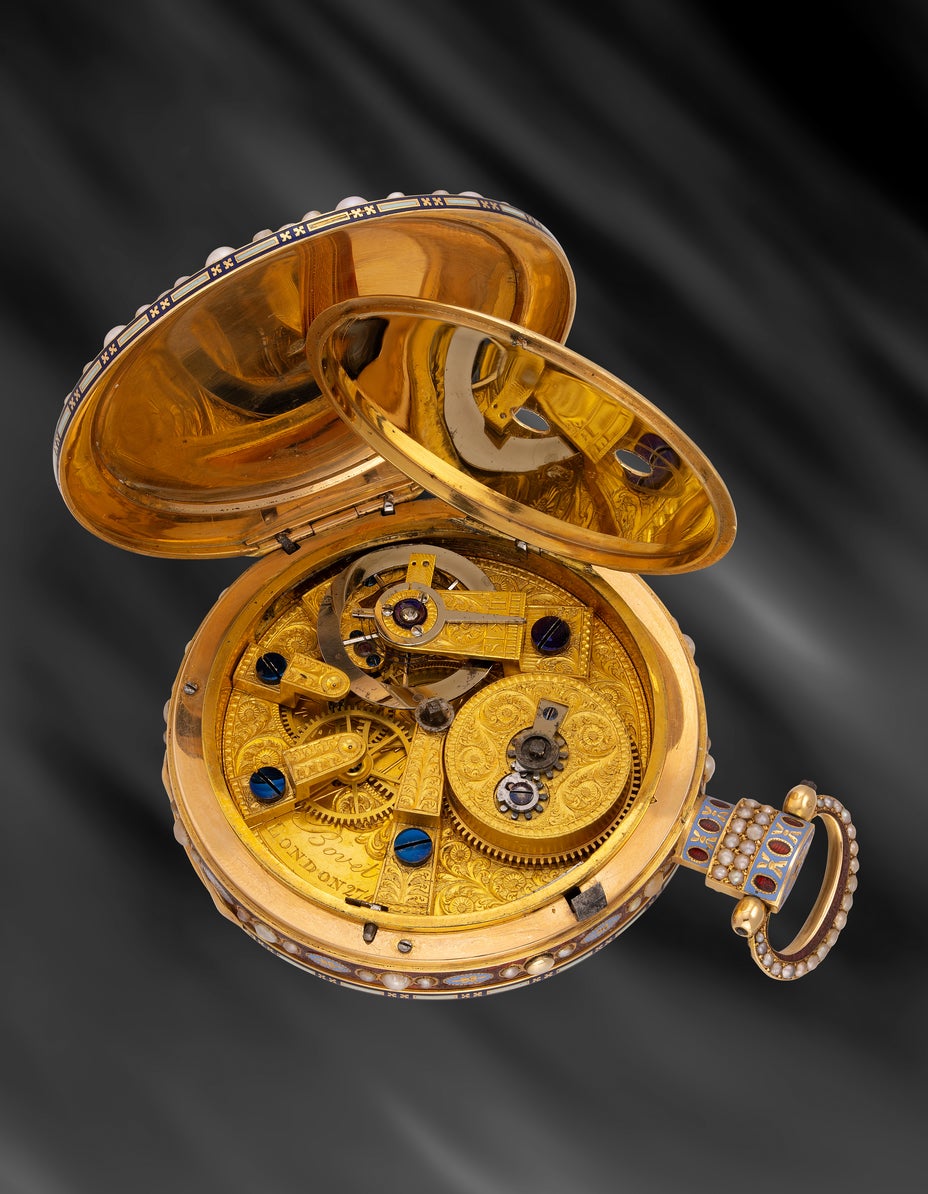
Bovet’s creations were celebrated for their breathtaking beauty: richly decorated gold cases adorned with vibrant enamel miniatures, cloisonné and champlevé enamels, delicate pearl-set borders, and masterfully engraved movements that enchanted connoisseurs.
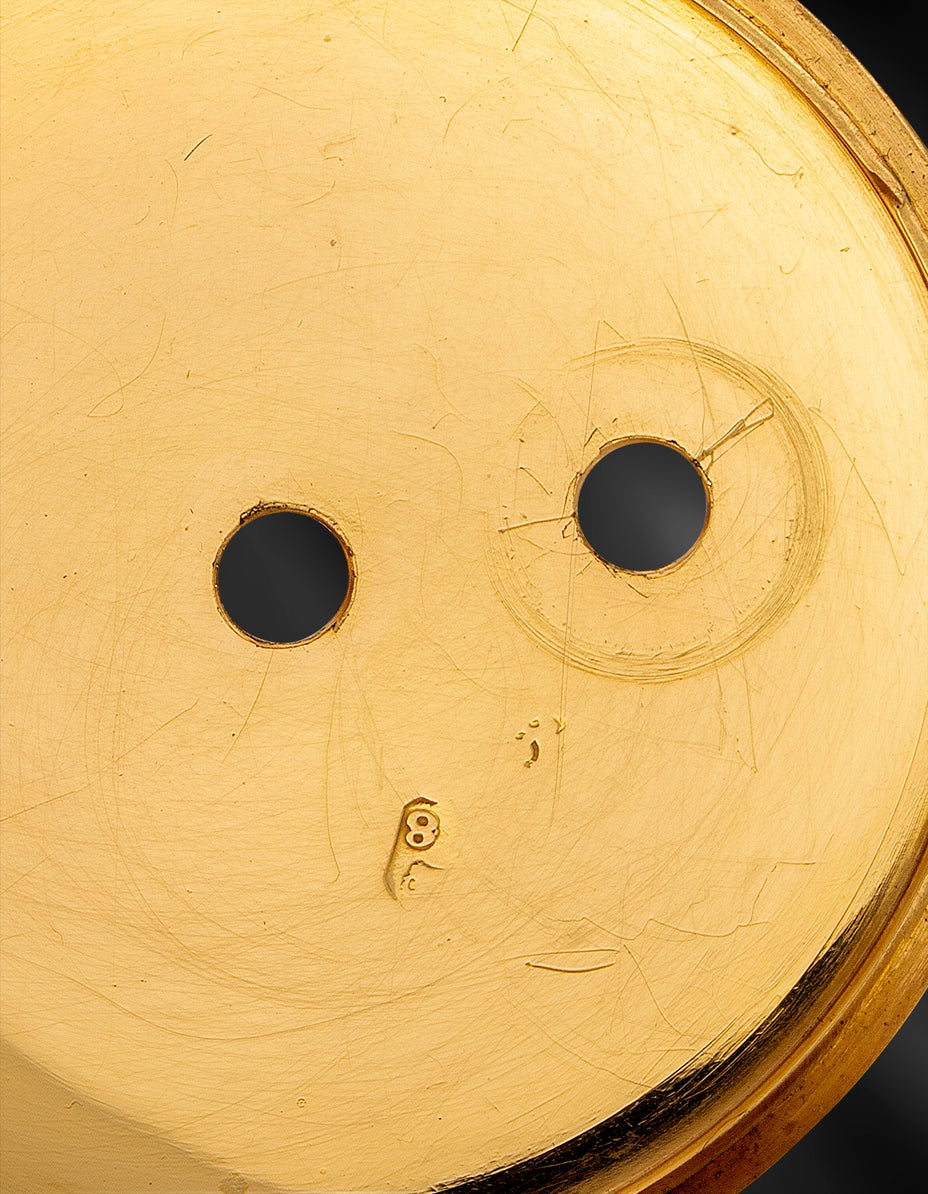
At the heart of this exceptional timepiece lies a superb enamel miniature depicting a tender pair of lovers bathed in soft, warm light. A masterpiece that captures the very pinnacle of early 19th-century Geneva enamel painting, this scene is attributed to the celebrated artist Jean-François-Victor Dupont (1785–1863), one of the era’s finest enamellers, who frequently collaborated with Bovet on pieces for the Chinese market. Dupont’s work, including royal portraits of figures such as King George IV, graces the collections of the world’s most prestigious museums, including Geneva’s Patek Philippe Museum.
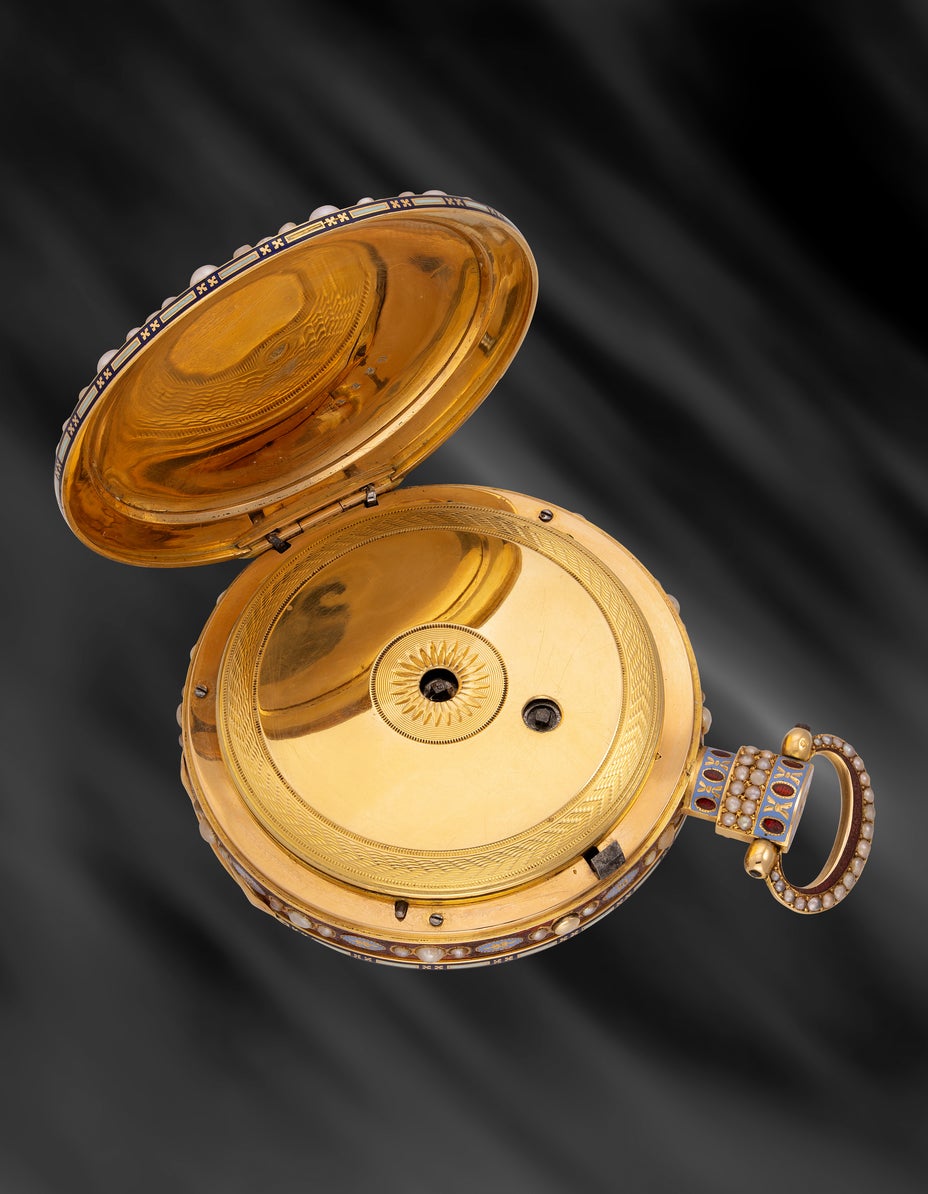
Measuring at 57mm, this remarkably preserved Bovet boasts a dazzling case in vibrant turquoise, scarlet, and blue enamels. Exquisite split-pearl settings gracefully adorn the caseband, with a cleverly concealed gold pusher discreetly nestled between 10 and 11 o’clock, a gentle push reveals the inner workings of the pocket watch.
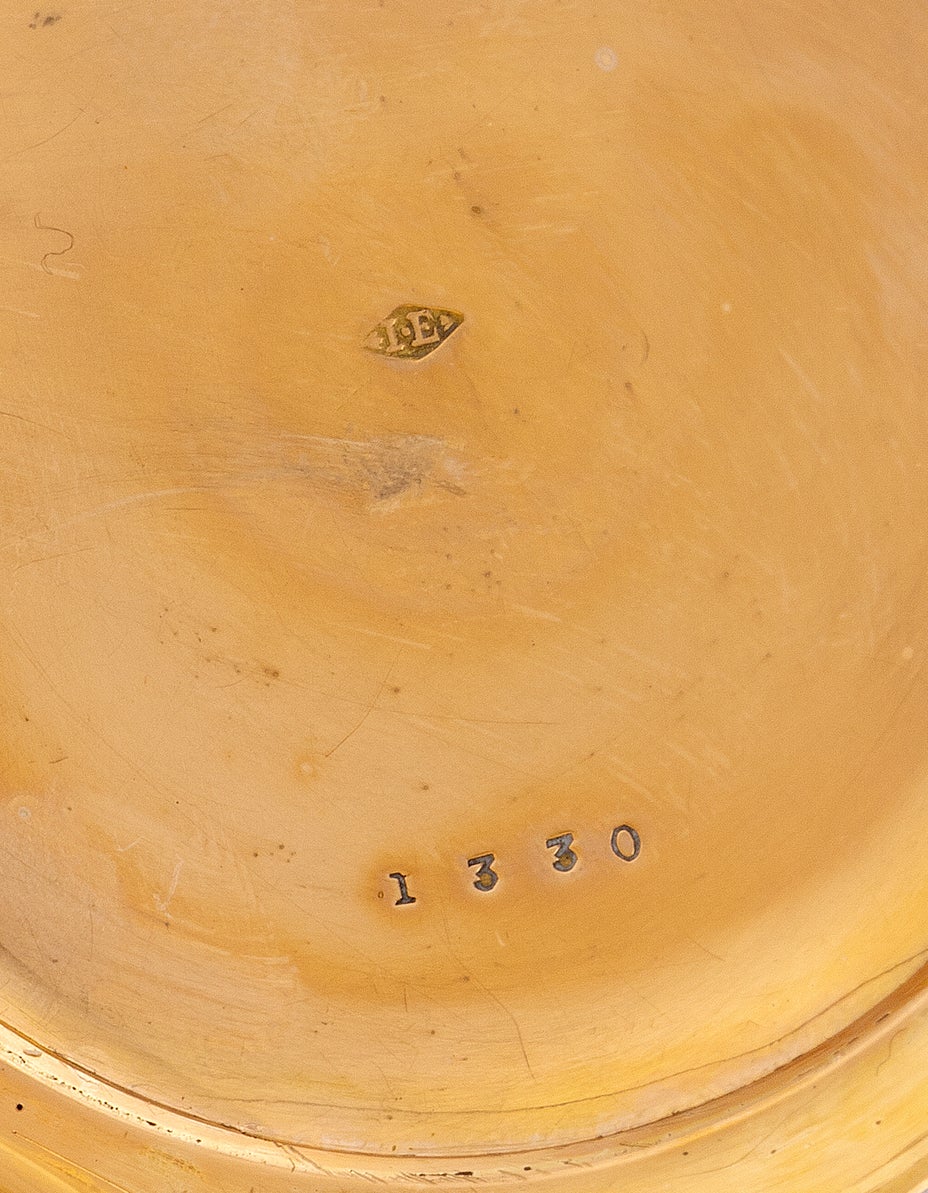
The inner caseback is stamped with the revered case maker’s mark “I.E.” — belonging to one of Geneva’s most talented gold chasers of the period. Above the gilt-finished Chinese duplex movement No. 274 sits intricate floral engraving by Bovet, complemented by a five-arm steel balance with a diamond endstone and striking large blued screws. The “I.E.” hallmark also appears on important Piguet & Meylan masterpieces preserved in Geneva’s Collections d’Horlogerie, d’Emaillerie, de Bijouterie et de Miniatures. Time down to seconds are indicated with spade hands on the white enamel dial with elongated Roman numerals.
Nearly two centuries after their creation, this treasure have lost none of their magic. Today, they remain among the most coveted and passionately collected treasures in the world of horology.
Jean-François-Victor Dupont
Jean-François-Victor Dupont (1785-1863) stands as a luminous figure in the realm of enamel artwork, celebrated for his exquisite paintings on enamel, porcelain, and ivory. A contemporary of esteemed enamel artists such as Jean Louis Richter and Isaac Adam, Dupont forged a distinctive style marked by originality, romanticism, and a vibrant palette. His miniatures drew inspiration from the acclaimed Genevan school, beautifully intertwining themes of Symbolism and Neoclassicism, particularly those inspired by Greek and Roman mythology.
As Romanticism blossomed across Europe, Dupont’s work captured the essence of this transformative period, influencing contemporary tastes and customs during the early Restoration of the French Monarchy. His art resonated deeply with a discerning Chinese clientele, who sought unparalleled attention to detail akin to the finest Chinese porcelain. The composition of his paintings is striking, featuring figures in the foreground that pulsate with life against a minimalist background, instilling a sense of dynamic action.
Dupont crafted his own enamels, achieving a stunning color spectrum, with signature shades of red, blue, and a unique purple that set his work apart. His use of the rare “pointillé” technique for faces and hands, alongside the one-bristle paintbrush, added an extraordinary depth to his creations.
Bovet
Swiss | 1822The firm Bovet 1822 has a rich, centuries-long history beginning when Edouard Bovet sold four decorative pocket watches in Canton Asia for what would today equal $1 million. By 1822, Edouard, with his brothers, registered the company in London, which at the time was an important center for watches and clocks. That same year, they moved their manufacturing center to the Swiss municipality Fleurier. Bovet became known for their highly decorative pocket watches for the Chinese market. Their richly engraved movements were so important to the watch that Bovet created the concept of the transparent watch back so owners could see the beauty of the movement. Bovet's oversized chronograph wristwatches, such as the Mono Rattrapante chronograph, are especially sought-after. Today, the firm continues their tradition of exquisitely enameled watches.