932Σ︎
Cartier
Barometer
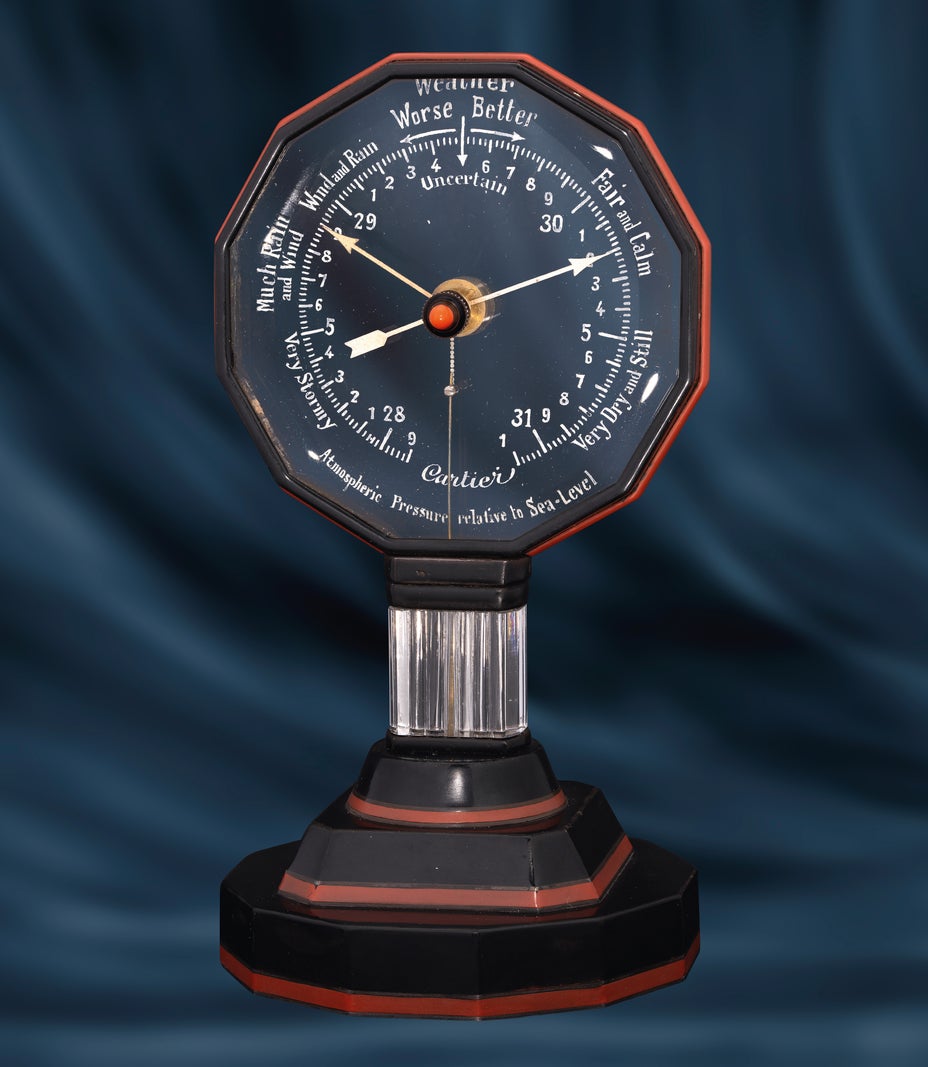
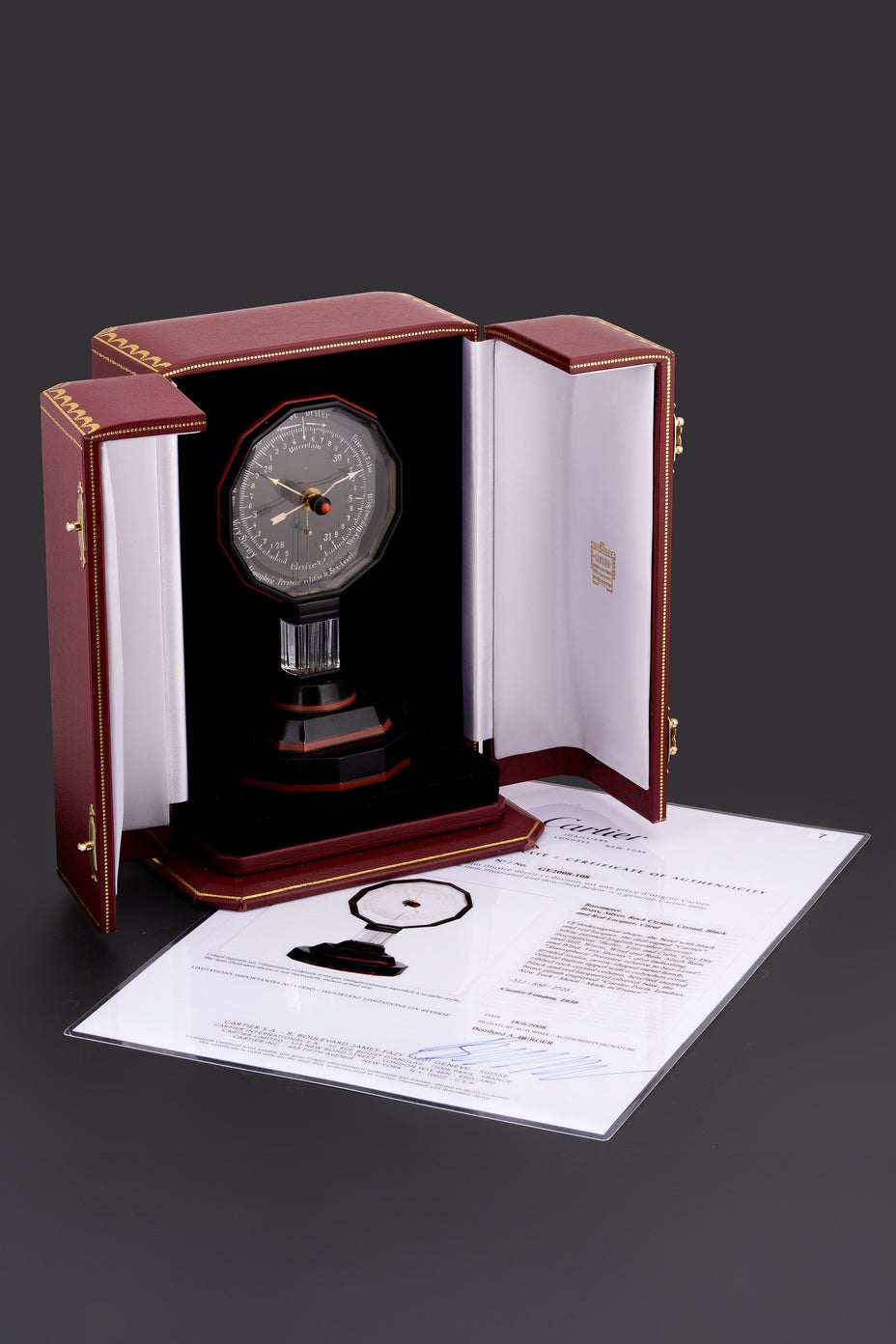
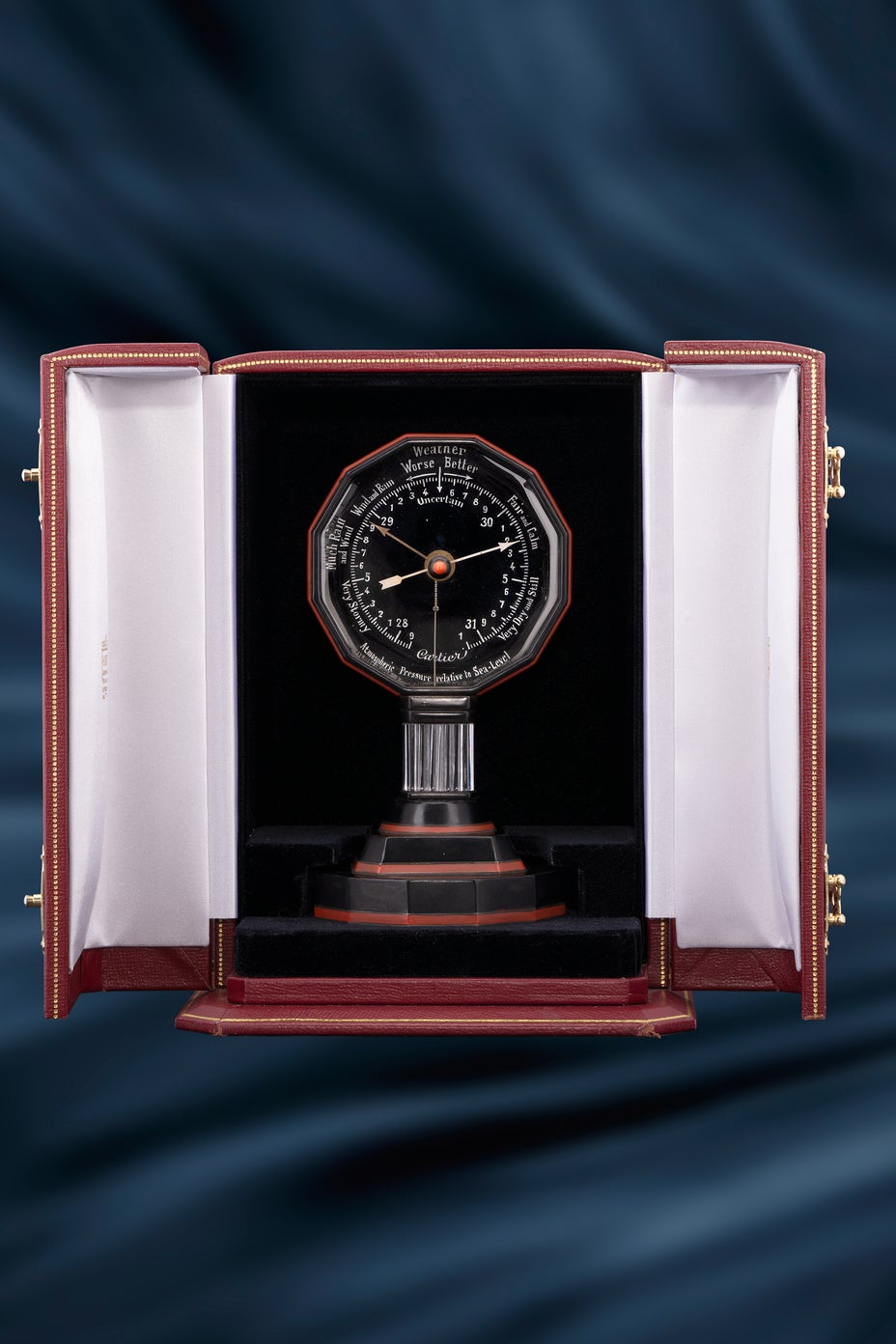
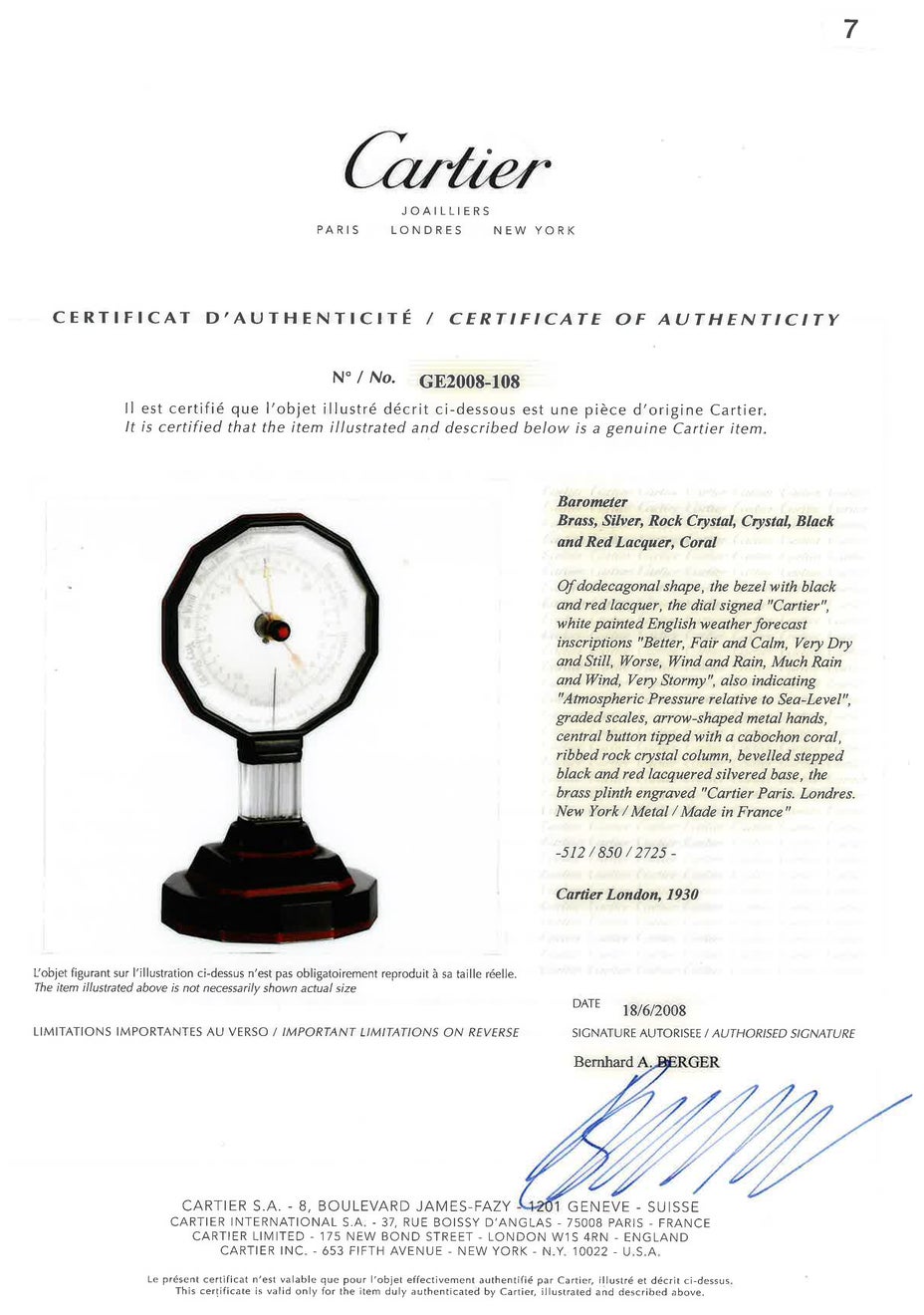
A unique, extraordinary and extremely rare rock crystal, coral, lacquer, brass and silver demi-mystery barometer with certificate of authenticity and presentation box
Full-Cataloguing
- Barometer for measuring atmospheric pressure
- Configuration that resembles Mystery Clock but with a connecting line
- Only English inscription barometer seen in auction market
Cartier has been creating some of the most creative and innovative clockworks, and in the early 20th century it marked the height of the Maison’s production of some of the most sought-after pieces. Amongst the splendid clockworks created Mystery Clocks by Cartier surely could be regarded as one of the most impressive and important stationary timepieces in the last century. They are the embodiment of inspiring minds and impeccable craftsmanship. Mystery Clocks, grail clocks for many collectors, are usually rare finds in the market, and this present example is something that can be said, extraordinary.
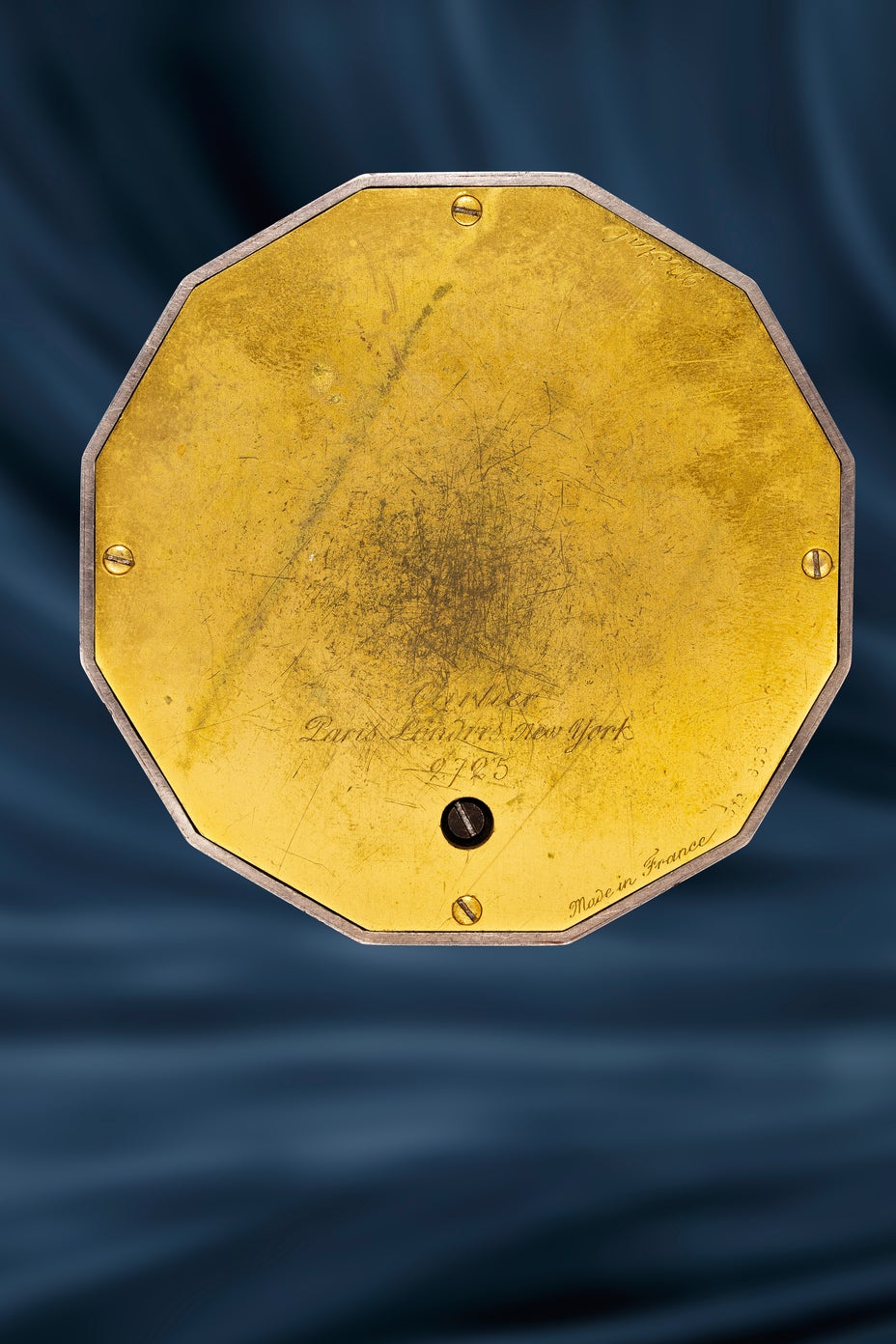
At first glance this piece might seem to be another adored Mystery Clock, however, it is actually a barometer which is a device for measuring atmospheric pressure relative to the sea level. For most times Cartier produces clocks but it is not the only occasion that the Maison has made a weather measuring tool. In fact, in the previous Hong Kong Watch Auction: XX at Phillips Auctions, there was a pink marble, agate and enamel table clock by Cartier consisting of a weather station with a barometer. Cartier clocks with barometers are not common finds, let alone a barometer with a similar configuration as Mystery Clocks. Authenticated by Cartier in 2008, the barometer can be confirmed that it was manufactured in France in 1930.
For this barometer it resembles a Mystery Clock but there is a slight difference to the usual configuration. The reason for Mystery Clocks seeming to have floating hands is the ingenious design by having transparent plates or rotating panels to conceal the inner workings, while the arrow-shaped metal hands of this barometer are connected to the base by a thin line, this not a fully “mystery” setting. Similar to the clockworks in the era by Cartier, it has a dodecagonal transparent dial enclosed by a black and red lacquer bezel supported by a rock crystal column, and bevelled stepped black and red lacquered silvered base with a brass plinth. The atmospheric pressure measurement scales and weather forecast inscriptions, painted in white, are indicated by the arrow-shaped hands with a center button tipped with a cabochon coral.
Although not adorned with precious gemstones like other Cartier clockworks, this barometer is still a work of art with the fine lacquered frame, persistent with the Art Deco look with a touch of oriental style. According to our research, there was a Cartier barometer made in 1920 with similar appearance, yet the inscriptions are in French, while the present example is in English. This barometer has appeared in auctions throughout the years, but no other barometers of the same configuration could be found, making this piece a well-sought and unique item. For Cartier enthusiasts and devoted collectors, this is an extremely rare chance to acquire such an extraordinary Art Deco piece.
Cartier
FrenchWith the Constitution of 1848 came a new standard for luxury in France. Founded one year prior by Louis-Francois Cartier, the house of Cartier was one of the first to use platinum in jewelry making. This incredibly expensive material became the stepping-stone for Cartier to experiment in form, mechanisms and attitude. It helped men move from pocket watches to wristwatches, effectively making the watch much more functional and prominent in a man's overall wardrobe.
Cartier did not only touch on functionality. Inspired by a commissioned painting by George Barbier featuring a black panther at the feet of an elegantly bejeweled woman, Cartier began incorporating wild animals in his designs—most notably, Cartier Panthère rings, bangle bracelets and watches. Yet it wasn't until the late 1960s that the house of Cartier debuted their iconic yellow and rose gold LOVE collection, which includes the famous bracelet that only a special screwdriver can open.