238Δ︎
Bovet
Ref. 5347
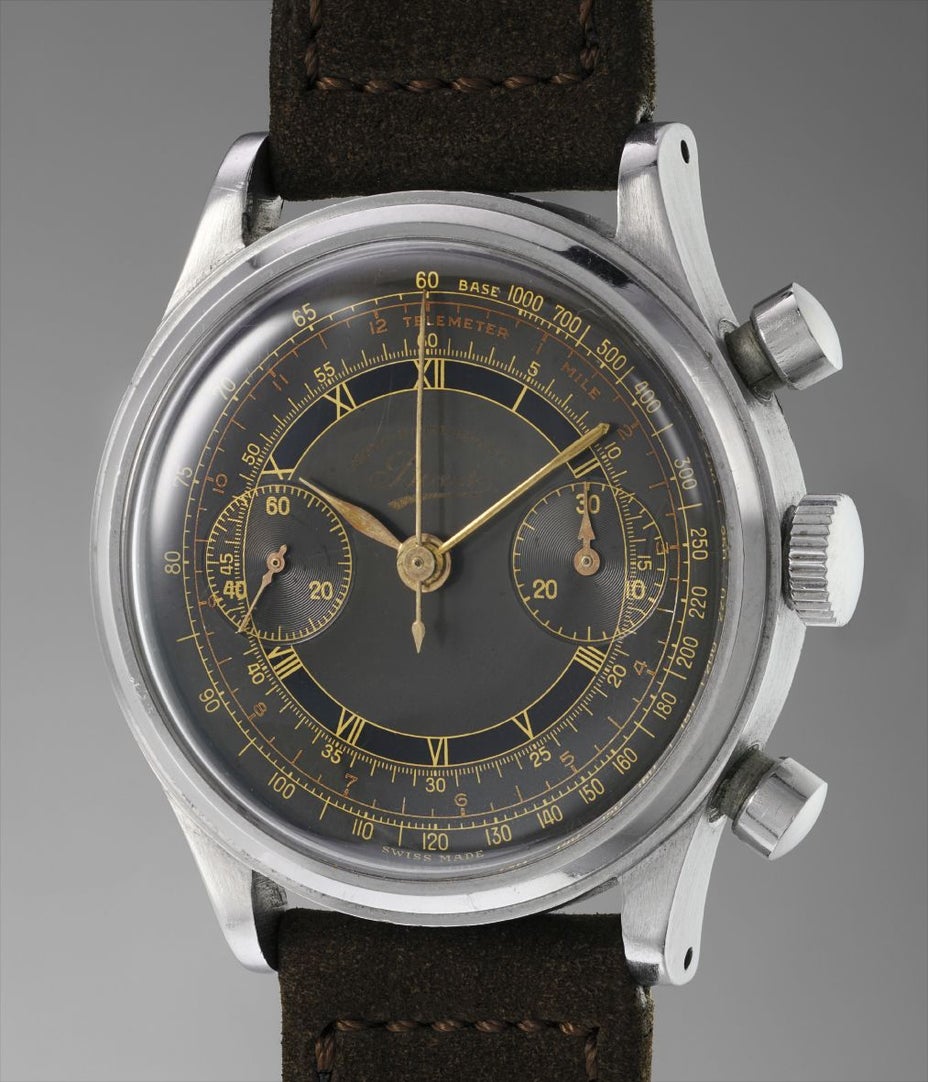
A rare and large stainless steel mono-rattrapante chronograph wristwatch
Full-Cataloguing
Thus, the "mono-rattrapante" system, such as the movement housed in the present watch, was born. Once the chronograph mechanism is operated by selecting the top button, the user can temporarily stop the sweep seconds hand by selecting the bottom pusher. During this time, tension builds in the hairspring. When the bottom pusher is released, the tension in the hairspring unwinds, allowing the seconds hand to catch up to the total elapsed time.
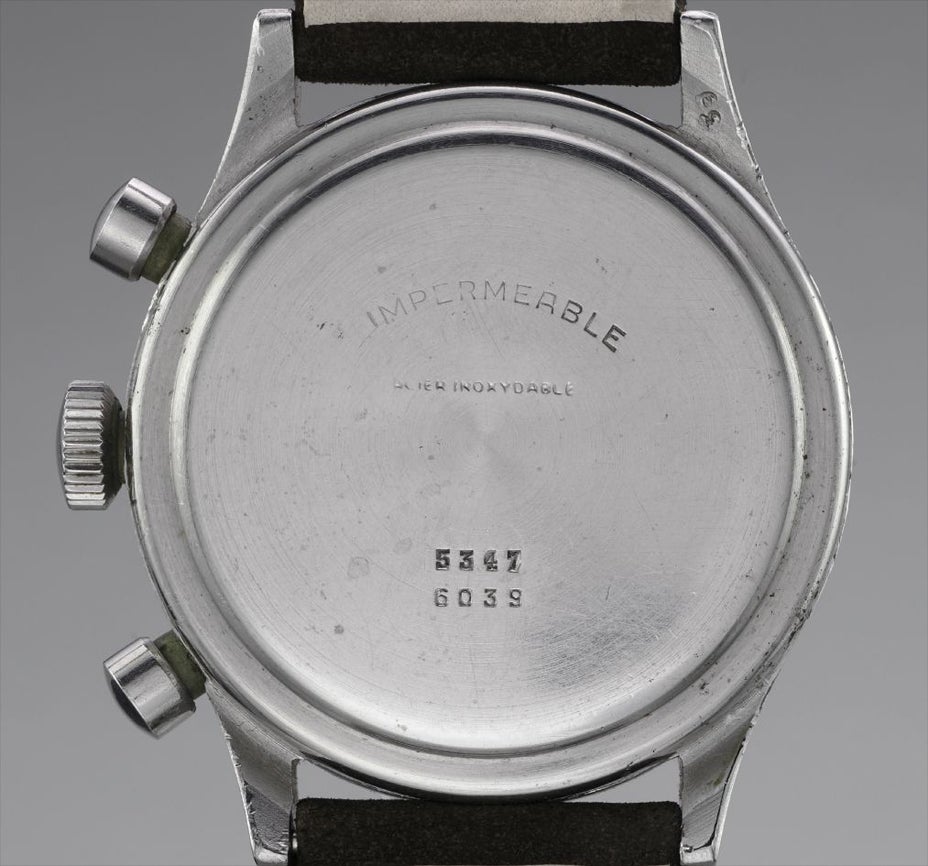
Moreover, the present watch is housed in a 38 millimeter case, which was extremely large for the period. It is interesting to note that the number "39" is engraved beneath the upper left lug, which corresponds to the last two digits of the case number. The gold and copper multi-scale dial is very attractive contrasting again the slate grey dial.
Most interesting is the movement, which is stamped SXK, denoting the watch was intended to be imported to the United States. Fitting, since "Telemeter" and "Swiss Made" is printed in English.
Bovet
Swiss | 1822The firm Bovet 1822 has a rich, centuries-long history beginning when Edouard Bovet sold four decorative pocket watches in Canton Asia for what would today equal $1 million. By 1822, Edouard, with his brothers, registered the company in London, which at the time was an important center for watches and clocks. That same year, they moved their manufacturing center to the Swiss municipality Fleurier. Bovet became known for their highly decorative pocket watches for the Chinese market. Their richly engraved movements were so important to the watch that Bovet created the concept of the transparent watch back so owners could see the beauty of the movement. Bovet's oversized chronograph wristwatches, such as the Mono Rattrapante chronograph, are especially sought-after. Today, the firm continues their tradition of exquisitely enameled watches.