Property from an Important Private Collection
36
Alberto Giacometti
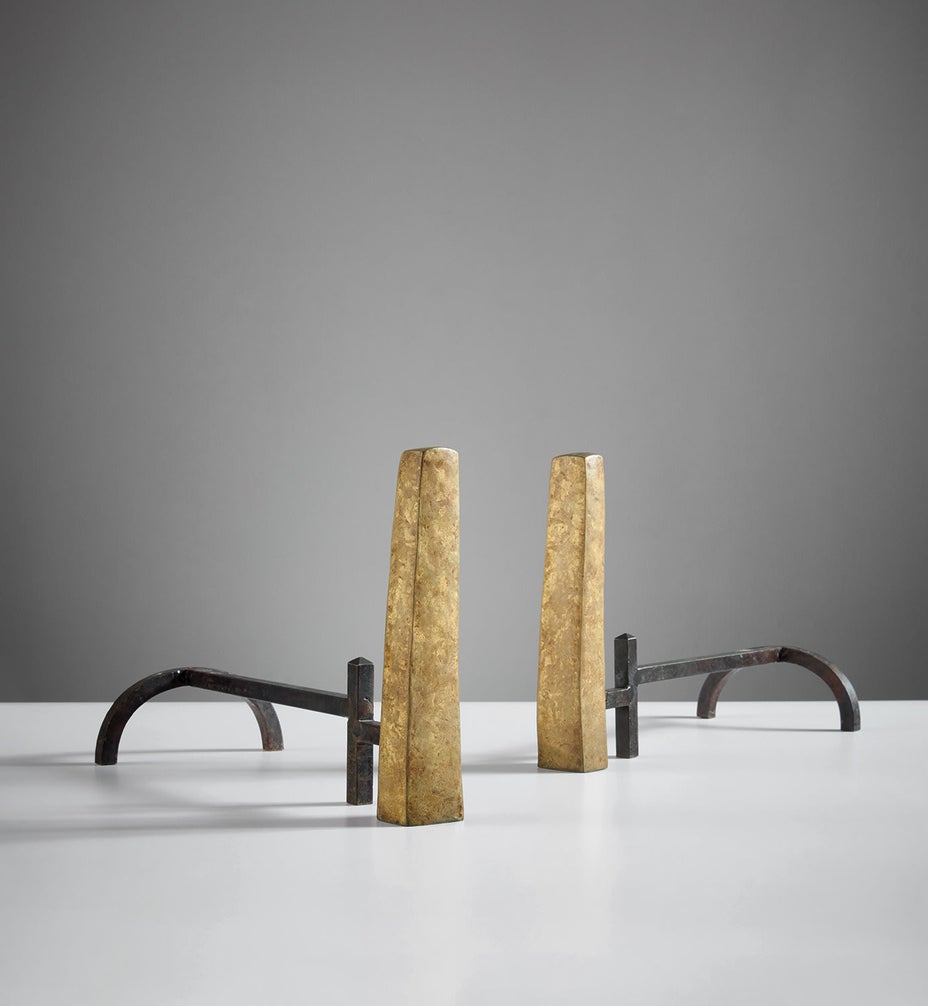
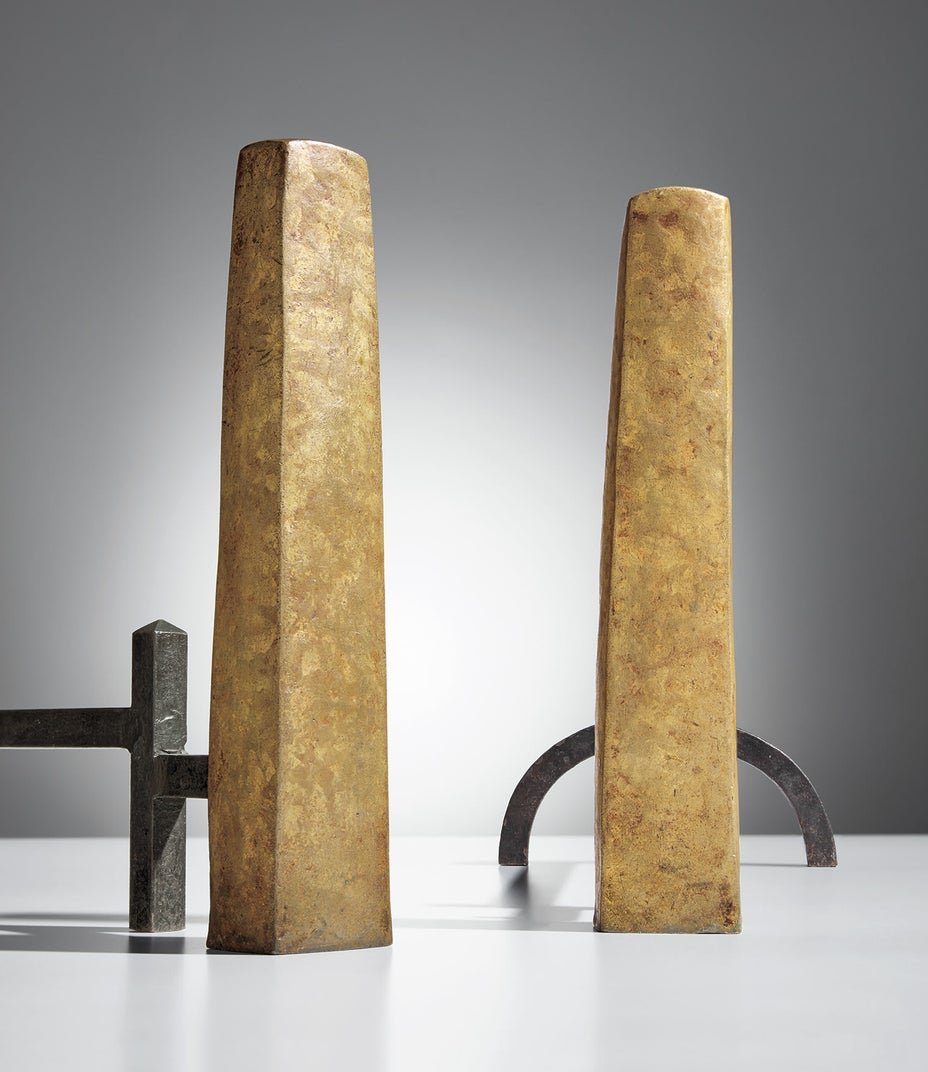
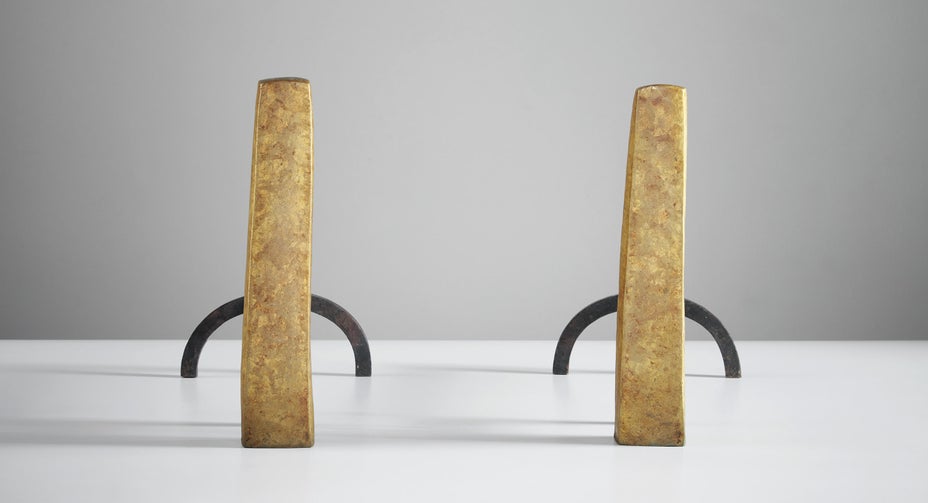
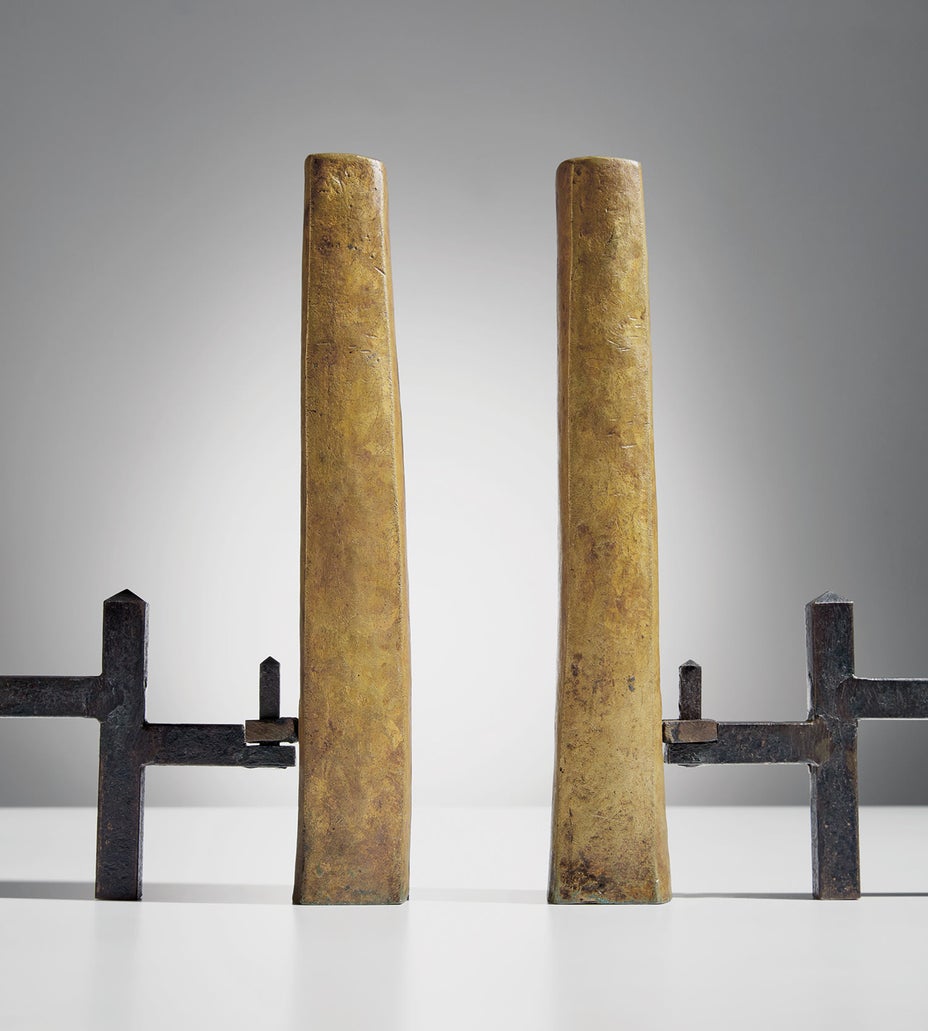
Rare pair of "Parallélépipédique" andirons
Estimate
$300,000–400,000
Sold For
$378,000
circa 1931
Gilt bronze, wrought iron.
Taller: 11 1/4 in. (28.6 cm) high
Reverse of each impressed AG 01. Together with a certificate of authenticity from the Comité Giacometti.
Full-Cataloguing
The present lot is registered by the Fondation Alberto and Annette Giacometti in the online Alberto Giacometti Database (AGD) under the number 4096.
Andirons by Alberto Giacometti are extraordinarily rare and the present lot, known as the Parallélépipédique model, is even more so: to date, among the ten andirons recorded in the online Alberto Giacometti database, this set constitutes the only example of this model.
These andirons are the product of an artistic collaboration between Giacometti and the interior designer Jean-Michel Frank, who beginning in the late 1920s, engaged the sculptor to create original objects that seamlessly accented his exacting, pitch-perfect interiors. The designer and artist shared an aesthetic that favored simplified forms and rough textures, as evidenced by the present lot which is composed of two elongated parallelograms whose uneven golden surfaces evoke the qualities of an excavated prehistoric sculpture.
Frank included this model in his own apartment on rue de Verneuil in Paris (an image from circa 1938 shows that he replaced a pair of rock crystal andirons that had appeared in an earlier image of the same fireplace with this model) as well as in one of his most important and extensive commissions, the villa of Jorge Born in Buenos Aires (1939), where they appeared in the smoking room alongside a screen by Salvador Dalí.
The present lot is known to have come from a private collection in Nice, France, prior the Sotheby’s Monaco sale of June 1981. While the full provenance has not been confirmed, a couple clues point to an important commission of Frank’s in Nice, his renovations of Raymond Patenôtre’s villa "Les Palmiers” (begun in 1936). Giacometti’s objects and lighting figured prominently in this project and while the Parallélépipédique andirons do not appear in the images of this interior, a photograph of the sitting room’s fireplace shows a pair of triangular andirons. Intriguingly, the cataloguing of the 1981 sale noted that the forged iron pedestals came with two separate bronze ornaments, one with the slightly rounded rectangular sections of the Parallélépipédique model (which is what was illustrated in the catalogue) and the other in the form of triangular columns.
Alberto Giacometti’s involvement with Jean-Michel Frank had the benefit of expanding his network of collectors beyond the circle of Surrealist artists he associated with in the 1930s. This decade was also notable for its fluidity between the fine and decorative arts, with artists collaborating with preeminent designers such as Frank and designers, such as the couturier Elsa Schiaparelli, embracing the inventiveness of Surrealism in their own métiers. The Parallélépipédique andirons recall, in particular, several of Giacometti’s geometrically-inclined works from this period, such as the tall obelisk and cone-shaped sculptures documented by Brassaï in a photograph of the artist’s studio in 1932.
Giacometti was especially admired by his contemporaries for his mastery of pure form. His friend, the artist and polymath Jean Cocteau confided in his diary that “I know of sculptures by Giacometti so strong and yet so light they make you think of birds’ footprints in the snow.”
Andirons by Alberto Giacometti are extraordinarily rare and the present lot, known as the Parallélépipédique model, is even more so: to date, among the ten andirons recorded in the online Alberto Giacometti database, this set constitutes the only example of this model.
These andirons are the product of an artistic collaboration between Giacometti and the interior designer Jean-Michel Frank, who beginning in the late 1920s, engaged the sculptor to create original objects that seamlessly accented his exacting, pitch-perfect interiors. The designer and artist shared an aesthetic that favored simplified forms and rough textures, as evidenced by the present lot which is composed of two elongated parallelograms whose uneven golden surfaces evoke the qualities of an excavated prehistoric sculpture.
Frank included this model in his own apartment on rue de Verneuil in Paris (an image from circa 1938 shows that he replaced a pair of rock crystal andirons that had appeared in an earlier image of the same fireplace with this model) as well as in one of his most important and extensive commissions, the villa of Jorge Born in Buenos Aires (1939), where they appeared in the smoking room alongside a screen by Salvador Dalí.
The present lot is known to have come from a private collection in Nice, France, prior the Sotheby’s Monaco sale of June 1981. While the full provenance has not been confirmed, a couple clues point to an important commission of Frank’s in Nice, his renovations of Raymond Patenôtre’s villa "Les Palmiers” (begun in 1936). Giacometti’s objects and lighting figured prominently in this project and while the Parallélépipédique andirons do not appear in the images of this interior, a photograph of the sitting room’s fireplace shows a pair of triangular andirons. Intriguingly, the cataloguing of the 1981 sale noted that the forged iron pedestals came with two separate bronze ornaments, one with the slightly rounded rectangular sections of the Parallélépipédique model (which is what was illustrated in the catalogue) and the other in the form of triangular columns.
Alberto Giacometti’s involvement with Jean-Michel Frank had the benefit of expanding his network of collectors beyond the circle of Surrealist artists he associated with in the 1930s. This decade was also notable for its fluidity between the fine and decorative arts, with artists collaborating with preeminent designers such as Frank and designers, such as the couturier Elsa Schiaparelli, embracing the inventiveness of Surrealism in their own métiers. The Parallélépipédique andirons recall, in particular, several of Giacometti’s geometrically-inclined works from this period, such as the tall obelisk and cone-shaped sculptures documented by Brassaï in a photograph of the artist’s studio in 1932.
Giacometti was especially admired by his contemporaries for his mastery of pure form. His friend, the artist and polymath Jean Cocteau confided in his diary that “I know of sculptures by Giacometti so strong and yet so light they make you think of birds’ footprints in the snow.”