Article | Richard Miklosch Tourbillon Pocket Watch Phillips Geneva Watch Auction Xxiv November 2026richard Miklosch Tourbillon Pocket Watch Phillips Geneva Watch Auction Xxiv November 2026
Richard Miklosch: The Math Teacher Who Made Tourbillons
At a crowded bench in Aachen, Richard Miklosch made precision pocket watches by hand in his spare time. A rare flying tourbillon invites us into his world.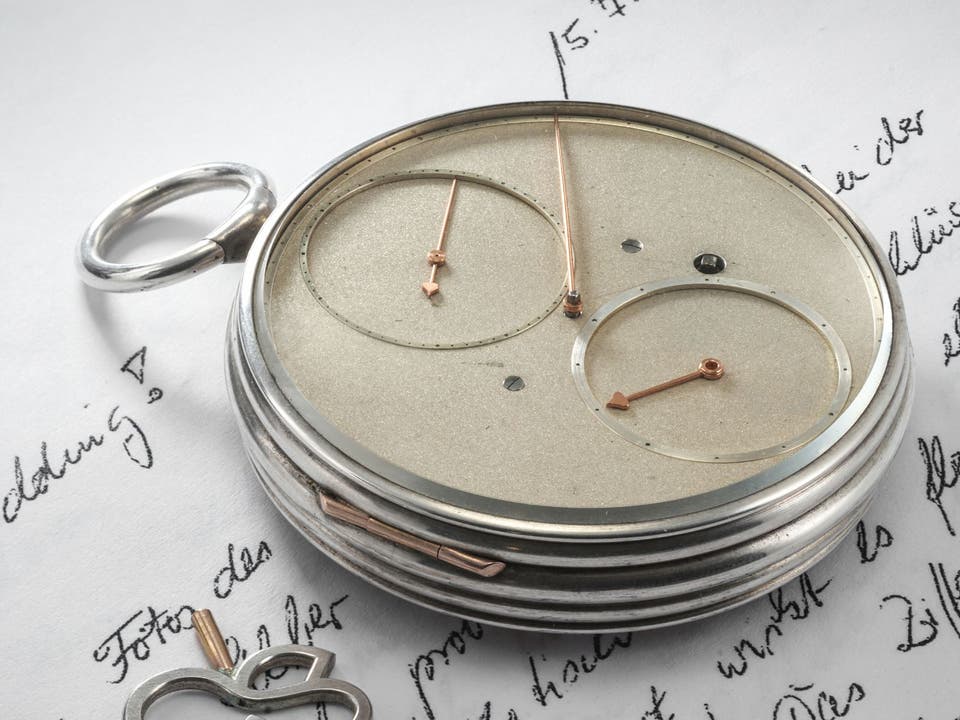
Phillips in Association with Bacs & Russo is delighted to present The Geneva Watch Auction: XXIV, a live auction taking place on 7–8 November 2026 at the Hotel President in Geneva. Featuring more than 220 exceptional luxury timepieces from leading makers including Patek Philippe, Rolex, Audemars Piguet, Cartier, and F.P. Journe, the sale includes the Richard Miklosch pocket chronometer featured in this story.
Pocket watches jostle for space with loupes, tools, loose gears, and stubs of paper. Some watches are complete; others are works in progress. On Richard Miklosch’s bench in Aachen, there was always something to study, something to perfect, or another component to make.

Richard Miklosch’s bench in Aachen. Curtis D. Thomson
The man presiding over this horological assortment had spent around 40 years teaching mathematics at technical school. Alongside that career, he had learned to make precision pocket watches – chronometers – by hand, including examples with flying tourbillons and detent escapements: demanding mechanisms even for someone with formal watchmaking training.
One of Miklosch’s creations, a circa 1985 silver pocket watch, is included in The Geneva Watch Auction XXIV. Looking closely at it offers a route into the life of a maker whose knowledge and enthusiasm influenced the likes of watch scholar and collector Dr. Helmut Crott and acclaimed independent watchmaker Kari Voutilainen.
A Different Classroom
Born in 1939 in what was then Czechoslovakia, Miklosch discovered watches through an unexpected childhood treasure trove. In 1945, while his family awaited passage to western Germany, they stayed in an abandoned watchmaker’s house. Among the discarded belongings were watch and alarm-clock movements, which kept the young boy absorbed.
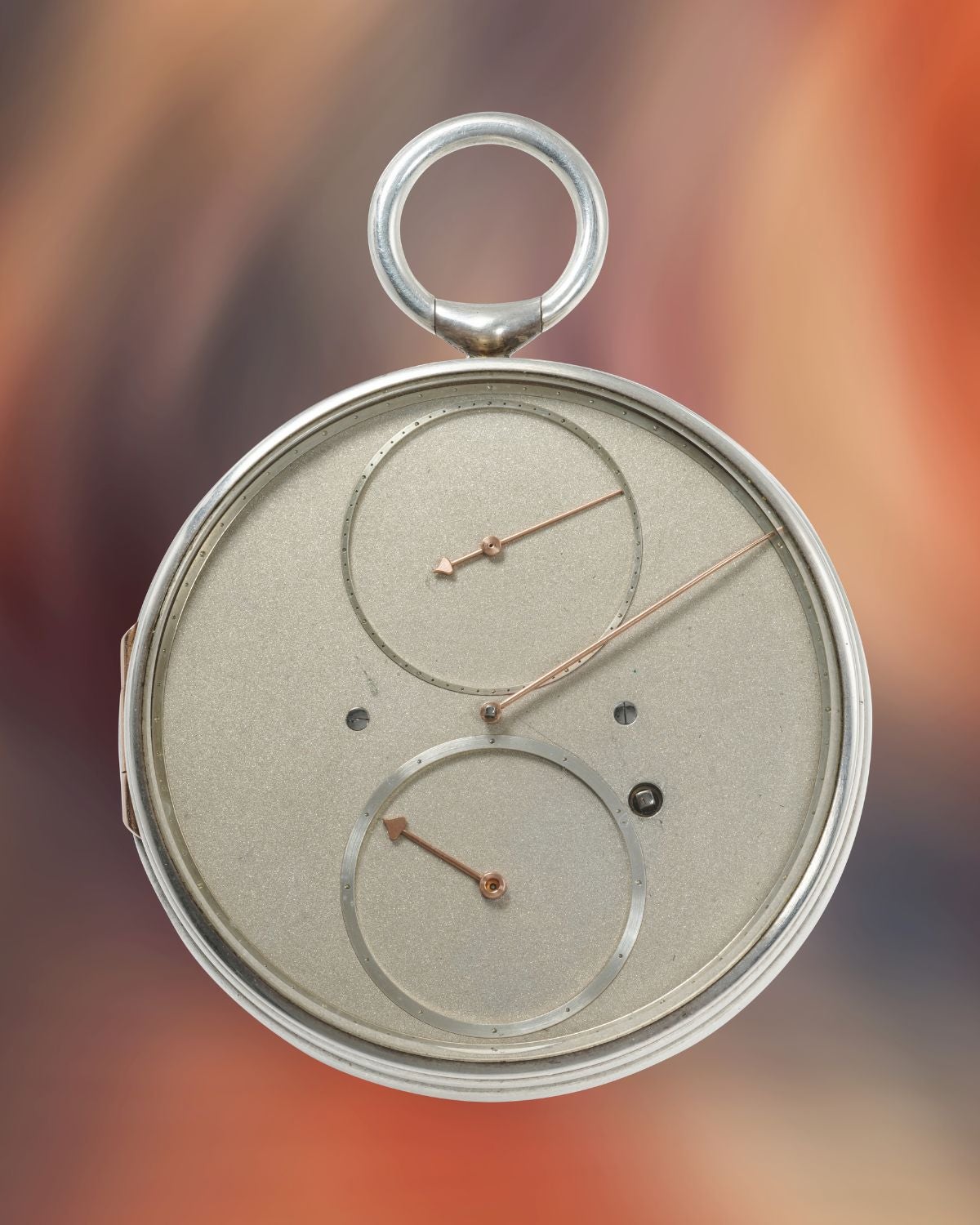
Lot 61: A circa 1985 Richard Miklosch flying tourbillon pocket watch with detent escapement in silver, included in The Geneva Watch Auction XXIV. Estimate: CHF 300,000–600,000
By the time he finished school, watchmaking, photography, and mathematics were his main interests. According to Curtis D. Thomson’s account in the January 2006 issue of International Watch, a school counselor advised pupils to keep their passion separate from their profession. Miklosch duly chose mathematics for his livelihood, leaving room to pursue the other two.
Watchmaking developed through repairs, collecting, and study, with help from local watchmakers. Visits across the Iron Curtain to East Germany brought guidance from Gustav Gerstenberger and Alfred Helwig, both associated with the German Watchmaking School in Glashütte.
Helwig had developed the flying tourbillon – supported from below to leave the rotating carriage unobstructed from above. Gerstenberger became Miklosch’s main mentor, giving him an unfinished movement to work on.
Miklosch returned a year later for his assessment. Over more than a decade of learning from him, Miklosch made two pocket chronometers and two tourbillons. In 1998, years after Gerstenberger’s death, he even completed a table chronometer that his mentor had begun around 1950.
Lot 61: A circa 1985 Richard Miklosch flying tourbillon pocket watch with detent escapement in silver, included in The Geneva Watch Auction XXIV. Estimate: CHF 300,000–600,000
The oft-used description “self-taught” deserves some context in Miklosch’s case. He sought instruction, studied earlier makers, and later visited Philippe Dufour, Derek Pratt, and George Daniels – some trio to learn from. He was, then, a keen pupil long after becoming a teacher himself.
Exercises at Home
Thomson spent five days with Miklosch in Aachen – near Germany’s borders with Belgium and the Netherlands – observing methods that give vivid meaning to the term “handmade.”
A screw could take an hour or more to produce before polishing: turning the material, cutting the thread, filing the slot, hardening, and tempering. A tourbillon carriage might take four to five months, with another month devoted to finishing.
“There are no presents in techniques… you must do exercises.”
—Richard Miklosch
The equipment included small watchmaker’s lathes, rounding-up tools, saws, drills, and files. Miklosch made almost all the components himself – only jewels, mainsprings, hairsprings, and certain balances were sourced elsewhere.
Even his way of handling a movement was individual. He would hold it in his left hand while fitting parts and tightening screws with his right, dispensing with a movement holder. A carriage was similarly cradled in his hands while he worked it with diamond files.
“There are no presents in techniques… you must do exercises,” he told Thomson.
If practice makes perfect, Miklosch had plenty of practice under way. Old cigar boxes held at least 20 watches and another 30 tourbillon carriages in various stages of completion – all part of his ongoing education.

Richard Miklosch’s bench in Aachen Curtis D. Thomson
A commission from a client might prompt him to set the “exercises” aside, with the possibility of returning to them later. For Miklosch, each unfinished piece offered another chance to understand the craft better.
Precision and Beauty
Miklosch had firm opinions about what a tourbillon should accomplish. “The main reason to make a tourbillon is to achieve a fine and stable rate,” he told Thomson. So far, so straightforward. The finer points lay in its construction.
In his article “Tourbillons, kritische Betrachtungen” – “Tourbillons: Critical Reflections” – published in Alte Uhren in 1978, he examined carriage design, the mass of moving components, and the suitability of different escapements.
Lot 61: A circa 1985 Richard Miklosch flying tourbillon pocket watch with detent escapement in silver, included in The Geneva Watch Auction XXIV. Estimate: CHF 300,000–600,000
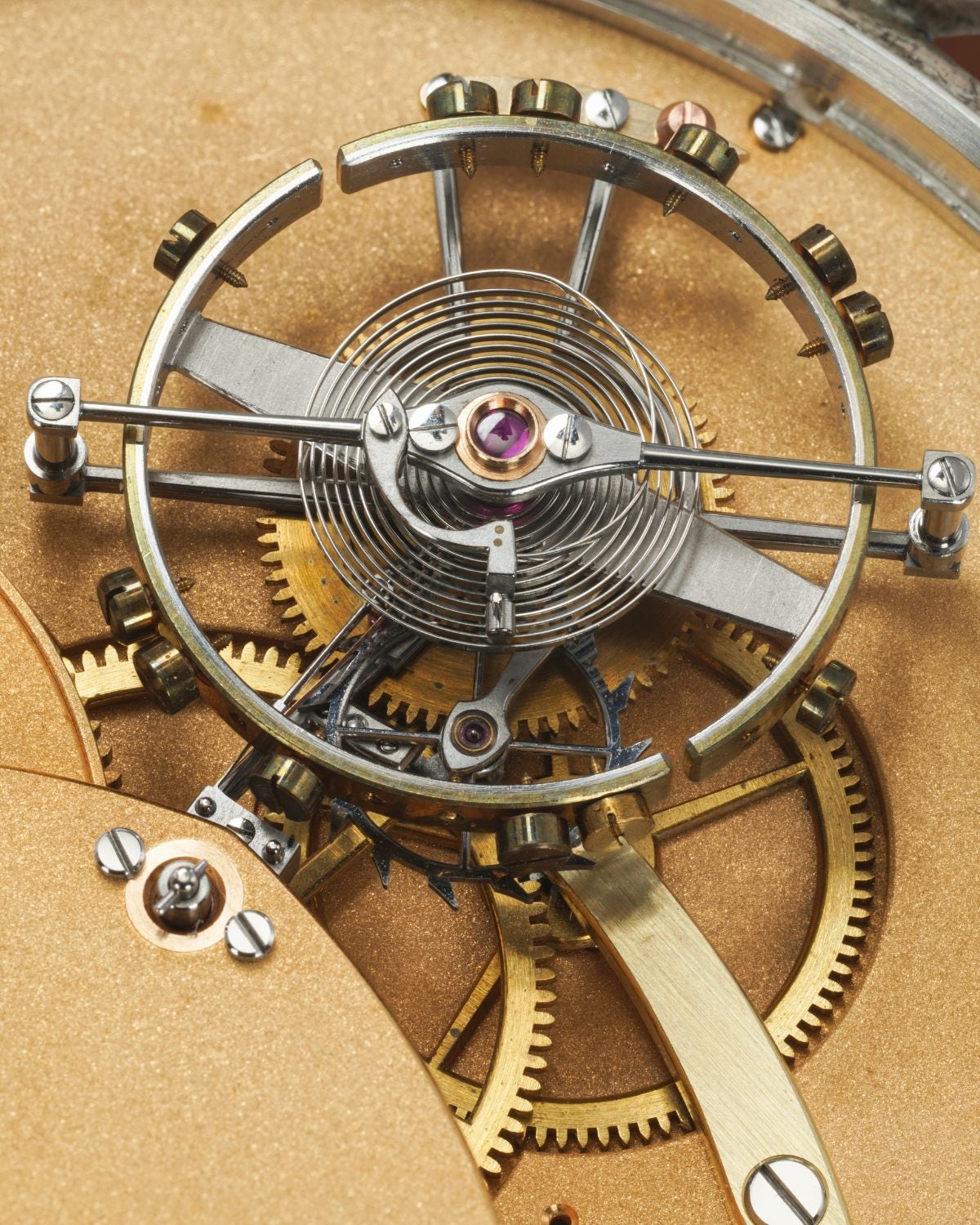
A tourbillon carries the balance and escapement in a rotating cage, intended to average out errors caused by gravity in different vertical positions. Its weight and proportions matter, as does the energy needed to keep it turning.
Miklosch favored light carriages and the Earnshaw-type spring detent escapement, which delivers impulse directly to the balance. His article explored why this escapement’s construction was particularly suited to a tourbillon, explaining that the spring detent could yield slightly as it stopped the escape wheel, cushioning the loads within the rotating assembly.
His broader prescription for a precision watch, outlined to Thomson, also called for a large, light balance, a substantial mainspring barrel, and an up-and-down indicator to monitor the remaining power reserve. The rotating carriage itself was optional: a chronometer could do without one.
He was sensitive to aesthetics, too. In the same article, he compared watching a tourbillon at work to contemplating a masterpiece of painting. Helwig’s flying construction, with its slender pillars and a red ruby in a gold setting, drew his admiration for its engineering and visual beauty.
Enthusiasm That Spread
Miklosch was also happy to share his passion and knowledge – sometimes with consequences that reached well beyond his workshop. Dr. Helmut Crott experienced this firsthand when he reconnected with Miklosch, his former schoolmate, in the 1970s.
Lot 61: A circa 1985 Richard Miklosch flying tourbillon pocket watch with detent escapement in silver, included in The Geneva Watch Auction XXIV. Estimate: CHF 300,000–600,000
A medical doctor by training, Crott had already developed an interest in watches and was planning to put on dedicated auctions. During an encounter in an antiques shop in Aachen, Crott explained his plans to Miklosch, who pulled a pocket watch from his waistcoat: a flying tourbillon made by Max Hahn at the German Watchmaking School in Glashütte around 1930.
In his account published by Phillips, Crott described being immediately struck by the movement’s beauty, despite his limited knowledge at the time. “That was my ‘aha’ moment – the spark that set me on this path,” he recalled.
Lot 61: A circa 1985 Richard Miklosch flying tourbillon pocket watch with detent escapement in silver, included in The Geneva Watch Auction XXIV. Estimate: CHF 300,000–600,000
Kari Voutilainen’s experience of Miklosch was equally profound. After moving to Switzerland, the Finn wrote Miklosch a handwritten letter asking to visit. The invitation that followed turned into an entire week in the workshop, watching Miklosch work.
“His enthusiasm completely ignited my ambition to make my own watches,” Voutilainen said in a recent interview.
By His Own Hand
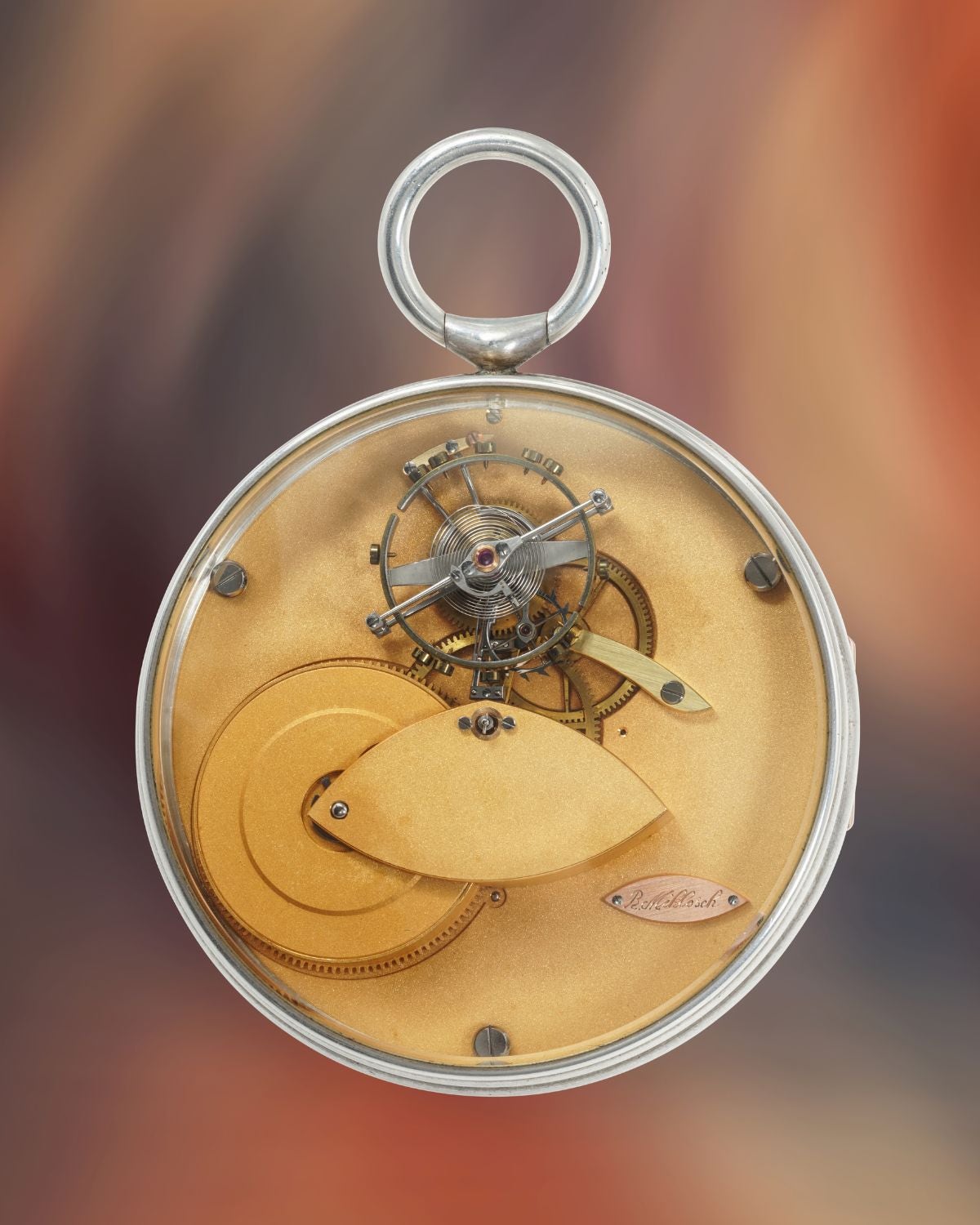
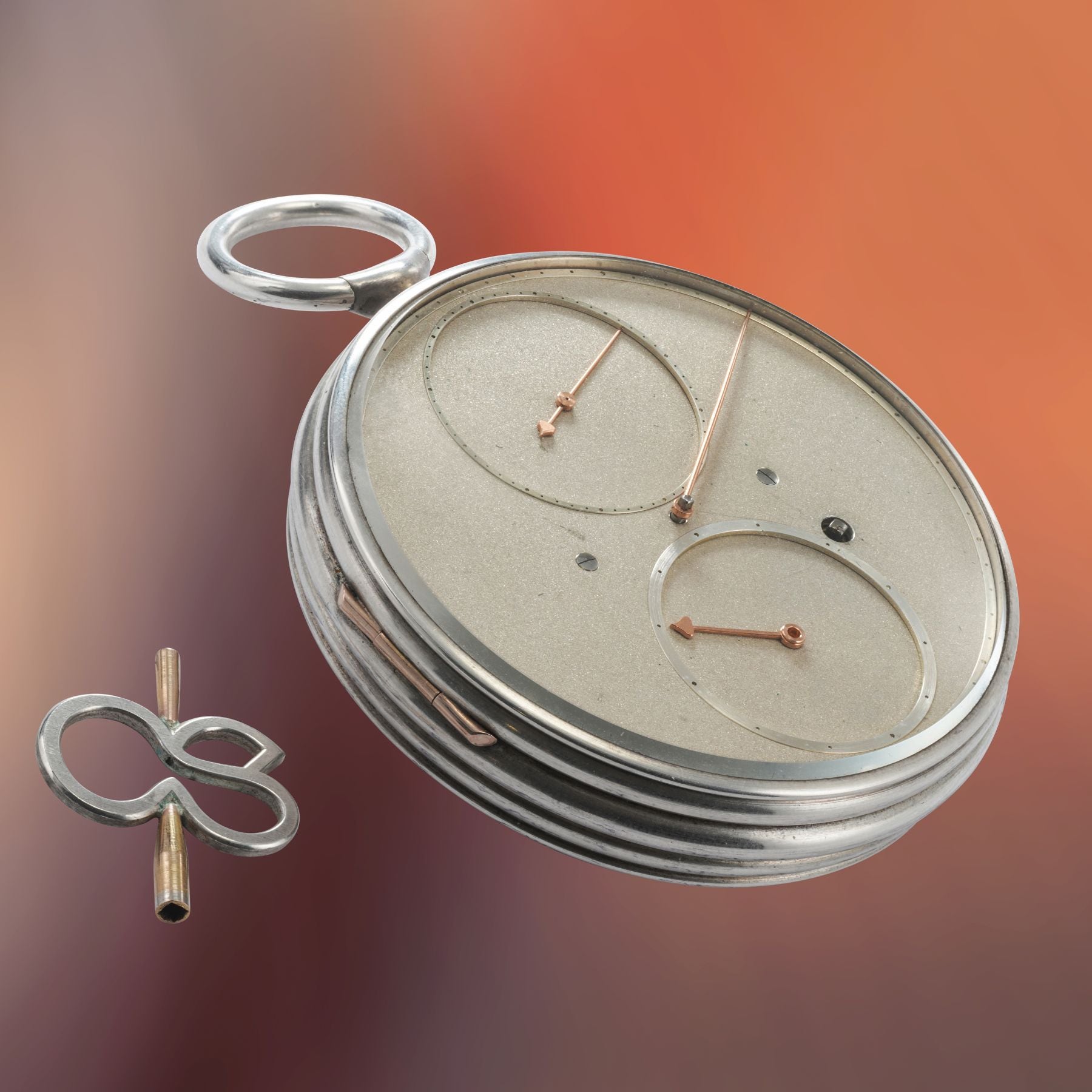
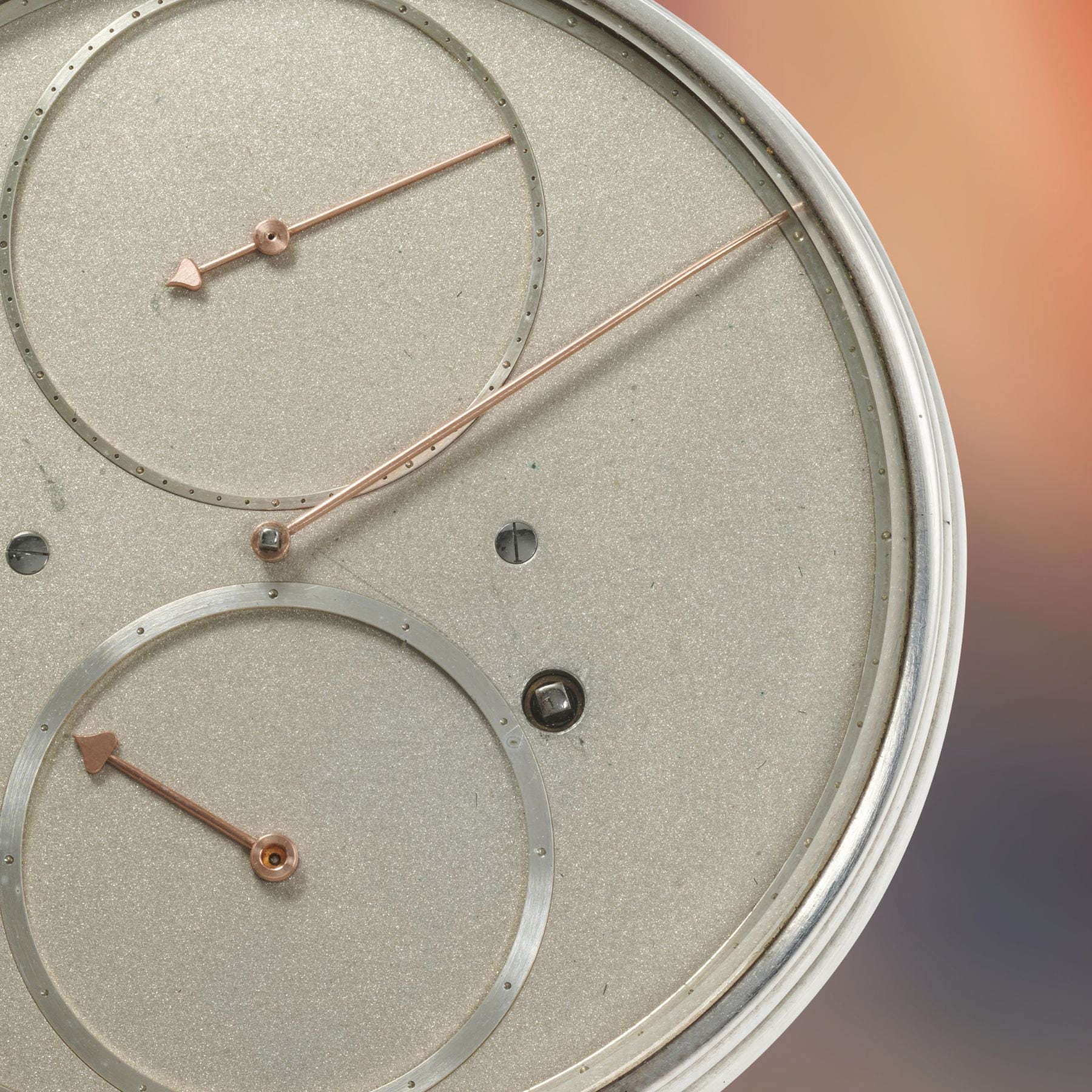
The circa 1985 pocket chronometer offered at Phillips puts Miklosch’s workmanship before us. Its 60mm silver case houses a manually wound movement with a flying tourbillon and Earnshaw-type detent escapement.
On the sober, grained regulator dial, separate indications for hours and minutes accompany a seconds display at 12 o’clock, giving each reading its own space.
Turn it over and you can admire the broad, gilded movement bridges, their finely grained surfaces forming a harmonious ensemble around the large tourbillon. One eye-catching bridge resembles a flattened Reuleaux triangle. Its curved outline gives the movement a character of its own, while letting the rotating tourbillon assembly take center stage.
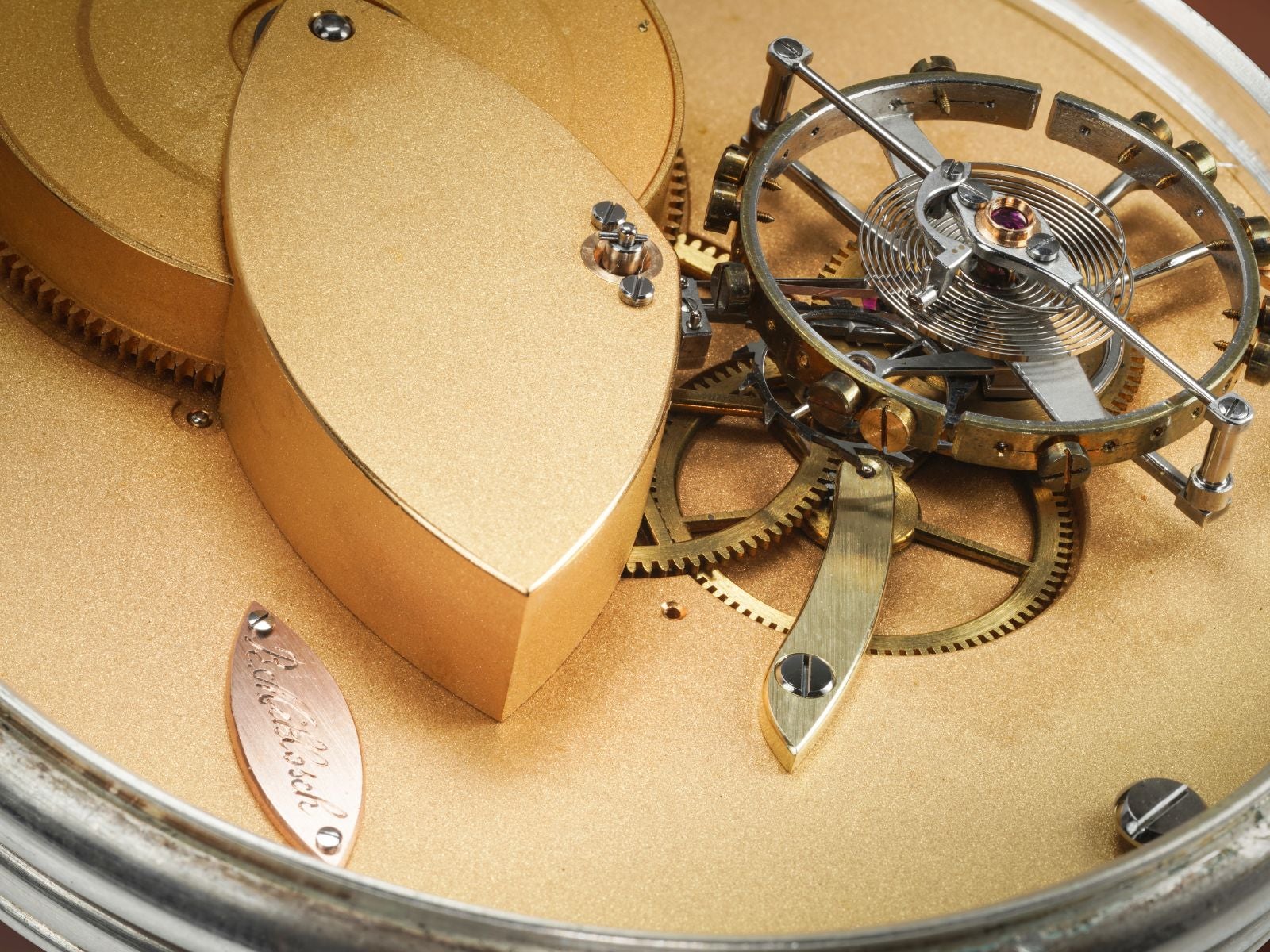
Lot 61: A circa 1985 Richard Miklosch flying tourbillon pocket watch with detent escapement in silver, included in The Geneva Watch Auction XXIV. Estimate: CHF 300,000–600,000
Phillips identifies 14 documented watches by Richard Miklosch, each one different. Recognition of that small, varied body of work has brought some striking results: in May 2026, another silver tourbillon pocket watch sold at Cortrie in Hamburg for €900,000 before fees.
Miklosch died in 2014, aged 75. He may never have envisaged how coveted his watches would become. Teaching mathematics provided his livelihood, but his workshop was a classroom, too. At his crowded bench in Aachen, he was a craftsman, teacher, and eager pupil – driven by an appetite for discovery and a willingness to share what he knew.
You can learn more, place a bid, and view the entire Geneva Watch Auction: XXIV catalog here.