Article | A Lange Soehne Glashuette Vintage Pocket Watch Exhibition Dr Helmut Crott Phillips Bacs Russo Geneva Nov Fall 2025
Commemorating 150 Years Since the Passing of Ferdinand Adolph Lange: An Exhibition
An exhibition of rare and unique A. Lange & Söhne and Glashütte precision timekeepers from the former and current collection of Dr. Helmut Crott.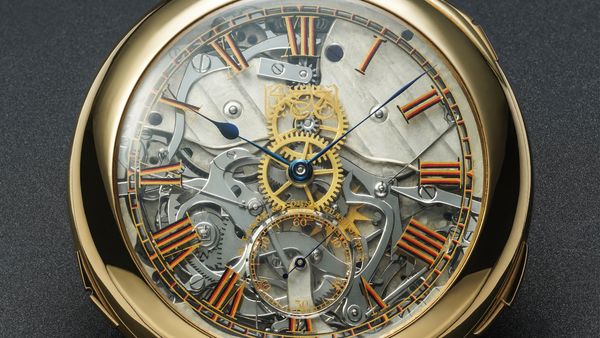
– Text by Dr. Helmut Crott; edited by Logan Baker
A Collector's Journey
This year marks the 150th anniversary of the death of Ferdinand-Adolph Lange. It is an honour to mark this occasion by presenting a selection of rare watches from A. Lange & Söhne, alongside pieces by other Glashütte manufacturers, from my private collection. With the generous support of Phillips in Association with Bacs & Russo, these watches will be shown to an international audience during the upcoming auction previews in Geneva (5-9 November 2025), Hong Kong (15-23 November 2025), and New York (3-5 December 2025).
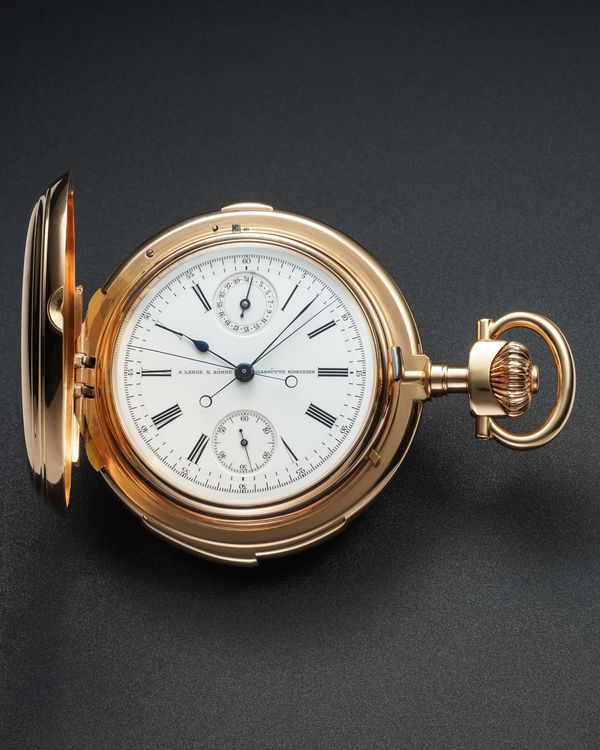
A unique circa 1887 A. Lange & Söhne Quarter-Repeating Split-Seconds Chronograph Pocket Watch No. 18115.
This anniversary is a chance to reflect on the rarity and significance of historic Glashütte watchmaking, especially that of A. Lange & Söhne, and to consider how the legacy continues in today’s Lange production. Fifty years ago, on the centenary of F. A. Lange’s passing, Martin Huber helped spark the renaissance of Glashütte watchmaking with his landmark exhibition of historic timepieces and his book Die Uhren von A. Lange & Söhne, Glashütte in Sachsen (The Watches of A. Lange & Söhne, Glashütte in Saxony). That work helped pave the way for the brand’s rebirth in 1994.
My interest in watches began in 1972, when I opened a small antiques shop in Aachen, Germany. Three years later, I co-founded an auction house specializing in arts and antiques with my then-partner Konrad Schmelzer. We quickly realized that to reach an international audience, we needed to specialize. Around the same time, a group of new watch-focused auction houses and departments was emerging in Zurich, Geneva, and Frankfurt, which inspired us to focus our attention on collectors’ watches. Soon after, I reconnected with a former schoolmate, Richard Miklosch (1939-2014), a self-taught watchmaker known for pocket-watch tourbillons in the Glashütte style. After I told him about my growing interest in watches and my plans to organize dedicated watch auctions, he looked at me kindly, produced a gold pocket watch from his waistcoat, and called it “the best precision watch ever made.” Although I still had only a rudimentary knowledge of watchmaking, I was immediately struck by the movement’s beauty. It was one of the famous flying tourbillons from the Glashütte watchmaking school, made in circa 1930 by Max Hahn. That was my “aha” moment – the spark that set me on this path.
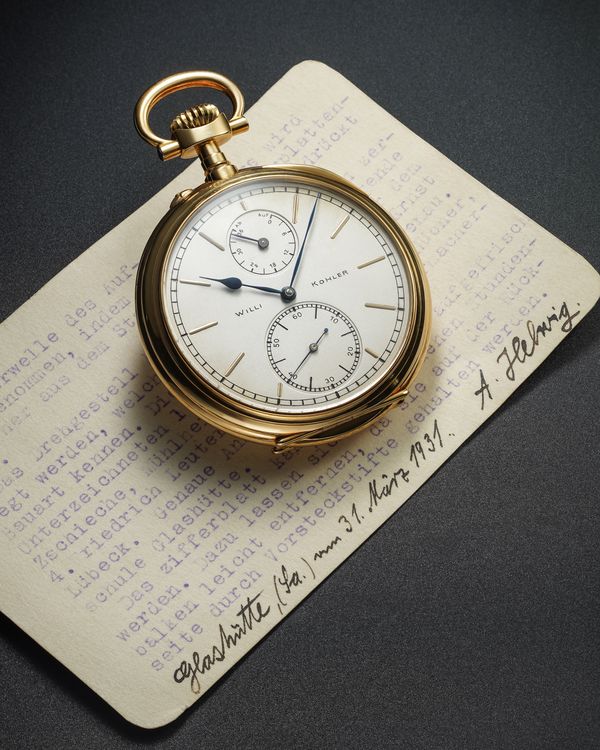
A circa 1928/29 Wilhelm Kohler Flying One-Minute Tourbillon Up/Down Pocket Watch No. 3607, completed while Kohler was at the D.U.S. watchmaking school under the tutelage of Professor Alfred Helwig.
From then on, Glashütte timepieces, especially those by A. Lange & Söhne, became the heart of my passion. I still remember the thrill of acquiring my first Lange around 1975, a gold open-face pocket watch in 1A quality, purchased at an antiques market in Stuttgart from Mr. Tölke, a noted Lange collector and scholar. Beyond their rarity and craftsmanship, these watches embodied something deeper: the remarkable achievement of establishing a world-class watchmaking industry in Saxony’s remote Ore Mountains, far from the traditional watchmaking centers in Switzerland and Paris.
In the early 1970s, collectors still favored timepieces from the 16th to 18th centuries. But interest soon shifted to 19th and early 20th-century precision pocket watches, and Glashütte creations became coveted.
“Lange watches were rediscovered in the 1960s by watch collectors who were fascinated by the quality and technical sophistication.” – Martin Huber, Die Uhren von A. Lange & Söhne Glashütte in Sachsen.
Another key figure in the growing appreciation and perception of Glashütte watchmaking was Kurt Herkner. A former student of the German Watchmaking School, he maintained ties to Glashütte – including the watchmakers’ guild – throughout the Iron Curtain years. His 1978 book Glashütte und seine Uhren provided collectors with a wealth of new information, keeping the subject alive at a time when knowledge was scarce.
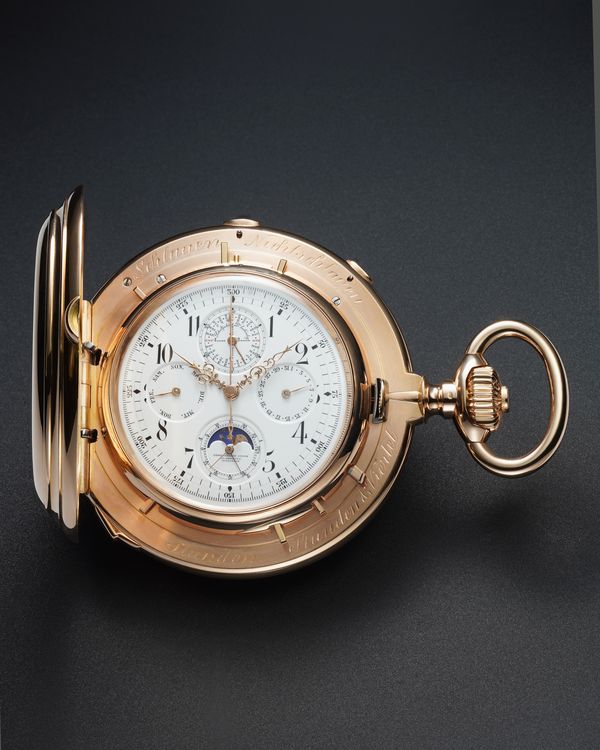
A circa 1902 Uhrenfabrik Union Grande Complication Pocket Watch No. 44502 with Grande and Petite Sonnerie, Minute Repeater, Split-Seconds Chronograph, and Perpetual Calendar. Only six Grande Complication watches were ever completed by Union Glashütte.
Milestone auctions further cemented recognition. I still recall attending the 40th Peter Ineichen sale in Zurich in 1981, where two masterpieces of Glashütte watchmaking crossed the block: the legendary “World Exhibition Tourbillon N°41000,” and Bruno Reichert’s flying tourbillon N°2973, with its chain-and-snail (fusée) mechanism. Both fetched extraordinary sums of over CHF 500,000, confirming Glashütte’s stature. Over a decade later, Lange’s 1994 Pour le Mérite tourbillon wristwatch would echo Reichert’s innovation by using the same planetary gear principle inside the snail cam – a brilliant link across seventy years of horology.
For me, Glashütte watchmaking has always been a story of passion and perseverance. Throughout my 50+ year career, there was no journey too far and no risk too great to acquire a rare Glashütte watch. In 1979, I traveled to the GDR, hoping to find treasures at the source. After several false starts, a forbidden detour to Leipzig led me to a small watch shop where I saw a beautiful chronometer model from the German Watchmaking School, signed “Willy Minkewitz, Mockau B/Leipzig.” I was told it was not for sale – it was the owner’s father’s masterpiece. On impulse, I offered him all the cash I had, 7,000 Deutsche Marks – a considerable sum of money at the time – and he agreed. I was overjoyed, but transporting it out of the GDR was another challenge. Luckily, the seller proposed a solution. As his grandparents were pensioners, they had a visa for an upcoming trip to the Federal Republic of Germany. They agreed to smuggle the watch across the border in their luggage. Two weeks later, I received it in West Germany, and on 27 October 1979, it took a place of honour in my auction catalogue.
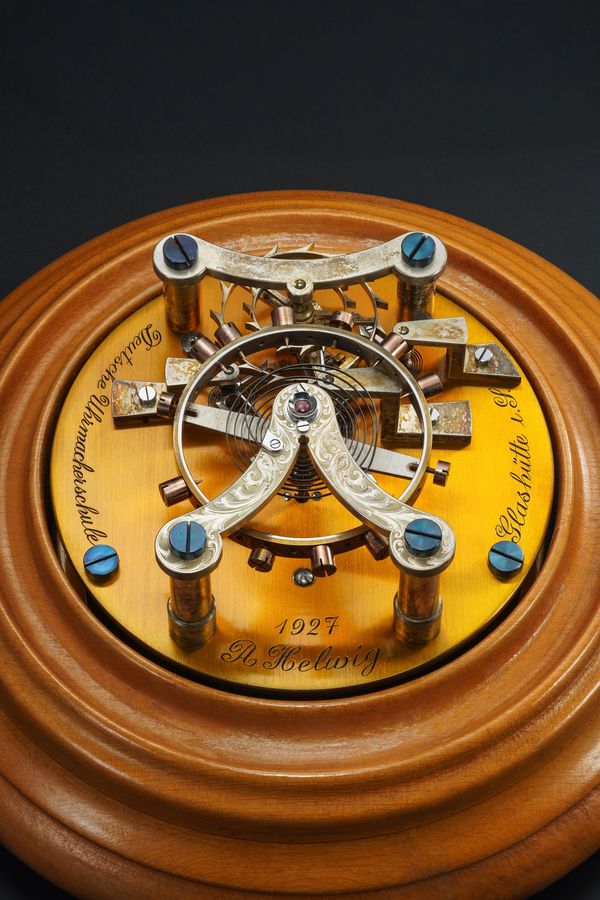
A 1927 model of a chronometer escapement with constant force, by Professor Alfred Helwig.
There have been disappointments over the years, too. I still feel the pain of having to return the World Exhibition Tourbillon to its owner shortly after purchasing it; he had changed his mind about parting with it. But these moments only underline the emotions tied to Glashütte.
Perhaps my proudest moment came when I planned and hosted a special Glashütte thematic auction in April 1991 in Frankfurt. By the mid-1980s, the rise of “vintage” wristwatches had begun to compete with the market for pocket watches, pushing prices downward, including for historic Glashütte pieces. My intention was to counter this trend with a focused auction of watches by A. Lange & Söhne and other Glashütte makers. The fall of the Berlin Wall in 1989 and German reunification in October 1990 provided the final impetus. With friends and colleagues, we gained access to the old Lange archives, stored in the GUB (Glashütter Uhrenbetriebe GmbH) “salon,” and photographed records related to the watches featured in my auction.
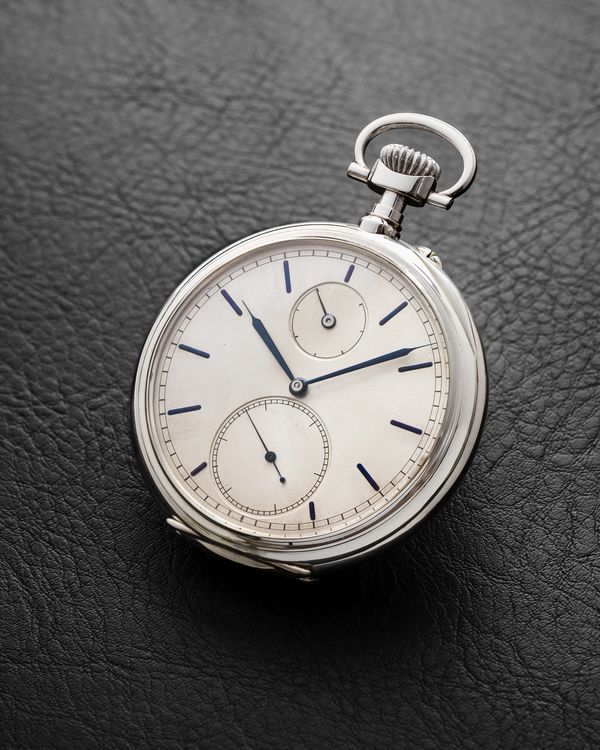
A circa 1934 Hans Carl Conrad Flying One-Minute Tourbillon Up/Down Pocket Watch No. 3834, completed while Conrad was at the D.U.S. watchmaking school under the tutelage of Professor Alfred Helwig. The tourbillon was regulated by Helwig himself. This watch was awarded first prize in the precision pocket watch trial at the German Naval Observatory in Hamburg in 1939/1940.
I also sought support for the auction from Günter Blümlein, the visionary leader behind the revived A. Lange & Söhne. On this occasion, we also met Walter Lange and Martin Huber – the latter being a key figure behind the scenes in the revival of the A. Lange & Söhne brand.
Unfortunately, the timing did not align with the company’s schedule, but the encounter strengthened my resolve. The final catalogue of my thematic auction included the A. Lange & Söhne Grande Complication N°99901 (formerly part of the Wuppertal Watch Museum collection), the A. Lange & Söhne Tourbillon N°42501 in its ceremonial Professor Graff case, among more than 140 other remarkable examples of fine Saxon watchmaking.
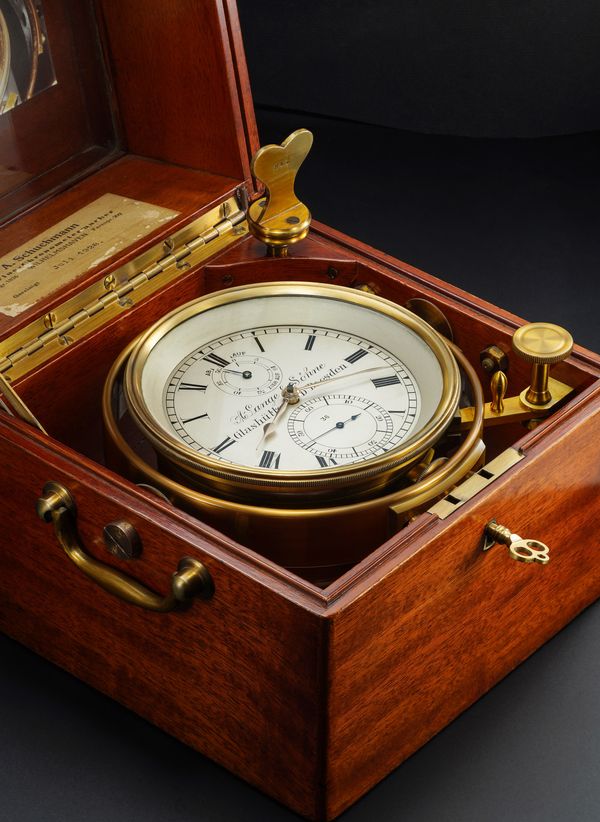
A circa 1904 A. Lange & Söhne Marine Chronometer No. 36 made for the German Imperial Navy.
We previewed the sale across Germany and, in Dresden, met with several retired Glashütte watchmakers, including Helmut Fischer, a former regulator at A. Lange & Söhne. The historian Reinhard Meis was also present, as was the mayor of Glashütte; the future director of the German Watch Museum, Reinhard Reichel; and, of course, Walter Lange and his wife. The atmosphere was joyous; Glashütte was once again attracting international attention. Looking back, I can say with pride that it is unlikely that a collection of Glashütte watches of that caliber will ever be assembled for sale again.
The inauguration of the Glashütte Watch Museum in 2008 marked a significant milestone in the recognition of the Glashütte watch industry. Financial provisions from the Swatch Group and impulses from supporters such as Professor Herbert Dittrich and Dr. Frank Müller, the former managing director of Glashütte Original, helped to create a magnet that today attracts thousands of watch aficionados from around the world.
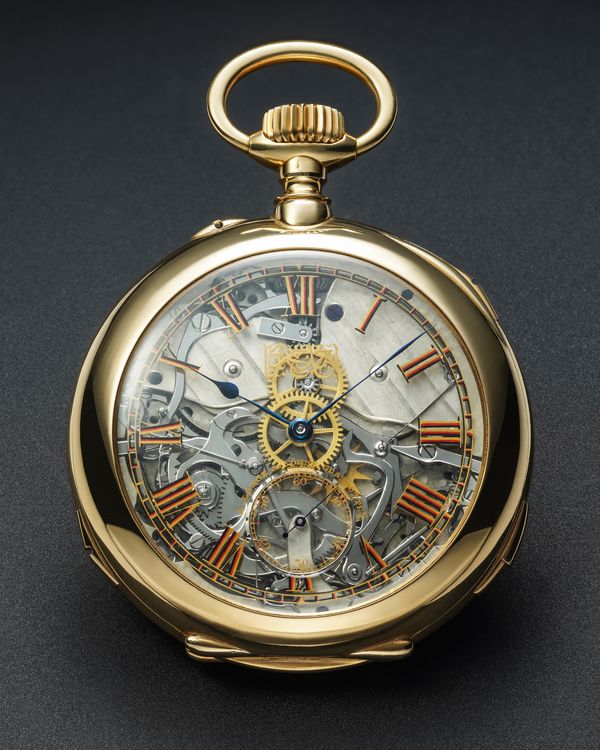
A unique circa 1911 A. Lange & Söhne Grande & Petite Sonnerie Pocket Watch No. 62510 with minute repeater and mineral glass dial and caseback.
With this special exhibition in 2025, I would like to inspire watch lovers around the globe about the magnificent historical Glashütte timepieces and share my conviction that this fascinating little town does matter and why it continues to stimulate collectors today, also in providing an understanding of the enormous success of Lange watches of the modern era.
I would like to express my gratitude to the entire Phillips team for their support in realizing this project, with particular thanks to Aurel Bacs and Livia Russo, Geneva directors Alexandre Ghotbi and Tiffany To, organizer Diana Ortega, editor Logan Baker, and videographer Arthur Touchais.
The History of the Glashütte Watchmaking Industry
Glashütte’s rise began in 1845, when Ferdinand Adolph Lange founded a watchmaking workshop in Saxony’s Müglitz Valley. Dresden’s long horological and scientific tradition – its guilds, the court’s patronage, and the Mathematisch-Physikalischer Salon – formed the intellectual soil that made Glashütte possible. Dresden nurtured precision timekeeping from the 18th century onward, with makers like Köhler and Seyffert building early precision pendulum clocks and establishing the city’s first time service. Railways and timetables then drove demand for accurate clocks across Saxony, creating space for new centers of production alongside London, Geneva, and Paris.
THE FIRST GENERATION: FERDINAND ADOLPH LANGE
F.A. Lange (1815-1875) had a goal. He aimed to produce high-grade watches in Glashütte that could compete with Swiss products. This plan also served a social need – silver mining in the Ore Mountains had collapsed, and the Saxon government backed his proposal to create skilled jobs in Glashütte.
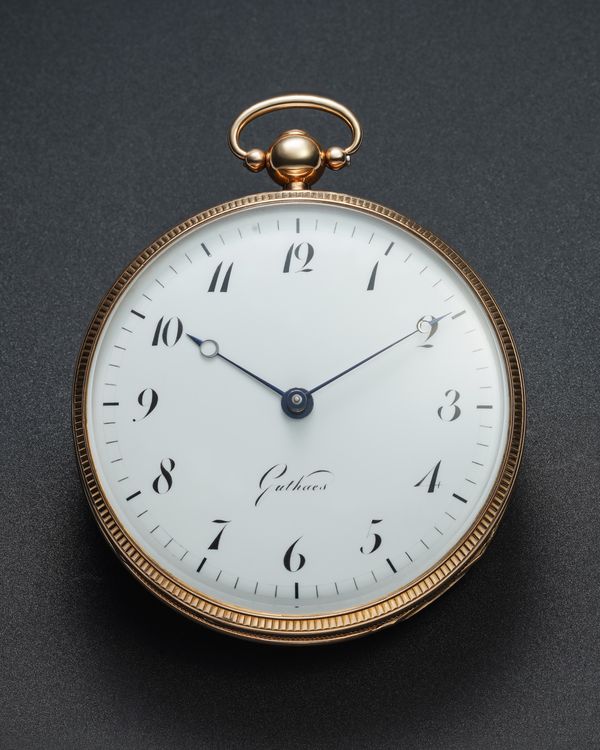
A circa 1820 Johan Christian Friedrich Gutkaes Pocket Watch No. 9.
Trained by Johann Friedrich Gutkaes in Dresden and by Winnerl in Paris, Lange opened his first workshop in Glashütte on 7 December 1845 with 18 apprentices. Early movements, up to serial N°7000, were signed “G&L” for Gutkaes & Lange. The firm operated as A. Lange & Comp. Uhrenfabrikation Glashütte in Sachsen, until his eldest son Richard joined the business in 1868, introducing the name we know today: A. Lange & Söhne.
From the beginning, Lange focused his production on lever escapements rather than the cylinder type, which was then in favor. He first used pin-lever designs for ease of manufacture, then adopted jeweled lever escapements. Around 1852, the signature Glashütte anchor escapement with gold lever and gold escape wheel was introduced. He developed a new compensation balance by fusing steel and brass, and by 1865, refined the movement architecture from a two-thirds plate to the now-classic three-quarter plate. He also pursued keyless work early on, developing crown winding and hand-setting solutions in parallel with contemporaries such as Adrien Philippe and Jules Jürgensen.
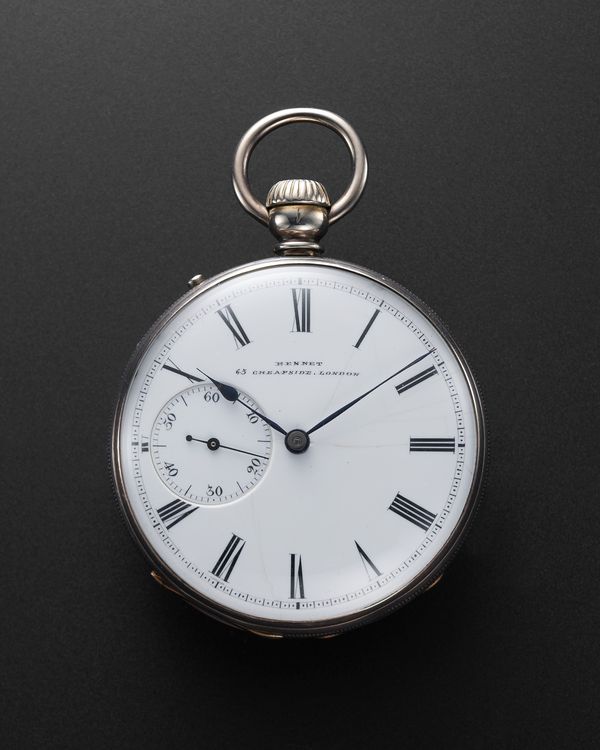
A circa 1855 A. Lange Pocket Watch No. 2188 with early crown winding mechanism.
Lange’s watchmaking character had reached its mature form: three-quarter plate, gold lever and escape wheel, engraved balance cock, and disciplined finishing. This architecture set the quality standard for Glashütte and the German school well into the 20th century. Lange also fostered a network of specialist suppliers in Glashütte that underpinned the town’s productivity – even inviting his own employees to set up their own workshops. When he died on 3 December 1875, the local watch industry was flourishing.
THE SECOND GENERATION: RICHARD AND EMIL LANGE
Richard Lange (1845-1932) trained under Moritz Grossmann, followed by a four-year stint at his father’s firm, then spent four years abroad, including at Vissière in Le Havre and with chronometer-maker Böhme in London. In 1868, he became a partner at the newly rechristened A. Lange & Söhne. A gifted technician, Richard improved movements continuously and secured numerous patents. Rapid growth led to the construction of a new headquarters in 1873.
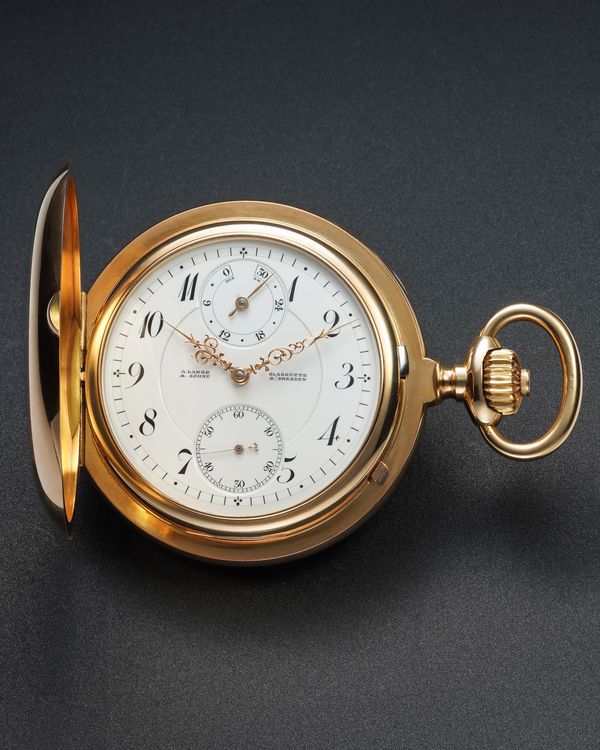
A circa 1890 A. Lange & Söhne Pocket Watch No. 29182 with date.
Richard Lange, who had devoted himself exclusively to scientific developments in the field of watch technology since 1910, continued to track technical progress in the watch industry well into his old age. At the advanced age of 84, Richard Lange made his most important invention.
Reinhard Meis writes analogously, on this subject, in his book A. Lange & Söhne Munich Callwey Verlag, 1997:
“He saw a possibility to improve the previously deployed El-Invar hairspring, which lacked elasticity, by adding a small percentage of beryllium to increase its hardness. This underappreciated invention by Richard Lange ultimately led to the introduction of the Nivarox balance spring by Reinhard Straumann. Lange thus made a significant contribution to one of the most important inventions of modern times in the Swiss watch industry.”
Emil Lange (1849-1922) joined the family business in 1871, managing commercial affairs. He secured long-term relationships with Swiss suppliers, including dialmakers, and specialist producers crafting mainsprings, hairsprings, and eventually, components for complications. He favored substantial precious-metal cases and commissioned richly engraved work from Dresden artists such as Prof. Graff and Prof. Pape.
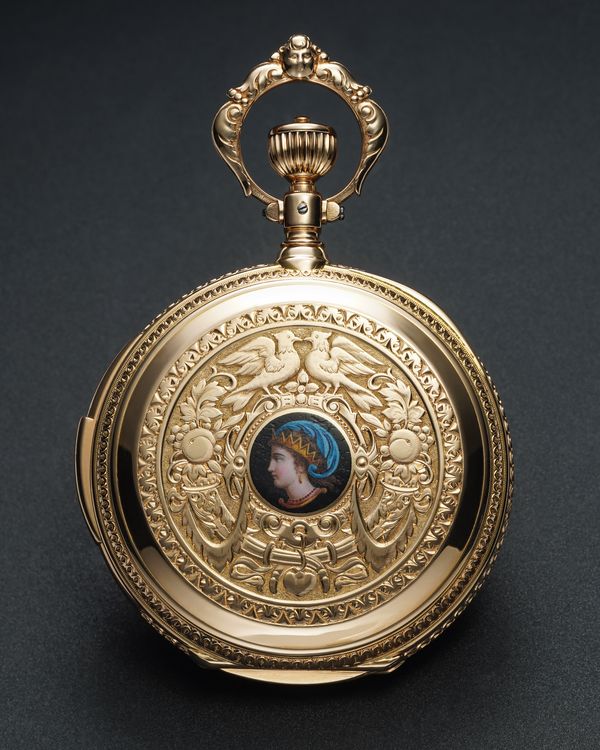
A circa 1898 A. Lange & Söhne Quarter-Repeating Pocket Watch No. 34707 with Professor Graff’s Renaissance-style case.
A. Lange & Söhne’s production continued to expand, now including everything from observation watches for naval use to marine chronometers; precision pieces adopted Guillaume bimetallic balance wheels made of nickel-steel.
Until the end of the 19th century, A. Lange & Söhne was the dominant watch manufacturer in Glashütte. Competition arrived with Glashütter Präzisionsuhrenfabrik AG in 1904 and Nomos-Uhr-Gesellschaft in 1908, which pursued more industrial manufacturing that relied on imported Swiss movements. Lange maintained largely hand-worked methods and offered two quality lines: ALS for top-grade and DUF (Deutsche Uhrenfabrikation) for high-quality watches at more accessible prices.
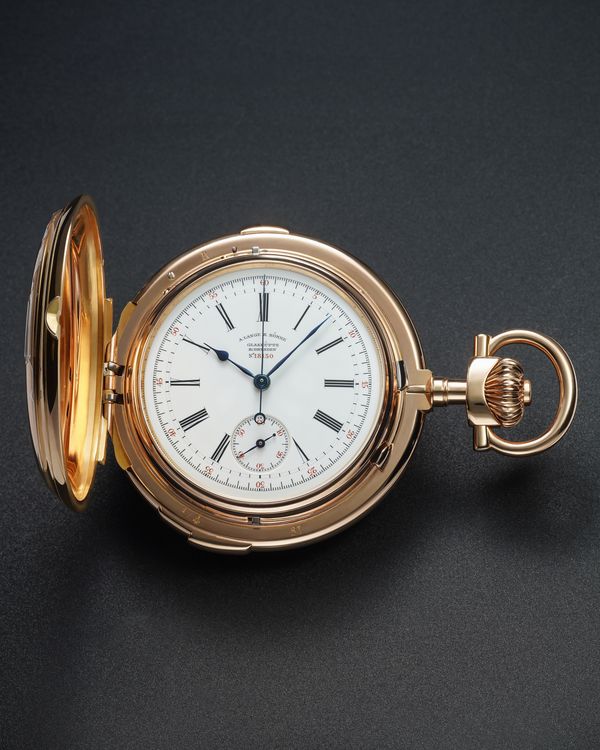
A circa 1886 A. Lange & Söhne Grande and Petite Sonnerie Pocket Watch No. 18130 with quarter repeater and chronograph.
World War I marked a turning point. In 1914, at the start of the war, A. Lange & Söhne and other local watch producers were forced to lay off a large portion of their workforce. That same year, the German Empire banned imports of Swiss watches and movements, creating a domestic shortage. In 1918, DPUG (Deutsche Präzisions-Uhrenfabrik in Sachsen GmbH) was founded, introducing strong local competition and state coordination of domestic production.
It wasn’t that people in Glashütte didn’t want to acknowledge the trend towards wristwatches or hadn’t recognized it. Wristwatches were already being offered in the 1913/14 sales catalogue of Präzisions-Uhren-Fabrik Aktiengesellschaft.
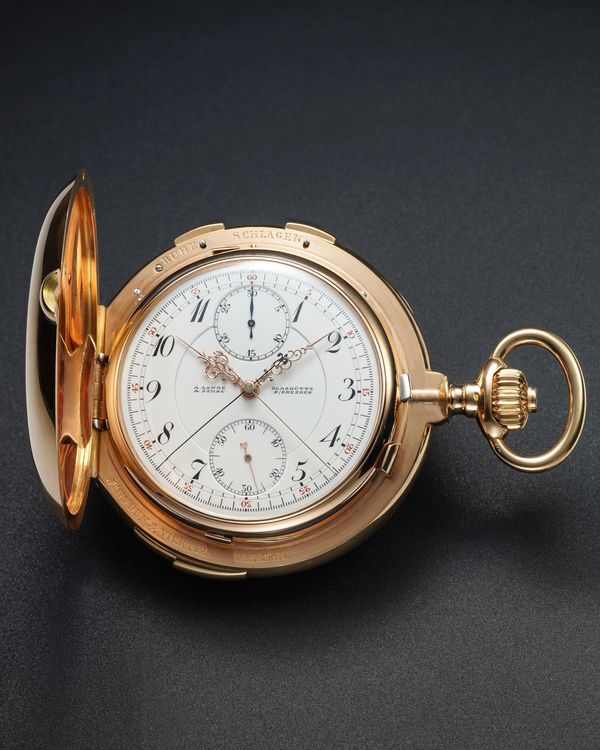
A circa 1913 A. Lange & Söhne Grande and Petite Sonnerie Pocket Watch No. 60032 with Split-Seconds Chronograph.
In 1926/27, under the leadership of Dr. Ernst Kurtz (1899-1996), the bankruptcy estate of Präzisions-Uhren-Fabrik Aktiengesellschaft gave rise to UROFA (Uhren-Rohwerke-Fabrik Glashütte AG) and UFAG (Uhren-Fabrik AG). The establishment of wristwatch production by UFAG in Glashütte in 1927 is thanks to Dr. Ernst Kurtz and Paul Löwe, whose names deserve greater recognition.
THE THIRD GENERATION: OTTO, RUDOLF, AND GERHARD LANGE
Otto Lange (1878-1971), the eldest son of Emil, joined the company in 1906 and led technical development. His two brothers were Rudolf (1884-1954), who managed A. Lange & Söhne’s commercial operations, and Gerhard (1892-1969), who excelled in economics. On 7 December 1920, the firm marked its 75th anniversary and introduced the utilitarian OLIW (Original Lange Internationales Werk) to address a changing market. The 1929 economic crisis sharply reduced demand for precision pocket watches. To enter the wristwatch market more aggressively, Lange opened a Geneva office in 1927 and sourced movements from Manufacture des Montres Niton SA. In the 1930s, it also used raw calibres from Montres Altus SA.
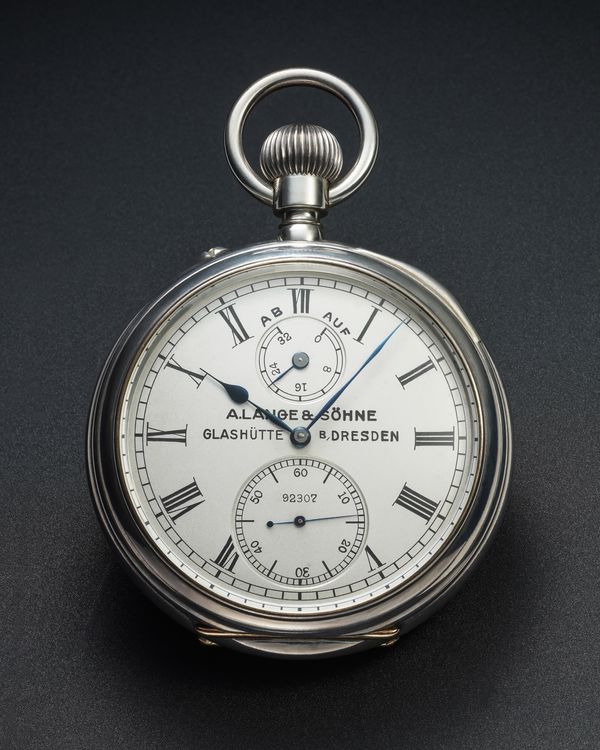
A circa 1937 A. Lange & Söhne Half-Second Chronometer Deckwatch No. 92307 with Glashütte pivoted detent escapement and power reserve indicator.
Under National Socialist rule, the economy recovered. Lange was politically controlled like other firms, but retained formal independence. Aviation and naval contracts created heavy demand for marine chronometers, deck watches, and pilots’ watches. The calibre 48 with small seconds, and calibre 48.1 with centre seconds, were developed quickly. The 48.1, with black dial and luminous numerals, served in oversized pilots’ watches. The calibre 48 introduced a power-reserve display based on Otto Lange’s patent N°732162, a concept revived in contemporary Lange wristwatches.
By the end of the war, the company had produced approximately 7,000 pilots’ watches with central seconds, roughly 5,450 deck watches, and around 600 standardized chronometers – about 13,500 precision watches for military use – work that kept A. Lange & Söhne alive.
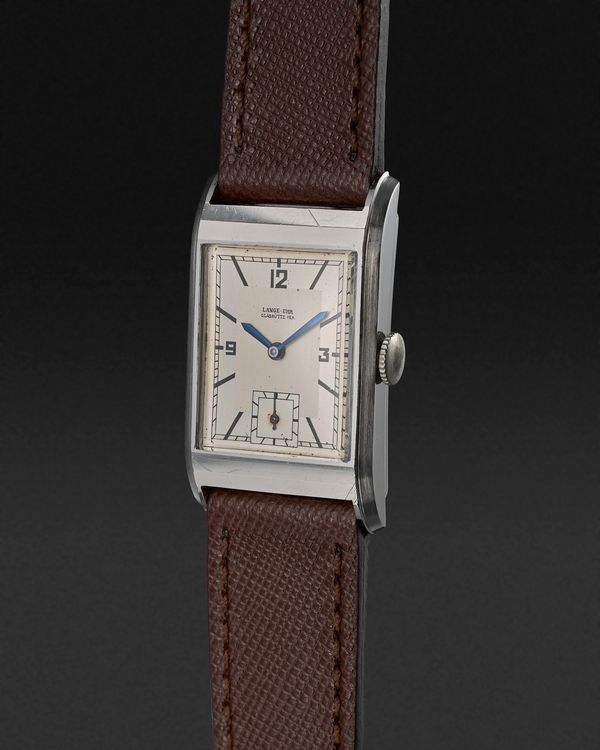
A circa 1940 A. Lange & Söhne wristwatch No. 102116 with Altus Genève movement.
On 8 May 1945, the final day of fighting on the European front of World War II, Russian aircraft bombed the Lange factory in Glashütte. Production quickly resumed in small batches. New wristwatch calibres 28 and 28.1 followed, scaled from the proven calibres 48 and 48.1.
On 1 July 1951, A. Lange & Söhne, UROFA/UFAG, and other domestic watch manufacturers merged to form a single, state-controlled entity, the GUB (Glashütter Uhrenbetriebe). After reunification, GUB eventually evolved into the current Glashütter Uhrenbetrieb GmbH, with its brand Glashütte Original. Meanwhile, the Lange name officially returned under a newly formed company in 1994.
THE FOURTH GENERATION: WALTER LANGE AND THE REBIRTH
Walter Lange (1924-2017), son of Rudolf and great-grandson of F.A. Lange, apprenticed as a watchmaker in the 1930s, served on the Eastern Front in 1942, and returned to Glashütte in 1945 to complete his training. He witnessed the expropriation and restructuring of the family firm. In November 1948, he refused to join the Communist Party and fled west with his brother. They attempted to rebuild the business in Pforzheim, Germany, under the name Lange vormals Glashütte (“Lange formerly Glashütte”), but the effort was unsuccessful.
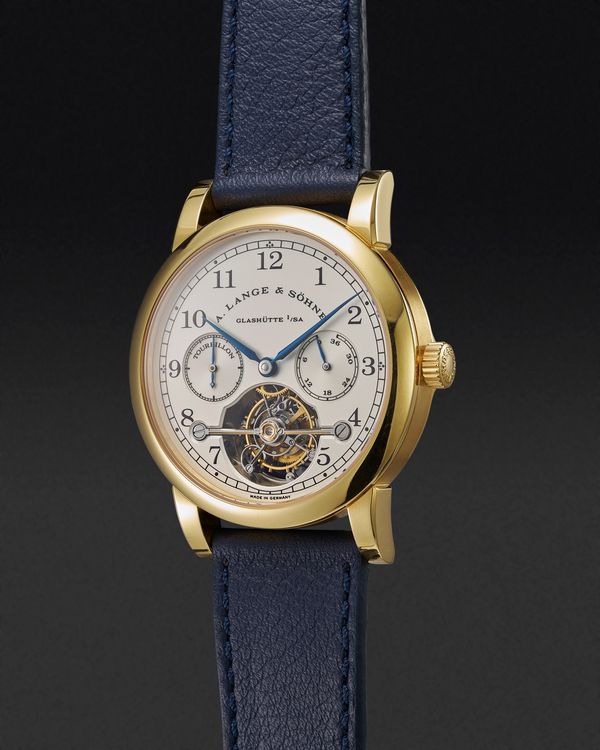
A 1998 A. Lange & Söhne Tourbillon Pour le Mérite Ref. 701.001 wristwatch in 18k yellow gold. No. 73/150.
A new start in Saxony was impossible until the fall of the Berlin Wall. On 7 December 1990, on the day exactly 145 years after F. A. Lange opened his workshop, Walter founded Lange Uhren GmbH in Glashütte, and started to re-register the A. Lange & Söhne name worldwide. He quickly assembled a core team of Glashütte specialists and, with strong industrial and financial support from IWC, worked with Günter Blümlein, Hartmut Knothe, and Reinhard Meis to rebuild a manufacture true to the old standard.
All of Lange’s first employees came from the GUB and the watchmaking school. Hence, without the old structures that still existed, rebuilding the new A. Lange & Söhne would have been difficult.
In October 1994, after four years of design and production, A. Lange & Söhne returned with four watches: the Lange 1, Saxonia, Arkade, and Tourbillon Pour le Mérite. Ever since, the reborn company’s success has made one thing clear: the A. Lange & Söhne legend never faded.
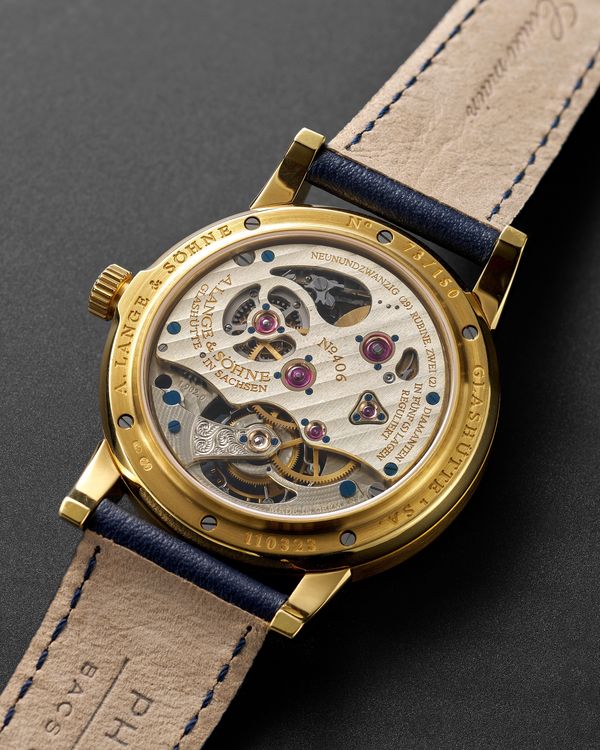
The manual-wind, in-house calibre L902 inside A. Lange & Söhne's 1990s Tourbillon Pour le Mérite
Collectors of Glashütte watchmaking kept it alive through its 50-year hiatus. In his book about Walter Lange, Martin Huber summarises the situation in his afterword as follows: “For me, the rebirth of A. Lange & Söhne is the success story of two people (Walter Lange and Günter Blümlein), in whom idealism and efficiency came together and merged in a very rare way.”
In addition to the rebirth of Lange, the aim at that time was to preserve the Glashütte watchmaking industry with GUB and its 2,000 employees. Günter Blümlein could have taken over GUB for a symbolic price, but this would have jeopardized the rebuilding of Lange.
So it was the difficult task of the Treuhandanstalt, alongside the help of public figures such as Mayor Frank Reichel, Professor Herbert Dittrich, and the then Prime Minister of Saxony, Professor Horst Biedenkopf, to save GUB with its 2,000 employees and thus preserve Glashütte’s cottage industry, which would also have been in line with F.A. Lange’s wishes.
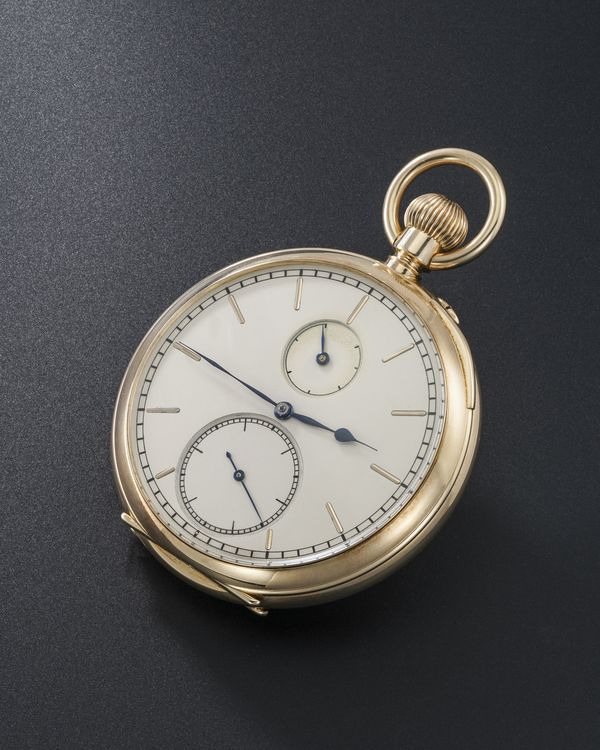
A 1921/1931 Bruno Reichert Flying One-Minute Tourbillon Up/Down Pocket Watch with chain-and-fusee and a tiny planetary gear inside the fusee. A. Lange & Söhne's 1990s Tourbillon Pour le Mérite was the first wristwatch powered by a chain and fusee. Inspired by the Reichert pocket watch seen here, it also incorporated a planetary gear inside the fusee.
A. Lange & Söhne’s renaissance has inspired other local manufacturers. Today, the density of competition in this small town is unparalleled, even by Swiss standards: A. Lange & Söhne, Glashütte Original, NOMOS, Moritz Grossmann, Union, Tutima, Mühle, and others all line up at a stretch of some hundred meters only on Glashütte’s High Street. It was not until the turn of the millennium, when GUB merged with the Swatch Group and began operating under the name Glashütte Original, that independent and high-quality products were developed.
Commemorating 150 Years Since the Passing of Ferdinand Adolph Lange: An Exhibition
An exhibition of rare and unique A. Lange & Söhne and Glashütte precision timekeepers from the collection of Dr. Helmut Crott.
Geneva: 5–9 November 2025
Hotel President, Quai Wilson 47, 1201 Geneva
Enquiries: watchesgnv@phillips.com
Opening Hours: Wednesday – Friday, 10:00 AM – 7:00 PM
Saturday – Sunday, 9:00 AM – 1:00 PM
Hong Kong: 15–23 November 2025
1/F, WKCDA Tower, West Kowloon Cultural District, No. 8 Austin Road West, Kowloon, Hong Kong
Enquiries: watcheshk@phillips.com
Opening Hours: 10:00 AM – 7:00 PM
New York: 3–5 December 2025
432 Park Avenue, New York, NY, United States, 10022
Enquiries: watchesny@phillips.com
Opening Hours: 10:00 AM – 7:00 PM
Curated by Phillips in Association with Bacs & Russo.