Article | Market Pulse Yassaman Ali On The South Asian Art Markets Momentum Modern And Contemporary Art Auction London
Market Pulse: Yassaman Ali on South Asian Art’s Momentum
Phillips’ Director of Middle East & South Asia Regions discusses the market and key works on offer in the upcoming Modern & Contemporary Art Evening & Afternoon Sale in London.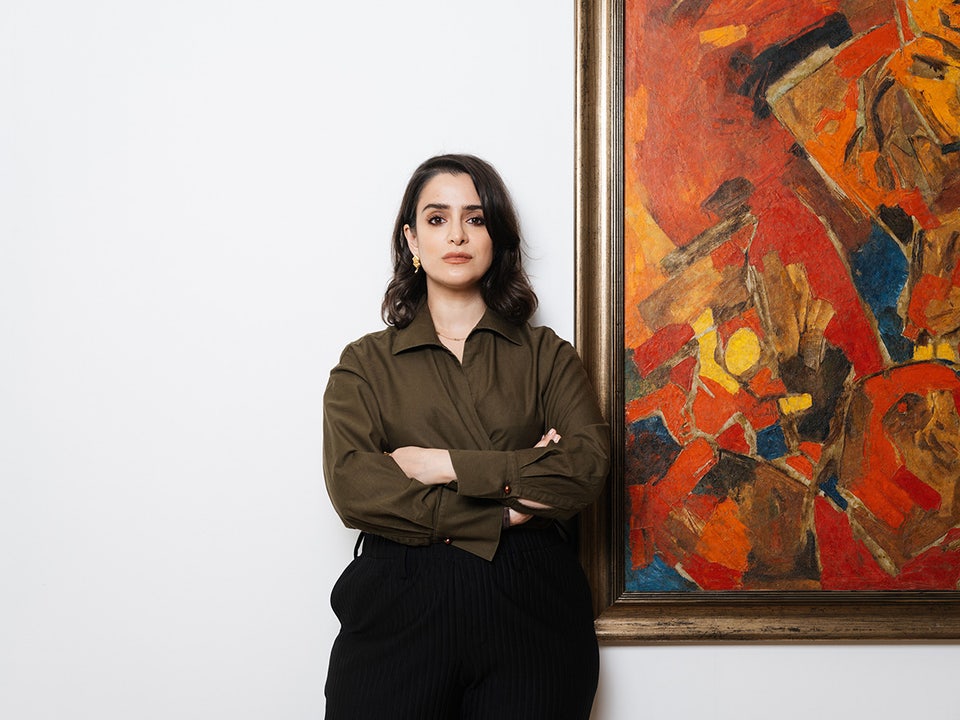
Yassaman Ali with Maqbool Fida Husain’s Untitled, 1974. Modern & Contemporary Art Evening & Afternoon Sale, London.
PHILLIPS: Recently, Phillips has expanded its offering of works by South Asian artists at auction. What is behind Phillips’ push into this category?
YASSAMAN ALI: Phillips is constantly evolving to remain at the forefront of collecting trends and market developments. Given the growing institutional focus on South Asian artists both internationally and particularly in London, it was a natural progression for Phillips to expand its offering of Modern and Contemporary works from South Asia. Alongside this, the category has benefited from an expanding collector base across the region and its diaspora, as well as a broader reassessment of global art history. Increasingly, collectors are recognizing the continuity that exists between generations of South Asian artists and the significant contributions they have made to international modern and contemporary art.
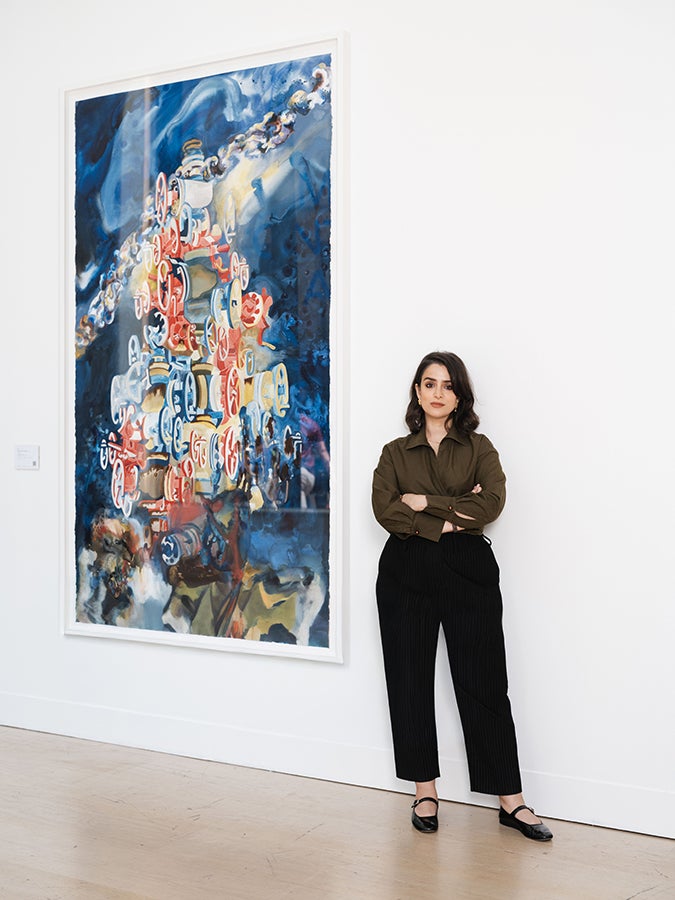
Shahzia Sikander, Sub Blues, 2019–2020. Modern & Contemporary Art Evening & Afternoon Sale, London.
PHILLIPS: What is your sense of the current appetite and market momentum for South Asian art?
YASSAMAN ALI: The strength of the market is evident across a variety of platforms. In addition to strong auction records, South Asian artists are increasingly represented by leading international galleries, the subject of major institutional exhibitions, and prominently featured at regional and international art fairs. Events such as the India Art Fair in New Delhi and Art Mumbai continue to attract significant attendance from collectors, curators and institutions, reflecting growing engagement with the category both locally and internationally.
This rising international interest is also reflected in major global platforms such as the Venice Biennale. This year's edition marked India’s return to Venice after a seven-year absence with the pavilion Geographies of Distance: Remembering Home, which explored themes of memory, migration and belonging. South Asian artists were also visible throughout the wider Biennale, emphasizing the increasingly central role artists from the region play in contemporary artistic discourse. Their works were also included in the main exhibition, presented within a broader curatorial conversation surrounding identity, place, memory and cultural exchange. This reflects a wider shift within the art world towards understanding South Asian artistic practice as an integral part of global art history rather than a separate category, which is precisely why we believe it is important to present these works within our international Modern and Contemporary auctions.
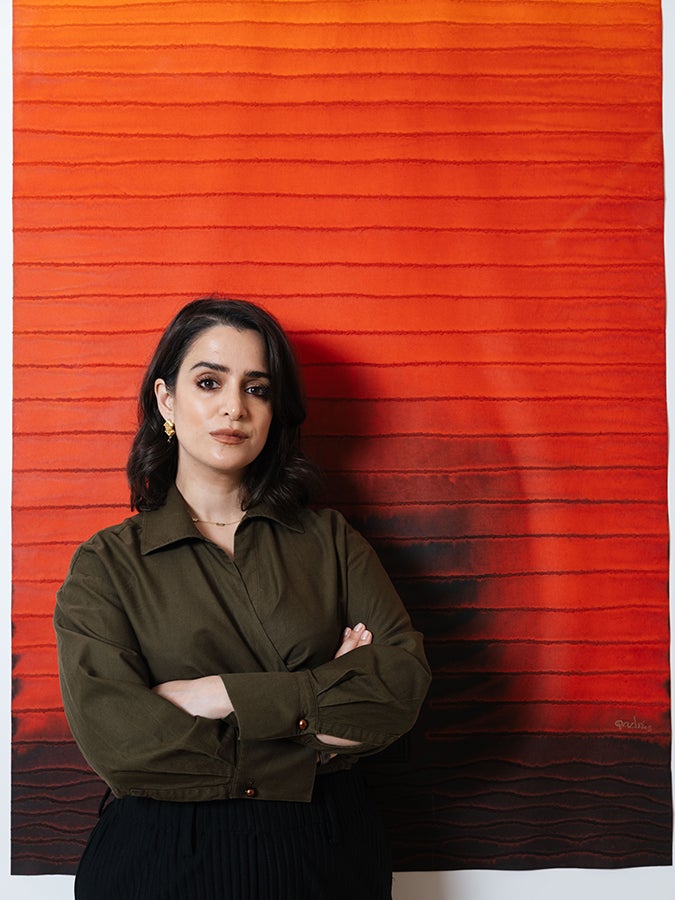
Yassaman Ali with Sohan Qadri’s Agni VI, 2008. Modern & Contemporary Art Evening & Afternoon Sale, London.
PHILLIPS: You recently organized the Crossing Borders selling exhibition at Phillips in association with Grosvenor Gallery. How did this exhibition help introduce new audiences to South Asian artists?
YASSAMAN ALI: We were delighted to present Crossing Borders last summer. The exhibition explored the artistic exchanges that emerged across the region in the decades following independence and partition, while highlighting themes that continue to resonate across generations, including identity, place, migration and cultural memory. Building on the success of that exhibition, we are pleased to continue this dialogue through our Modern and Contemporary auctions, introducing new artists to Phillips and our collector base while placing them within a broader international context.

Lancelot Ribeiro, Landscape, 1965. Modern & Contemporary Art Evening & Afternoon Sale, London.
PHILLIPS: What advice would you give collectors new to this category? And how can these works challenge or enrich a collection that primarily focuses on Western art?
YASSAMAN ALI: For collectors new to the category, I would encourage a combination of viewing works in person, reading and engaging with institutional exhibitions. Recently, several important exhibitions have reflected the growing international recognition of South Asian art. Current examples include Mrinalini Mukherjee: Unbound Forms at The Hepworth Wakefield, Women Sculptors of India and Bangladesh at the Yorkshire Sculpture Park, the work of Bangladeshi artist Soma Surovi Jannat at the Ashmolean Museum, which explores themes of climate and environmental change, and T. Venkanna: Sculpture Garden at Studio Voltaire.
I also think it is particularly inspiring to explore the relationships many South Asian artists maintained with their contemporaries in Britain and Europe. Their careers were often shaped through shared exhibitions, intellectual exchanges and artistic dialogue. South Asian artists were not operating in isolation but were active participants in broader international conversations surrounding modernism and contemporary art. Understanding these interactions allows collectors to view both Western and South Asian art through a more global lens, revealing shared influences, pivotal artistic exchanges and parallel narratives. It also highlights the continuity that exists across generations of South Asian artists. Whether examining the modernist experiments of Lancelot Ribeiro, or the contemporary practices of artists such as Subodh Gupta and Shahzia Sikander, what resonates is the recurring exploration of migration, landscape, memory, identity and belonging.
This philosophy is reflected in our approach at Phillips, where South Asian works are presented within our Modern and Contemporary sales rather than isolated in a separate category. This is something we feel strongly about, as these artists deserve to be viewed within a broader international art historical framework and presented alongside their global contemporaries.
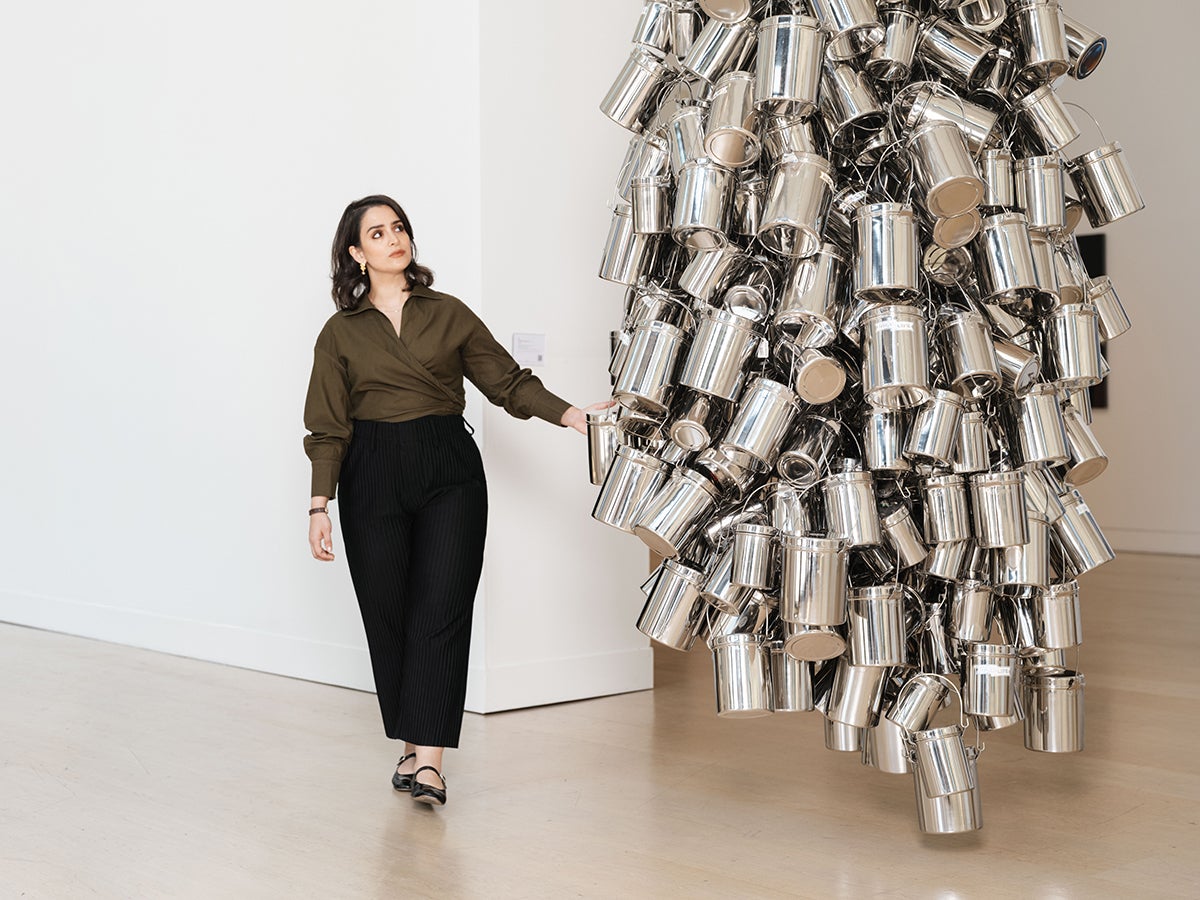
Yassaman Ali with Subodh Gupta’s OK Mili, 2005. Modern & Contemporary Art Evening & Afternoon Sale, London.
For enquiries on these works and more, please reach out to:
Yassaman Ali
Director, Middle East & South Asia Regions
yali@phillips.com
+44 78 8747 3572
Sofia Kolonchina
Head of Sale
skolonchina@phillips.com
+44 7442 364 564
Discover more from Modern & Contemporary Art Evening & Afternoon Sale, London >