13
Yoshitomo Nara
Household Dog
Estimate
$200,000–300,000
Sold For
$185,000
acrylic and lacquer on fiberglass reinforced plastic, cotton and plywood
house 41 x 23 1/2 x 95 1/8 in. (104.1 x 59.7 x 241.6 cm)
dog 11 1/2 x 8 1/2 x 16 1/2 in. (29.2 x 21.6 x 41.9 cm)
dog 11 1/2 x 8 1/2 x 16 1/2 in. (29.2 x 21.6 x 41.9 cm)
Signed and dated "2000 Nara" on the interior of the house. This work is a variant from an edition of 6, in 3 differing roof colors.
Full-Cataloguing
"Rather than merely offering the work for the viewers to see face-on, I want to trigger their imaginations. This way, each individual can see my work with his or her own unique, imaginative mind. People with imaginative minds can perhaps see something more than I can." Yoshitomo Nara
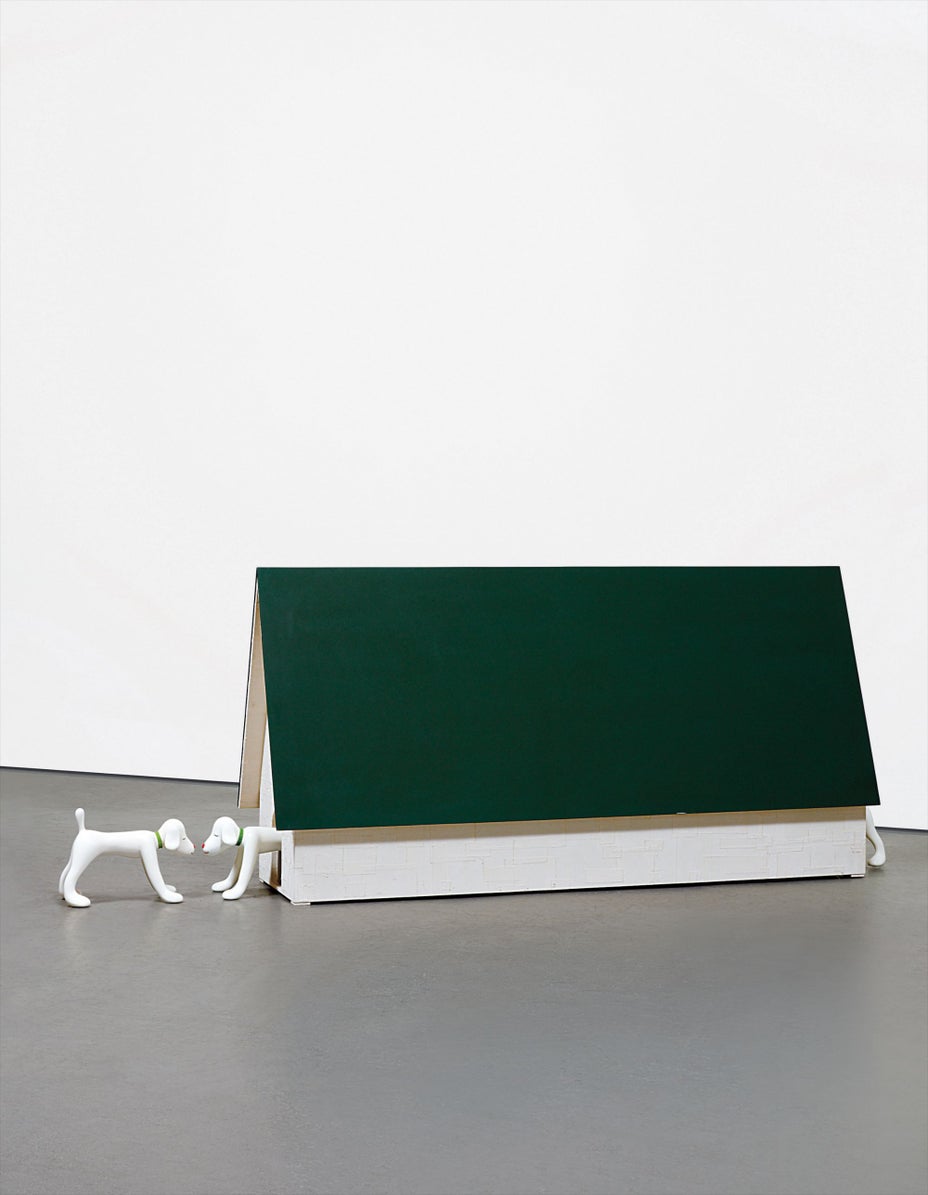
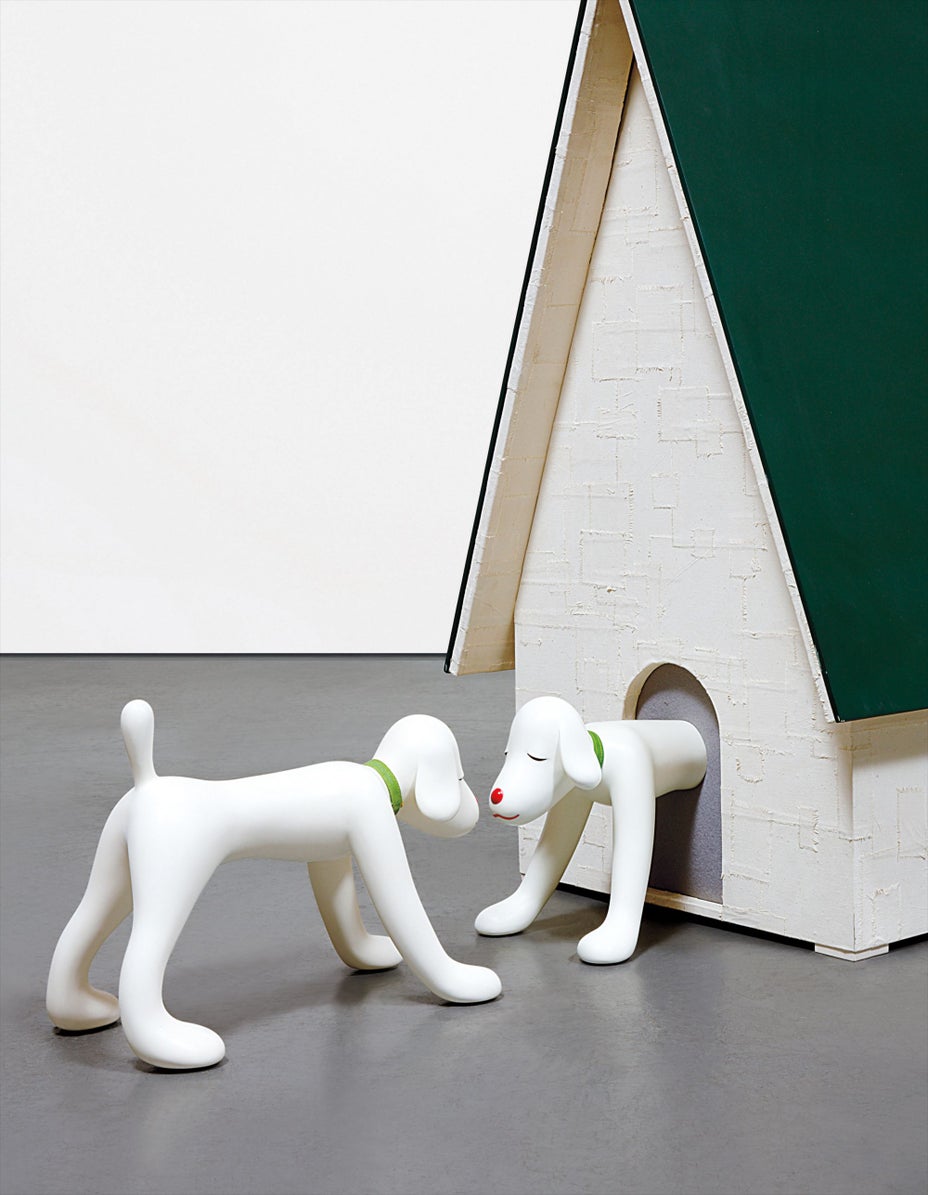
Executed in 2000, Household Dog is one of Yoshimoto Nara's sculptures whose outwardly innocent forms encapsulate a deeply held set of emotions that spans childhood memory, spirituality, and loneliness. Executed in his characteristically playful style, these cartoon-like renditions of two puppies – one left out and roaming free, the other trapped within the confines of his house – provoke a strong emotional reaction, but they also possess strong spiritual and autobiographical qualities, which reach into the heart of Nara's unique brand of art-making. The puppy as alter-ego is one of the most pervasive motifs within Nara’s oeuvre. Here, the viewer is confronted with a discordant image, that of a dog whose body manages to span the entirety of its house – its head and forequarters protruding from the front while its tail and hindquarters jut out the back. This creature manages not simply to have one foot in and one foot without, but rather is both inside and outside simultaneously. Its companion gazes on, but the blank expressions on both obfuscate a clear reading of their relationship. The viewer can only understand the distance and disconnect between the two while projecting a connection based on proximity and likeness. Nara’s sculptures and paintings speak to memories and emotions from our childhood that we may have forgotten, but which, as is made evident upon reflection in front of the work, still exist somewhere in the deep recesses of our subconscious. Exemplary examples of his sculptural work, such as Household Dog, beg the viewer to question perceived boundaries between the established ideas of childhood and adulthood in contemporary society, all in a visually stunning and innocently disarming fashion.
Executed in 2000, Household Dog is one of Yoshimoto Nara's sculptures whose outwardly innocent forms encapsulate a deeply held set of emotions that spans childhood memory, spirituality, and loneliness. Executed in his characteristically playful style, these cartoon-like renditions of two puppies – one left out and roaming free, the other trapped within the confines of his house – provoke a strong emotional reaction, but they also possess strong spiritual and autobiographical qualities, which reach into the heart of Nara's unique brand of art-making. The puppy as alter-ego is one of the most pervasive motifs within Nara’s oeuvre. Here, the viewer is confronted with a discordant image, that of a dog whose body manages to span the entirety of its house – its head and forequarters protruding from the front while its tail and hindquarters jut out the back. This creature manages not simply to have one foot in and one foot without, but rather is both inside and outside simultaneously. Its companion gazes on, but the blank expressions on both obfuscate a clear reading of their relationship. The viewer can only understand the distance and disconnect between the two while projecting a connection based on proximity and likeness. Nara’s sculptures and paintings speak to memories and emotions from our childhood that we may have forgotten, but which, as is made evident upon reflection in front of the work, still exist somewhere in the deep recesses of our subconscious. Exemplary examples of his sculptural work, such as Household Dog, beg the viewer to question perceived boundaries between the established ideas of childhood and adulthood in contemporary society, all in a visually stunning and innocently disarming fashion.