107
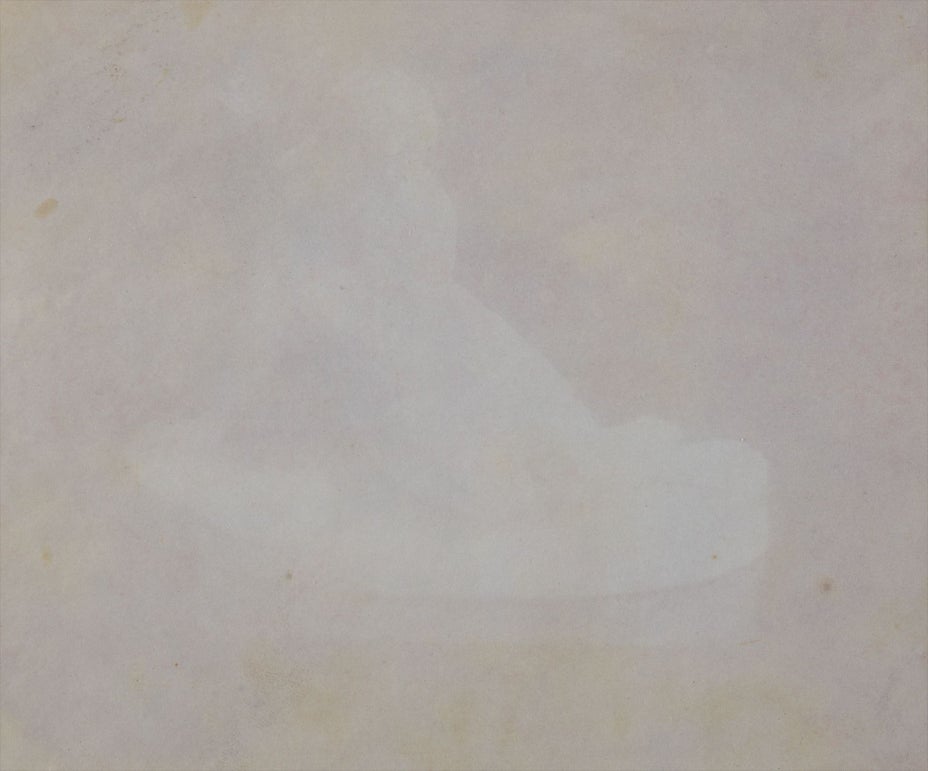
William Henry Fox Talbot
Eve
Estimate
$20,000–30,000
Sold For
$15,000
1840
Salt print from a photogenic-drawing negative.
6 1/4 x 7 1/2 in. (15.9 x 19.1 cm)
Full-Cataloguing
Dating from April 1840, this delicate image is the earliest photograph in this offering of material from Joy of Giving Something Foundation. It is an image from the dawn of photography, when both photographic technique and photographic art were in their formative stages. Eve was made using Talbot’s photogenic drawing process, which involved first coating a plain piece of stationery with a solution of table salt, and then with a solution of silver nitrate; the combination of these created light-sensitive silver chloride.
The first images Talbot made with this light-sensitive paper were photograms, in which he laid objects directly onto the paper and then exposed the paper to light. He next experimented with putting sensitized paper into a camera of his own design. Eve was made by this latter method; Talbot then used the resulting image as a paper negative from which to contact-print the photograph offered here.
From 1834 to 1840, Talbot worked with his photogenic drawing technique, adjusting and improving it every step of the way. The technique would ultimately be displaced by Talbot’s own calotype process, but the primacy of the photogenic drawings cannot be denied. As Talbot authority Larry Schaaf writes, “The body of work that comprises Talbot’s photogenic drawings represents a distinct and exciting phase in both his technical and his aesthetic development. Many of his ideas about photography were embodied in examples of this early period” (“On the Art of Photogenic Drawing,” Sun Pictures, Catalogue Seven, p. 9).
The first images Talbot made with this light-sensitive paper were photograms, in which he laid objects directly onto the paper and then exposed the paper to light. He next experimented with putting sensitized paper into a camera of his own design. Eve was made by this latter method; Talbot then used the resulting image as a paper negative from which to contact-print the photograph offered here.
From 1834 to 1840, Talbot worked with his photogenic drawing technique, adjusting and improving it every step of the way. The technique would ultimately be displaced by Talbot’s own calotype process, but the primacy of the photogenic drawings cannot be denied. As Talbot authority Larry Schaaf writes, “The body of work that comprises Talbot’s photogenic drawings represents a distinct and exciting phase in both his technical and his aesthetic development. Many of his ideas about photography were embodied in examples of this early period” (“On the Art of Photogenic Drawing,” Sun Pictures, Catalogue Seven, p. 9).