130
Victor Kullberg
"One Minute Tourbillon Chronometer with Earnshaw Spring Detent Escapement*
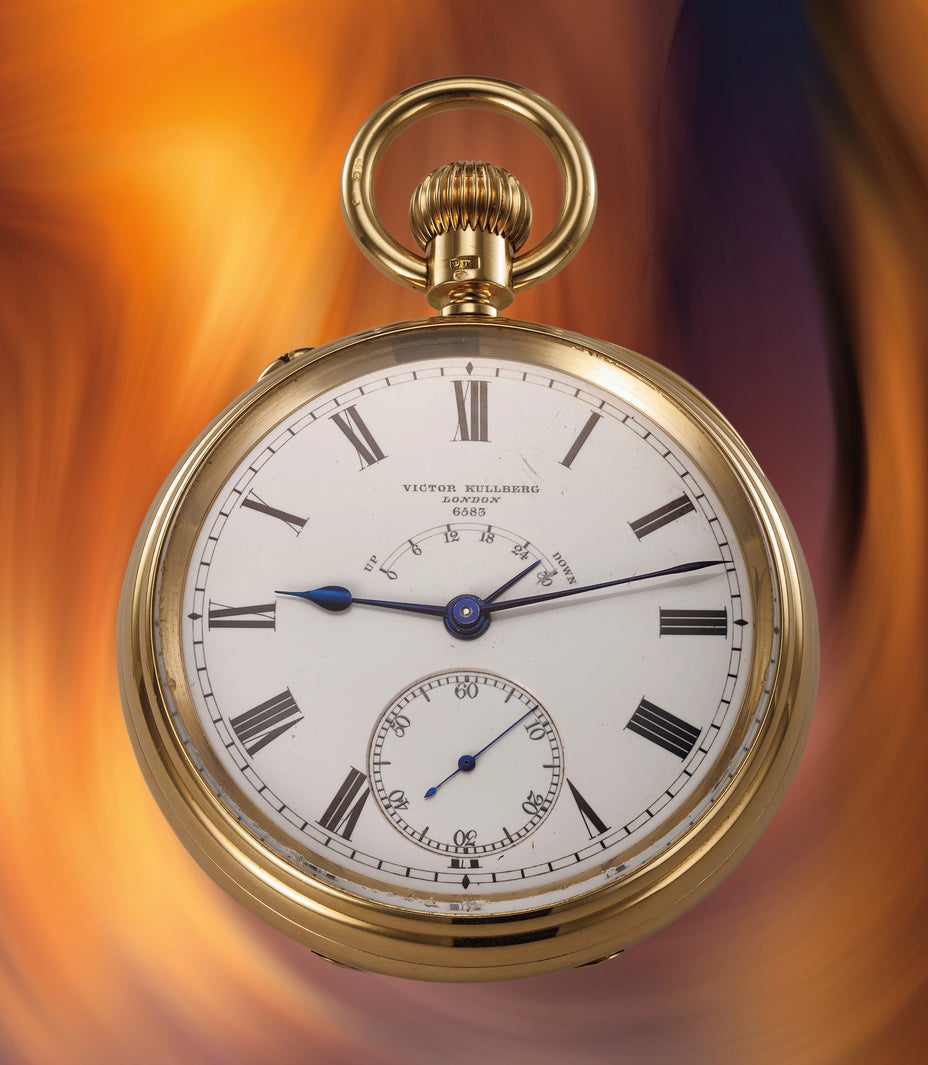
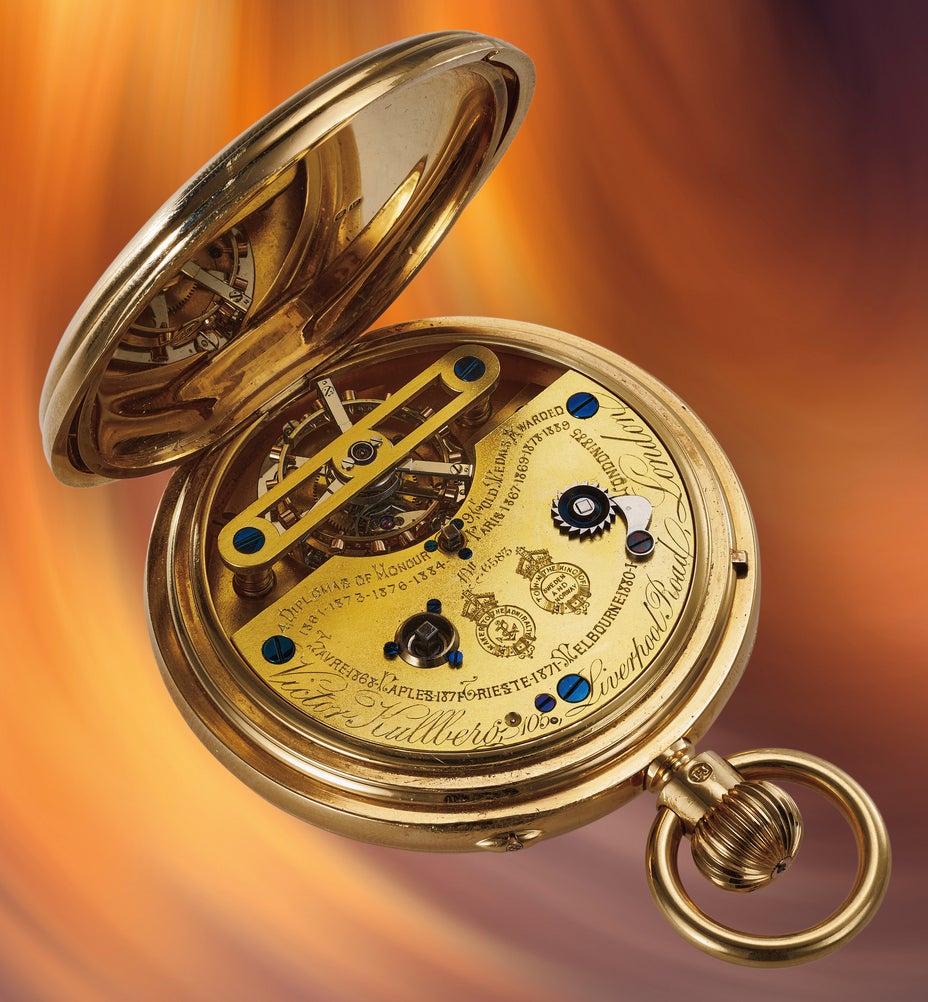
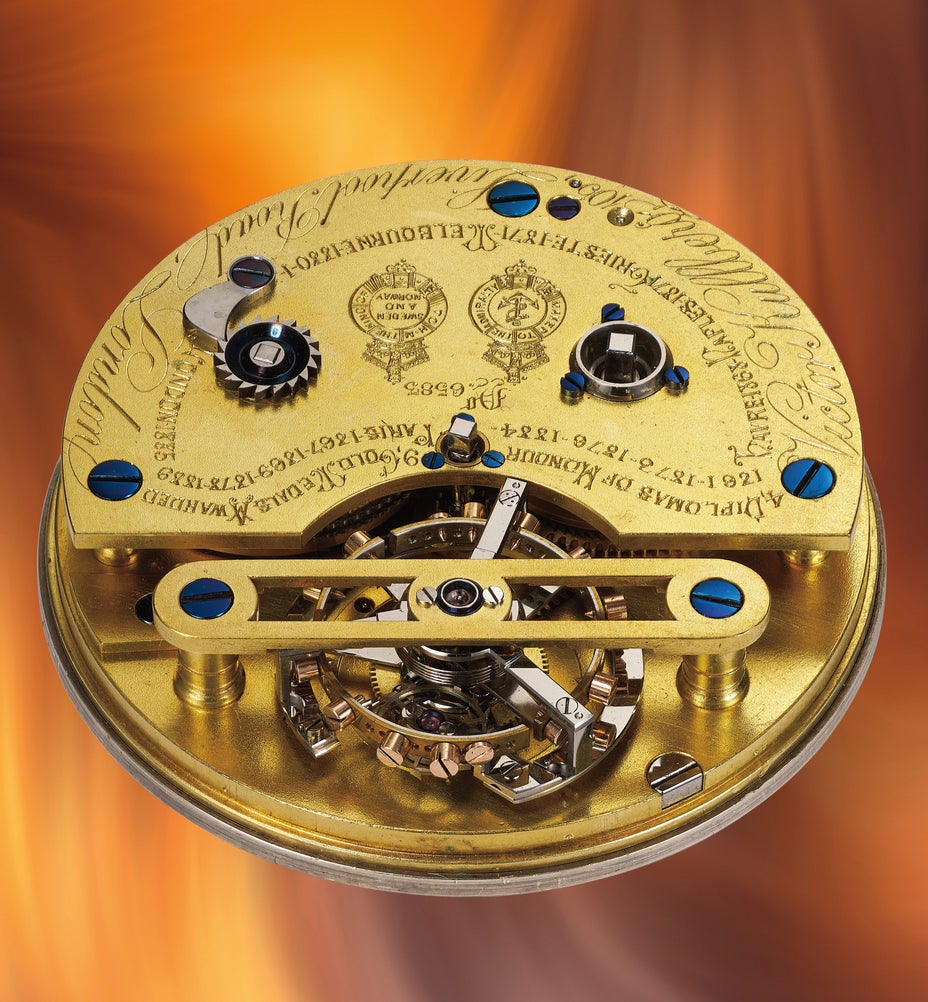
An impressive yellow gold open face one minute tourbillon pocket chronometer with Earnshaw spring detent escapement
Estimate
CHF40,000–80,000
€43,500–87,000
$50,800–102,000
Sold For
CHF266,700
Manufacturer
Victor Kullberg
Year
Circa 1890
Movement No
6583
Model Name
"One Minute Tourbillon Chronometer with Earnshaw Spring Detent Escapement*
Material
18k yellow gold
Calibre
Manual
Dimensions
56mm diameter
Signed
Dial and movement signed, case with makers mark FT for Fred Thoms and year letter 1898
Full-Cataloguing
Good To Know:
- Tourbillon chronometer with detent escapment
- Kullberg made only 3 pocket tourbillon chronometers of which this is the only one with detent escapment
In Das Tourbillon, it is recorded that Victor Kullberg produced only three tourbillon pocket chronometers, of which a single example incorporated a detent escapement - the present example.
Born in Sweden in 1824, Kullberg ranks among the most distinguished chronometer makers of the 19th century, supplying marine chronometers to the British, Norwegian, Swedish, Russian and American Navies. After a formative period with Urban Jürgensen in Copenhagen, he relocated to London in 1850, where he began producing chronometer escapements for leading makers. Establishing his own firm in 1856, he quickly gained renown for his stem-wind pocket chronometers, which were entered into the principal European observatory trials and exhibitions, securing no fewer than fifteen awards.
In 1874 he was appointed Chronometer Maker to Norway and Sweden and decorated with the Order of Vasa. Further international recognition followed, notably in 1882 when the Astronomer Royal declared chronometer no. 4066 to be among the finest ever tested at Greenwich. While broadly adhering to the English school of design, Kullberg distinguished his work through the use of the reversed fusee system, reducing friction and wear, executed to a standard of exceptional refinement.
Following his death in 1890, the firm passed to his two sons and nephew and continued in operation until the ateliers were destroyed during the Second World War.
The original workbooks preserved at the Guildhall Library, Corporation of London, record that work on the present watch commenced on 10 November 1897. A further entry notes the dial ordered from Mr Wills on 19 February 1899 at a cost of £8. The watch was exhibited at the Paris Exhibition of 1900 and may well have been created expressly for this occasion, as no contemporary commission is recorded. It remained unsold until 21 August 1913, when it was purchased by Mr Elliott C. Lee, an American citizen.
Elliot Cabot Lee (1854–1920) was a prominent Bostonian watch collector who, between 1885 and 1920, quietly built one of the most significant collections of complicated watches in the world. While his famous contemporaries, Henry Graves Jr. and James Ward Packard, focused on Swiss watchmaking (specifically Patek Philippe), Lee was a devoted patron of English high horology during its peak.
- Tourbillon chronometer with detent escapment
- Kullberg made only 3 pocket tourbillon chronometers of which this is the only one with detent escapment
In Das Tourbillon, it is recorded that Victor Kullberg produced only three tourbillon pocket chronometers, of which a single example incorporated a detent escapement - the present example.
Born in Sweden in 1824, Kullberg ranks among the most distinguished chronometer makers of the 19th century, supplying marine chronometers to the British, Norwegian, Swedish, Russian and American Navies. After a formative period with Urban Jürgensen in Copenhagen, he relocated to London in 1850, where he began producing chronometer escapements for leading makers. Establishing his own firm in 1856, he quickly gained renown for his stem-wind pocket chronometers, which were entered into the principal European observatory trials and exhibitions, securing no fewer than fifteen awards.
In 1874 he was appointed Chronometer Maker to Norway and Sweden and decorated with the Order of Vasa. Further international recognition followed, notably in 1882 when the Astronomer Royal declared chronometer no. 4066 to be among the finest ever tested at Greenwich. While broadly adhering to the English school of design, Kullberg distinguished his work through the use of the reversed fusee system, reducing friction and wear, executed to a standard of exceptional refinement.
Following his death in 1890, the firm passed to his two sons and nephew and continued in operation until the ateliers were destroyed during the Second World War.
The original workbooks preserved at the Guildhall Library, Corporation of London, record that work on the present watch commenced on 10 November 1897. A further entry notes the dial ordered from Mr Wills on 19 February 1899 at a cost of £8. The watch was exhibited at the Paris Exhibition of 1900 and may well have been created expressly for this occasion, as no contemporary commission is recorded. It remained unsold until 21 August 1913, when it was purchased by Mr Elliott C. Lee, an American citizen.
Elliot Cabot Lee (1854–1920) was a prominent Bostonian watch collector who, between 1885 and 1920, quietly built one of the most significant collections of complicated watches in the world. While his famous contemporaries, Henry Graves Jr. and James Ward Packard, focused on Swiss watchmaking (specifically Patek Philippe), Lee was a devoted patron of English high horology during its peak.