

816Σ
Van Cleef & Arpels
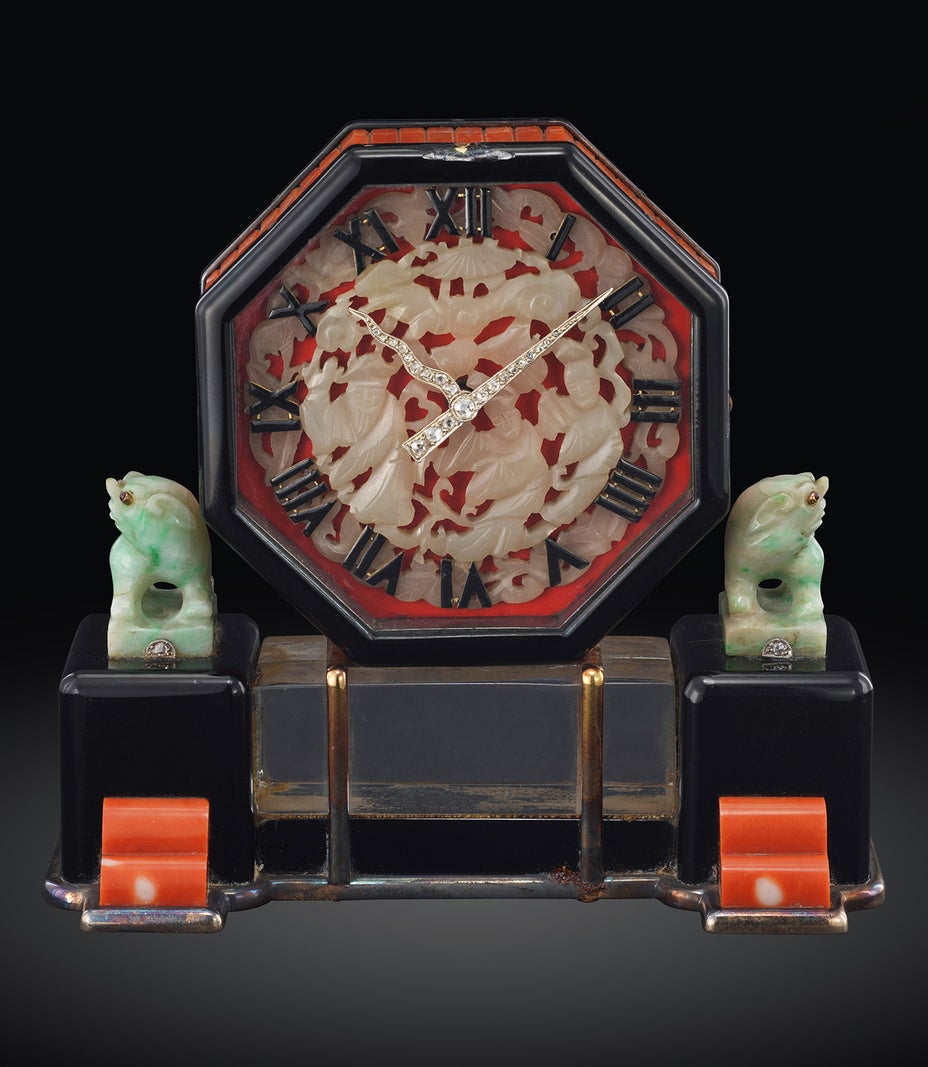
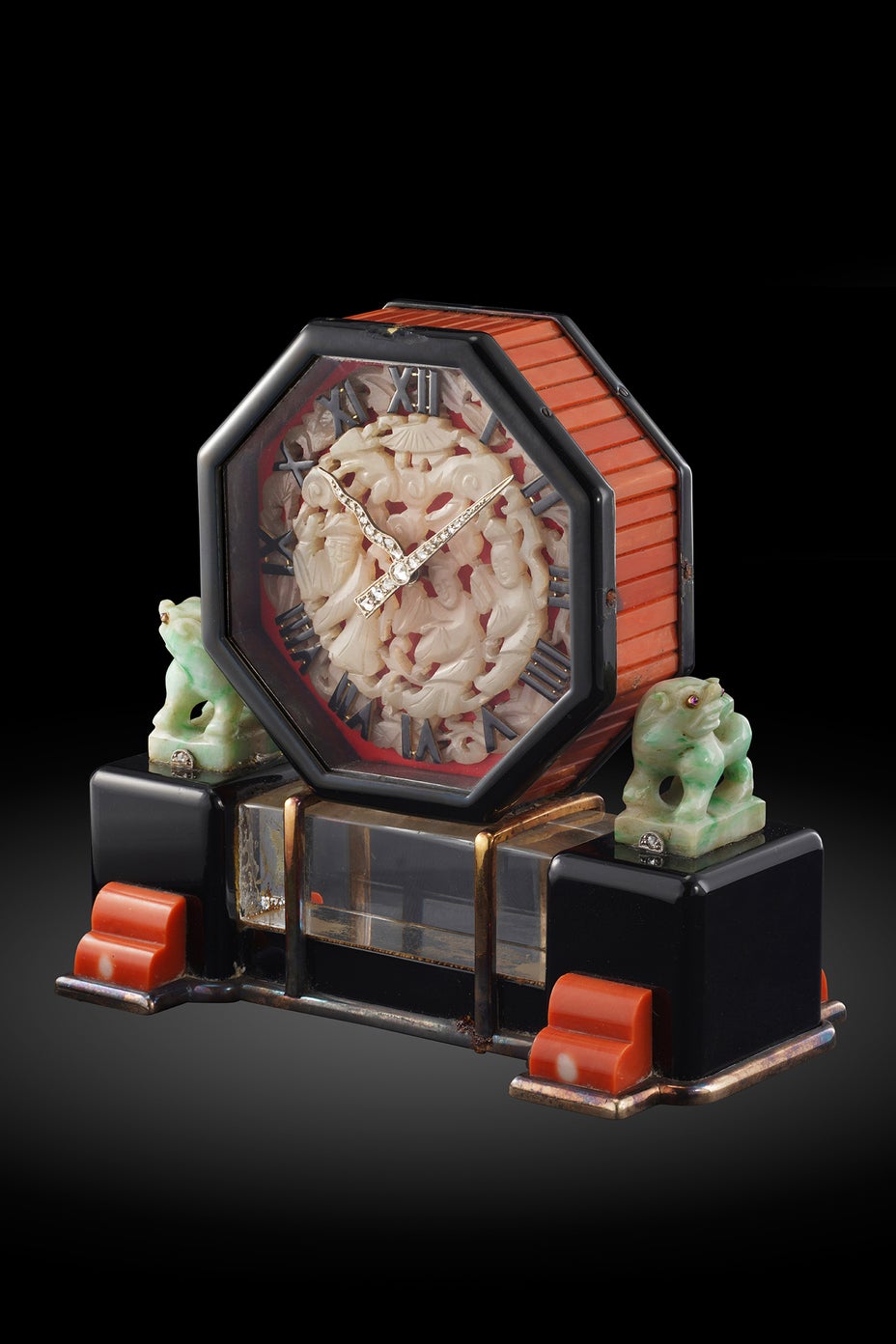
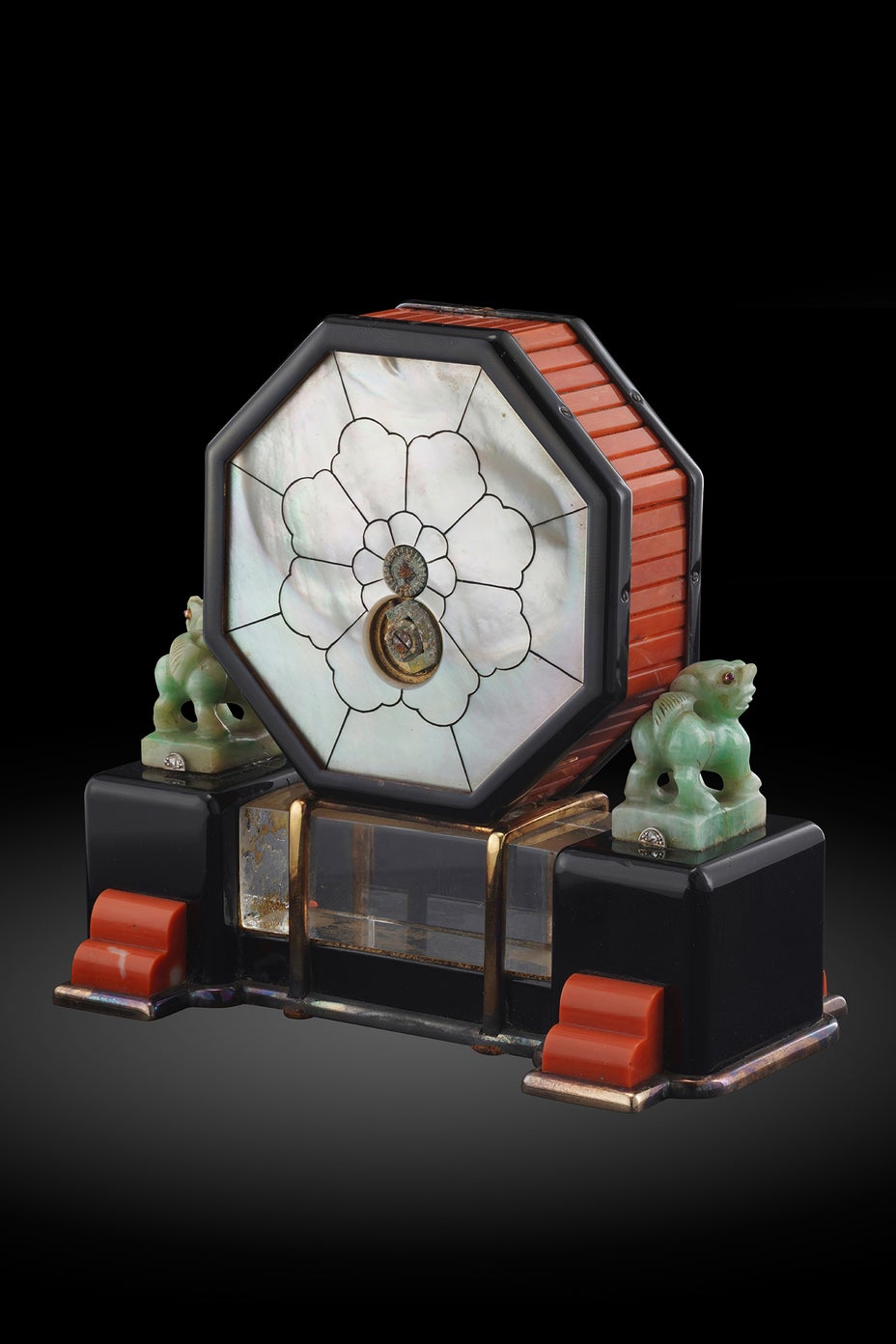
A rare and attractive yellow gold, coral, nephrite, mother-of-pearl and lacquer desk clock with nephrite “Fu Dogs” and rock crystal base
- Estimate
- HK$160,000 - 320,000€18,300 - 36,700$20,500 - 41,000
HK$1,079,500
Lot Details
- Manufacturer
- Van Cleef & Arpels
- Year
- Circa 1925
- Movement No
- 339
- Case No
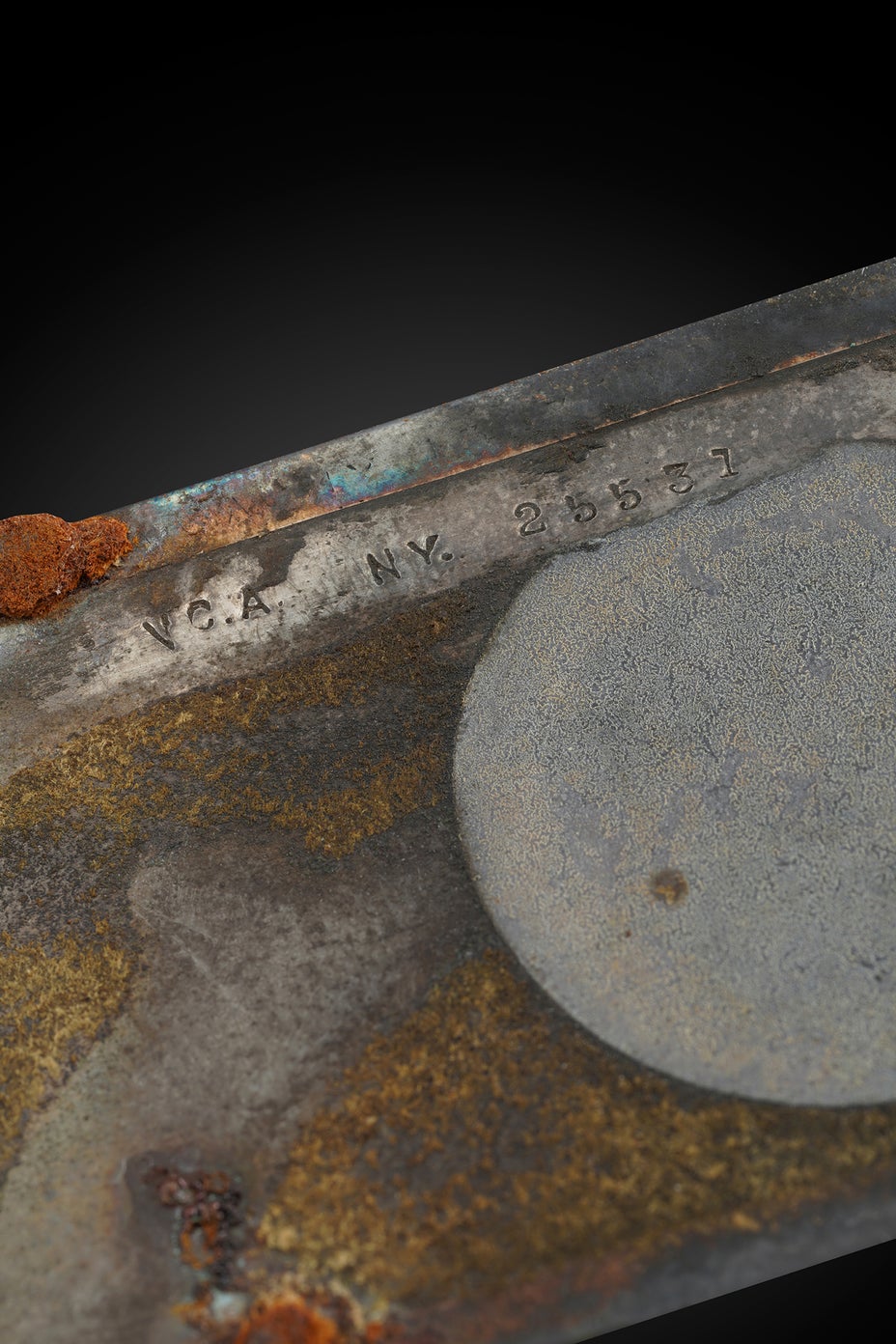
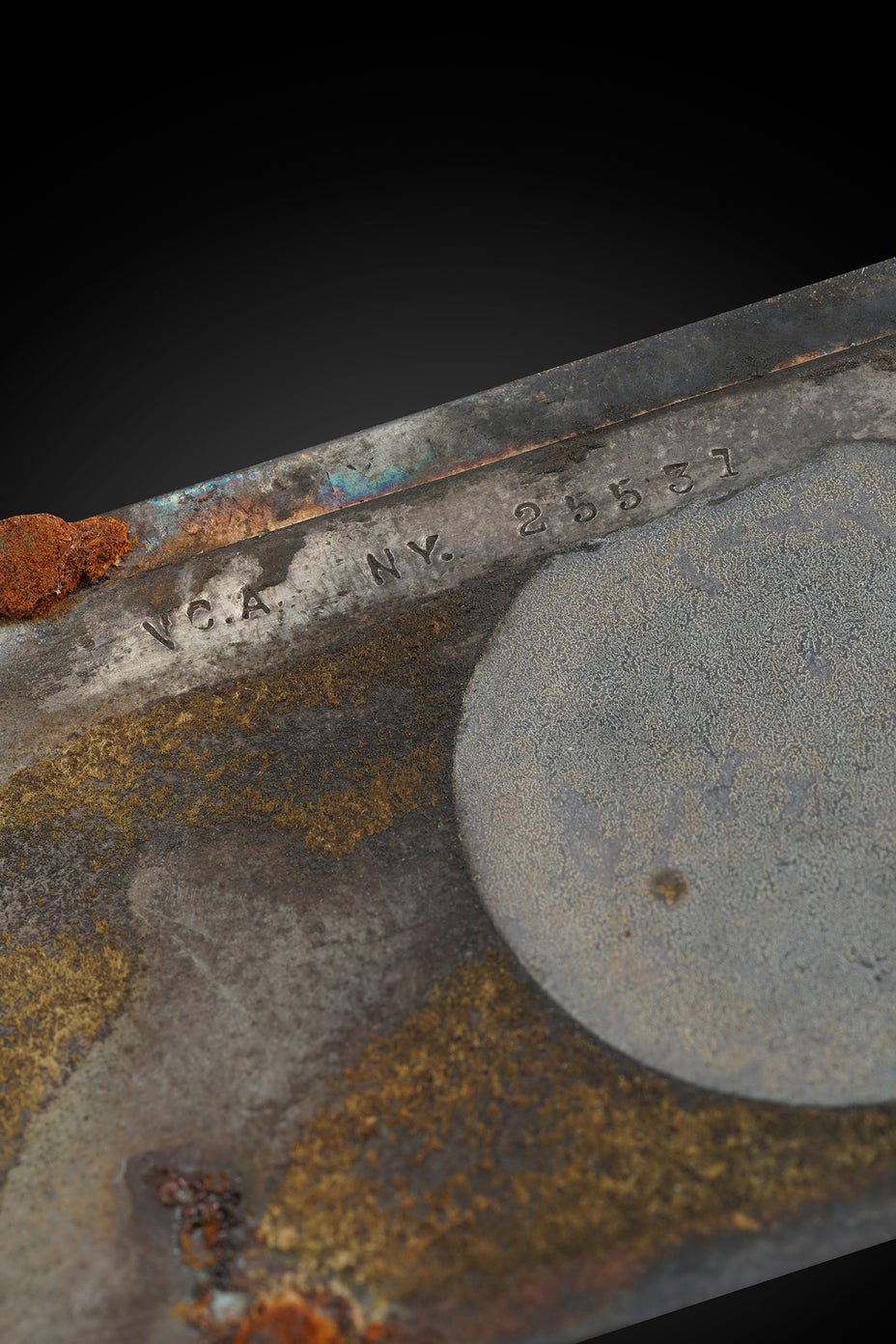
- 25'531, 4024, 2321
- Material
- 18k yellow gold, coral, nephrite, onyx, lacquer, mother-of-pearl, diamonds and rock crsytal
- Calibre
- Manual, jeweled
- Dimensions
- 95mm width and 90mm height
- Signed
- Case signed and furthermore with hand stamped numbers, movement signed by European Watch & Co.
Specialist
Full-Cataloguing
Catalogue Essay
Like Cartier, the storied and iconic jeweler Van Cleef & Arpels was actively producing and selling lavish and intricate clocks during the 1920s. And, also like Cartier, Van Cleef & Arpels incorporated rich materials and symbolism into their repertoire, bringing elements of exoticism into their creations. Asian influences—especially from China and Japan—played a pivotal role in shaping many of Van Cleef & Arpels' timepieces, including their iconic Art Deco clocks. The combination of Art Deco’s sleek, geometric forms with delicate Asian motifs created a fascinating blend of East and West, where opulent craftsmanship met the serenity and symbolism often found in Eastern art. Many of the clocks from this period featured intricate designs inspired by traditional Asian aesthetics, including motifs such as lotus flowers, cranes, bamboo, and stylized landscapes. These motifs were not just decorative; they carried deep cultural significance in Asian art.
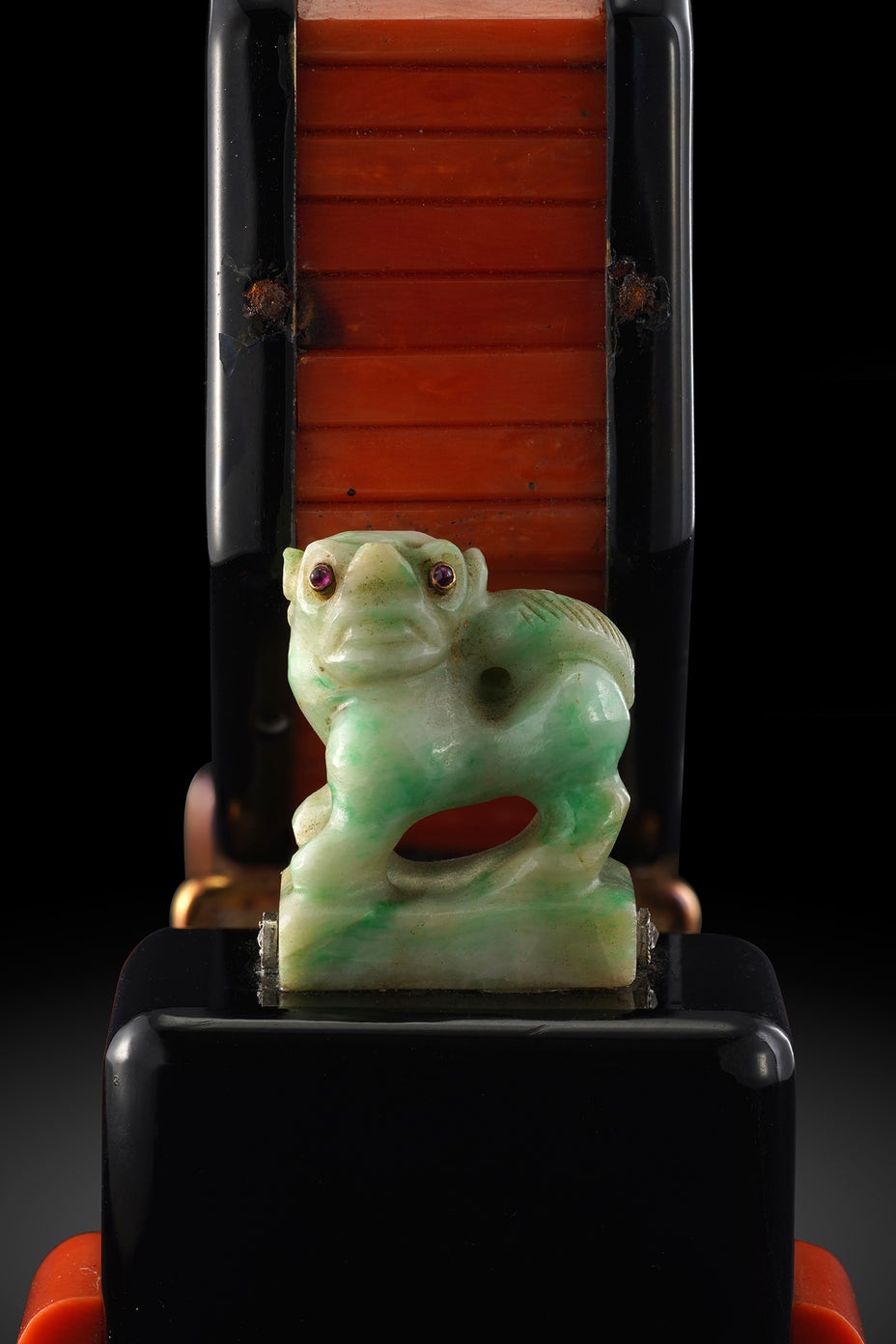
The present desk clock is a perfect example of the creativity of the 1920s. While the center of the dial is made of nephrite, depicting Chinese intellectuals, the panels enclosing the dial are made of thin coral, showcasing the artisan’s know-how in its delicate setting. Most notably, two “Fu Dogs” flank the edge of the clock. In Chinese culture, the "Fu Dogs" are symbolic guardian lions, commonly seen in Chinese art, architecture, and folklore. Despite being called "dogs" in the West, these creatures are actually lion-like statues, usually represented as pairs—one male and one female—guarding entrances to buildings, temples, or imperial palaces. The Fu Dogs are deeply rooted in Chinese tradition and carry significant symbolic meaning, such as prosperity, luck, protection, imperial power, and a balance of yin and yang. No detail is left unturned – even the eyes of the dogs are set with rubies.
Most interestingly, the present clock is very similar in appearance to another Cartier clock, which shares similar characteristics in the presentation of the dial, octagonal structure, black lacquer base, and the two mythical creatures that flank the clock. It shows that during this period, the very best jewelers most probably shared workshops or artisans, as only a few craftsmen were able to work at such a high level in terms of technique and creativity.
The present desk clock is a perfect example of the creativity of the 1920s. While the center of the dial is made of nephrite, depicting Chinese intellectuals, the panels enclosing the dial are made of thin coral, showcasing the artisan’s know-how in its delicate setting. Most notably, two “Fu Dogs” flank the edge of the clock. In Chinese culture, the "Fu Dogs" are symbolic guardian lions, commonly seen in Chinese art, architecture, and folklore. Despite being called "dogs" in the West, these creatures are actually lion-like statues, usually represented as pairs—one male and one female—guarding entrances to buildings, temples, or imperial palaces. The Fu Dogs are deeply rooted in Chinese tradition and carry significant symbolic meaning, such as prosperity, luck, protection, imperial power, and a balance of yin and yang. No detail is left unturned – even the eyes of the dogs are set with rubies.
Most interestingly, the present clock is very similar in appearance to another Cartier clock, which shares similar characteristics in the presentation of the dial, octagonal structure, black lacquer base, and the two mythical creatures that flank the clock. It shows that during this period, the very best jewelers most probably shared workshops or artisans, as only a few craftsmen were able to work at such a high level in terms of technique and creativity.
Van Cleef & Arpels
FrenchWhen Alfred Van Cleef and Estelle Arpels fell in love, their marriage paved the way for iconic jewelry house Van Cleef & Arpels to become a symbol of unification. With their background in precious stone dealing, the Arpels found their perfect match in the Van Cleefs, a family of expert stonecutters. In 1906, Estelle's brother Charles established the company name with Alfred's help and opened shop in the Place Vendôme in Paris. To this day, this Parisian neighborhood is associated with turn-of-the-century luxury.The Van Cleef & Arpels aesthetic has always had its finger on the pulse of worldwide trends: For example, the house took inspiration from Tutankhamen upon the Egyptian king's discovery in the 1920s, which spurred a global phenomenon marrying Egyptian Revival and Art Deco motifs. Over the decades, Van Cleef & Arpels has produced intricate watches, earrings and necklaces with a signature elegance that mirrors contemporary tastes.
Browse Maker